






- Nineteen professionals from the olive oil sector gathered in Tunisia to strengthen their technical and sensory analysis skills in virgin olive oil quality assessment.
- The course combined theory and practice in oil tasting based on official IOC methodology, oil classification and quality assurance in tasting panels.
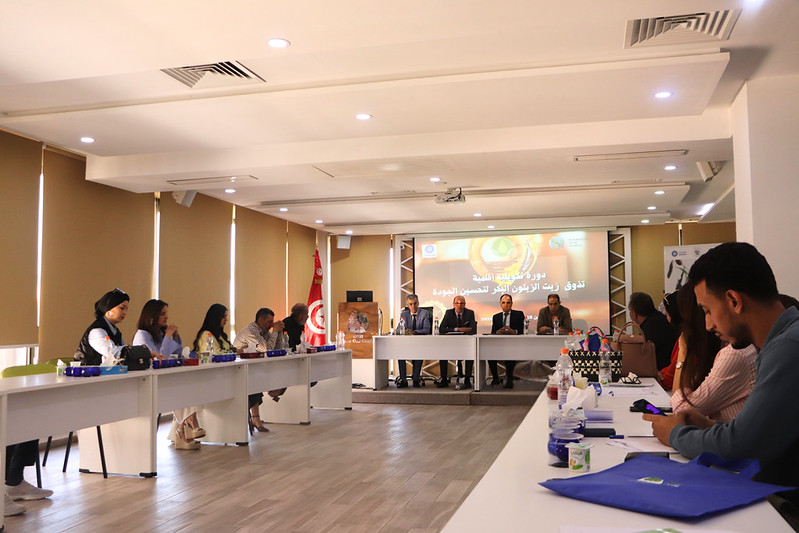
From 18 to 22 May 2026, oil tasters, panel leaders, laboratory technicians and producers gathered in Tunisia for the regional course ‘Sensory analysis for the improvement of virgin olive oil quality’ to strengthen their skills in virgin olive oil assessment and classification.
The training was organised by CIHEAM Zaragoza and the International Olive Council (IOC) in the framework of the technical cooperation programme set up by both organisations, with the collaboration of the National Olive Oil Office (ONH) in Tunisia.
Nineteen professionals from six countries of the Mediterranean region (Egypt, Jordan, Lebanon, Libya, Morocco and Tunisia) took part in the initiative, delivered entirely in Arabic, by the IOC-accredited experts in sensory analysis Nouha Farés and Samia Chkir.
Comprehensive programme of sensory analysis
The programme addressed key questions ranging from chemistry and standardisation of olive oil to basic principles and terminology used in sensory analysis. In the first tasting sessions participants learnt to recognise negative and positive attributes of virgin olive oil.
The following workshops focused on the profile sheet used by panellists, on sample classification and calculation of the robust coefficient of variation (CVr), and on how to improve the reliability and accuracy of each taster. Special attention was paid to the intensity scale of the profile sheet, the role of the panel leader according to the ISO 17025 standard, and the correlative approach to physical and chemical data used for oil classification.
The instructors explained the techniques used for the selection of olive oil tasters and how to determine the detection threshold of the tasting panel, as well as international control methods for sensory analysis. They also addressed use of reference samples and duplicate analysis tests in standardised tasting rooms. On the last day, participants focused on the sensory identity of Tunisian olive oils and used the profile sheets used for the Mario Solinas competition to taste national and foreign varieties.
Training for the competitiveness of the olive oil sector
The main objective was to improve tasters’ technical and sensory performance to ensure a rigorous and consistent assessment of virgin olive oils and their classification, in accordance with the applicable physical, chemical and organoleptic standards.
Bringing together tasters and professionals served to harmonise tasting procedures, exchange technical expertise and promote regional cooperation for the sustainable development and competitiveness of the olive oil sector.