






- In this article, CIHEAM Zaragoza's project manager Raquel Álvarez addresses how incorporating behavioural science into agricultural and forestry policies can help make existing measures more accessible and effective.
The European Green Deal and the Common Agricultural Policy (CAP) set ambitious objectives for moving towards more sustainable agriculture and forest management. However, achieving these objectives depends not only on policies, financial support and technical recommendations, but also on the day-to-day decisions made by those working the land. Why, even when more sustainable alternatives are available, are they not always adopted in practice? Understanding the influence of factors such as how information is presented, administrative constraints and perceptions of what other professionals are doing can help to design more effective policies. It is precisely in this context that green nudges can play a key role.
The ForestAgriGreenNudge (FAGN) project
The European project ForestAgriGreenNudge (FAGN), was launched to explore the potential of these interventions in the context of public policies in the agriculture and forestry sectors. Funded by Horizon Europe (GA 101133987), the project is currently led by the Burgundy School of Business (BSB), with the participation of CIHEAM Zaragoza. FAGN brings together universities, research centres, sectoral organisations and stakeholders from 12 European and Mediterranean countries. This diversity helps to promote the adoption of sustainable practices from a range of agricultural, forestry and socioeconomic perspectives.
FAGN starts from a clear premise: small changes can make a difference. Drawing on behavioural science, the project examines how small changes in the way information or available options are presented can encourage more sustainable decisions. These interventions, known as green nudges, seek to influence decision-making without prohibiting alternatives or resorting to additional economic incentives.
To achieve these objectives, FAGN combines three complementary lines of work:
- Analysis of scientific evidence: Revise existing knowledge of green nudges to assess their effectiveness and ethical implications.
- Field testing and co-creation: Test the most promising interventions in real-life settings and refine them in collaboration with farmers, foresters, advisers, businesses and administrations.
- Translating results into practice: Develop the iNUDGE Academy, a digital platform providing resources and practical guidance to help policymakers and professionals in the agroforestry sector to design and implement green nudges effectively and responsibly.
Real cases in Europe: How do the nudges work in fields and forests?
Experiences from other projects help to illustrate how behavioural science principles can facilitate more sustainable decisions in agriculture and forest management:
- Personalised information for forest management (Climate Nudge, Finland): Decisions such as using ash as fertiliser or thinning young forests can be complex for forest owners. The Climate Nudge project uses digital information tailored to each plot to highlight the environmental and economic benefits of certain practices, helping owners to assess their options at the right time.
- Simulations and decision-support systems in crop protection (RENOVATE and IPM Decisions): In agriculture, the RENOVATE platform uses simulations and interactive stories so that farmers can explore the economic and environmental consequences of pesticide use before applying them in the field. In turn, IPM Decisions provides Integrated Pest Management support tools that help users interpret relevant information and make better-informed decisions
- Demonstrations and peer-to-peer learning (Climate Farm Demo): Seeing how other professionals implement certain practices can help reduce the uncertainty associated with change. The Climate Farm Demo initiative combines carbon footprint assessments with demonstration events led by farmers themselves. Learning about the results achieved and the difficulties encountered by others who have tested out new practices can help build trust and encourage adoption.
Invisible barriers and social dilemmas
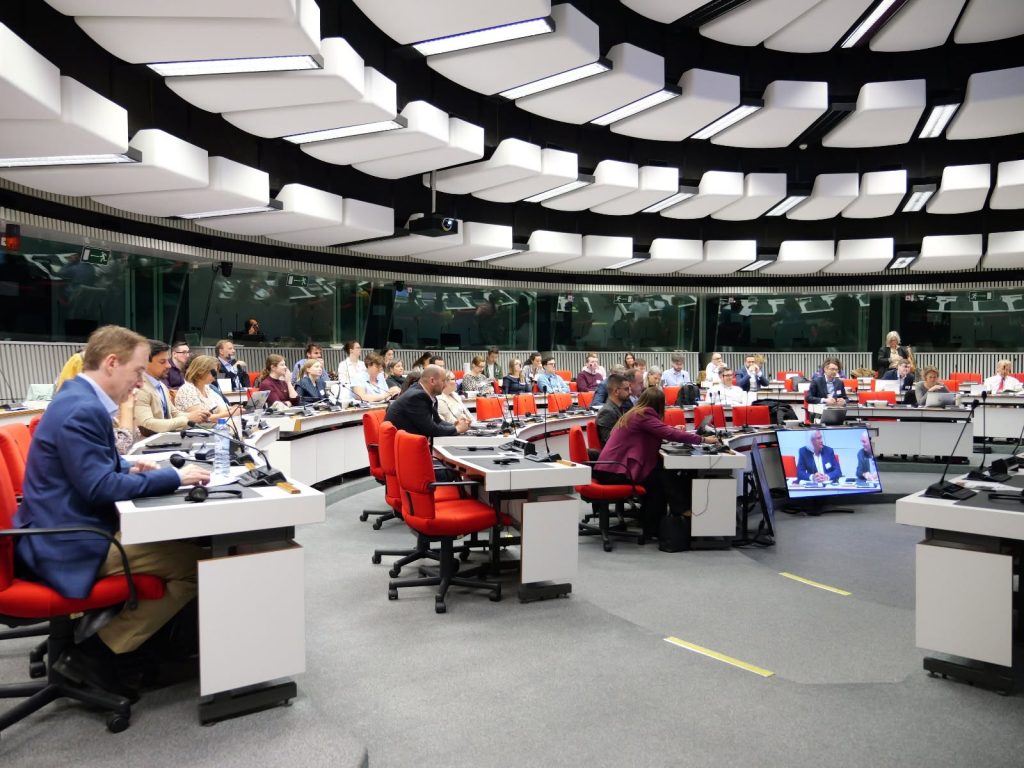
Farmers’ and foresters’ decisions do not depend solely on available financial support or technical recommendations. They are also influenced by less visible factors, such as loss aversion, the tendency to stick with established practices, and administrative constraints. These issues have been addressed at recent FAGN events, such as the First Policy Workshop and the Policy Hackathon 2026, which highlighted the importance of understanding how professionals in the sector make decisions.
One particularly noteworthy finding from the initial results of the survey conducted as part of these events is the existence of a perception gap: although farmers and foresters may be personally willing to adopt more sustainable practices, they may perceive their colleagues as more reluctant or resistant to change than they really are. This misperception can discourage the adoption of new practices and make collective action difficult.
Alongside these social barriers, there are more practical obstacles, such as the complexity of administrative procedures and the mental effort involved in understanding and applying for certain CAP support schemes. When a measure is complicated to access, even those willing to adopt it may find it difficult to do so.
In this context, green nudgesprovide a complementary tool for facilitating more sustainable decisions without resorting to prohibitions or additional economic incentives. Small changes in the way options or procedures are presented can help overcome barriers and make the sustainable alternatives more accessible.
Other possibilities include simplifying aid application forms, reviewing default options in certain procedures and incorporating information about practices adopted by other farmers and foresters into the agricultural advisory services and Agricultural Knowledge and Innovation Systems (AKIS). Such interventions can help to improve the accessibility and effectiveness of existing measures.
Governance, ethics and co-creation
In order for green nudges to contribute to more effective public policies, their design must also meet ethical standards. The European Law Institute(ELI) Innovation Paper entitled A Framework for Good Green Nudging, drawn up by Dr Marta Santos Silva, emphasises the importance of ensuring that these interventions are transparent, proportionate and respectful of individual autonomy.
In this respect, co-creation is one of the key principles of FAGN: interventions should not be designed by institutions alone, but developed with the active participation of farmers, foresters and other local stakeholders. Listening to their experiences and taking account of their socioeconomic and geographical circumstances makes it possible to develop more appropriate solutions tailored to each context.
Integrating behavioural science into agriculture and forest policies can help make existing measures more accessible and effective. The aim is to ensure that environmentally beneficial practices are not only possible, but also easy for those working the land to adopt.
References
This article draws on the activities of the ForestAgriGreenNudge (FAGN) project (Horizon Europe, GA 101133987) and summarises evidence compiled in the project’s fact sheets and the conclusions of the Policy Brief (forthcoming). It also integrates the findings of the First Policy Workshop of ForestAgriGreenNudge, the Policy Hackathon 2026, and the legal and governance framework set out in the European Law Institute’s (ELI) A Framework for Good Green Nudging(webinar).