






- The programme combined workshops, mentoring sessions and technical visits, enhancing the development of innovative and sustainable business initiatives.
- Participants worked on the validation of their business models, access to finance and presentation of proposals to potential investors.
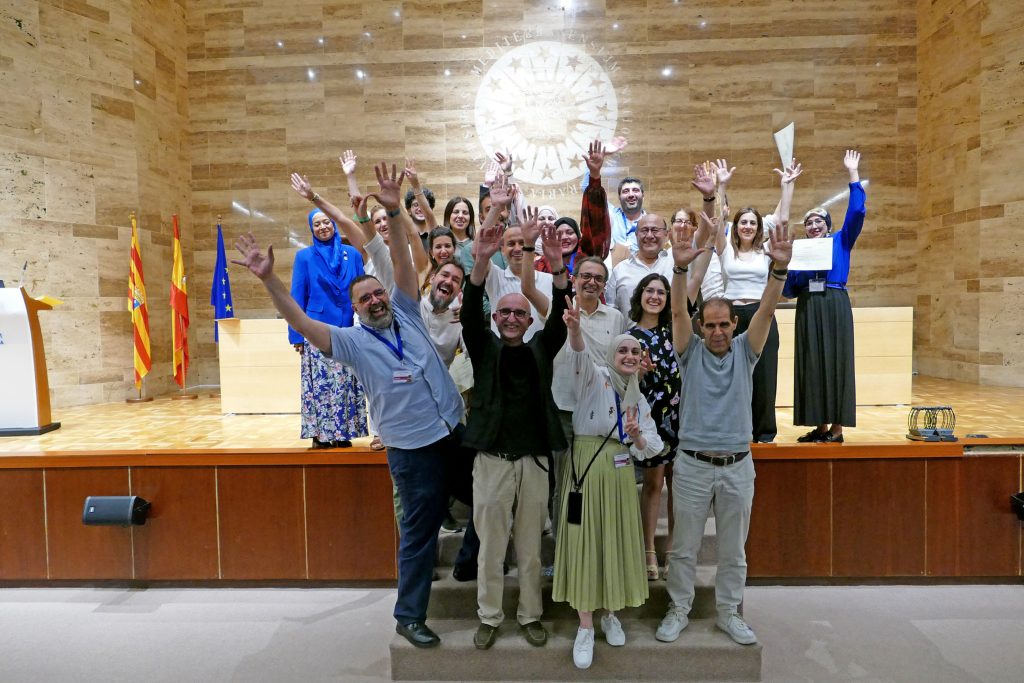
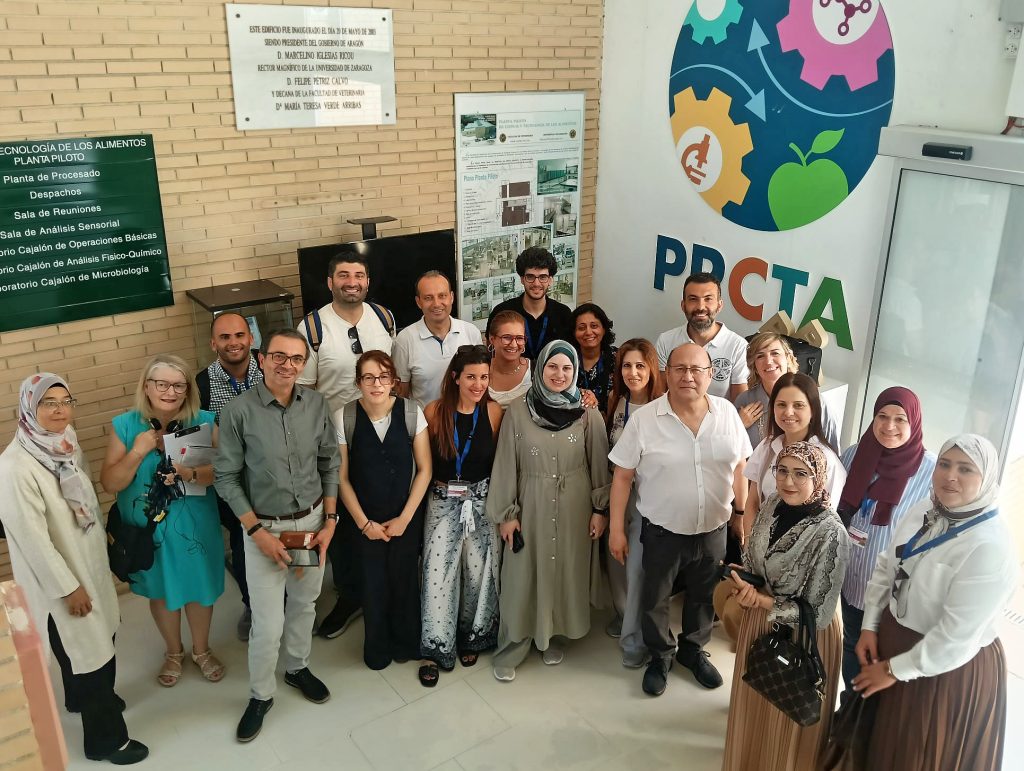
Sixteen professionals from six countries across Africa, Asia and Europe (Egypt, France, Jordan, Lebanon, Spain, Tunisia and Türkiye) participated in the First Mediterranean Food Entrepreneurship Week from 22 to 26 June 2026. The course was organised by CIHEAM Zaragoza in collaboration with the Spanish Agency for International Development Cooperation (AECID), with the technical support of the Asociación de Jóvenes Empresarios de Zaragoza (AJE Zaragoza). The programme was delivered by experts from universities, consulting firms, the Chamber of Commerce, an incubator, a business accelerator and an association for young entrepreneurs.
First edition of the Mediterranean Food Entrepreneurship Week
The advanced course provided specialist information on tools and methodologies for developing innovative and sustainable business initiatives in the agrifood sector. The course took a practical and participatory approach combining training sessions, workshops, mentoring, peer learning and technical visits, strengthening participants’ entrepreneurial capacities, supporting validation and accelerating startups, identifying innovation opportunities and building robust business models and roadmaps.
Challenges and opportunities in the Mediterranean region. Mapping the entrepreneurial ecosystem and institutional support
The first sessions addressed key challenges facing Mediterranean food systems, such as water scarcity, climate change, market volatility and youth unemployment. By mapping the entrepreneurial ecosystem participants were able to identify key stakeholders and support mechanisms for entrepreneurship in the agrifood sector.
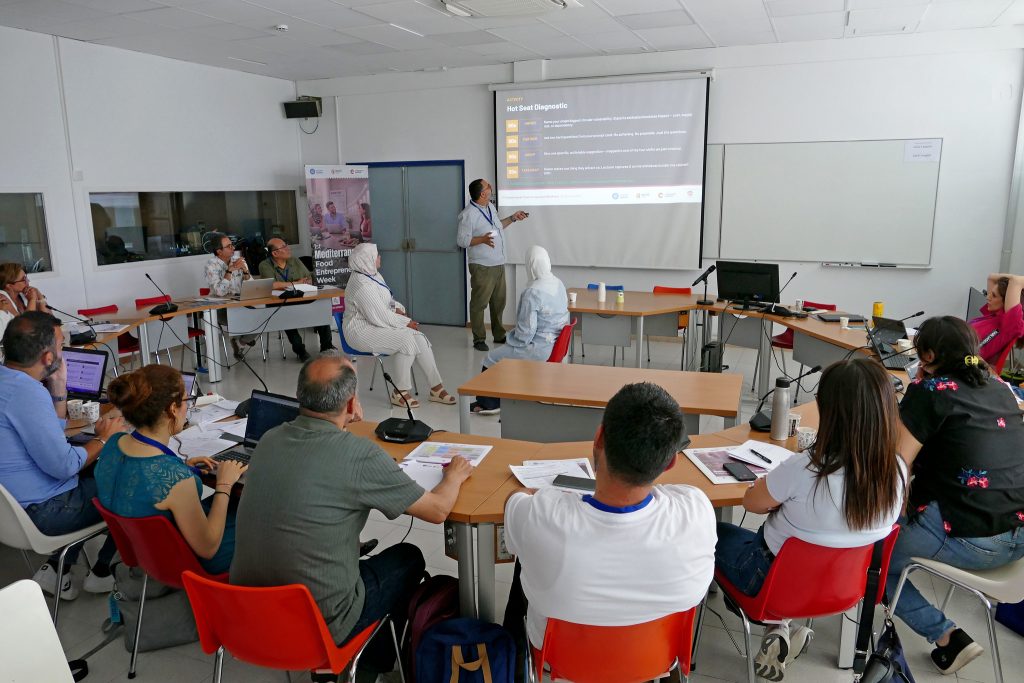
Through diagnostics exercises, participants identified resources, networks and opportunities for collaboration as well as obstacles preventing the growth of their business initiatives. The sessions included an introduction to instruments and support programmes for entrepreneurship and innovation in the food sector such as PRIMA, EIT Food, SwitchMed, Berytech, AJE Zaragoza and CEEI Aragón.
Innovation in business models. Mapping participants’ projects
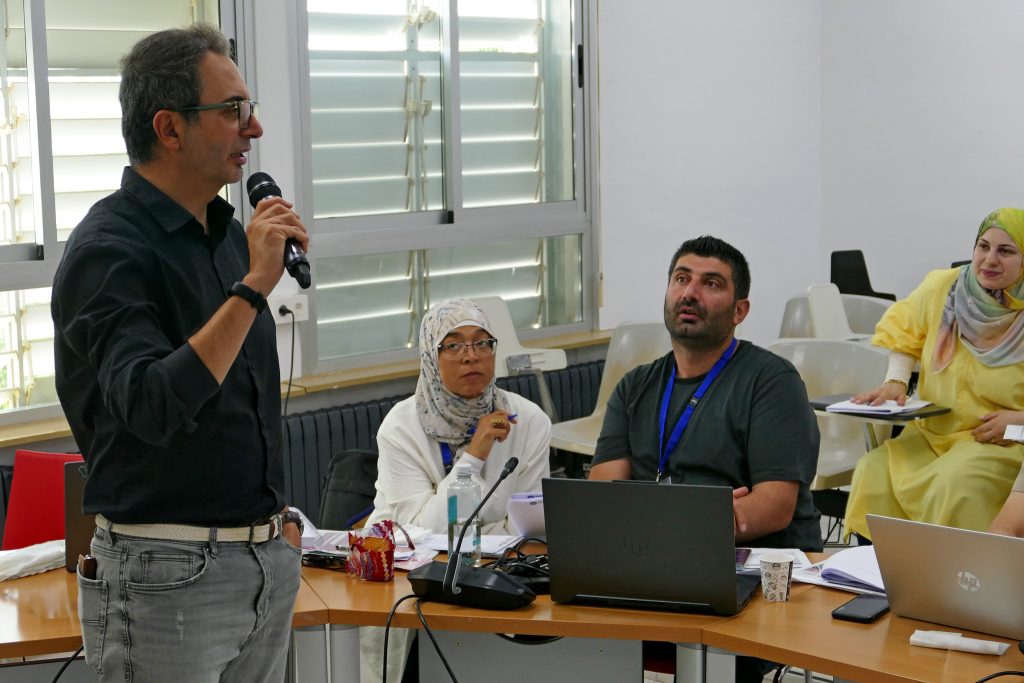
Through the Business Model Innovation Lab, participants used the Business Model Canvas to identify weaknesses and to analyse and strengthen their business initiatives, identifying areas for improvement, redefining their value proposition, gaining deeper insight into their client ecosystem and potential sources of income. This analysis enabled them to select and incorporate innovation strategies to validate, optimise and consolidate their business models.
During the mapping exercise, participants identified, analysed and prioritised the key stakeholders in their business projects.
Digital transformation in the food sector. Sustainability and the circular economy
The programme addressed the potential of technologies such as the Internet of Things (IoT), sensors, artificial intelligence, machine learning, blockchain and digital twins to improve the efficiency, traceability and sustainability of agrifood systems.
In addition, participants examined food safety and fraud issues, reduction of food waste, data management, digital solutions, sustainability and the circular economy as strategies to improve resilience, optimise resources and increase business competitiveness.
Technical visits and mentoring sessions
At Mas Seeds, participants learnt about the application of circular business models supported by digital tools, quality strategies and integration of the value chain to optimise resources and strengthen resilience of the firm. Visits to the CITA pilot plant of the University of Zaragoza, CEMINEN-SPINUP and CIEM Open Innovation System acquainted participants with the research ecosystem, innovation initiatives and business incubators in Zaragoza, thus favouring knowledge-sharing and development of new business initiatives.
The mentoring and peer-learning session combined growth strategy analysis to strengthen business models, identification of opportunities for improvement in areas such as scalability, optimisation of operations, circular economy, and access to markets and finance. Participants drew up an action plan for 30, 60 and 90 days to boost the development of their business initiative.
Financing, communication, presentation of proposals to investors and final presentations
The session on startup financing and finance management examined aspects such as investors, markets, business model, key performance indicators (KPI), cashflow, finance previsions and forecasts, and potential risks for startups during initial stages.
During the pitching and storytelling workshops, participants learnt how to transform these elements into clear, coherent and attractive proposals, strengthening their communication skills and presenting initiatives with an improved design of their value propositions, target markets and needs for finance. Participants concluded the training by presenting their Roadmaps for Growth and Impact, combining their growth, innovation and coherence strategies with what they learnt in the programme.
Final thoughts
Beyond the training dimension, the course has raised visibility and interest in a practical methodology to accompany real business projects by encouraging knowledge exchange and collaborative learning. It aspires to become a regional platform for knowledge-sharing, collaborative learning and alliance building between entrepreneurs, researchers, institutions and actors from the private sector.
The success of this first edition has confirmed the relevance of this approach. The training sessions, practical workshops, mentoring activities and spaces for interaction have strengthened ties between participants and laid the foundations for an initiative set to continue.