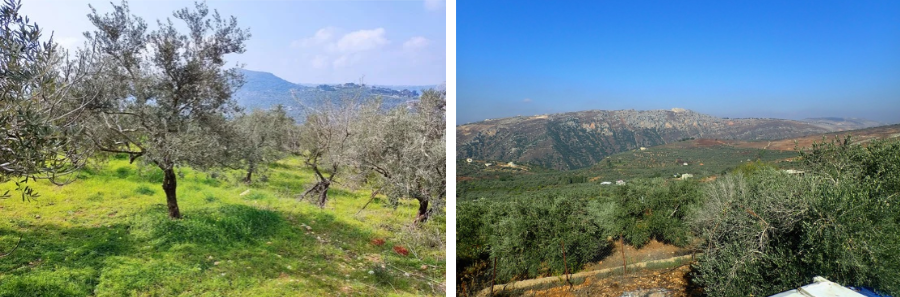


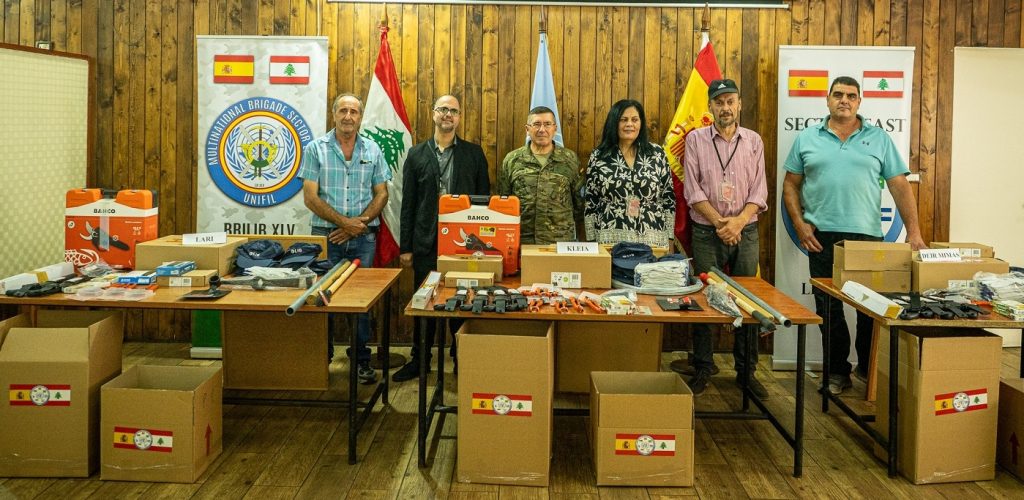
On 22 October, the Lebanon XLV Brigade (BRILIB XLV), deployed as part of the United Nations Interim Force in Lebanon (UNIFIL) delivered material donated by CIHEAM Zaragoza in collaboration with the Polytechnic School of Huesca to agricultural institutions in southern Lebanon. The donation was made within the framework of the development cooperation project OLIB. The purpose of the project is to make a positive contribution to the quality of life of olive farmers in the region of Nabatiyeh in southern Lebanon through training and knowledge transfer in olive farming and oil processing.
Material to support local farmers
The equipment was purchased by CIHEAM Zaragoza under the OLIB project, funded by Zaragoza Provincial Council, to support training and technical assistance activities in olive growing and olive oil production. The Organisation has made the equipment available to local entities that can put it to use in support of farmers in southern Lebanon. These include the Lebanese Institute of Agricultural Research (LARI), the Deir Mimas Agricultural Cooperative and the Kleyaa Agricultural Cooperative, all key institutions supporting the development of the olive growing sector in the region.
The equipment was delivered timely by the Spanish armed forces in the height of the olive harvest season for immediate use during one of the busiest periods of the crop year.
The OLIB project
OLIB (Strengthening Sustainable Local Development and Coexistence in Lebanon through Improved Olive Tree Yield and Productivity) is a development cooperation initiative coordinated by CIHEAM Zaragoza and funded by Zaragoza Provincial Council through the 2023-2024 call for international development and solidarity projects.
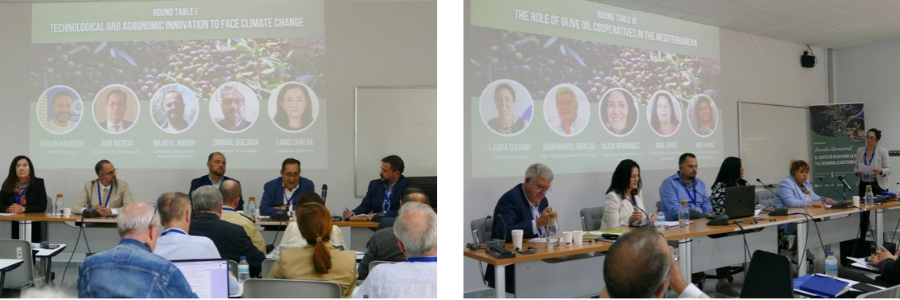
The objective of the project is to strengthen theoretical and practical knowledge in olive growing and oil technology for agricultural cooperatives, farmers, advisors and technical specialists in southern Lebanon. The main lines of work include improvement of olive grove management to increase yield and strengthen climate change adaptation strategies.
The project also seeks to boost the local economy and enhance cohesion in an area affected by economic and social crises and armed conflict, through the engagement of local actors such as Deir Mimas women’s cooperative. Most of the project activity was conducted in 2024, namely capacity-building events, teaching material and a guidebook of agronomic techniques available online in Spanish, Arabic and English. In addition, training for agents of change was carried out with Lebanese experts, together with the international workshop ‘The role of olive oil for peace and sustainable development’, organised in September 2024 by CIHEAM Zaragoza and Zaragoza Provincial Council.
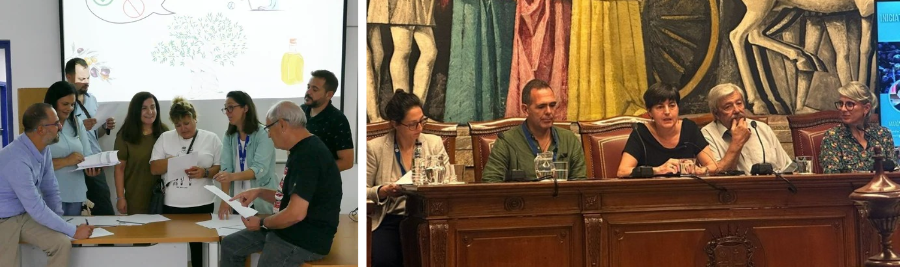
The results of the project’s activities were presented in the Project activity report OLIB 2024.
Synergy with the Programa Almazara
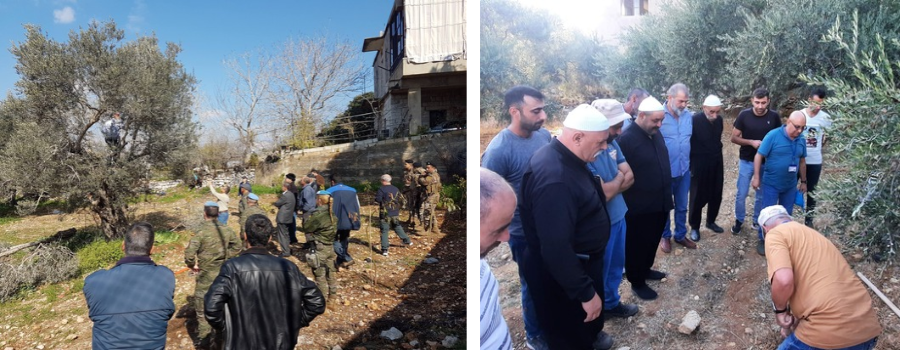
The dispatch of equipment is closely related to the olive mill programme Programa Almazara, led since 2018 from the Polytechnic School of Huesca and supported by the Spanish military brigade deployed in the United Nations Interim Force in Lebanon (UNIFIL), to improve olive production through transfer of technical knowledge and capacity building for local farmers. Through theoretical and practical activities related to pruning, pest control, appropriate fertiliser use, soil conservation, olive harvesting and processing, and oil mill technology, the programme has contributed to modernising olive groves in the area and fostering a climate of trust and collaboration between the local communities and the Spanish armed forces.
Scientific, institutional and practical cooperation
The donation reinforces CIHEAM Zaragoza’s commitment with the sustainable development of rural areas in the Mediterranean region and underlines the importance of collaboration between academic institutions, specialised bodies, and the Spanish armed forces, and whose joint efforts enhance the direct application of initiatives by the local population.