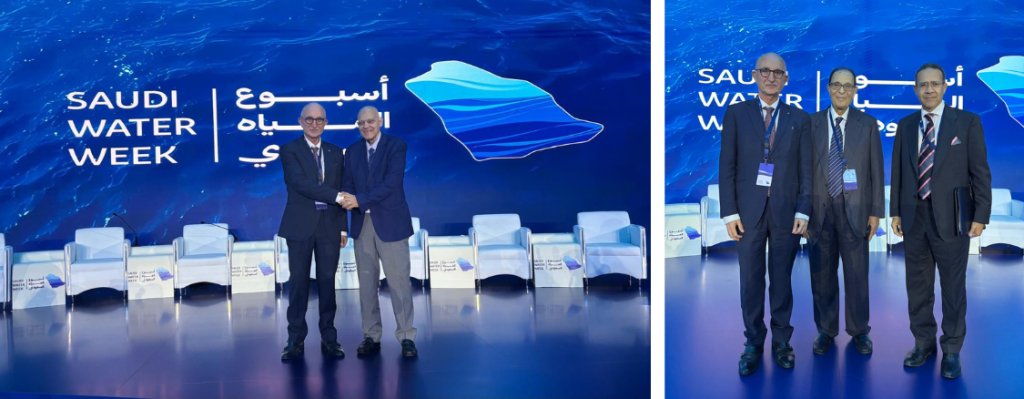


- CIHEAM Zaragoza took part in Saudi Water Week and the 7th Arab Water Forum Conference, held in Jeddah (Saudi Arabia) from 28 June to 2 July 2026.
- Director Raúl Compés highlighted Spain's irrigation model at CIHEAM regional dialogue on water resilience.
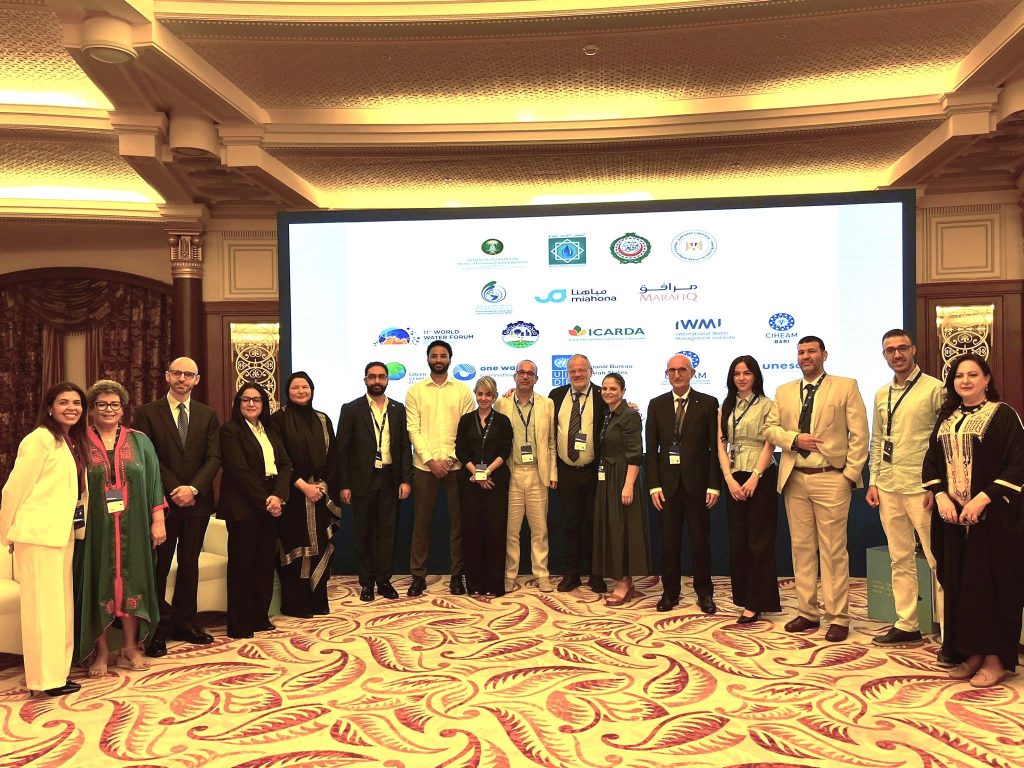
CIHEAM General Secretariat convened a high-level regional dialogue entitled ”Community-Led Water Resilience: Water Risk Management and Nature-Based Solutions”, held during the 7th Arab Water Forum in Jeddah (Saudi Arabia), in close collaboration with its four Mediterranean Institutes. The session was organised in partnership with the Arab Water Council and with the support of the Union for the Mediterranean, in a context where water scarcity, climate change and land degradation pose growing threats to agriculture, food security and rural livelihoods across the Mediterranean and neighbouring regions.
The director of CIHEAM Zaragoza — one of CIHEAM's four Mediterranean Institutes — Raúl Compés, took part in the dialogue representing the Institute, alongside experts, researchers, regional organisations, innovation actors and practitioners brought together to discuss practical approaches to more resilient and inclusive water management.
During the debate, moderated by Yasmine Seghirate (CIHEAM), Compés explained how it was possible to increase the area under irrigation by adopting methods to improve water use efficiency, reduce fertiliser use and improve quality, thereby creating the conditions for an agricultural revolution characterised by a shift in crops, land consolidation and increased profitability — in turn enhancing the appeal of the primary sector to young people and women.
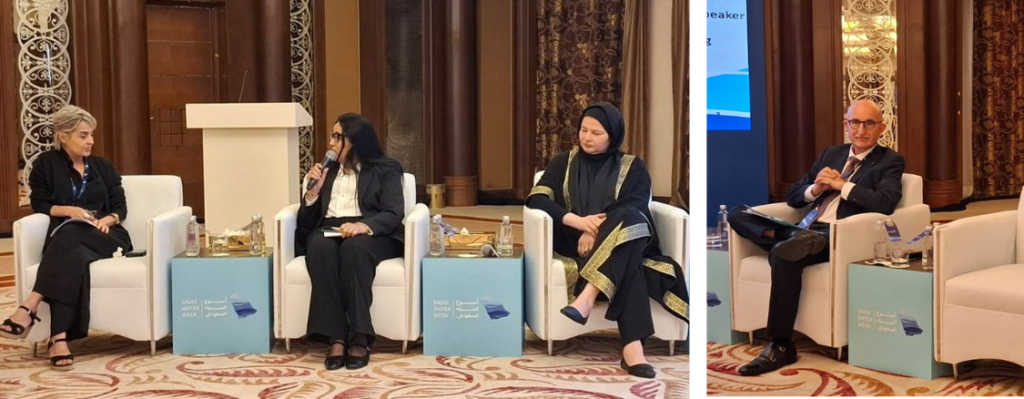
"In the case of Spain, this process was made possible by setting irrigation as a state policy, with an ambitious public-private funding model and multi-stakeholder, multi-level governance coordinated by the government, in which irrigation communities and water users' associations play a leading role" Compés went on to say, "This serves as a good example for many other countries that view new irrigation systems as the key strategy for adapting to climate change and strengthening their strategic food self-sufficiency".
The session also drew on experiences from CIHEAM's other three Mediterranean Institutes, alongside contributions from the Arab Water Council, the Union for the Mediterranean, Berytech, Planetek Italia and other specialists in water governance, innovation and social inclusion. Discussions moved from strategic perspectives to concrete field experiences, before opening onto a wider debate on the conditions needed to scale up successful initiatives through stronger public policies, regional cooperation and multi-stakeholder partnerships.
This regional dialogue, organised by the CIHEAM General Secretariat, marks a further step in strengthening the Organisation's engagement on water resilience within the broader Mediterranean agenda. Its conclusions will feed into preparations for the Euromediterranean Water Forum and the next CIHEAM Ministerial Meeting, as well as into international discussions including COP31 in Antalya and the 2027 World Water Forum in Saudi Arabia.