





- 27 professionals from 10 countries strengthened their expertise in agricultural risk management and insurance to improve climate resilience in the Mediterranean region.
- The course combined policy, technical and practical approaches, including remote sensing, climate projections and index-based insurance for managing emerging agricultural risks.
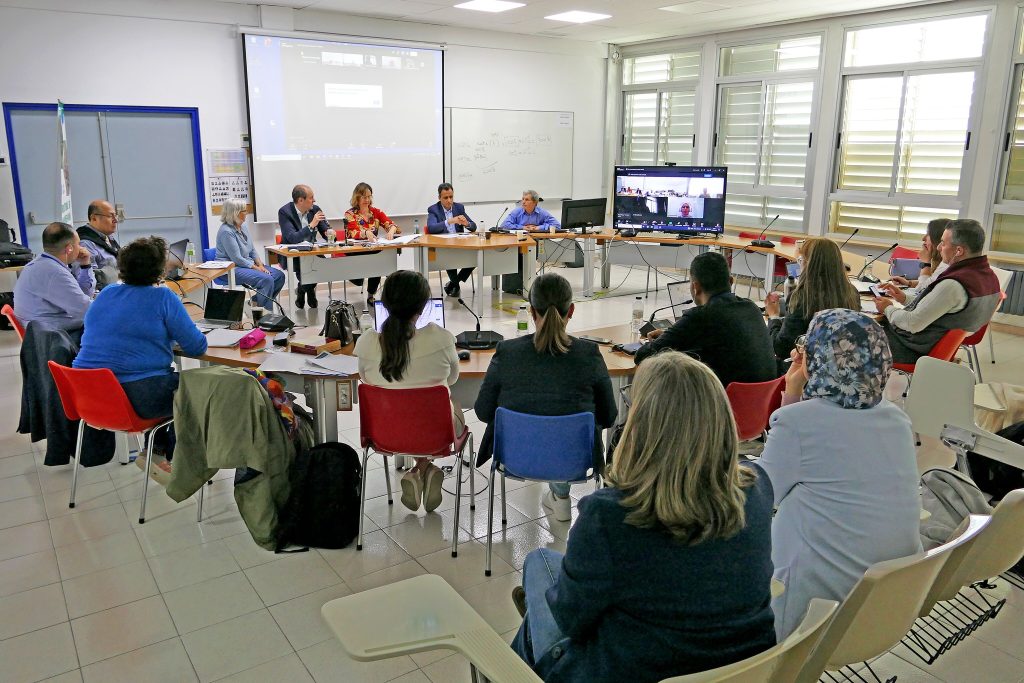
From 13 to 17 April 2026, CIHEAM Zaragoza hosted the advanced course ‘Agricultural risk management and insurance in times of climate change’, with the participation of 27 professionals from ten countries across Africa, Asia and Europe. The activity was organised by CIHEAM Zaragoza with the technical support of the Research Centre for the Management of Agricultural and Environmental Risks (CEIGRAM) of the Polytechnic University of Madrid (UPM).
The participants came from ministries of Agriculture, research centres, universities, public administrations and international bodies in Albania, Algeria, Côte d’Ivoire, Egypt, Hungary, Italy, Lebanon, Spain, Tunisia and Türkiye.
Climate change and risks for agriculture
Climate change is one of the main threats to the sustainability of the agrifood sector. Growing frequency and intensity of extreme meteorological events such as prolonged drought, floods, or off-season frost, threaten farmers’ income and welfare, food security and market stability.
Loss of harvests, reduced productivity, shifts in crop calendars and degradation of natural resources compromise the economic viability of crop farms, especially SMEs. These effects, together with the volatility of agricultural prices, increase uncertainty in terms of future income.
In this context, agricultural insurance is a fundamental instrument to protect producers against losses associated to adverse climatic phenomena, pests and diseases. In the Mediterranean region, they play a key role in risk management, enabling farmers to transfer part of the economic risk related to agricultural activity and help to sustain their income.
Specialised training for decision-makers and professionals in the sector
The course provided advanced knowledge on agricultural risk management, addressing the design, implementation and evaluation of insurance systems adapted to the conditions of the Mediterranean region.
The programme was delivered by specialists from the research centre CEIGRAM, the Spanish group of insurance bodies Agroseguro, the Caisse Tunisienne d’Assurances Mutuelles Agricoles (CTAMA), Hohenheim University, the Spanish state agency for agricultural insurance (ENESA) and the agrifood cooperative Cooperatives Agroalimentàries de Valencia.
Over the five days of the course, participants analysed the main risks affecting agriculture, studied a range of management strategies and explored the potential of new technologies to enhance the evolution of agricultural insurance.
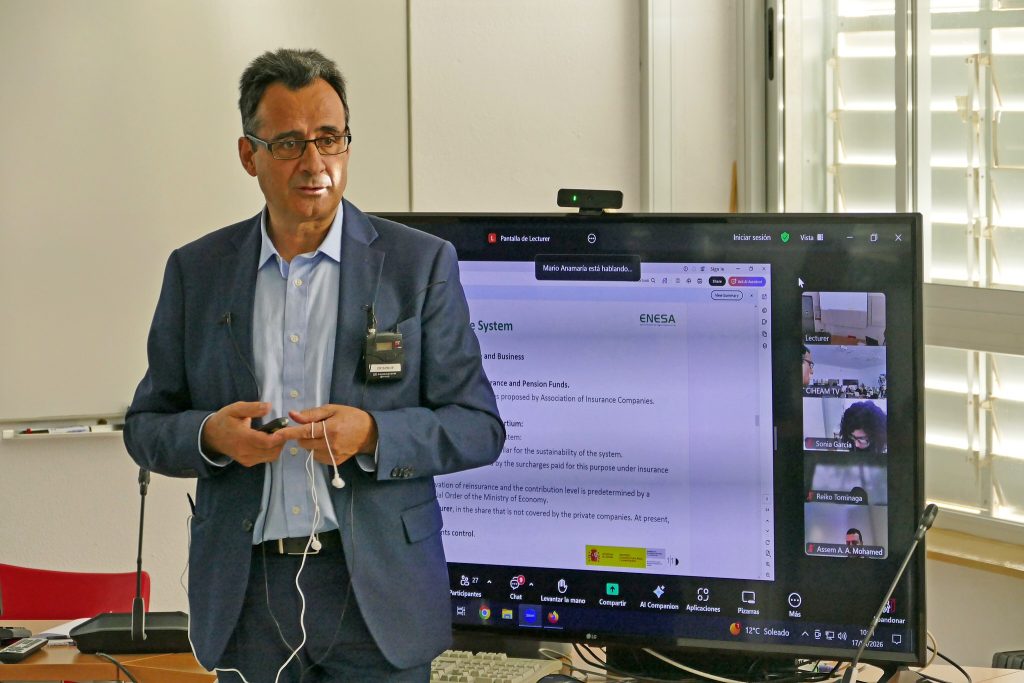
Practical sessions on remote sensing, climate and indexed insurance
The training combined theoretical sessions with practical exercises. The programme covered various risk management strategies including risk layering, adaptation, prevention and transfer. Participants gained insight into the steps and options for implementing national agricultural insurance systems.
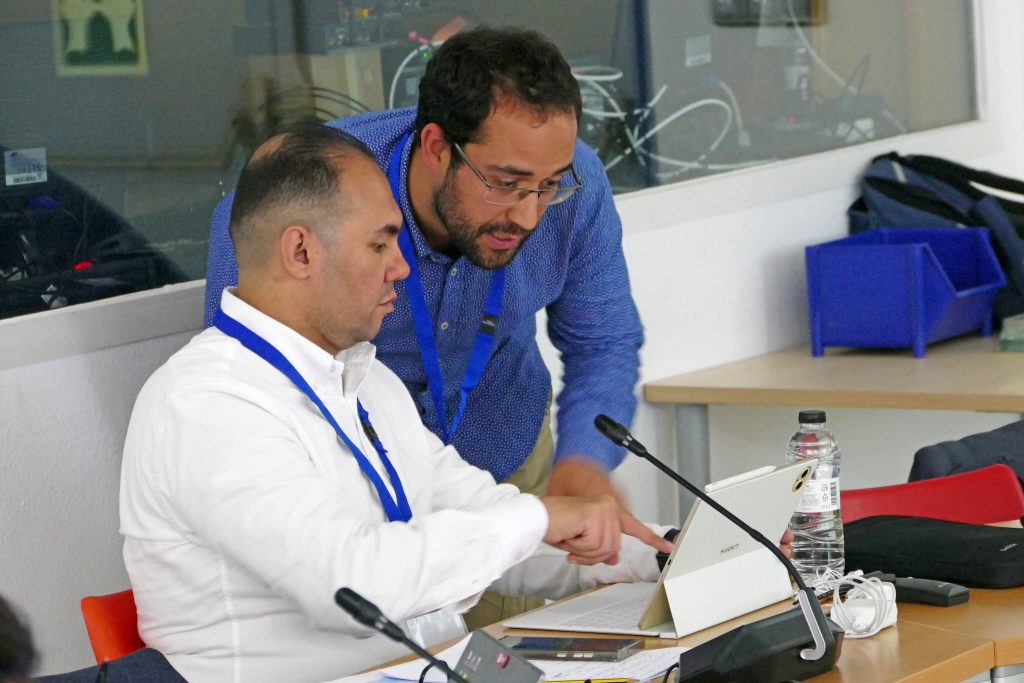
During the practical exercises, participants worked in groups on data based on remote sensing and climate projections and on the development of index-based insurance, in particular:
- Application of remote sensing to agricultural risk management.
- Use of climate projections for agroclimatic risk evaluation.
- Design of indexes for agricultural insurance.
The programme also included a round table discussion where panellists analysed the main challenges and opportunities for agricultural insurance in the Mediterranean region.
Strengthening skills for a more resilient agriculture
In this training event, CIHEAM Zaragoza and CEIGRAM reinforced their commitment with capacity-building for professionals with decision-making responsibilities in the Mediterranean region.
The training contributes to more sustainable and resilient agricultural systems in the context of climate change, favouring practices related to efficient water use, soil conservation, and adoption of better-adapted crops to emerging climatic conditions.
Furthermore, this type of training initiative generates a positive impact on rural communities by supporting tools that help to protect small and medium-scale farmers, who are particularly vulnerable to climate risks.