


- In this article, CIHEAM Zaragoza's project manager Irene Gavieiro addresses how the Multi-Actor Approach demands meaningful engagement across the entire project lifecycle, turning research into practical, lasting impact.
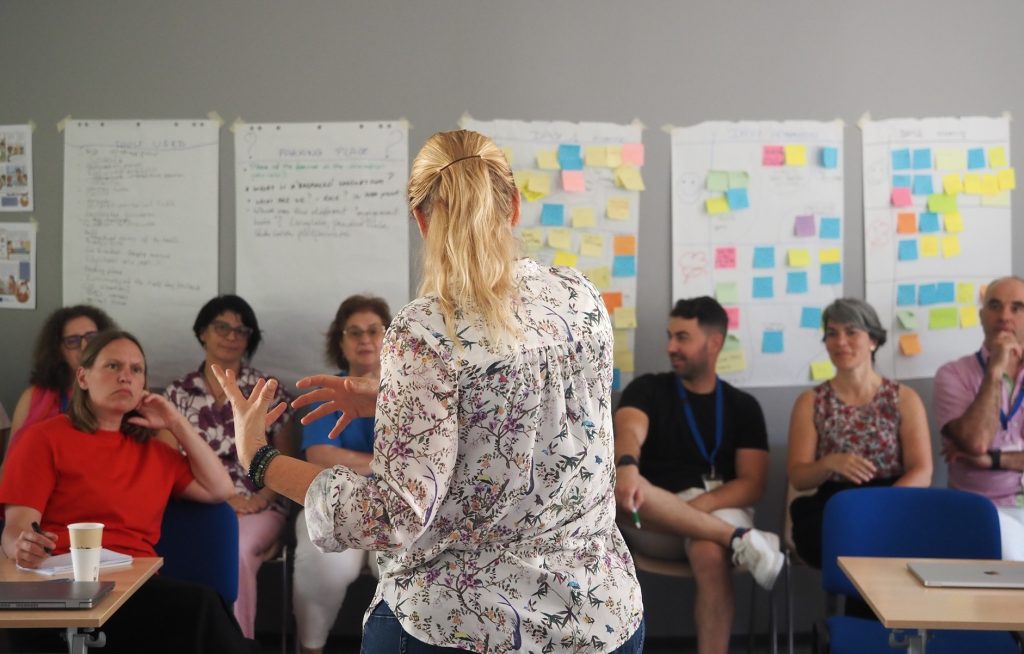
Agricultural innovation is no longer driven only by scientific excellence. Today's agricultural systems face complex and interconnected challenges that require new ways of generating knowledge and developing solutions. From climate change and biodiversity loss to food security, digital transformation and generational renewal, addressing these issues demands new forms of collaboration that connect researchers, farmers, advisors, businesses and policymakers in the co-creation of solutions that respond to real needs.
For decades, agricultural innovation followed a linear, top-down model: researchers generated knowledge, advisory services transferred it, and farmers applied it in practice. While this approach contributed to technological progress and productivity, it is no longer sufficient to address today's sustainability challenges. Moreover, the understanding of innovation has evolved beyond a purely technical process: it is now seen as a collaborative process where scientific expertise, practical experience and local knowledge complement one another to develop solutions that are relevant, applicable and responsive to real-world needs.
This shift is reflected in the European Union's Multi-Actor Approach (MAA), one of the defining features of Horizon Europe Research and Innovation (R&I) projects in agriculture and rural development. Since its introduction under Horizon 2020, the number of multi-actor projects has grown rapidly. Between 2014 and 2024, 437 multi-actor projects were funded under Horizon 2020 and the first years of Horizon Europe. By the end of 2025, more than 600 multi-actor projects received funding. Today, around 40% of Horizon Europe Cluster 6 topics require the MAA, demonstrating that collaboration is no longer an added value but a non-negotiable requirement of agricultural research and innovation.
A new way of working together in research and innovation
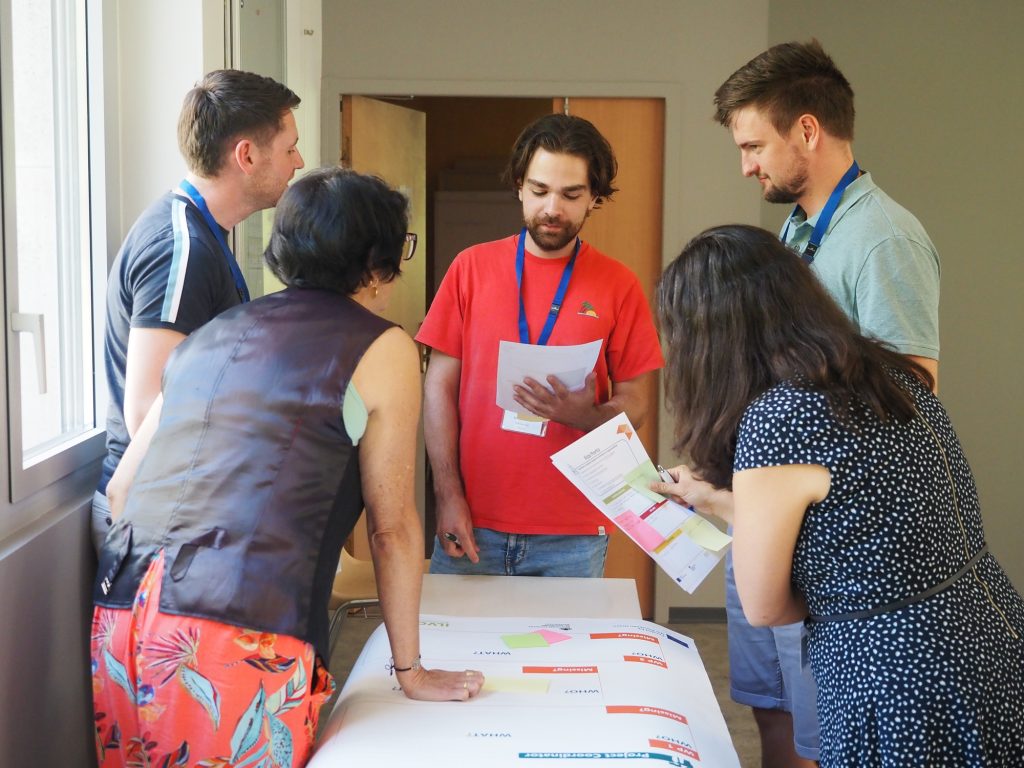
The European Commission defines the Multi-Actor Approach (MAA) as "a form of interactive, transdisciplinary and responsible research and innovation" that “aims to make research and innovation processes more co-creative and, thereby, its outcomes more co-owned, reliable, demand-driven and relevant to society”.
Rather than developing solutions for end users, the MAA promotes research carried out with them. Farmers, advisors, researchers, businesses, civil society organisations and public authorities become active partners throughout the entire innovation process, from identifying needs and designing research to testing, validating and disseminating solutions.
This represents more than a change in methodology; it reflects a different understanding of how innovation happens. The interactive innovation model behind the MAA recognises that knowledge does not flow in a single direction. Instead, innovation emerges through continuous interaction between scientific research, practical experience, market needs and local knowledge. Farmers are no longer seen simply as recipients of innovation, but as innovators who contribute valuable expertise to the research process itself.
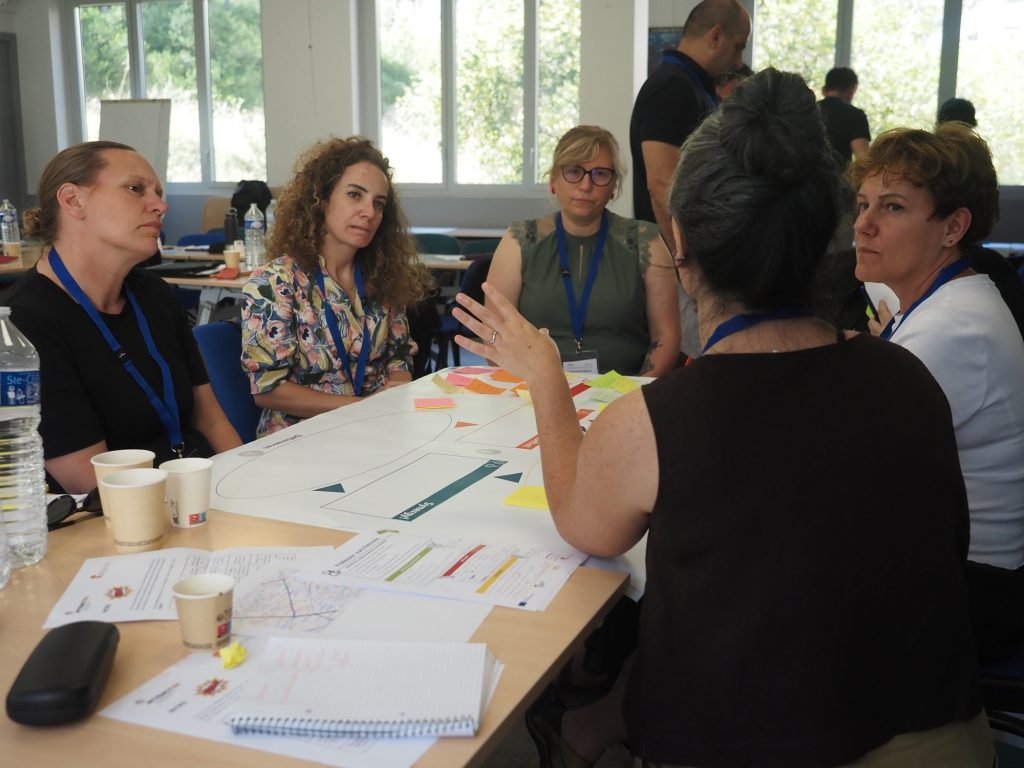
The benefits of the MAA are particularly evident in rural development. Rural territories are diverse systems where environmental, economic and social challenges intersect. When these perspectives are integrated from the beginning, research becomes better aligned with real needs, trust among partners is strengthened and the likelihood that innovations will be adopted beyond the lifetime of a project increases.
This collaborative model also reflects the principles of Agricultural Knowledge and Innovation Systems (AKIS), which promote stronger connections between research, advisory services, education, farmers, businesses and policymakers to accelerate the exchange of knowledge and innovation.
However, despite its growing adoption, the Multi-Actor Approach is still sometimes misunderstood. A common misconception is that involving stakeholders simply means consulting them at different stages of a project. In reality, genuine co-creation goes much further. The MAA requires meaningful engagement throughout the entire project lifecycle: from proposal development to implementation, dissemination and uptake. Horizon Europe increasingly recognises that lasting impact depends not only on scientific excellence, but also on the ability to combine complementary knowledge and translate research into practical solutions.
The PREMIERE Project
As the Multi-Actor Approach becomes an increasingly important feature of Horizon Europe, researchers and innovation actors need practical guidance to apply it effectively. This is where the PREMIERE Project, in which CIHEAM Zaragoza is a partner, comes in.
PREMIERE is a Horizon Europe project that supports researchers, advisors, innovation brokers, policymakers and other actors in designing and implementing high-quality Multi-Actor Approach (MAA) projects. Bringing together partners from across Europe, the project aims to strengthen the skills, knowledge and collaboration needed to develop research and innovation that is more inclusive, practice-oriented and responsive to the needs of agriculture and rural communities.
As part of this mission, PREMIERE has developed the Online Academy, an open-access learning platform that brings together practical resources to support the application of the Multi-Actor Approach. These include the PREMIERE MOOC, a free, self-paced course that guides learners through the principles and practical application of the MAA. The Academy also offers webinars, practical tools, video testimonials, FAQs and other learning resources, providing a lasting hub for anyone interested in strengthening collaborative innovation in agriculture and rural development.
(*) Reference: This article is based on the content of “Module 1: Getting Started with the Multi-Actor Approach (MAA): What Is It and Why It Matters?” of the PREMIERE MOOC, authored by Lisa van Dijk (Eberswalde University for Sustainable Development, HNEE). The module introduces the principles of the MAA, its evolution within Horizon Europe, the foundations of interactive innovation, and the role of Agricultural Knowledge and Innovation Systems (AKIS) in fostering collaborative research and innovation. The module is available through the PREMIERE Online Academy.