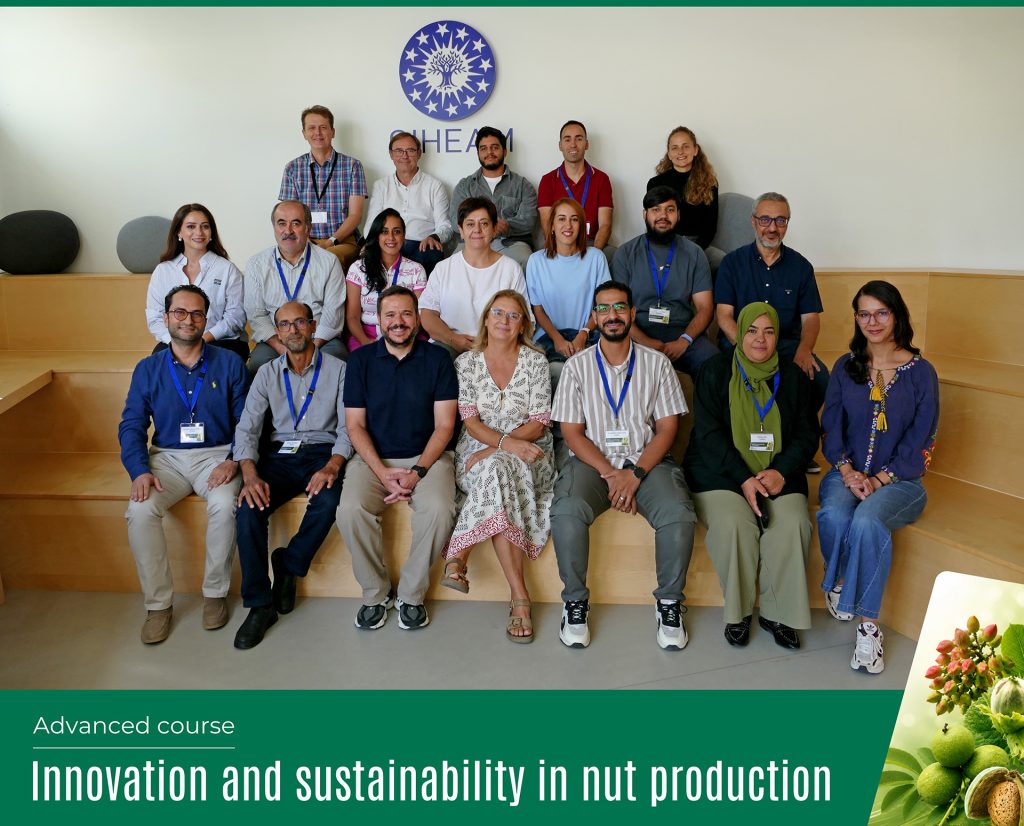






- From 21 to 26 September, CIHEAM Zaragoza organised the Advanced Course ‘Innovation and Sustainability in Nut Production’, bringing together professionals, researchers, advisors and decision-makers to examine how innovation, efficient resource use and new technologies can help address the challenges facing nut crops in the Mediterranean.
A sector facing new challenges
Almond, pistachio, hazelnut and walnut production plays a fundamental role in Mediterranean agriculture, contributing to rural economies, landscapes and food production.
However, producers face growing pressure from climate variability, scarce water resources and emerging pests and diseases, while having to ensure stable, high-quality production.
Innovation is key to addressing these challenges. Advances in plant material, orchard design, mechanisation, irrigation, and digital technologies are transforming nut production systems. At the same time, it is essential to maintain soil health and biodiversity as well as resource use efficiency to ensure their long-term sustainability.
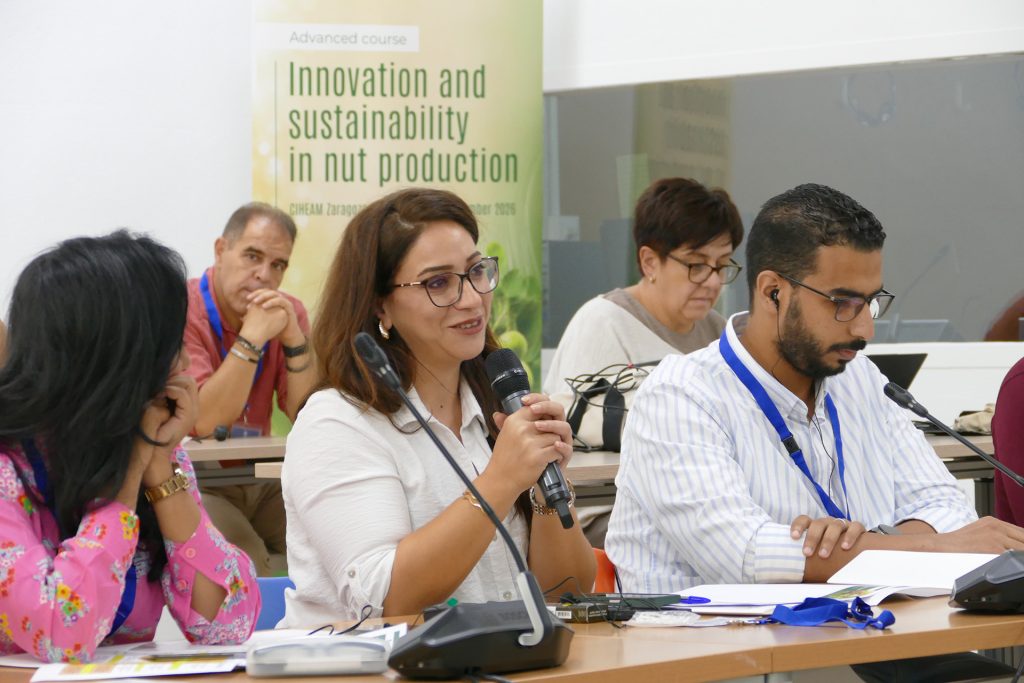
The course provided agrifood professionals, researchers, advisors and decision-makers with an advanced, comprehensive understanding of innovation, sustainability and management strategies for modern nut production. It explored ways of responding to increasing climate variability by improving resource use efficiency, meeting market demands and enhancing environmental sustainability.
From plant material to post-harvest performance
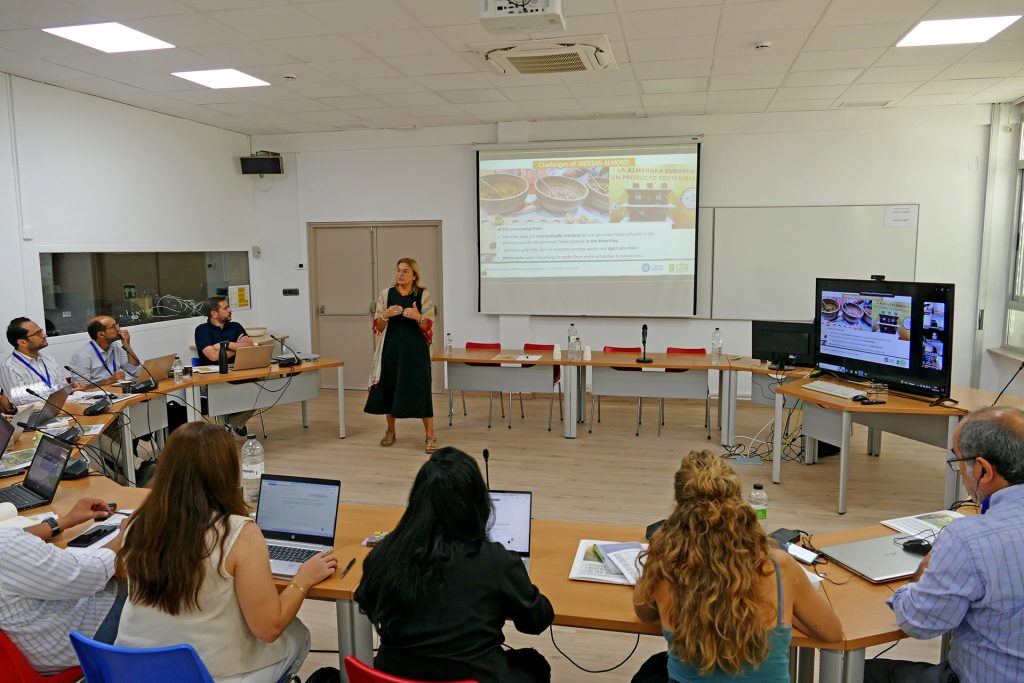
Participants gained an integrated understanding of nut production, learning more about the ecophysiological and edaphoclimatic requirements of almond, pistachio, hazelnut and walnut crops.
They explored orchard design and mechanisation, water requirements and efficient irrigation techniques, as well as the role of plant material and breeding programmes in enhancing productivity, resilience and sustainability.
The course programme also addressed the main biotic and abiotic constraints and examined sustainable management practices including soil improvement, cover crops, precision nutrition and integrated plant protection.
Finally, participants explored the relationship between quality and postharvest performance, analysing the economic, technological and environmental implications of innovation in the nut sector.
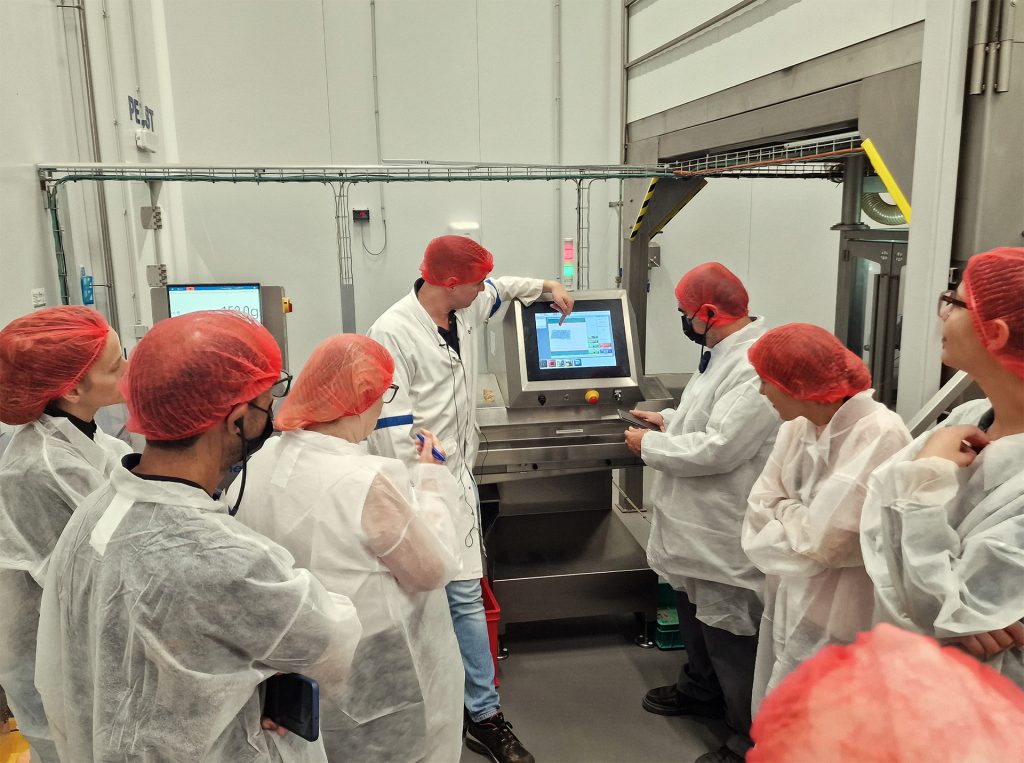
Responding to Mediterranean challenges
In southern and eastern Mediterranean countries, nut crops are gaining strategic importance as drivers of rural development, productive diversification and resilience to climate change.
In this context, the course has responded to some of the region’s priority needs, particularly climatic adaptation and efficient water use. Participants gained insights into precision irrigation strategies, deficit irrigation and practices for conserving soil moisture.
They also strengthened their knowledge of variety and rootstock selection and breeding programmes, all of which are fundamental to increasing productivity, adapting crops to adverse conditions and ensuring the long-term sustainability of orchards.
The course contributed to promoting more efficient and sustainable production models by exploring new orchard designs, mechanisation and innovative technologies, while also highlighting the importance of soil conservation, biodiversity and maintaining the equilibrium of agroecosystems.
The links between crop management practices, quality, post-harvest performance and market demands also highlighted opportunities to increase the value and competitiveness of nut products. Moreover, the exchange of experiences among Mediterranean experts and professionals strengthened regional cooperation, favouring the creation of knowledge-sharing networks. These connections can help promote more resilient and profitable nut production systems, adapted to the challenges that producers will face in their respective countries.