

- The head of the Productivity-Sustainability-Resilience Benchmarking Unit at the OECD’s Trade and Agriculture Directorate delivered the inaugural lecture of the 2026/2027 academic year at CIHEAM Zaragoza, examining how public policy can help build sustainable agrifood systems
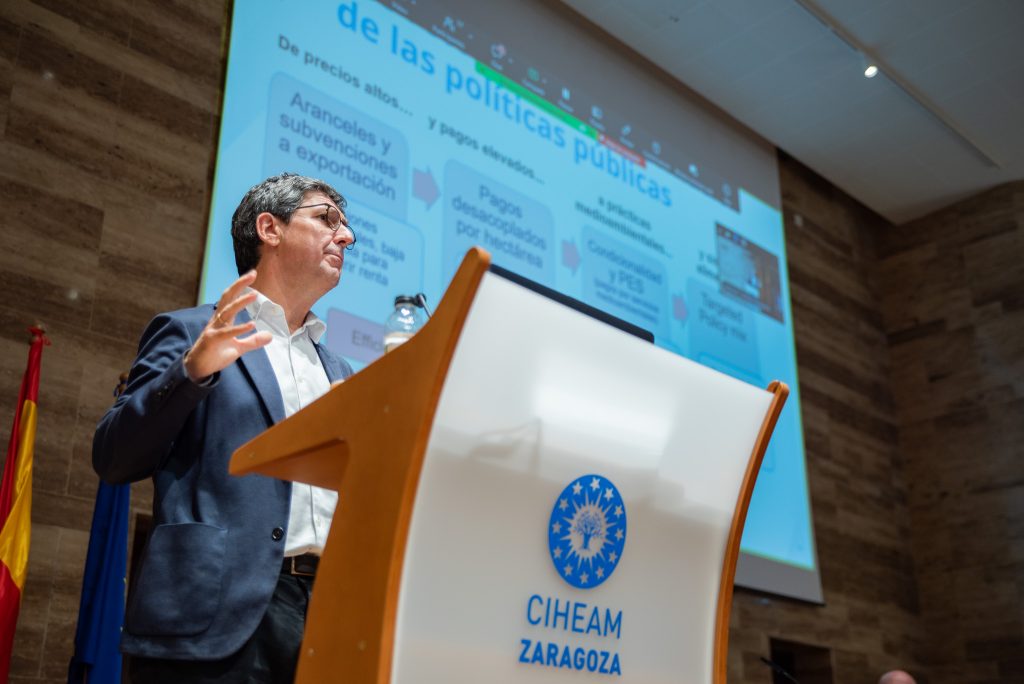
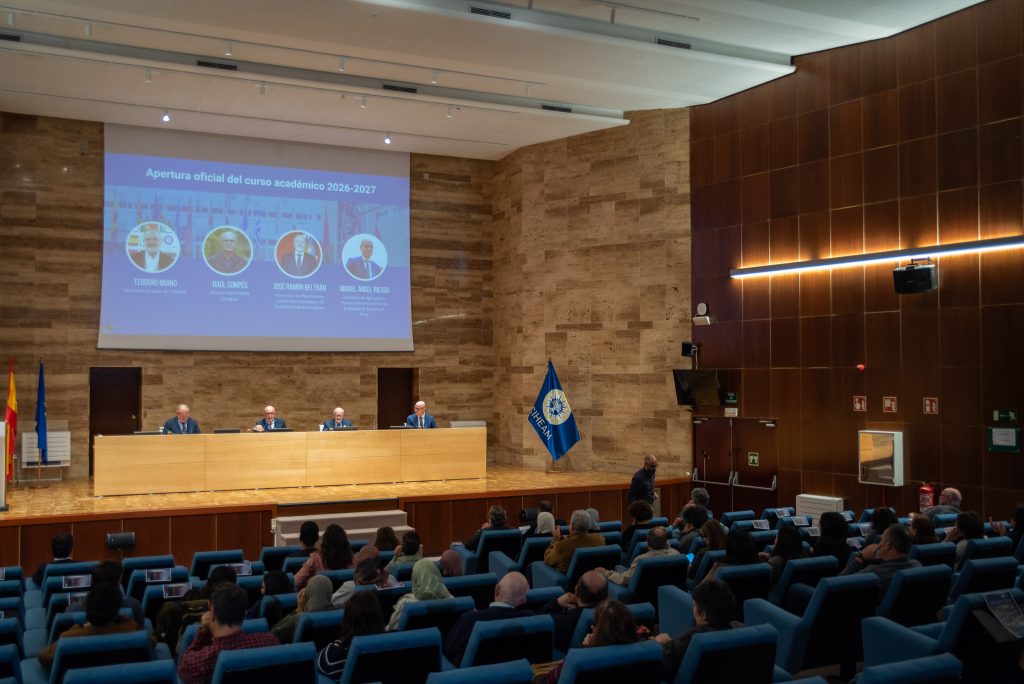
How can public policy deliver sustainable agrifood systems? This was the central question addressed by Jesús Antón, head of the Productivity-Sustainability-Resilience Benchmarking Unit at the Organisation for Economic Co-operation and Development (OECD), during the inaugural ceremony for the 2026/2027 academic year at CIHEAM Zaragoza.
Antón described the challenge as ‘enormous’ and argued that meeting it would require a fundamental change in paradigm. “We need to look beyond traditional policies, focus on innovation, engage all stakeholders and orient the entire sector towards sustainable productivity”.
Achieving this, he stressed, calls for a rethink of agricultural policy, considering a wide range of objectives that go beyond primary production. These objectives include food security and nutrition, the sustainable management of natural resources and the quality of life of people working throughout the food value chain.
New master’s degree in agri-food marketing and entrepreneurship
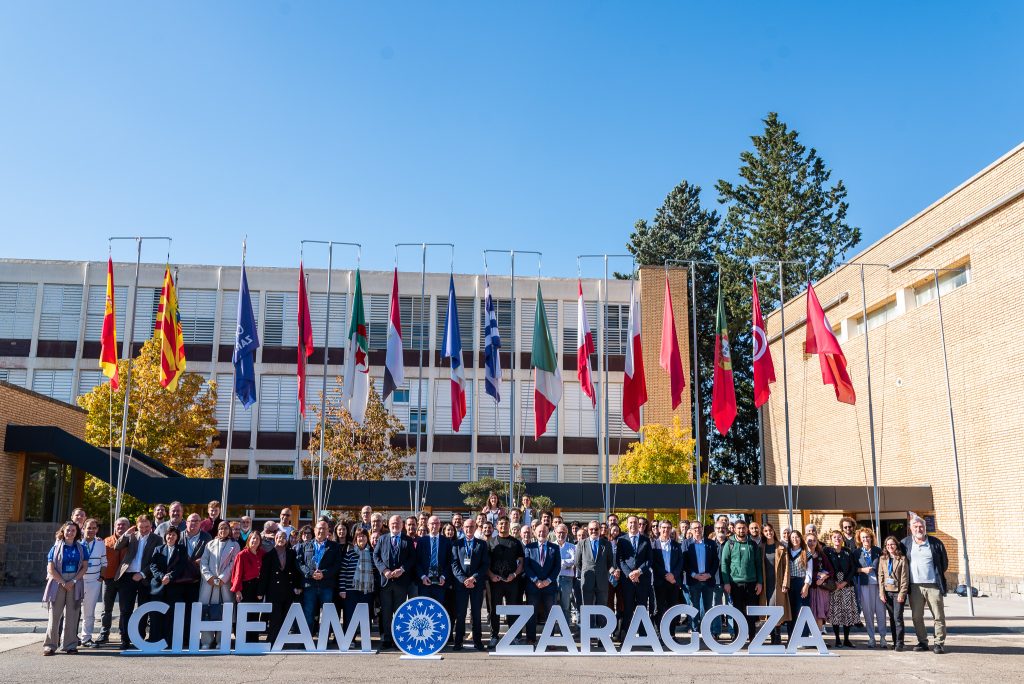
During the ceremony, CIHEAM Zaragoza presented its training programme for 2026/2027, which includes a new interuniversity master’s degree in Agri-Food Marketing and Entrepreneurship. The programme is delivered in collaboration with the four universities belonging to Campus Iberus: the universities of Zaragoza, Lleida and La Rioja, and the Public University of Navarre.
The new academic year begins with more than 120 students from 29 countries: Afghanistan, Albania, Algeria, Argentina, Belgium, Bolivia, Canada, Chile, Colombia, the Dominican Republic, Ecuador, Egypt, Ghana, Italy, Jordan, Lebanon, Morocco, Mauritania, Mexico, Nigeria, Pakistan, Peru, Portugal, Senegal, Spain, Tunisia, Türkiye, Uruguay and Venezuela.
In addition to its master’s programmes, CIHEAM Zaragoza will deliver nine advanced courses for professionals between October 2026 and June 2027. These courses address strategic priorities for the Mediterranean agrifood sector, including climate change mitigation and adaptation, olive oil quality and added value, ecological and forest restoration, working conditions, and agrifood entrepreneurship. Raúl Compés, director of CIHEAM Zaragoza, highlighted the contribution of these activities to strengthening international cooperation between professionals working in the food and agriculture sector and in the management of the natural resources across the Mediterranean region.
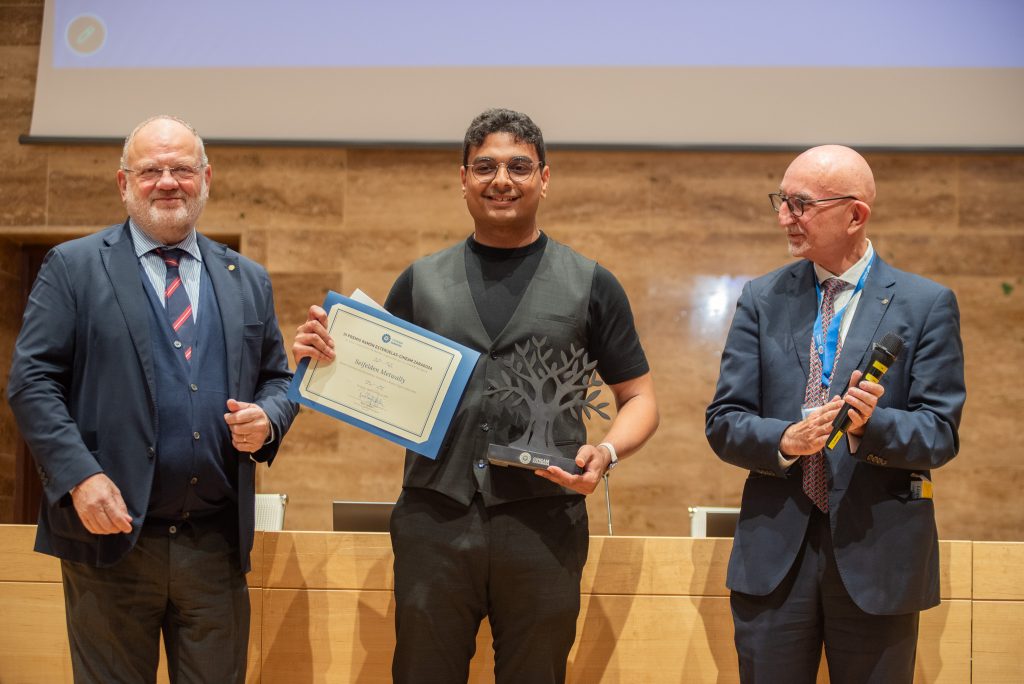
Third edition of the Ramón Esteruelas–CIHEAM Zaragoza Prize
The Ramón-Esteruelas-CIHEAM Zaragoza Prize for outstanding achievement over 2023-2025 went to Seifelden Metwally, an Egyptian graduate of the International Master’s in Plant Genetics, Genomics and Breeding. His Master’s Thesis (TFM) examined new strategies for accelerating crop breeding without compromising long-term sustainability. He is now continuing this line of research for his doctoral studies in olive breeding.
On receiving the award, Metwally highlighted the value of his experience at CIHEAM Zaragoza: “I was fortunate to share this experience with outstanding fellow students and lecturers from institutions around the world, and to learn directly from leading specialists”.
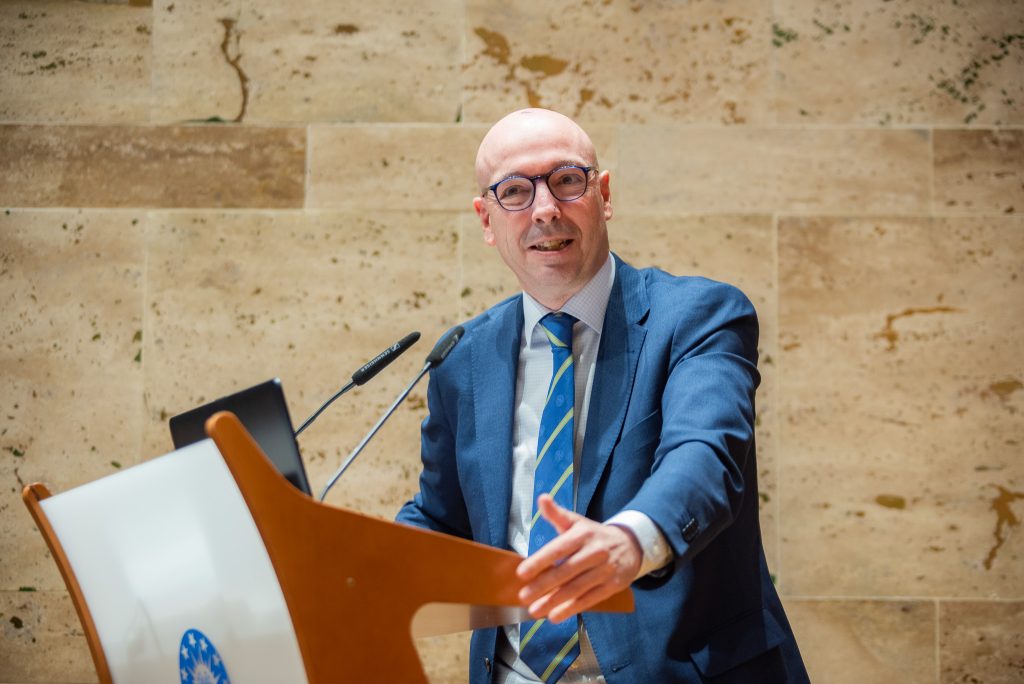
CIHEAM Zaragoza paid tribute to Miguel Ángel Riesgo, Counsellor of Agriculture, Fisheries and Food at the Spanish Embassy in Paris and delegate for Spain on the CIHEAM Governing Board.
The ceremony concluded with the official opening of the academic year, with Miguel Ángel Riesgo joining Teodoro Miano, Secretary General of CIHEAM; José Ramón Beltrán, Vice-Rector for Planning and Strategic Development at the University of Zaragoza; and Raúl Compés, Director of CIHEAM Zaragoza, on the panel.