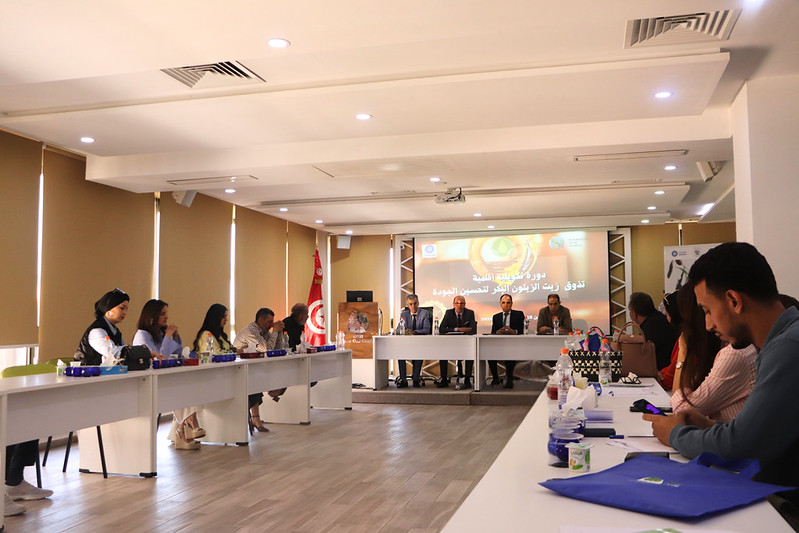
Nineteen professionals from the olive oil sector gathered in Tunisia to strengthen their technical and sensory analysis skills in virgin olive oil quality assessment.
The course combined theory and practice in oil tasting based on official IOC methodology, oil classification and quality assurance in tasting panels.
From 18 to 22 May 2026, oil tasters, panel leaders, laboratory technicians and producers gathered in Tunisia for the regional course ‘Sensory analysis for the improvement of virgin olive oil quality’ to strengthen their skills in virgin olive oil assessment and classification.
The training was organised by CIHEAM Zaragoza and the International Olive Council (IOC) in the framework of the technical cooperation programme set up by both organisations, with the collaboration of the National Olive Oil Office (ONH) in Tunisia.
Nineteen professionals from six countries of the Mediterranean region (Egypt, Jordan, Lebanon, Libya, Morocco and Tunisia) took part in the initiative, delivered entirely in Arabic, by the IOC-accredited experts in sensory analysis Nouha Farés and Samia Chkir.
Comprehensive programme of sensory analysis
The programme addressed key questions ranging from chemistry and standardisation of olive oil to basic principles and terminology used in sensory analysis. In the first tasting sessions participants learnt to recognise negative and positive attributes of virgin olive oil.
The following workshops focused on the profile sheet used by panellists, on sample classification and calculation of the robust coefficient of variation (CVr), and on how to improve the reliability and accuracy of each taster. Special attention was paid to the intensity scale of the profile sheet, the role of the panel leader according to the ISO 17025 standard, and the correlative approach to physical and chemical data used for oil classification.
The instructors explained the techniques used for the selection of olive oil tasters and how to determine the detection threshold of the tasting panel, as well as international control methods for sensory analysis. They also addressed use of reference samples and duplicate analysis tests in standardised tasting rooms. On the last day, participants focused on the sensory identity of Tunisian olive oils and used the profile sheets used for the Mario Solinas competition to taste national and foreign varieties.
Training for the competitiveness of the olive oil sector
The main objective was to improve tasters’ technical and sensory performance to ensure a rigorous and consistent assessment of virgin olive oils and their classification, in accordance with the applicable physical, chemical and organoleptic standards.
Bringing together tasters and professionals served to harmonise tasting procedures, exchange technical expertise and promote regional cooperation for the sustainable development and competitiveness of the olive oil sector.
CIHEAM Zaragoza, CSIC, UPV, Re-Livestock, and Digi4Live, in collaboration with ILVO jointly organised an advanced course to provide a comprehensive understanding of PLF technologies
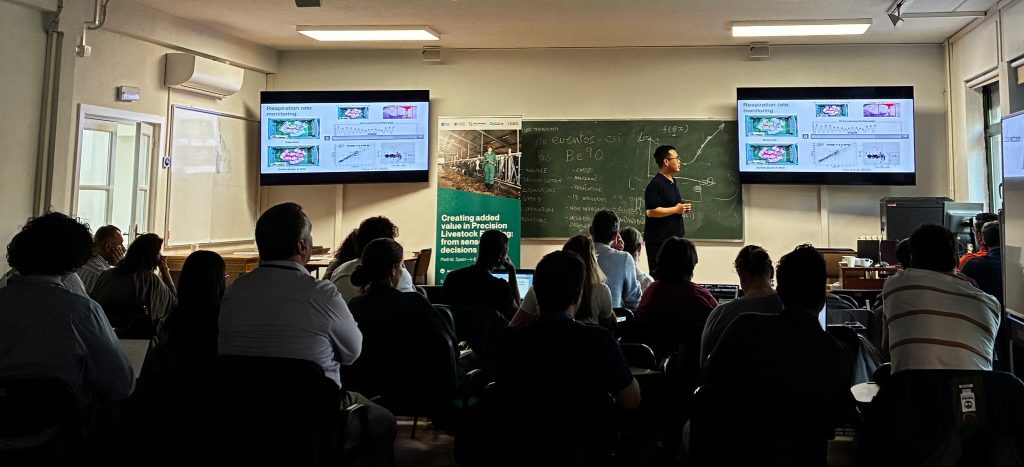
This training course enabled participants to gain insight into the concepts, technologies and practical applications of precision livestock farming
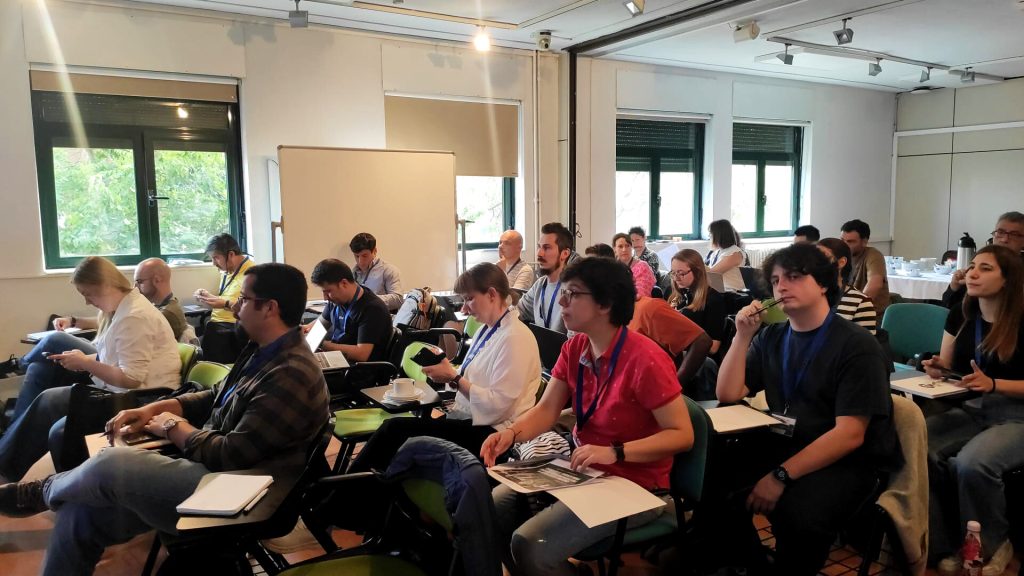
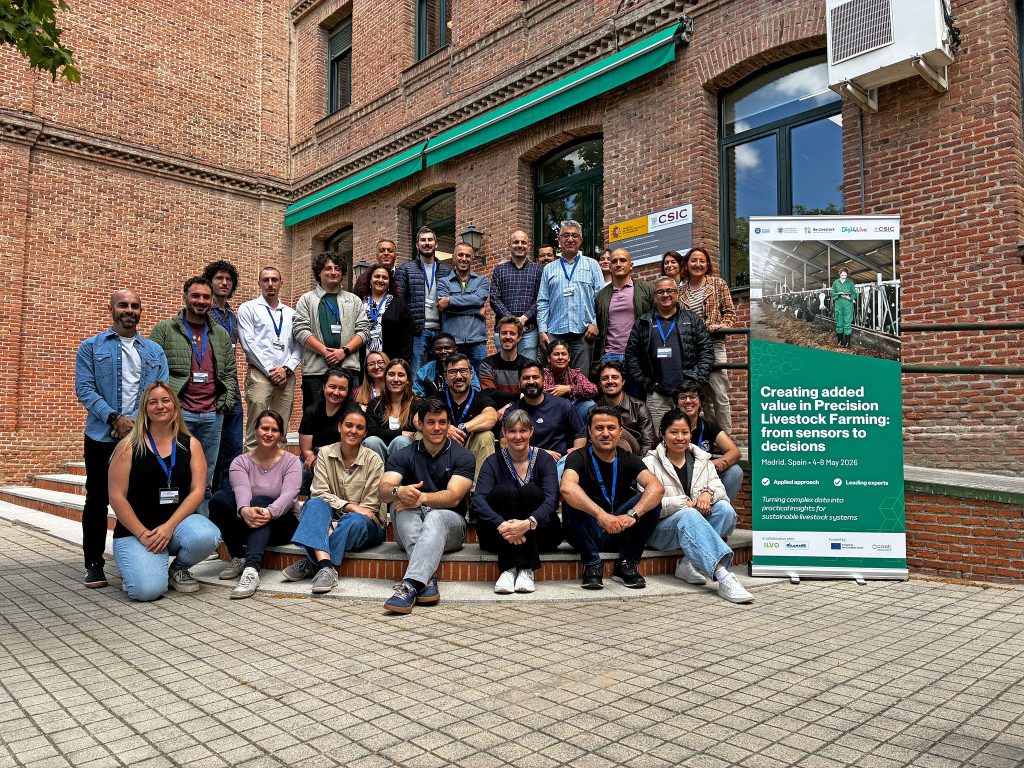
Thirty-one professionals from 18 Mediterranean countries, America, and central and northern Europe attended the advanced course “Creating Added Value in Precision Livestock Farming: From Sensors to Decisions”, held on the CSIC Campus in Madrid from 4 to 8 May. The course was part of Work Package 8 of the Horizon Europe Re-Livestock project “Facilitating Innovations for Resilient Livestock Farming Systems” (GA No. 101059609) and was jointly organised by the International Centre for Advanced Mediterranean Agronomic Studies (CIHEAM) through the Mediterranean Agronomic Institute of Zaragoza (CIHEAM Zaragoza), the Spanish National Research Council (CSIC), the Universitat Politècnica de València and the Horizon Europe Digi4Live project, in collaboration with Flanders Research Institute for Agriculture, Fisheries and Food (ILVO). The course provided an international, multidisciplinary environment for knowledge exchange on the future of digital technologies in livestock farming.
Training framework
Sensor technology and data-driven systems are deeply transforming food production by enabling continuous monitoring, automation, and smarter decision-making across a wide range of sectors. In agriculture, and particularly in livestock production, these advances are equally transformative. Sensors such as accelerometers, GPS trackers, environmental sensors, and computer vision systems, provide detailed insights into animal behaviour, health, welfare, environmental impact, and performance that were previously impossible to capture at scale. The application of sensors and data-driven technology in livestock production is commonly known as Precision Livestock Farming (PLF). PLF systems allow farmers to detect diseases earlier, tailor feeding strategies, and reduce environmental impacts through better control of emissions and resource consumption, helping the livestock industry to face increasing demands from consumers for sustainability, welfare, and environmental responsibility.
Despite the multiple advantages of adopting PLF technologies, their implementation can be challenging. High installation and maintenance costs may be unaffordable for small and medium-sized farms despite price reductions expected in the near future. Furthermore, many systems require a stable internet connectivity and a reliable power supply, which are not always available in rural areas. Moreover, there is a lack of regulation concerning data ownership, privacy, and the ethical use of continuous monitoring technologies.
However, the main barrier for widespread adoption of PLF technologies is the difficulty to process and interpret data and obtain added value from the information they provide. The large volume of data generated can overwhelm farmers with more information than they can realistically process. Moreover, there is a lack of understanding of how to use this data to address the environmental, economic, and social dimensions to improve the sustainability of the livestock production system.
The course addressed the main social challenges that farmers, researchers and private companies face, for instance how to design strategies to enhance technical insight into various PLF technologies, how to establish a process of gathering and transforming raw data into information for decision making, and how to understand the advantages and limitations of PLF systems.
From data collection to decision-making
Throughout the week, participants explored how Precision Livestock Farming (PLF) technologies are reshaping livestock systems by enabling more precise, data-driven, and sustainable management practices. The five-day training programme combined theoretical lectures with hands-on practical activities, technical visits, case studies, and interactive discussions, allowing participants to gain practical experience in data collection, standardisation, analysis, and interpretation for decision-making processes in livestock production systems.
The course addressed the role of digitalisation and advanced monitoring technologies in improving animal health, welfare, sustainability, and farm efficiency, with Re-Livestock showcasing innovative approaches to support more resilient livestock systems. One of the main conclusions of the course was that the real value of PLF lies not in generating more data, but in transforming it into simple, practical, and actionable tools that support farmers’ decision-making. Discussions also addressed important challenges for PLF adoption, including interoperability, data governance, infrastructure limitations, and the need to ensure that technologies remain farmer-oriented and applicable under real farming conditions.
Overall, the training reinforced the role of the Horizon Europe Re-Livestock project in promoting collaboration between science, technology developers, farmers, and policymakers to ensure that digital innovations generate real impact and contribute effectively to the transition towards more sustainable, resilient, and efficient livestock farming systems,
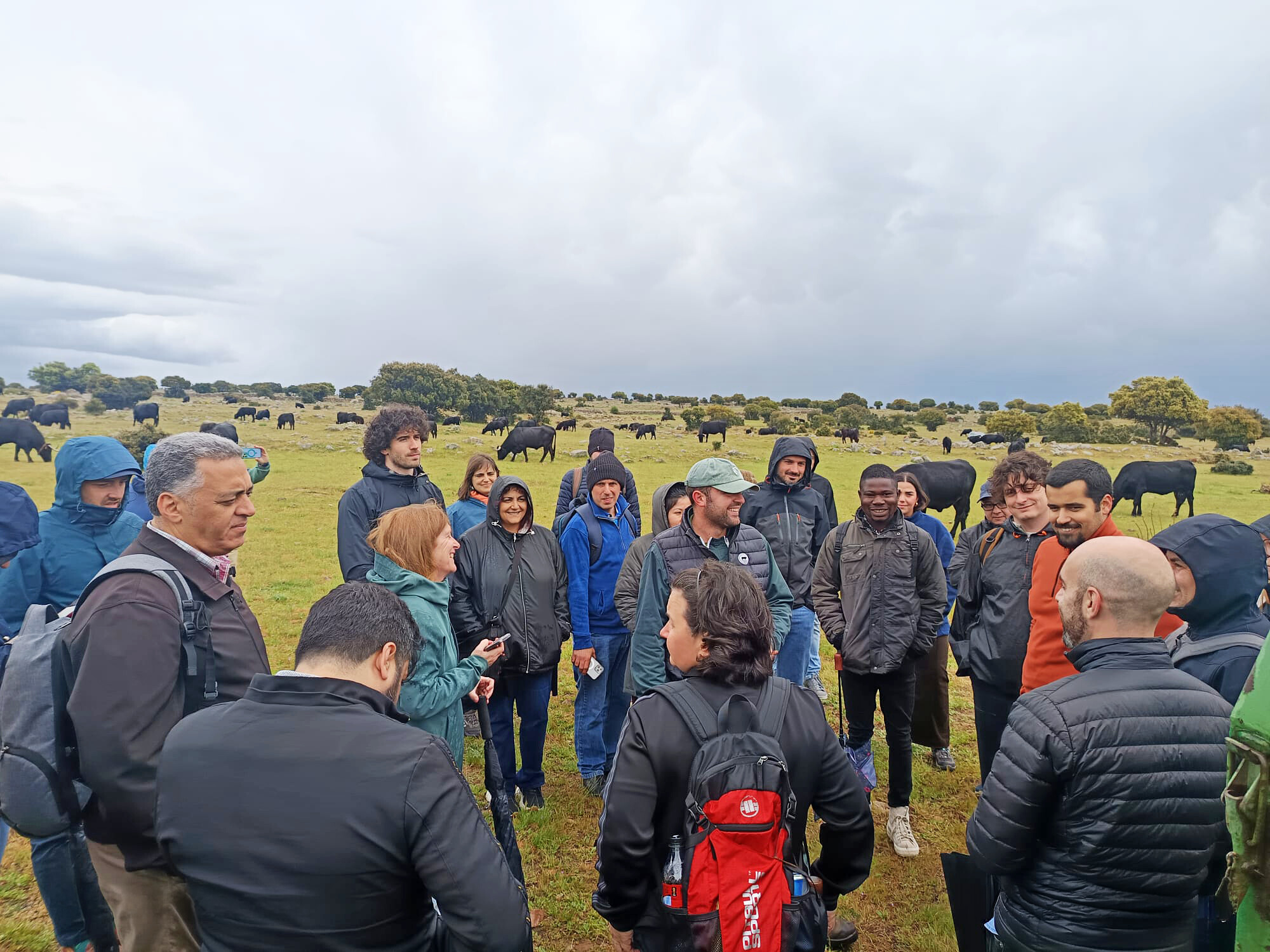
The training programme concluded with a field visit to the National Association of the Avileña Negra Iberica breed to introduce professionals from other regions to semi-extensive calf feeding systems and collective facilities for Avileña Negra Iberica breed selection and commercialisation.
Regional Impact and Mediterranean Cooperation
The multiactor approach of the course was based on the participation of a wide range of professional profiles: 10 researchers, 10 lecturers, 6 specialists from private companies, 2 policymakers and 2 participants from interprofessional farmers associations (meat and dairy). This highlighted the importance of implementing multidisciplinary models and teams in PLF.
Regarding the objectives achieved, the training enabled professionals from countries where precision tools are not yet established to become acquainted with PLF technologies. The course provided an opportunity for the exchange of knowledge and experiences among a group of interdisciplinary stakeholders, and constant debate with lecturers. The intense interaction indicated the high level of motivation among the participants and interest in the topics included in the programme.
It also had a significant impact on Mediterranean countries, as it offered solutions adaptable to extensive or traditional livestock farming systems characteristic of the Mediterranean region. The aim was to strengthen crucial technical capacities for the implementation of new practices that increase resilience and sustainability of animal production models. In a Mediterranean context, organisers and participants detected the need to adapt PLF technologies from intensive animal production systems to traditional extensive models of livestock farming.
The field day was an enriching experience for participants to come into contact with the Avila landscape and talk to the farmers about the facilities required for breed selection and for commercial purposes.
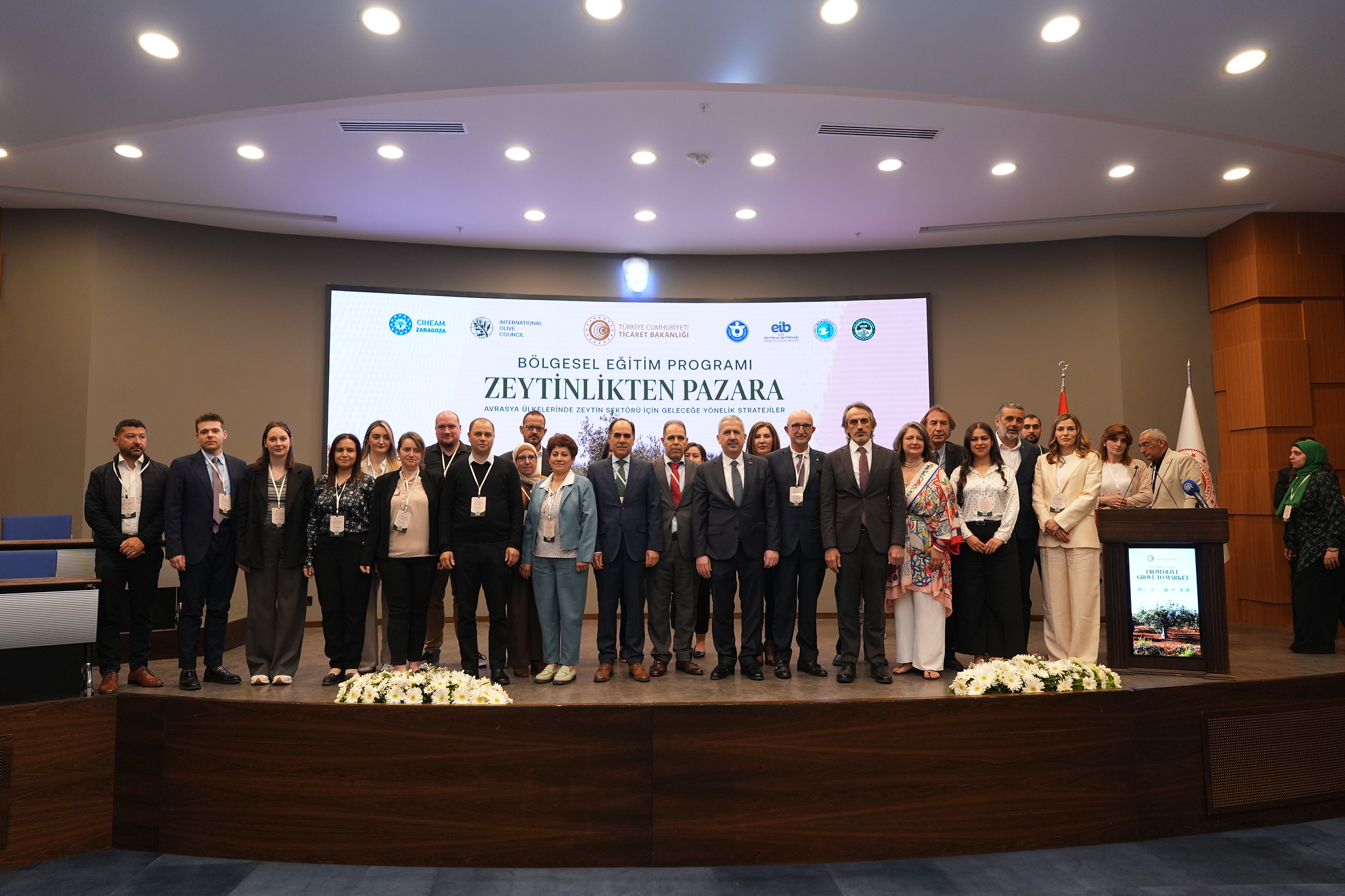
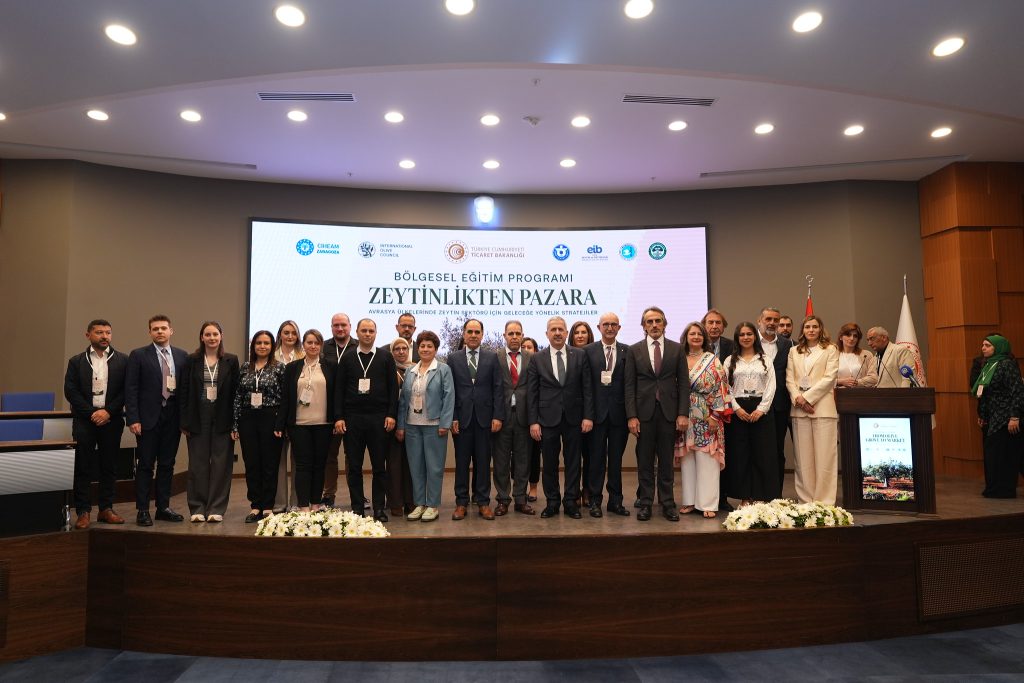
50 participants from 13 countries gathered in İzmir to discuss future strategies for the olive sector across Eurasia.
The course combined technical sessions and field visits covering the entire olive value chain, from cultivation and processing to quality, marketing and cooperation models.
Bringing together olive sector experts from across Eurasia
From 5 to 7 May 2026, the regional training course “From olive grove to market: future strategies for the olive sector in Eurasian countries” brought together experts, researchers and public-sector representatives in İzmir (Türkiye) to discuss the future of the olive sector across the region.
The course was organised by CIHEAM Zaragoza, the International Olive Council (IOC) and the Ministry of Trade of the Republic of Türkiye, in collaboration with Turkish local and national organisations.
More than 150 persons attended the inauguration of the event, and 50 participated in the course, including representatives of public administrations, research centres, cooperatives and professional organisations from 13 countries across the Eurasian and Mediterranean regions.
Reinforcing cooperation through institutional collaboration
The opening session featured interventions by Raúl Compés, Director of CIHEAM Zaragoza, Abderraouf Laajimi, Deputy Executive Director of the IOC; Dr Mustafa Tan, President of the National Olive and Olive Oil Council; and Mahmut Gürcan, Deputy Minister of Trade of the Republic of Türkiye.
The course forms part of the ongoing collaboration between the IOC and CIHEAM Zaragoza to strengthen technical capacities, foster scientific and institutional cooperation, and support more sustainable and resilient agri-food systems.
Addressing current challenges across the olive value chain
The regional course brought together experts, institutions and participants from several Eurasian countries to discuss the main challenges and opportunities facing the olive sector. Organized with the support of the International Olive Council (IOC), CIHEAM Zaragoza and national partners, the course aimed to strengthen capacities and promote regional cooperation across the olive value chain.
The programme addressed key topics ranging from olive cultivation and climate change adaptation to processing technologies, quality standards, marketing strategies and value addition. International experts delivered technical sessions on sustainable olive growing systems, harvesting and post-harvest practices, virgin olive oil quality, table olive processing, and innovation in mechanical extraction. Particular attention was given to IOC standards, circular economy approaches and branding strategies to enhance competitiveness in international markets.
The course also encouraged active participation through country presentations and discussions on priority needs and future cooperation opportunities among Eurasian countries. A technical field visit complemented the training activities, allowing participants to observe good agricultural and processing practices in olive groves, mills and facilities in the İzmir region, including a visit to TARIS.
The event highlighted the importance of innovation, sustainability and regional collaboration in ensuring the resilience and future development of the olive sector.
Technical visit connects theory with practice
As part of the course, participants also took part in a technical visit to the Olive Research Institute and the TARİŞ Olive and Olive Oil Cooperative in the İzmir region.
The visit provided practical insight into olive varietal diversity, olive oil quality assessment, sensory analysis and industrial processing practices, while also highlighting the role of cooperatives in strengthening producers’ capacities and improving market access.
Strengthening regional dialogue in the olive sector
By bringing together experts and public-sector representatives from across Eurasia, the initiative contributed to strengthening regional dialogue, sharing technical knowledge and promoting cooperation for the sustainable development and competitiveness of the olive sector.
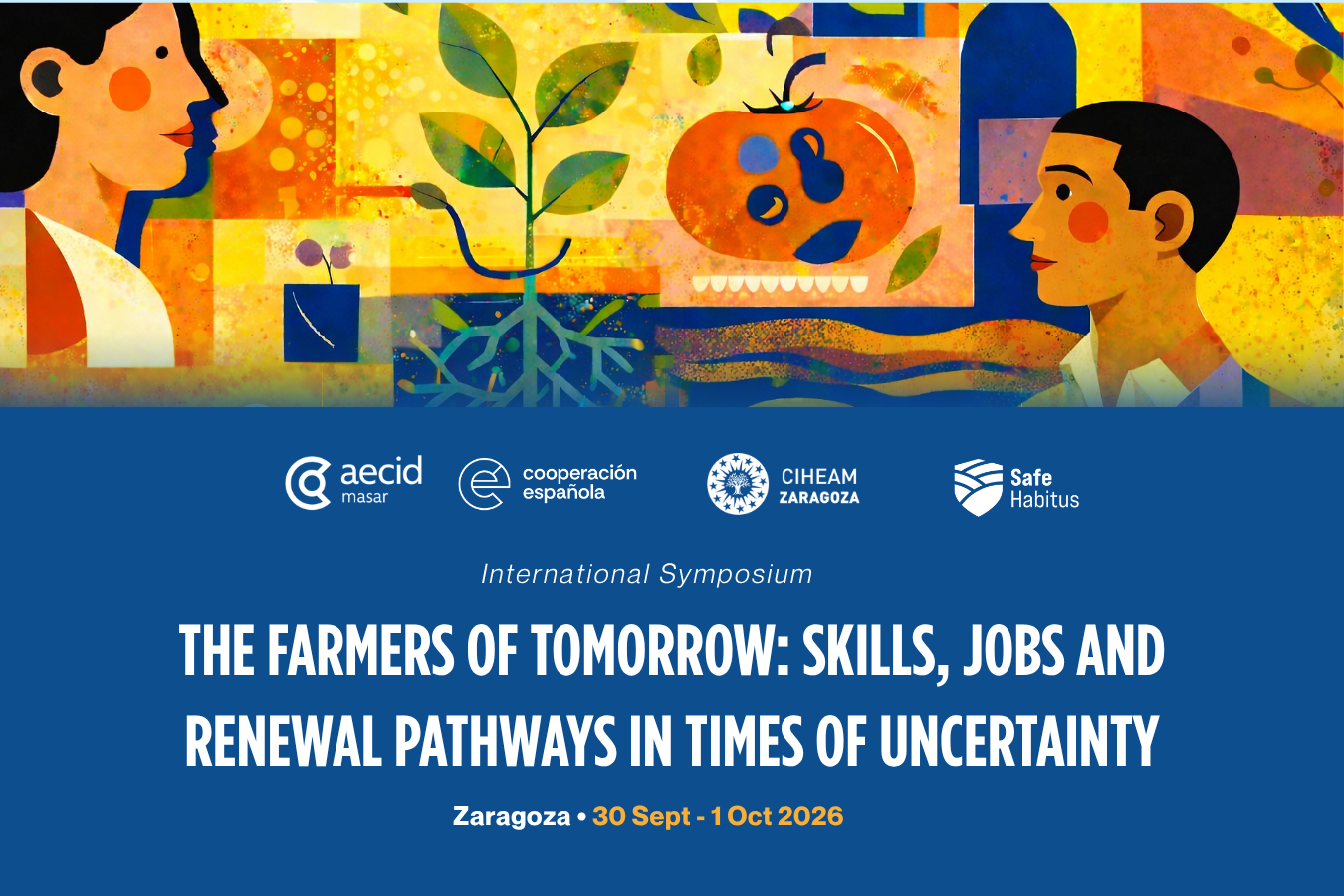
Organised by CIHEAM Zaragoza, in collaboration with the Spanish Agency for International Development Cooperation (AECID) and the SafeHabitus project, this international symposium will take place on 30 September and 1 October 2026 in Zaragoza, Spain.
The symposium aims to analyse how economic, labour, skills and territorial factors shape entry and permanence in the agriculture sector, and identify pathways that enhance its attractiveness, sustainability and renewal, particularly for young people.
“Who will farm tomorrow — and under what conditions?” This is the central question driving a two-day international symposium that CIHEAM Zaragoza, in collaboration with the Spanish Agency for International Development Cooperation (AECID) and the SafeHabitus project, is organising for 30 September and 1 October 2026 in Zaragoza, Spain.
The agricultural sector, as the backbone of broader agri-food systems, is undergoing a deep structural transformation, raising urgent questions about its long-term economic, social and territorial sustainability. Generational renewal, farm succession and the attractiveness of agricultural careers are not purely demographic issues — they are shaped by a broader set of factors: employment conditions, access to productive resources, organisational models, rural living conditions and evolving societal expectations. Across the Mediterranean region, these dynamics take diverse forms, reflecting variations in demographic structures, labour markets, territorial contexts and institutional frameworks that make uniform solutions inadequate.
This symposium provides an evidence-based space to analyse how economic, social, institutional and territorial factors interact to shape the attractiveness of the agri-food sector across the Mediterranean, with particular attention to young people and the future of family farming. While recognising structural constraints, it also seeks to identify existing and emerging opportunities linked to innovation, new organisational models and new ways of living in rural territories.
The event will bring together approximately 40 speakers and 100 invited guests who will attend in person, with online attendance open to the general public. It is designed for policymakers, researchers, sector actors, youth and women representatives, and civil society organisations with an interest in the future of agriculture and rural territories across the Mediterranean and beyond. The programme has been developed with the support of a Scientific-Technical Committee, which has advised on the design and structure of thematic sessions and contributed to the identification of key speakers and participants.
Approach
The symposium approaches renewal and attractiveness in the agri-food sector as core structural dynamics, shaped by the interaction of economic, social, institutional, territorial and sector-specific factors. Renewal is understood not as a purely demographic process, but as one conditioned by the organisation of production, labour relations, access to resources, living conditions in rural areas and public policy frameworks.
The analysis is grounded in the economics of agricultural activity. Issues such as profitability, income stability, access to land and finance, production costs and working conditions are treated as determinants of both entry into and permanence within the sector. Innovation is considered in a broad sense — encompassing not only technological change but also organisational, business and governance models that may influence viability.
A territorial perspective underpins the entire discussion, recognising that decisions about agricultural careers are embedded in broader rural contexts. Access to services, infrastructure, education, housing, complementary employment opportunities and overall quality of life are treated as key factors shaping the sector’s attractiveness. Gender and generational dimensions are integrated transversally, examining how institutional arrangements, labour markets and access to resources may create differentiated opportunities or barriers for women and young people.
Finally, the symposium takes an inclusive Mediterranean perspective, building its analysis upon evidence and direct contributions from across the whole region, with the aim of identifying convergences, divergences and context-specific dynamics that can inform policy, innovation and practice.
Why this Matters
This symposium is situated within a complex international policy landscape. Key reference frameworks include:
The United Nations Decade of Family Farming (2019–2028)
The EU Strategy for Generational Renewal in Agriculture (2025)
The African Union CAADP Strategy and Action Plan (2026–2035)
The Sustainable Arab Agricultural Development Strategy (2020–2030), adopted by the Arab Organization for Agricultural Development under the auspices of the League of Arab States, which supports agricultural modernisation, rural employment and access to productive resources
The FAO report on The Status of Youth in Agrifood Systems (2025), which analyses structural barriers and opportunities for youth employment and engagement in agriculture
The ILO Policy Guidelines on Promoting Decent Work in the Agri-Food Sector, emphasising working conditions, social protection, labour rights and employment quality
The OECD report on Attracting New Farmers for the Future of Agriculture (2025), which underscores generational renewal as a structural policy challenge and stresses the need to lower entry barriers, improve access to land and finance, and strengthen rural living conditions
Together, these frameworks provide a basis for understanding how strategic and policy priorities are shaping the transformation of the agri-food sector across the Mediterranean.
Objectives
Beyond generating and sharing evidence-based analysis, the symposium seeks to stimulate debate on policies, strategies and practices that can enhance the attractiveness, sustainability and innovation of the agricultural sector. It aims to connect experts, practitioners, policymakers, and youth and women representatives from diverse disciplines, sectors and countries, fostering collaboration and exchange of experiences across the Mediterranean. It also seeks to motivate young people to explore opportunities in agriculture, encourage joint initiatives, and strengthen training and education programmes — raising awareness of how improving rural living conditions can support the long-term renewal and sustainability of the sector.
Programme Overview
The symposium is structured around five thematic round tables, each addressing a key dimension of agricultural renewal and attractiveness:
Opening session — “The future of farming: Who will farm? And under what conditions?”
Round Table 1 — “The economics of farming: profitability, land and access to resources”
Round Table 2 — “Work in agriculture: labour dynamics, skills and working conditions”
Round Table 3 — “Why choose farming? Rural living conditions and the choice to stay”
Round Table 4 — “Farming differently: technology, cooperatives and new business models”
Round Table 5 — “Enabling the next farmers: policies, partnerships and investment for agricultural renewal”
In addition to the main sessions, the symposium will include a poster session showcasing concrete case studies and successful initiatives.
The full programme will be published shortly (download here the draft agenda).
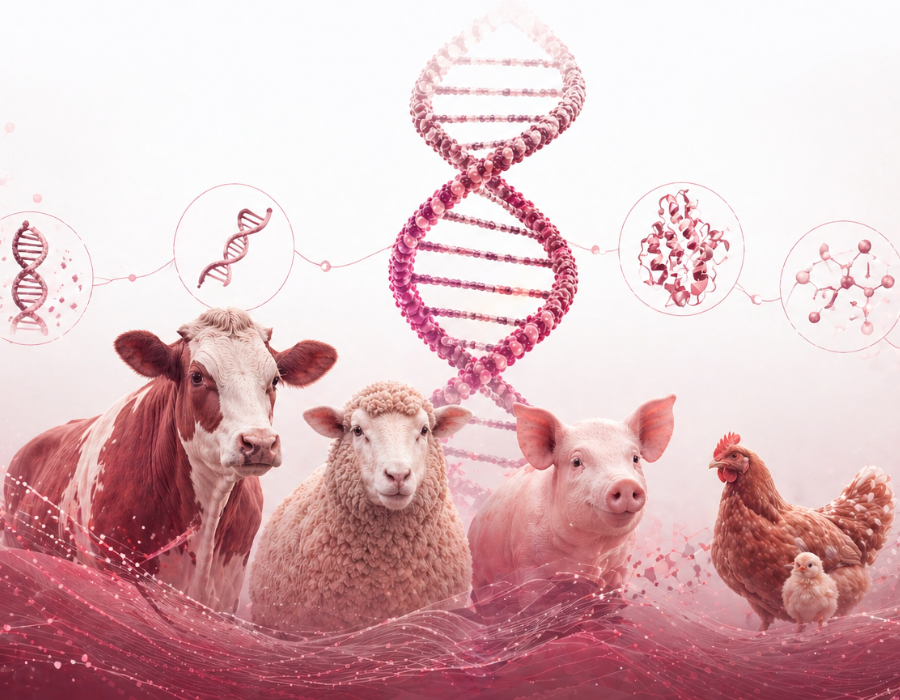
Genomics and multi-omics approaches have become essential tools to help us understand and improve animal production systems, supporting the transition towards more sustainable, efficient, and ethical models.
Animal breeding is a key driver of profitability and competitiveness within the livestock sector. It also plays a vital role in addressing emerging challenges related to animal resilience, health and adaptation to changing environments.
To explore recent advances in this field, CIHEAM Zaragoza, the Polytechnic University of Valencia, and the Autonomous University of Barcelona are organising a webinar on 5 May 2026, from 16:00 to 17:30 (CET, Madrid time).
The speakers are alumni of the International Master in Animal Genetics and Reproduction Biotechnology, jointly organised by the Polytechnic University of Barcelona, the Autonomous University of Barcelona and CIHEAM Zaragoza. They will share their expertise and insights on the following topics:
Hologenomic approaches to studying the microbiome-gut-brain axis in pigs, presented by Yuliaxis Ramayo, researcher at the IRTA Catalonia Institute of Agrifood Research and Technology and graduate of the 2007-2009 edition of the Master in Animal Genetics and Reproduction Biotechnology.
Tracking the genetic footprint of domestication in pigs:integration of transcriptomic and genomic data, presented by Diego Vargas, predoctoral researcher at the CRAG Barcelona Centre for Research in Agricultural Genomics and graduate of the 2022-2024 edition of the Master in Animal Genetics and Reproduction Biotechnology. In 2025 he was awarded the Ramón Esteruelas-CIHEAM Zaragoza Prize for outstanding achievement.
The multi-omics footprint of genetic selection for resilience, presented by Marina Martínez Álvaro, researcher at the Polytechnic University of Valencia and graduate of the 2011-2013 edition of the Master in Animal Genetics and Reproduction Biotechnology.
The session will be moderated by Bernardo Basurco, administrator in the Training Unit at CIHEAM Zaragoza, and Noelia Ibáñez, professor in the Animal Science Department of the Polytechnic University of Valencia and scientific coordinator of the Master in Animal Breeding and Reproduction Biotechnology (UPV/UAB/CIHEAM Zaragoza).
The presentation will be delivered in Spanish, with slides in English. Simultaneous interpretation into English will be provided.
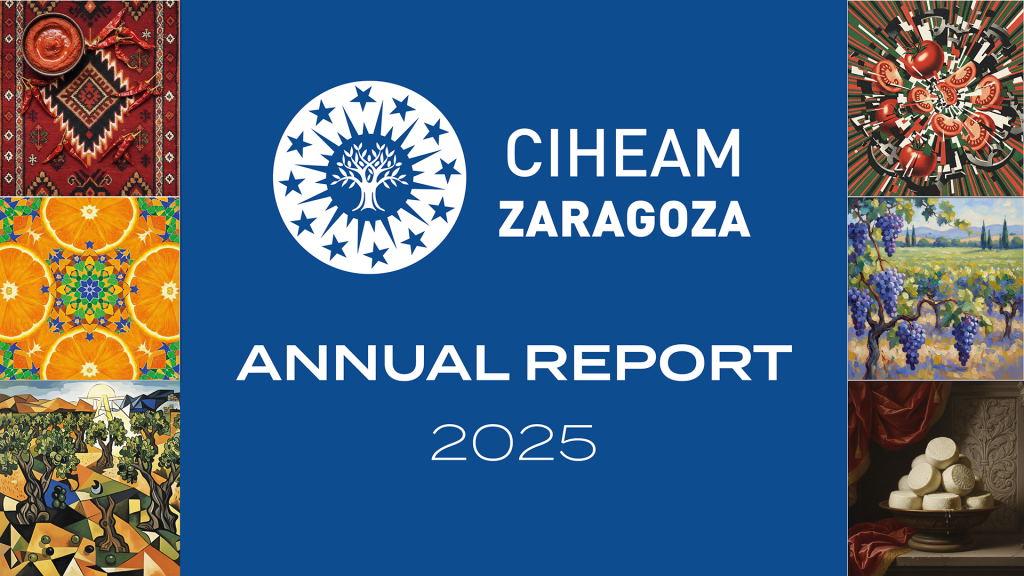
Highlighting a year of collaboration, training and innovation aimed at driving more sustainable and resilient agri-food systems across the Mediterranean.
CIHEAM Zaragoza has published its 2025 Annual Report, providing a comprehensive look at the main activities, results and lines of work carried out over the past year. This first edition of the report offers readers a global, structured insight into the role played by the Institute in the Mediterranean region.
The publication illustrates the value of a working model based on alliance building, advanced training, international cooperation, and generation of applied knowledge, with a clear objective: to contribute to the transition towards more sustainable, resilient and inclusive agri-food systems.
Throughout 2025, CIHEAM Zaragoza has organised master’s programmes, specialist courses and international projects in key areas such as plant production, animal production, fisheries and aquaculture, water and natural resources management, and economy and rural development. These activities have brought together international experts, researchers and institutions, consolidating the role of the Institute as a platform for dialogue, capacity-building and scientific diplomacy.
The document also illustrates the context in which CIHEAM Zaragoza operates: a Mediterranean region marked by structural challenges such as food insecurity, water scarcity, climate change, and socio-economic inequalities, where the need for cooperation and strengthening of human capital is unquestionable.
This Annual Report highlights the continued relevance of CIHEAM Zaragoza’s original mission: to build networks, share knowledge and nurture talent to overcome the challenges of Mediterranean agri-food systems.
Para ofrecer las mejores experiencias, utilizamos tecnologías como las cookies para almacenar y/o acceder a la información del dispositivo. El consentimiento de estas tecnologías nos permitirá procesar datos como el comportamiento de navegación o las identificaciones únicas en este sitio. No consentir o retirar el consentimiento, puede afectar negativamente a ciertas características y funciones.
Funcional
Always active
El almacenamiento o acceso técnico es estrictamente necesario para el propósito legítimo de permitir el uso de un servicio específico explícitamente solicitado por el abonado o usuario, o con el único propósito de llevar a cabo la transmisión de una comunicación a través de una red de comunicaciones electrónicas.
Preferencias
El almacenamiento o acceso técnico es necesario para la finalidad legítima de almacenar preferencias no solicitadas por el abonado o usuario.
Estadísticas
El almacenamiento o acceso técnico que es utilizado exclusivamente con fines estadísticos.El almacenamiento o acceso técnico que se utiliza exclusivamente con fines estadísticos anónimos. Sin un requerimiento, el cumplimiento voluntario por parte de tu proveedor de servicios de Internet, o los registros adicionales de un tercero, la información almacenada o recuperada sólo para este propósito no se puede utilizar para identificarte.
Marketing
El almacenamiento o acceso técnico es necesario para crear perfiles de usuario para enviar publicidad, o para rastrear al usuario en una web o en varias web con fines de marketing similares.