The MSc programme in Olive Growing and Olive Oil Technology closes its 14th edition

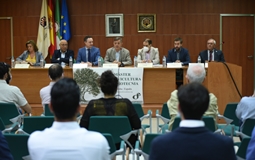
The University of Cordoba has hosted this morning the closing ceremony of the Master in Olive Growing and Olive Oil Technology, which this year is holding its 14th edition. The Master is a two-year programme and the Specialization Course that began last September is now drawing to an end. It is followed by a second course in which the students carry out their Master’s Thesis in different national or international research organizations.

The closing ceremony was presided over by a large group of institutional representatives, namely, the general coordinator of Graduate Studies of the UCO, Álvaro Martínez Moreno; the local representative for Agriculture, Livestock and Fisheries of the Junta de Andalucía, Juan Ramón Pérez Valenzuela; Ramzi Belkhodja –on behalf of the director of CIHEAM Zaragoza, Raúl Compés López; the head of the Olive Growing and Olive Oil Technology and Environment Unit of the IOC, Lhassane Sikaou; the managing director of the FPCO Foundation, Iñaki Benito Otazu; the director of the Institute of Sustainable Agriculture-CSIC of Cordoba, Leire Molinero Ruiz; and the director of the master’s degree, Ricardo Fernández Escobar.

The current edition of the master’s program has had 17 students –selected from 134 applicants–from 10 countries: Albania, Algeria, Croatia, Spain, Iran, Italy, Morocco, Montenegro, Tunisia and Turkey.

Within the Master’s program, the University of Cordoba offers its own courses and degrees for professionals in the sector who are unable to complete the full Master’s program. Two students from Italy and Brazil participated in this year’s edition of the Diploma of University Expert in Olive Oil Technology, and another two from Spain and Brazil in the Diploma of University Expert in Olive Growing.

A total of 16 MSc Theses were defended by students from previous editions from Algeria, Argentina, Egypt, Spain, Italy, Morocco, Portugal, Tunisia and Turkey.

As for teachers, a total of 145 professors from UCO, CSIC, IFAPA, AGAPA and companies in the sector have been involved.

The Master is organized by different international, national and regional institutions, such as the University of Cordoba (UCO), the Dep. of Agriculture and Fisheries of Junta de Andalucía, the IFAPA, the CSIC, CIHEAM Zaragoza, the International Olive Council (IOC) and the FPCO Foundation.

Annual meeting of the CIHEAM Advisory Board

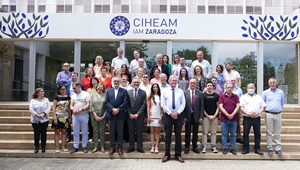
Chaired by Ms Lamiae Ghaouti, the CIHEAM Advisory Board met on 12 and 13 May 2022 at CIHEAM Zaragoza (Spain) for working sessions with the directors of the Chania, Montpellier and Zaragoza Institutes, the Secretary General, and collaborators.

Besides supporting scientific and academic activities, the Advisory Board gives guidance to CIHEAM in its strategic thinking and operational focus. Several meetings had been organized prior to this meeting, to work on the development of current policies (Gender Equality Plan, publications, etc.) and on initiatives carried out by the CIHEAM working groups in the field of the sustainability of Mediterranean food systems, fishing, and coastal development, the socio-economic inclusion of young people, the empowerment of women and how to strengthen their role in agricultural value chains.

In this respect, the Advisory Board was particularly engaged in discussions concerning the future CIHEAM prize intended to reward young project leaders. This Award will reward innovative projects and disruptive initiatives that contribute to the objectives of CAPMED, including strengthening food and nutritional security, supporting the development of the most vulnerable territories and communities, and preventing risk (climate change, animal and vegetable health).

On the occasion of the 60th anniversary of the CIHEAM in 2022, this Award for Innovation aims to highlight the ingenuity of Mediterranean youth in agrifood systems and to support their ability to generate solutions to current challenges.

Henceforth, CIHEAM will be acknowledging innovative and disruptive projects, whilst continuing to reward excellence in research, in particular through the Prize for the best thesis.

In a closed-door session, the members of the Advisory Board studied several applications and deliberated by mutual agreement. The successful candidate will be proposed to the members of the Governing Board when they meet on 18 and 19 July in CIHEAM Chania (Crete).

Closing conference of the first year of the MSc Programme in Sustainable Fisheries Management (2021/2023)

Next Friday 27th May, CIHEAM Zaragoza is organising an online conference on the occasion of the closing of the first year of the MSc programme in Sustainable Fisheries Management (2021/2023) held in Alicante, jointly organised by the University of Alicante, CIHEAM Zaragoza, and the Ministry of Agriculture, Fisheries and Food (MAPA), through the General Secretariat for Fisheries (SGP). The General Fisheries Commission for the Mediterranean (GFCM) and the Fisheries and Aquaculture Department of the FAO provide technical support within the limits of their mandates. The keynote speech “International Year of Artisanal Fisheries and Aquaculture (IYAFA 2022): Challenges, Pillars and Action Plan” will be delivered by Nicole Franz, FAO Fisheries Planning Officer.

Meeting with the Director General of the International Organisation of Vine and Wine (OIV)

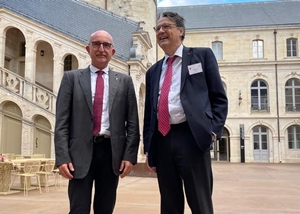
The Director of CIHEAM Zaragoza, Raúl Compés, has travelled to the new headquarters of the International Organisation of Vine and Wine (OIV) in Dijon to meet the Spanish Director General, Pau Roca.

During their meeting they have analysed the potential to carry out joint activities between CIHEAM and OIV. Collaboration between both international bodies is currently regulated under the Memorandum of Understanding signed in 2006. CIHEAM provides cooperation capacities in questions related to food and agriculture through their 4 Institutes, situated in Greece (Chania), Italy (Bari), France (Montpellier) and Spain (Zaragoza), besides the headquarters in Paris and the OIV is an international point of reference in the world of wine. One of the most promising areas of joint interest is environment and sustainability. The forthcoming UN Climate Change Conference COP 27 to be held in Sharm el Sheij in Egypt this forthcoming November offers an excellent opportunity to express and build on their common interests in matters related to climate change.

Summary of the course on advances in weed management for sustainable agriculture

CIHEAM Zaragoza, together with ICARDA, the Agrifood Research and Technology Centre of Aragon (CITA), the European Weed Research Society (EWRS) and the Spanish Weed Science Society (SEMh), organized the course “Advances in Weed Management for Sustainable Agriculture” from 28 March to 2 April 2022.

The topic of the course attracted a great deal of interest, as reflected in the high number of applications (95), from 19 countries in Europe, Africa, Latin America and Asia. The 24 successful applicants were professionals from 7 countries (Algeria, Greece, Italy, Portugal, Spain, Tunisia and Turkey), working at universities, research centres and private firms.

The course took place in hybrid format delivered by 15 experts from universities and research centres in Denmark (2), Italy (1), the Netherlands (11) and Spain (1), on topics related to integrated weed management.

The course commenced with an institutional welcome from CIHEAM Zaragoza and the other organizers: CITA, SEMh and EWRS, followed by interventions from Alicia Cirujeda and Joaquín Aibar who presented the programme, introduced the lecturers and explained the practicals, group work and technical visits.

The programme was organized in three blocks. The first was delivered by Paolo Barberi from the Scuola Superiore Sant’Anna addressing how to frame weed management into sustainable agriculture and face current challenges for weed management and control. This was followed by moderated debate with the participation of Lammert Bastiaans from the University of Wageningen (Holland) and Alicia Cirujeda from the CITA (Spain).

The second block, given by Lammert Bastiaans, and Jordi Recasens and Bàrbara Baraibar from the University of Lleida, focused on the applications of weed biology and ecology that are needed to implement sustainable weed management systems, and study weed population and community dynamics, weed seed banks, and crop-weed interaction. This section also covered invasive and emerging weeds, trends and effects in Mediterranean environments.

The third block dealt with how to build a weed management system made up of 4 important steps: know your enemy, preventive measures, crop weed management and direct management measures in annual and perennial crops. In this final part of the course Lammert Bastiaans, Alicia Cirujeda and Joaquín Aibar were accompanied by José Dorado from the CSIC in Madrid, Paul Neve and Bo Melander from the University of Copenhague, Josep María Montul from the University of Lleida, and Nuria Pedrol from the University of Vigo.

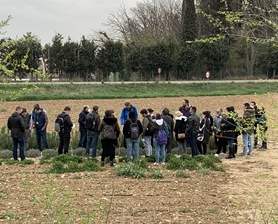
José María Peña from the CSIC in Madrid and Ana Isabel de Castro from the INIA also in Madrid, led the hands-on part of the course and explained weed scouting, using images from different remote sensing programmes. Besides, Artiz Royo-Esnal from the University of Lleida presented decision support systems. Two technical visits were organized: one to the CITA’s botanical garden and a weekend visit to private farm estates to see integrated weed management programmes on site.

The course concluded with team projects where participants were asked to build an integrated weed management system. Participants worked in 5 groups followed by a general presentation of their results. A round table was organized to discuss the topics addressed throughout the week.

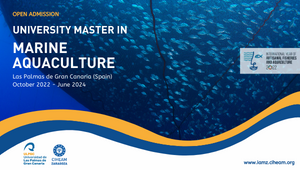
Registration is now open for the University Master in Marine Aquaculture

Aquaculture is the source of food production that has grown most over the past 30 years. It has become a consolidated activity able to supply the growing demand for fish products, as opposed to the stagnation of catches by fisheries from the late 1980s. In 2018 world production of Aquaculture reached 114.5 million metric tons (algae included). Thus, almost 50 % of the aquatic products destined for human consumption, and up to 90 % in species such as salmon, carp and oysters, 70 % in mussels and 25 % in prawns or shrimp come from aquaculture. Furthermore, Spain is the second largest producer in Europe and one of the major producers of trout, turbot, seabream and seabass.

Aquaculture today has a continuous demand for specialized professionals in various fields of this activity, which this Master programme has been strengthening for over 25 years. With modules on the principles of aquaculture and cultivation techniques, as well as cross-sectional topics such as nutrition, pathology, genetics, reproduction, engineering, economics and the environment, this Master programme offers a complete overview of the aquaculture sector and is a unique opportunity to meet and work with professionals and students from all over the world and share hands-on experience with top experts.

Dates: October 2022 – June 2024

Venue: University of Las Palmas de Gran Canaria (ULPGC), Gran Canaria, Spain

Organizers: ULPGC and CIHEAM Zaragoza, with the collaboration of the Aquaculture Research Group, the Scientific and Technological Park of the ULPGC and ECOAQUA.

Pre-registration: Applications for pre-registration and additional information should be addressed to Prof. Félix Acosta Arbelo (felix.acosta@ulpgc.es)

The pre-admission period for applications for 2022-2024 will be available at the link https://www.ulpgc.es/masteres-administracion/inicio

Scholarships: Candidates from CIHEAM member countries (Albania, Algeria, Egypt, France, Greece, Italy, Lebanon, Malta, Morocco, Portugal, Spain, Tunisia and Turkey) may apply for scholarships covering registration fees, and for scholarships covering the cost of full board accommodation. Scholarships will be awarded according to academic merit, and preference will be given to candidates from developing countries. The application for these scholarships must be made before 4 May 2022 through the following address: http://www.admission.iamz.ciheam.org/es/

Various public and private agencies may grant scholarships to participate in the programme. These scholarships may cover all or part of the registration fees. In http://www.fulp.ulpgc.es there are several calls for scholarships for postgraduate studies.

Candidates from West African Countries (Senegal, Mauritania, Ghana, Gambia, Ivory Coast, Cape Verde, Guinea-Conakry, Sierra Leone, Guinea-Bissau and Liberia) may apply for a registration fee grant sponsored by the Canary Islands Government (Viceconsejería de Acción Exterior y Relaciones Institucionales), that must be requested through the Master organization.

More information: University Master in Marine Aquaculture