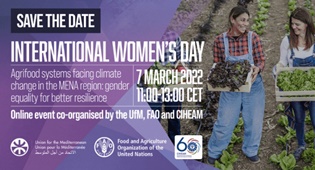
INTERNATIONAL WOMEN’S DAY 2022

7 March 2022

INTERNATIONAL WOMEN DAY 2022

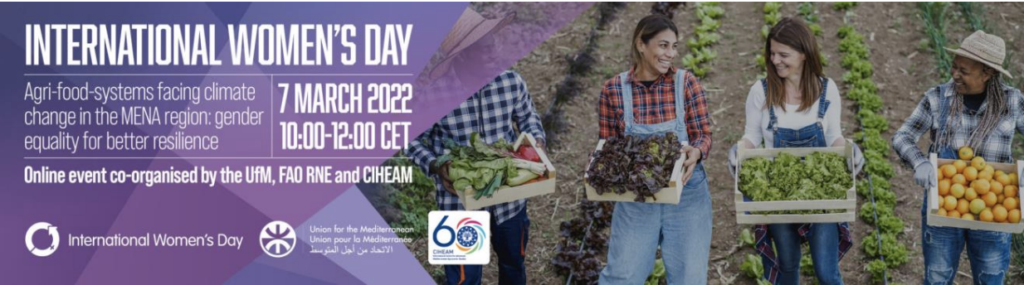
Agri-food systems facing climate change in the MENA region: gender equality for better resilience

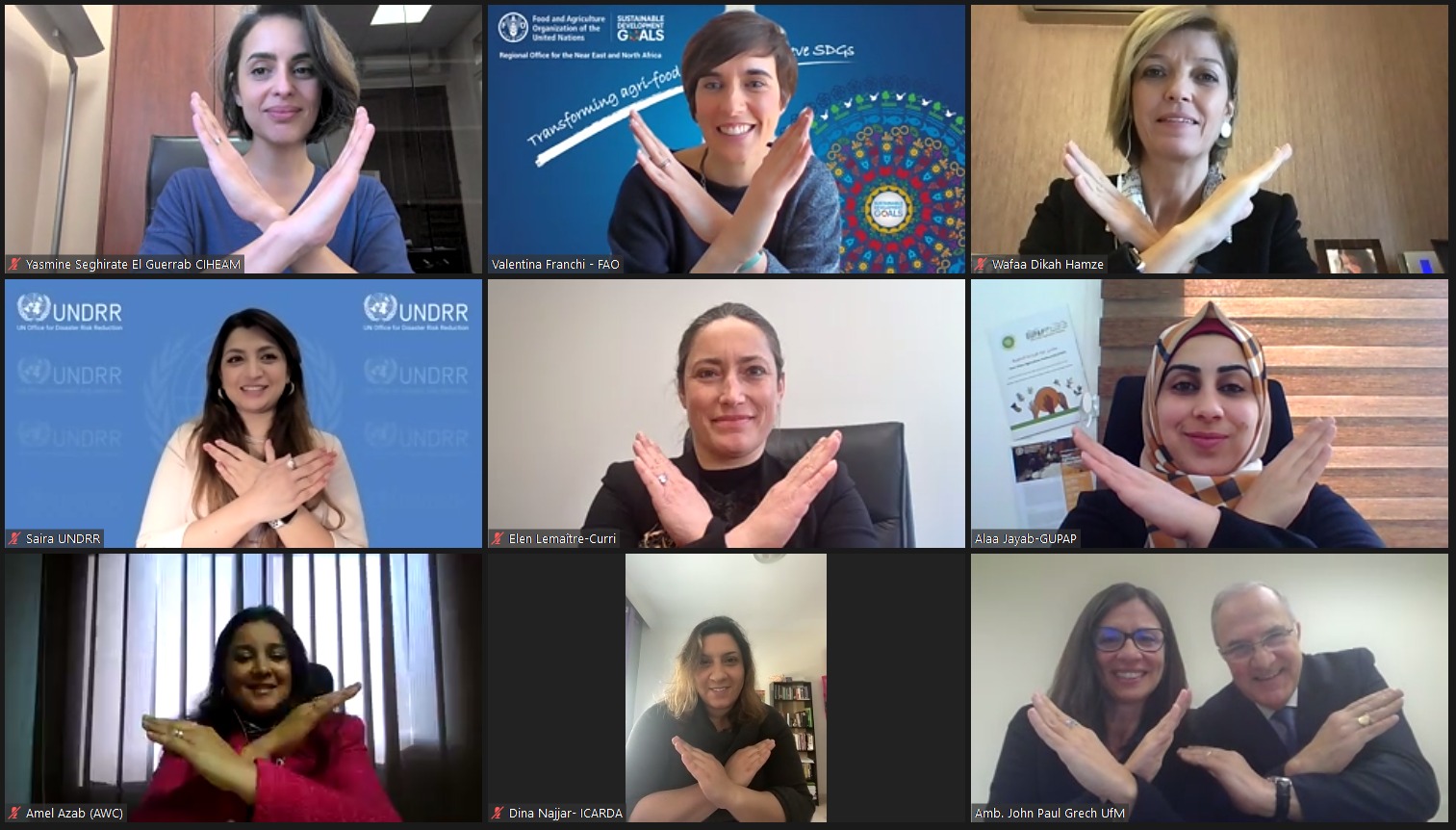
  • The online event, live streamed also on the UfM FB page and Youtube Channel has been followed by more than 650 participants across the different platforms. A strong participation that demonstrates a growing interest in gender mainstreaming in climate, rural development and agricultural policies.

See the online event here

In the context of the 2022 International Women’s Day theme “Gender equality today for a sustainable tomorrow”, recognizing the contribution of women and girls around the world to build a more sustainable future for all, the aim of the event was to identify challenges to be addressed when it comes to women as change drivers for a more resilient agri-food system facing climate change. Moreover possible solutions have been put forward in terms of policies, strategies and governance at regional and country levels. 
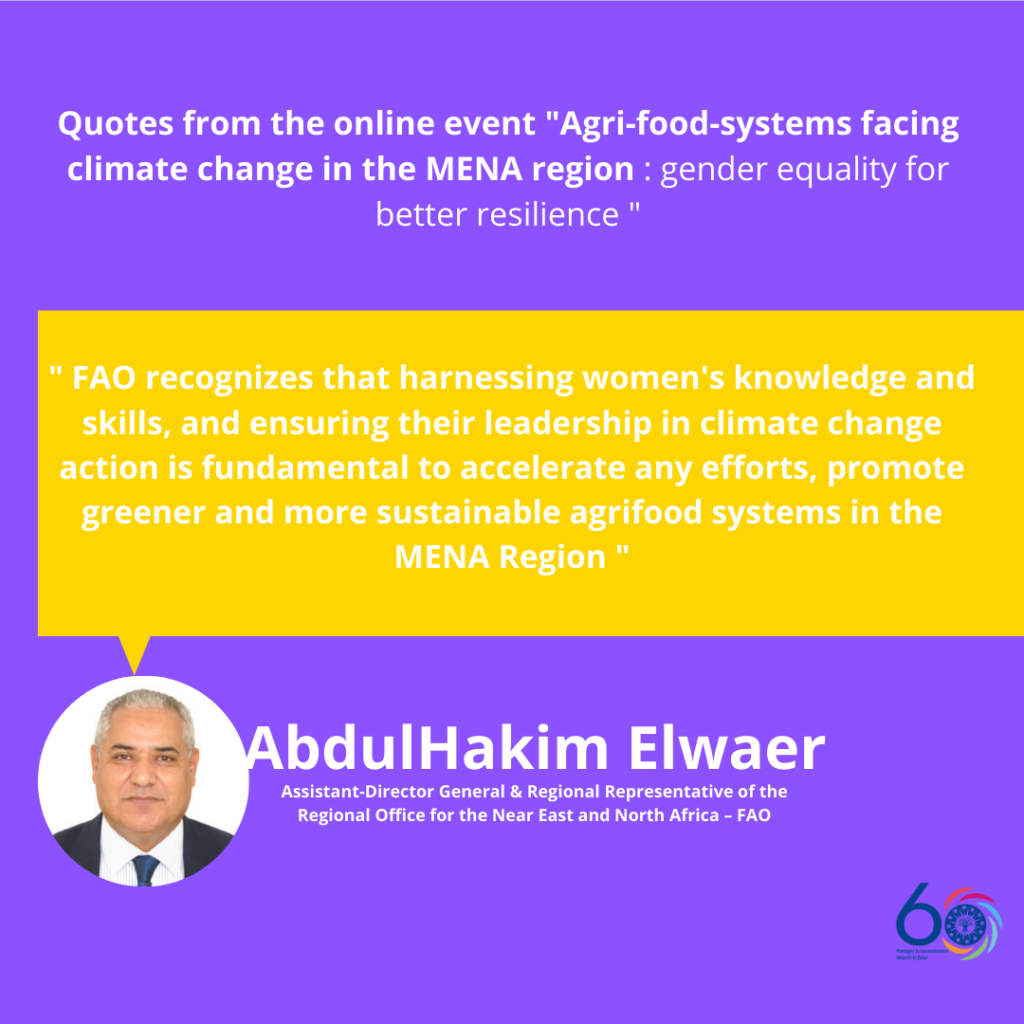
The opening remarks by Mr. Abdulhakim ELWAER, Assistant Director General and Regional Representative, FAO Regional Office for the Near East and North Africa highlighted the important role that women play in agri-food systems in the face of climate change and water scarcity in the region, despite the persisting inequalities that constraint their potential and empowerment. He also pointed out to the need to strengthen collaborations across the region to consolidate and accelerate efforts.
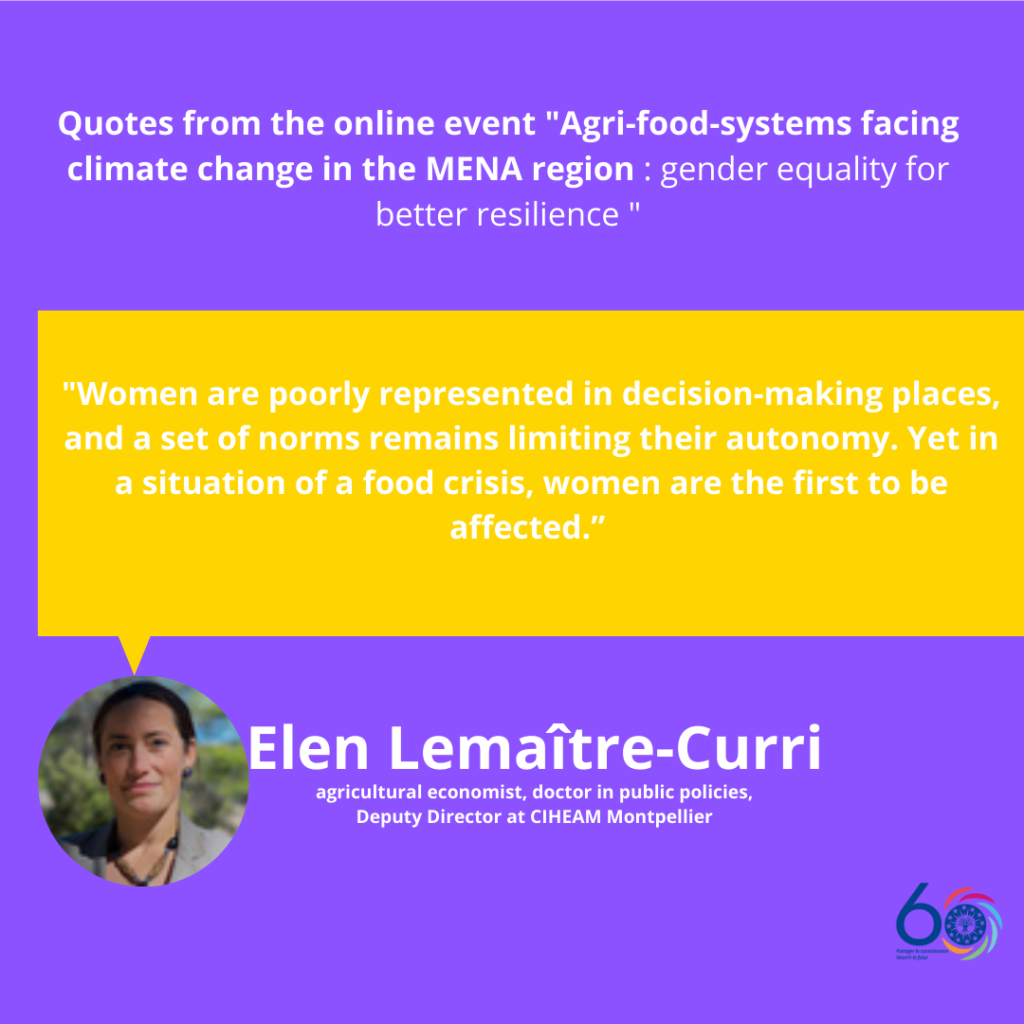
However, because of persistent bias and discrimination, women have less opportunity to thrive and have limited access to technology, financial instruments and actual land ownership. In this regard, Elen Le maître-Curri, agricultural economist, doctor in public policies, Deputy Director at CIHEAM Montpellier,  recalled that the effects of climate change aggravate an already complicated situation for the agri-food systems of the MENA region, marked by limited natural resources, food insecurity, or even rural areas that are losing part of their population, especially the youngest and most active. A set of challenges that affect women differently than men. 

In the round table a constructive exchange took place, bringing together experiences from across the region, thanks to the contribution of institutions and organizations, such as ICARDAUNDDRRArab Water Counciland GUPAP among others.

The discussion focused its attention on the need to foster rights and fair policies in order to support the most fragile groups, namely women, girls and children. Women – especially in rural communities – provide for their families and contribute to the resilience of their communities while being paid less than men and are often those affected by discriminating policies and harmful social norms which exclude them from the relevant decision-making processes.
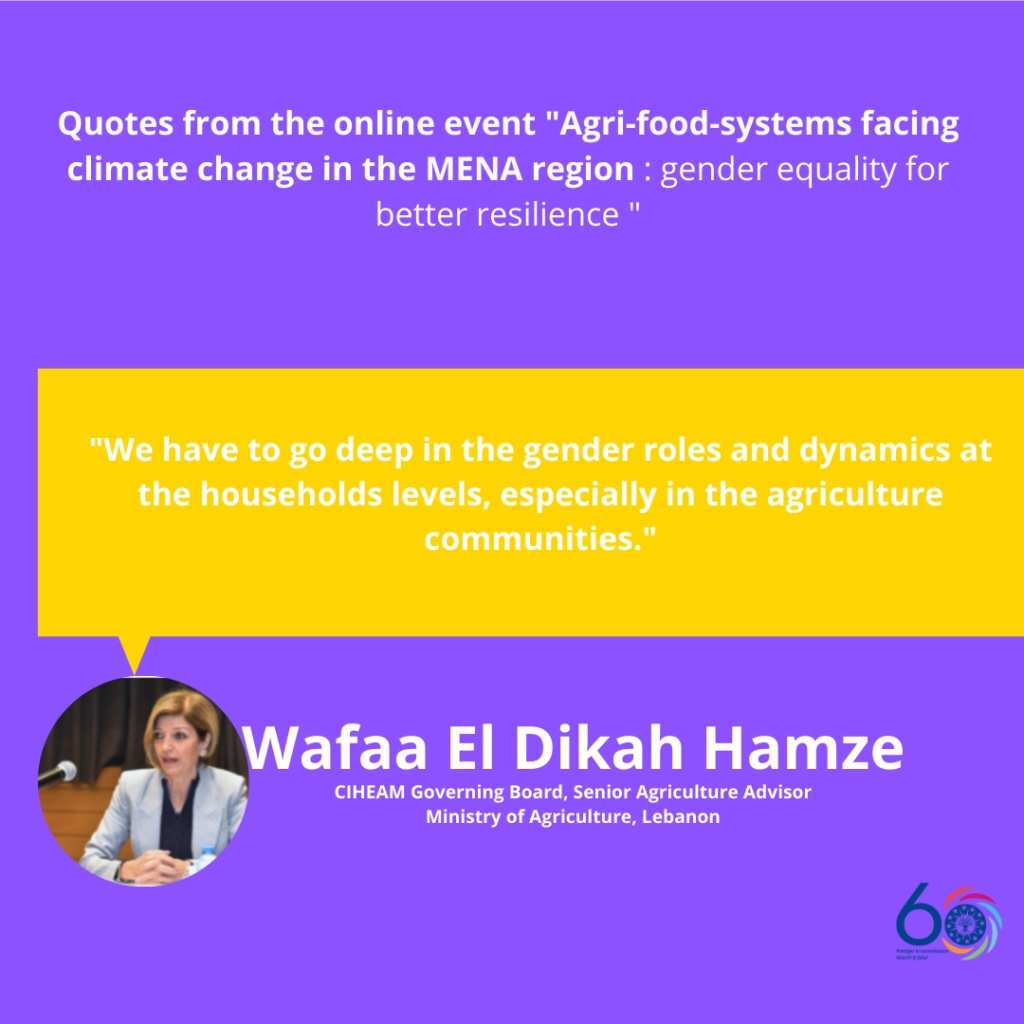
When it comes to the migrations caused by climate change, women are the most vulnerable and it is therefore important to include political measures to promote women’s priorities linked to climate change events. 
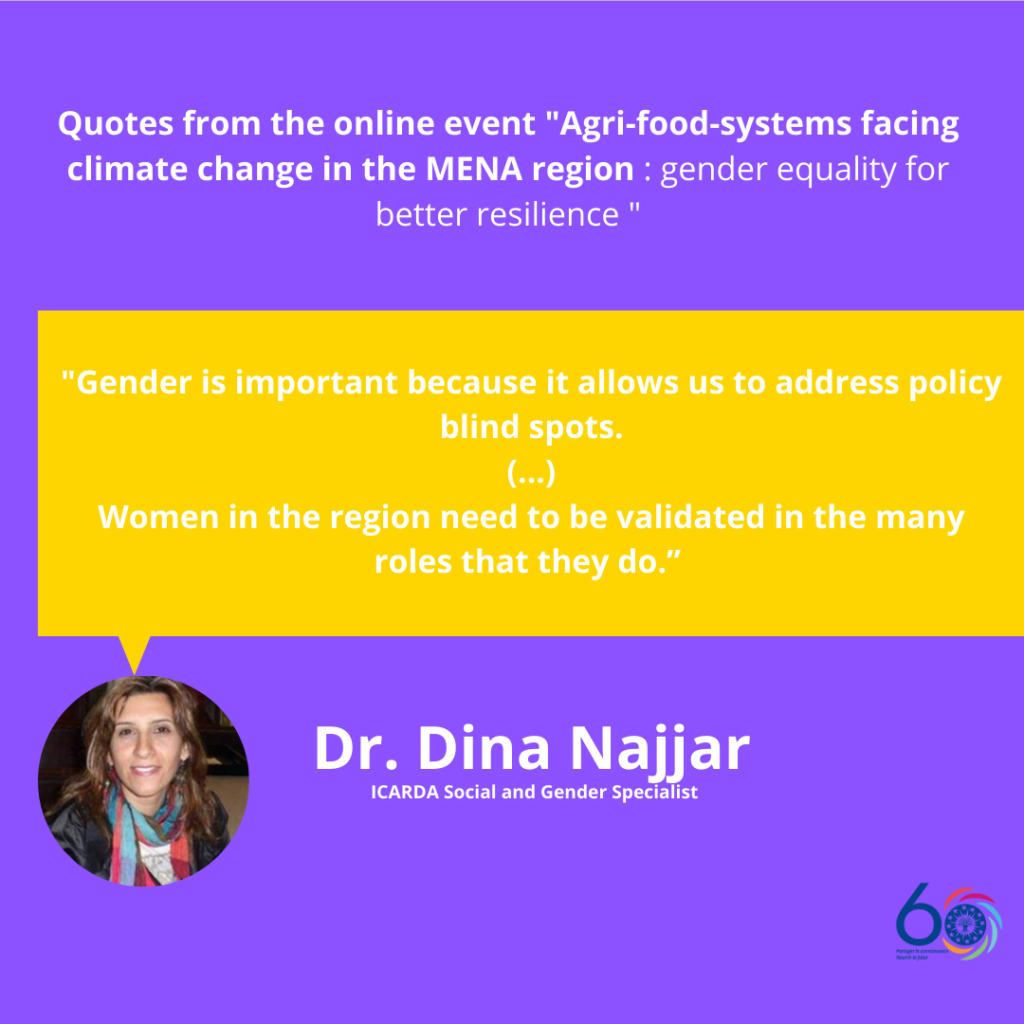
Social bias has been identified as very visible in the region: power dynamics at the community level prevent women from excelling in knowledge and experience. It is therefore important to raise awareness to fight discriminatory social norms, and to do so the involvement of men is an essential tool as well as the creation of women networks to exchange best practices. 
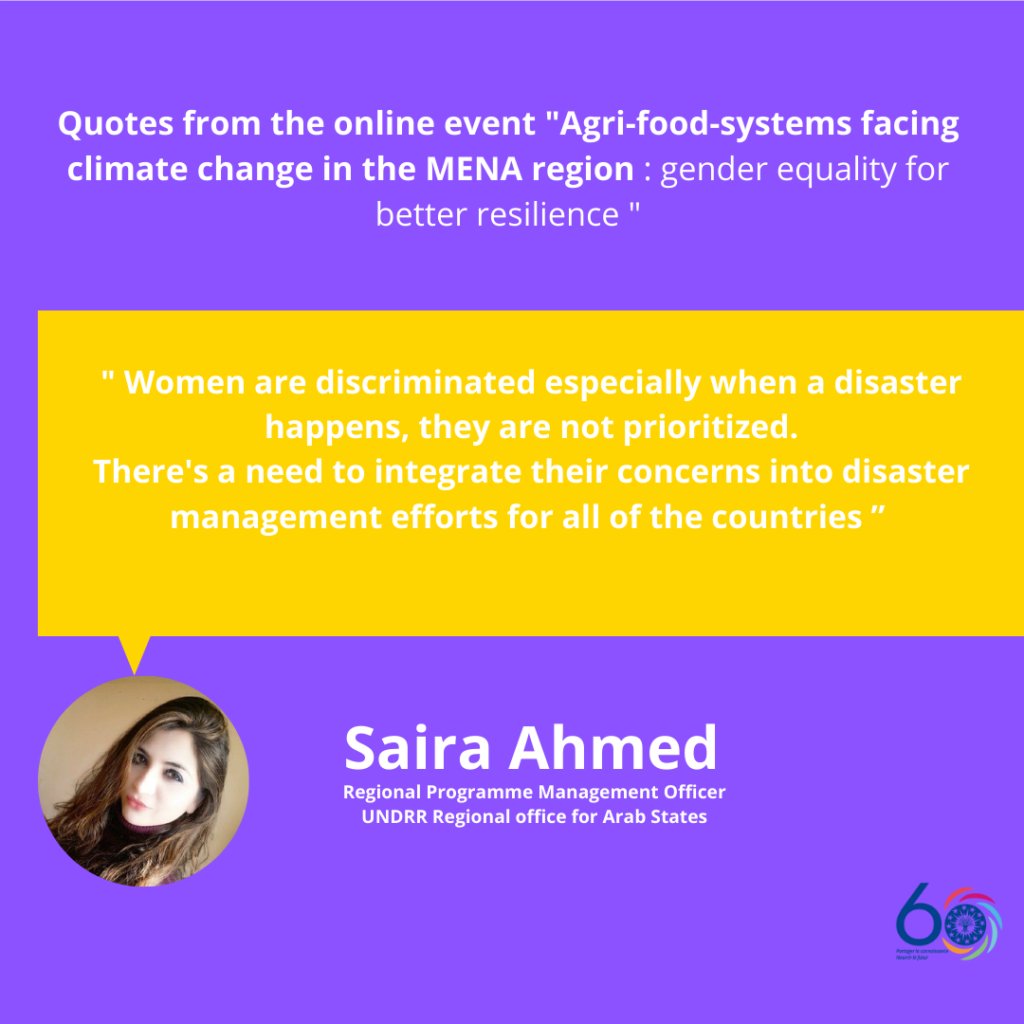
In his closing remarks the Deputy Secretary General of the UfM, Amb. John Paul Grech, highlighted “Women leadership is a key factor to be ensured when outlining climate resilient policies. It is important that women actively participate in the discussions and decisions over climate change mitigation and adaptation, as they possess unique skills and knowledge to help respond to climate change effectively and sustainably”.
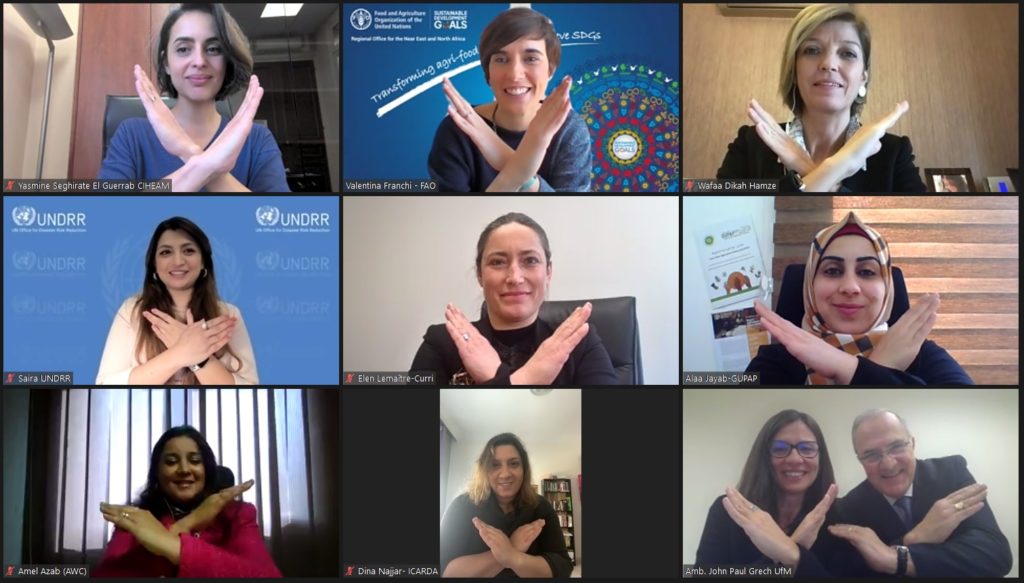
This joint event by the Union for the Mediterranean, in partnership with the Regional Office for Near East and North Africa of FAO and the CIHEAM stems from their commitment to promoting gender equality and women’s empowerment in agri-food systems, and to creating a conducive environment for women and girls to lead and thrive.
You can watch the full online event here

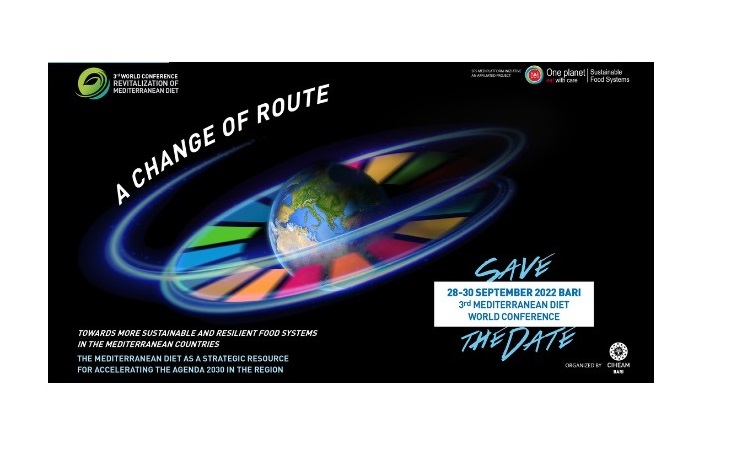
3rd World Conference on Mediterranean Diet

SAVE THE DATE

28-30 September 2022 in Bari (Italy)

To celebrate the 60th Anniversary of the CIHEAM, the CIHEAM Bari is organizing the Third World Conference on the Revitalization of the Mediterranean Diet.

Entitled “Change of Course Towards More Sustainable and Resilient Food Systems in Mediterranean Countries: the Mediterranean Diet as a Strategic Resource to Accelerate the Agenda 2030 in the Region”, the conference will be held on 28-30 September 2022, in Bari. 

LOOK BACK AT THE SECOND WORLD CONFERENCE (2019)

🌍 LOOK BACK AT THE MEDITERRANEAN DIALOGUES IN THE FRAME OF THE UNITED NATIONS SUMMIT FOR SUSTAINABLE FOOD SYSTEMS

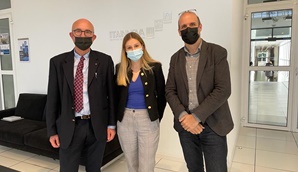
CIHEAM Zaragoza Director, Raúl Compés, meets the Director of Itainnova, Esther Borao

Last 22 February CIHEAM Zaragoza Director, Raúl Compés, met the Director of Itainnova (Technological Institute of Aragon), Esther Borao, and the Deputy Director, Carlos Millán. Itainnova is a public entity dependent on the government of Aragon devoted to promoting technology transfer and innovation in Aragonese companies, mainly in SMEs. Its activity focuses on new materials and components, mechatronics, electrical systems, industrial processes and ICT technologies. During the meeting, common interests were identified and opportunities for collaboration between the two entities were analysed. As lines of potential interest, the internships and Master’s thesis by CIHEAM Zaragoza students and the European and development cooperation projects stand out.

International Women’s Day 2022 – Agrifood systems facing climate change in the MENA region: gender equality for better resilience

As part of their collaboration, CIHEAM, FAO and UfM have decided to mark the celebration of IWD 2022 with a joint event, focused on the MENA region and on promising solutions to support women’s empowerment and climate adaptation through synergies. They will bring into the debate their research, governance and policy perspectives and experiences. The theme of the International Women’s Day (IWD) 2022 – Changing Climates: Equality today for a sustainable tomorrow recognizes and celebrates the contribution of women and girls to building a sustainable future.

CIHEAM, FAO and UfM share a commitment to promoting gender equality and women’s empowerment in agri-food systems, and to creating a conducive environment for women and girls to lead and thrive. Their common commitment is also reflected in a Memorandum of Understanding, signed in 2020, which led to the establishment of a multi-stakeholder initiative on Sustainable Food Systems in the Mediterranean (SFS-MED), as well as the contribution to the Regional Consultations led by the Committee on World Food Security in October 2021 to discuss the Zero Draft of the Voluntary Guidelines (VGs) on Gender Equality and Women’s and Girls’ Empowerment (GEWE) in the Context of Food Security and Nutrition.
Being the most impacted, women are also a critical part of the solution. Women and girls play a key role in climate change adaptation and mitigation as well as disaster risk reduction in many communities, for instance, through the management of early warning systems. Many female farmers and fisherwomen have gained vital knowledge of what works when facing climate change, which they are effectively   applying to their production techniques. They also often know what is required to improve their specific situations and increase their resilience.  Too frequently, however, they are not consulted or included in decision-making processes.

Objectives of the event

The event aims to raise awareness on the gender-differentiated impacts of climate change on agri-food systems, and on the interventions that are needed to address them, build women and girls’ resilience, and unleash their potential to mitigate climate change and adapt to its impacts.

More specifically, the event will offer the opportunity:

  • to identify the key challenges to be addressed when it comes to women as key change drivers for a more resilient agri-food system facing climate change
  • to propose possible solutions in terms of policies, strategies, and governance at regional and country level
  • to share good practices and experiences from the private sector and CSOs

For more information visit the UfM site: International Women’s Day 2022

Registration is now open for the advanced course on “Valuation of Ecosystem Services”

Registration is now open for the advanced course on “Valuation of Ecosystem Services” that CIHEAM Zaragoza organizes together with the International Center for Agricultural Research in the Dry Areas (ICARDA) and the European Forest Institute (EFI), through the EFI’s Mediterranean Facility (EFIMED) and which will take place in Zaragoza from 9 to 13 May 2022.

Ecosystem services provide substantial benefits to human well-being and sustainable development. However, these benefits are not widely recognized and integrated into socio-political decisions and their potentials are underestimated, leading to a continued loss and degradation of ecosystems and biodiversity. Providing over 20 hours of in-class training as well as 14 hours of practical work in groups, this course offers a plural valuation approach of ecosystem services, a view of existing policy assessment frameworks and a critical review of valuation methods and instruments, highlighting the importance of their integration. Besides, it is a unique opportunity to meet and work with professionals from all over the world and share experience with top experts working on the valuation of ecosystem services.

Dates: 9-13 May 2022

Organizers: CIHEAM Zaragoza, ICARDA and EFI

Application deadline: 18 March 2022

For more information visit the course page here

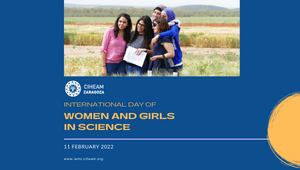
International Day of Women and Girls in Science: Increasing presence of women in agricultural sciences in the Mediterranean

The increase in the number of female students in CIHEAM Masters and Masters of Science programmes in all 4 institutes (Bari, Chania, Montpellier and Zaragoza) is noteworthy.

In addition, the last 4 prizes for the Best CIHEAM Master of Science thesis issued by the Board of Directors were awarded to women:

  • Elsa Chedid, for her research work on “DNA-based markers combined with High Resolution Melting analysis for olive oil authentication and adulteration” (CIHEAM Chania)
  • Marwa Mourou: “Isolation and molecular characterization of Xylella fastidiosa from different host plant species in Apulia region (Italy)” (CIHEAM Bari).
  • Najla Ksouri: “Transcriptional Responses in Prunus persica under Conditions of Drought Stress using RNA Sequencing” (CIHEAM Zaragoza)
  • Wided Khechimi: “Proposal for an indicator of cultural ecosystem services: Measuring the impact of recreational visits of Mediterranean wetlands on human well-being” (CIHEAM Montpellier).

Women also play an active role in CIHEAM bodies: the current president of the CIHEAM Advisory Council is Mrs Ghaouti Lamiae (Hassan II Institute of Agronomy and Veterinary Medicine, Morocco), who replaced Dr Nahla Hwalla (Lebanon) and this year Valérie Baduel, France’s delegate to the CIHEAM Board of Directors, was appointed Director General for Education and Research at the French Ministry of Agriculture and Food.