International Congress on the Mediterranean Diet

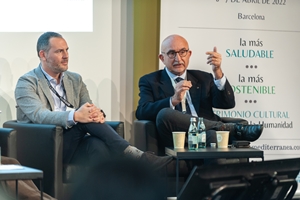
The XII International Congress Mediterranean Diet was held in Barcelona last week within the framework of the Food Fair Alimentaria. On Wednesday 6th April, Raúl Compés López, Director of CIHEAM Zaragoza, took part in a Round Table “Dieta Mediterránea, la más saludable”, moderated by Elisa Plumed, President of the Spanish Association of Food and Agriculture Journalists.

He pointed out that sustainability is not determined by the nature of the product itself, but by how it is produced or consumed. He added that to determine whether a product or production chain is sustainable we have to know how it has been produced, processed, transported and distributed. It may be Mediterranean but it may not have been produced sustainably.

Compés went on to say that to discover how sustainable a product is, we need a great deal of information, not always available to consumers. The Administration should oblige companies to provide neutral information for consumers so they can choose the product that best suits their preferences and favour direct sales and short distribution channels.

Meeting of Raúl Compés and Clara Arpa to discuss innovation and sustainability

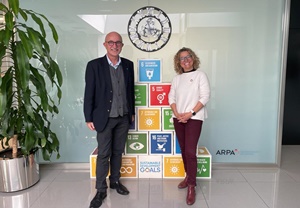
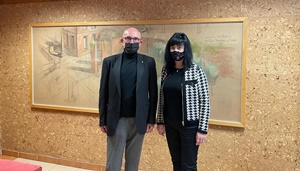
On Friday 8 April, the Director of CIHEAM Zaragoza, Raúl Compés López, met with Clara Arpa, CEO of Arpa EMC and President of the CIDS Innovation Centre for Sustainable Development (CIDS) and the United Nations Global Compact in Spain. This is the world’s largest corporate social responsibility initiative in support of the Sustainable Development Goals (SDG).

CIHEAM is committed to the SDG and Agenda 2030. The thematic priorities of CIHEAM’s Agenda 2025 are: protecting the planet by fighting triple waste; promoting food security and nutrition through sustainable food systems; favouring inclusive development by investing in new generations and fragile territories and preventing crises and increasing resilience by creating mechanisms for risk management. In this fruitful meeting they explored subjects of common interest and opportunities for mutual collaboration, and discussed the potential of advanced courses and other actions to boost innovation and sustainability

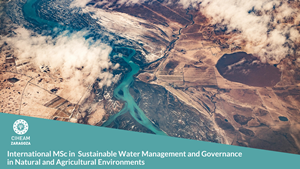
Registration is now open for the International MSc in Sustainable Water Management and Governance in Natural and Agricultural Environments

Water is a natural resource that requires careful management to ensure its availability and quality for future generations. In order to face the challenges of water management and governance we need to work in an integrated and interdisciplinary manner, involving hydrological, biophysical, economic, institutional, regulatory, policymaking and planning efforts.

This international Master programme builds on CIHEAM Zaragoza’s 50 years of solid training experience in the area of water, environment, agriculture and economics. It has an innovative, multidisciplinary focus aimed to equip future water professionals with the blend of skills necessary to make a significant contribution to sustainable water management and governance both in agriculture as well as in natural environments.

Developed together with leading organisations in the water sector, this MSc programme offers an integrated and applied approach with lectures and practicals, individual and team study and work, and technical visits. It is a truly international and multicultural experience and a unique opportunity to network with professionals from other countries and generate the necessary knowledge and capabilities to prepare you for a successful and rewarding career.

Dates: September 2022 – June 2024                            

Venue: CIHEAM Zaragoza (Spain)

Organizers: CIHEAM Zaragoza

For more information: http://www.masterwatermanagement.com/

Loarre and CIHEAM Zaragoza host a European training event on how to promote sustainable cultural tourism

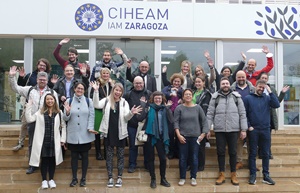
The training took place in Loarre’s Town Hall on 17 March with researchers and experts from Austria, Belgium, Croatia, Finland, Italy, the Netherlands and Spain. Representatives of different counties of Huesca took part in a parallel training session to test a tool designed to boost sustainable tourism in the province.

The SmartCulTour project, Smart Cultural Tourism as a Driver of Sustainable Development of European Regions, has organized an internal capacity-building event for representatives of the project’s six Living Labs to test creative tools to boost the tourist sector in each of the regions. The training was organized in two working sessions, one in the town of Loarre on 17 March and another on 18 March at CIHEAM Zaragoza. Participants came from Belgium, Finland, Croatia, Italy, Austria and Spain.

The aim of the first session was to provide the project’s partners with context about the tourist sector in Huesca. They worked on tools to favour engagement of stakeholders related to the tourist sector that would enable them to promote their area from a more emotional perspective, linking their past, present and future to their territory.

The second session was held at CIHEAM Zaragoza. Participants worked on methodologies to help territorial managers improve their decision-making by addressing initiatives that would cover the needs identified for development in European regions – including the province of Huesca – as sustainable cultural tourism destinations.

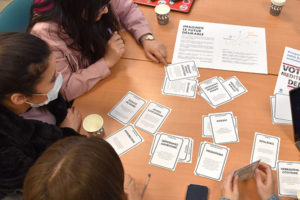
A parallel session was organized on 17 March for representatives of different counties, public entities, and businesses in the province of Huesca who did a pilot test of the SmartCulTour Game, one of the project outcomes expected to have the biggest territorial impact. The idea is to use the serious game approach to draw up policies and engage stakeholders, and at the same time learn about cultural tourism and potential interventions to make cultural tourism more sustainable for local communities, the environment and the business sector.

This training event lies within the activities of the SmartCulTour project, which aims to promote territorial development through sustainable cultural tourism. This model of tourism requires a redefinition of the classical cultural tourism, considering new demands derived from sustainability and the need for supply and demand metrics and impact assessment. The project intends to review theories and make an empirical validation of good practices in the natural surroundings and seek closer collaboration between the local stakeholders, facilitating the development of joint strategies and creating sustainable cultural tourism experiences.

The SmartCulTour project has received funding from the European Union’s Framework Programme for Research and Innovation and has 10 partners: KU Leuven (Belgium), University of Applied Sciences of Breda (the Netherlands), University of Split (Croatia), University of Lapland (Finland), Modul University of Vienna (Austria), Ca’Foscari University of Venecia (Italy), Toerisme Vlaanderen (Visit Flanders, Belgium), Quantitas (Italy), UNESCO, and CIHEAM Zaragoza.

Meeting with the Director General of Tourism of the Government of Aragon

On Tuesday 8th March, the Director of CIHEAM Zaragoza, Raúl Compés López, met the Director General of Tourism of the Government of Aragon, Gloria Pérez García. During the meeting they identified topics of common interest and explored opportunities for collaboration between both entities.

CIHEAM Zaragoza has experience in activities related to rural development and tourism and is currently participating in a European H2020 project on smart cultural tourism (SMARTCULTOUR). One of the areas targeted for study and application of this paradigm is the province of Huesca, chosen both for its numerous tangible and intangible cultural assets and for its needs to create sustainable development opportunities that fix population.

Another area of shared interest is wine tourism. For many wineries this has become a significant channel for direct wine sales, revenue diversification and customer loyalty. It is also an important driver of growth for many wine producing areas. In fact, Aragon has 4 ‘Wine Routes’, a model of collective organization that helps to enhance the value of the natural and historical heritage of these territories.

YOUTH IMAGINE THE FUTURE OF THE MEDITERRANEAN

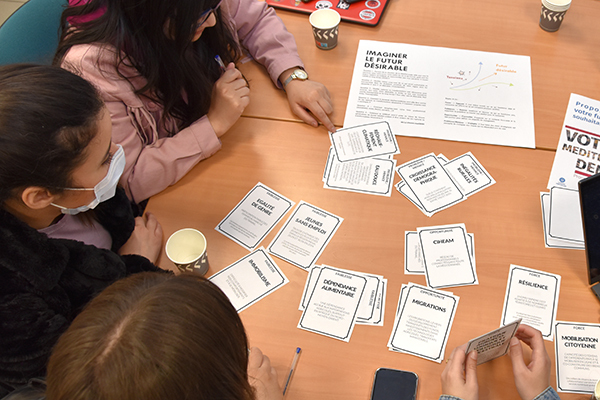
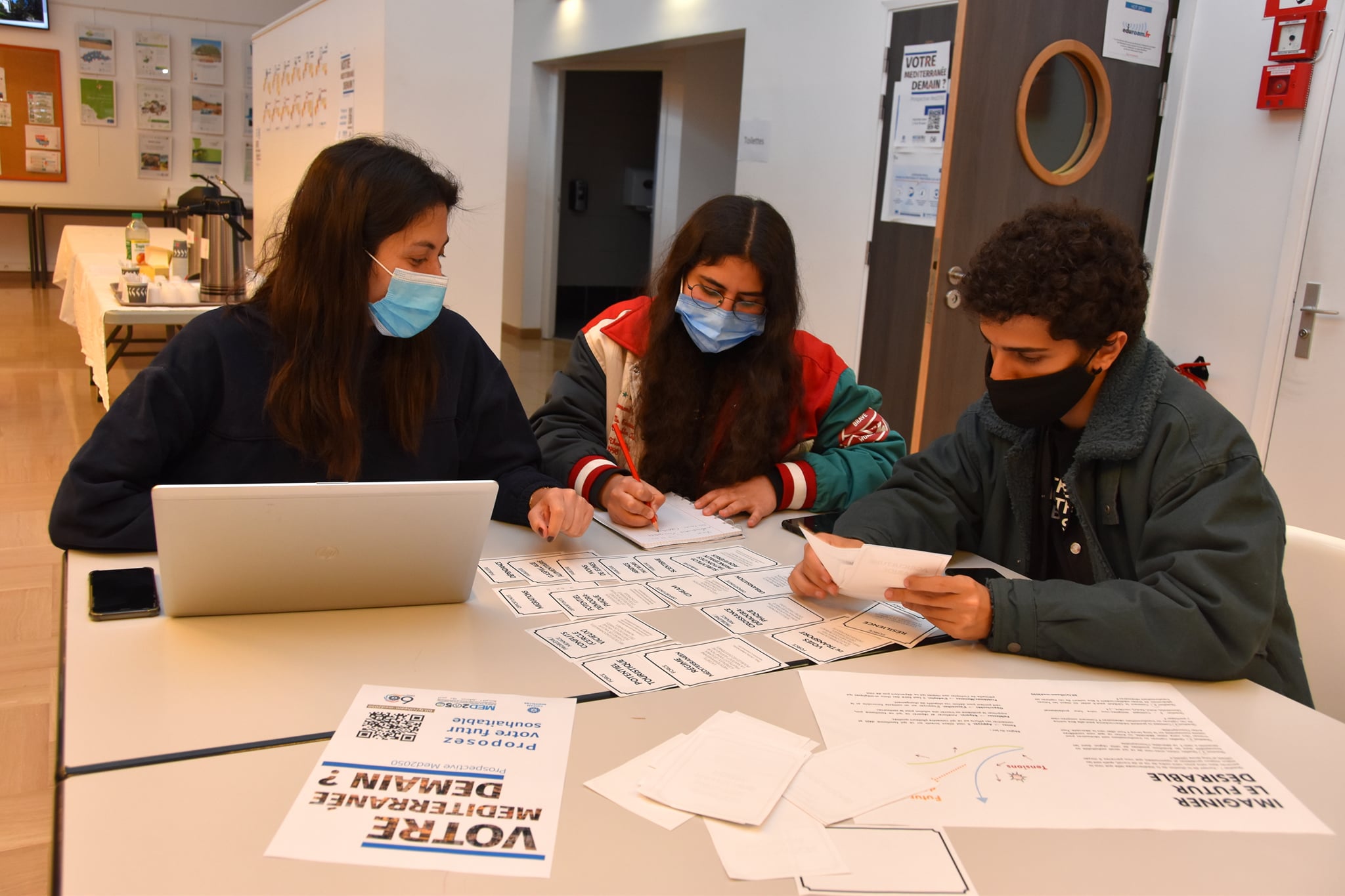
In partnership with Plan Bleu and as part of its MED2050 prospective study, the CIHEAM is mobilizing its students and ALUMNI to imagine the future of the Mediterranean!

Since Wednesday 10 of march, the CIHEAM has been questioning its students about their vision of the possible future of the Mediterranean region. To do so, it has relied on a partnership with the NGO Com4Dev, which is familiar with foresight and facilitation exercises of groups, with a view to co-constructing reflections and advocacy.

The survey is structured around various questions relating to the perception of the current situation, probable future visions, ruptures and/or long-term transformations.

This project aims to confront several possible visions of the future of the Mediterranean by 2050 and to co-build solid and realistic transition paths towards common sustainable development goals.

The CIHEAM Montpellier is the first one involved, the Institutes of Bari (Italy), Chania (Greece), and Zaragoza (Spain) will follow.

In view of the 12th Ministerial Meeting of the CIHEAM which will focus on the Women and Youth Empowerment in agro-food systems and rural areas (Morocco, Autumn 2022) and the celebrations of the 60th anniversary of the CIHEAM, this survey will also provide a better understanding of the needs and aspirations of CIHEAM students and ALUMNI.

The answers could thus contribute to the current reflections and help to determine actions of the CIHEAM in the fields of training, research, and cooperation.