
Predictive breeding tools for intensive and sustainable production under climate change scenarios

CIHEAM Zaragoza, together with the projects BARISTA, PRIMA (GENDIBAR), and ICARDA organized the advanced online course “Predictive Breeding Tools for Intensive and Sustainable Production under Climate Change Scenarios” from 17 to 26 January 2022.

The subject matter of the course raised considerable interest, reflected in the number of applications (138) received from 33 countries in Europe, Africa, Latin America and Asia. Finally, 38 professionals were selected from 12 countries: Algeria, Egypt, France, Germany Lebanon, Morocco, Portugal, Senegal, Slovenia, Spain, Tunisia and Turkey, all working at universities, research centres and private firms.

During 8 sessions transmitted live via Zoom, 17 experts from universities and research centres in Australia (2), Denmark (1), Finland (1), France (1), Germany (3), Italy (6), Morocco (1) Spain (1), and the United Kingdom (1) delivered lectures on topics related to genomics, modelling and integration of predictive selection in simulation models. One of the most novel topics addressed was prediction in plant breeding in different climate change contexts.

The programme was divided into three blocks. The first block addressed prediction and genomic selection, the second dealt with basic concepts of crop growth modelling in different scenarios of climate change and the third block focused on the integration of genomic prediction in crop simulation models. The participants became acquainted with the WOFOST and ARMOSA models and used them to conduct simulation exercises. There was also a demonstration of the APSIM model.

The course began with an introduction from CIHEAM Zaragoza and the BARISTA project. Then Reimund Rötter, professor from the University of Göttingen (Germany) and scientific coordinator of the course, presented the programme and lecturers. On the first day participants saw topics of different climate change scenarios; plant physiology, phenotyping for adaptation to high temperatures (Gustavo Slafer, ICREA, UdL-Agrotecnió, Spain); phenotyping for drought resistance (Alan Schulman, University of Helsinki, Finland) and nitrogen use efficiency (Soren Rasmussen, University of Copenhagen, Denmark).

The first block addressed introductory topics such as the general concepts of genomics (Agostino Fricano, CREA, Italy), genomic selection and its practical application (Filippo Bassi, ICARDA, Morocco). The second block focused on modelling and provided an explanation of basic concepts of crop growth simulation (Reimund Rötter) as well as demonstrations of some simulation models such as WOFOST, APSIM and ARMOSA (Gennady Bracho Mújica, University of Göttingen; and Marco Acutis and Alessia Perego, University of Milan).

The third block dealt with flowering time (Livia Paleari and Roberto Confalonieri, University of Milan, Italy) and wheat ideotype design for adaptation to different climate scenarios (Mikhail Semenov, Rothamsted Research Centre, United Kingdom, and Matthieu Bogard, ARVALIS, France). Lectures concentrated on the development of phenotyping methods for different abiotic stresses such as high temperatures and drought. Erik van Oosterom of Queensland University (Australia) presented the case of high temperatures in sorghum and Graeme Hammer, also from Queensland University (Australia), addressed in silico crop design. Livia Paleari and Roberto Confalonieri completed the third block with a case study on wheat lodging.

The course concluded with some practical exercises with the WOFOST programme and a final discussion with the lecturers attending the session to clarify participants’ doubts in all the topics addressed in the course.
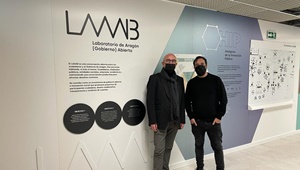
The Director of CIHEAM Zaragoza meets Raúl Oliván, DG of Open Government and Social Innovation of the Government of Aragon

On Wednesday 19th January Raúl Oliván, Director General of Open Government and Social Innovation of the Government of Aragon, met with Raúl Compés, Director of CIHEAM Zaragoza (International Centre for Advanced Mediterranean Agronomic Studies), at Aragon’s Open Governance Laboratory (LAAAB) at the headquarters of the Department of Citizenship and Social Rights. They explored topics of common interest for both institutions and analysed opportunities for mutual collaboration. In particular they discussed how the HIP model (Hexagon of Public Innovation) could enhance the potential of CIHEAM’s Institute in Zaragoza and be applied at international scale in the scope of food and agriculture.

Online Advanced Course Aquaculture Epidemiological Surveillance

CIHEAM Zaragoza and the EU H2020 funded project MedAID (Mediterranean Aquaculture Integrated Development, Grant agreement No 727315) organized an advanced course for professionals on “Aquaculture Epidemiological Surveillance” with the collaboration of the University of Zaragoza which was held online from 23 September to 28 October 2021 over a period of 5 weeks with 16 live streaming sessions. The total time required to complete the course, including individual and practical work, was 64 hours. The course was structured in five topics and at the end of the theoretical part, different experts were invited for the online sessions to delve into the most important aspects of each topic.

The initial topic was purely theoretical, the concepts included in the syllabus were practised and understood through suggested reading and self-tests. In the second topic the focus was placed on epidemiological surveillance as well as its classification and new approaches that are being applied in the aquaculture sector. Two expert sessions were organized with Edmund Peeler (CEFAS, UK) who made a communication entitled “The World Organization for Animal Health (OIE) and its role in aquaculture health” in which he explained the functioning of an institution as important for animal health such as the OIE; and Edgar Brun (NVI, Norway) who made a communication entitled “Epidemiological surveillance of salmonid aquaculture in Norway of listed and non-listed diseases” through which it was possible to discuss and understand how epidemiological surveillance is managed in a reference country, such as Norway, for listed and non-listed diseases.

The third topic was the study and analysis of the disease and included very diverse concepts such as sampling, of great importance in aquaculture, or the impact that these diseases have on production. The sampling was explained in depth by Professors Ana Muniesa and Ignacio de Blas (Univ. Zaragoza, Spain) in two practical work sessions in which various computer exercises were performed using the WinEpi epidemiological calculator. To understand the impact that these diseases have on aquaculture production and the diagnostic procedures used in each, 3 invited presentations were delivered: “Bacterial diseases with impact on seabass and seabream farming” with S. Zrncic (HVI, Croatia), “Viral diseases with impact on Mediterranean fish farming” with A. Toffan (IZSVe, Italy) and “Diagnostic procedures in the case of mortality caused by unknown aetiology” with N. Vendramin (DTU, Denmark).

The 4th topic focused on the prediction of disease, risk and modelling and risk exercises were explained in depth by Professor Ana Muniesa (Univ. Zaragoza, Spain) in a practical work session in which various computer exercises were performed using the WinEpi epidemiological calculator. In addition, a guest lecture was delivered entitled “Risk assessment of VER/VNN introduction and spread in seabass farms” by S. Tavornpanich (NVI, Norway) in which he looked into aspects of risk and disease modelling with a specific case such as VER/VNN.

The final topic involved tools for control and eradication since the main objective of epidemiology is to serve as a basis for the development of policies that influence human health, such as the prevention and control of diseases. There were 2 guest sessions: “Biosecurity in Mediterranean fish farming” by A. Le Breton (Vet’Eau, France), and “Fish farming health defence groups in Spain. Objectives and surveillance programmes” by J. López (FEADSA, Spain) and a final session coordinated by the FAO on “FAO tools for the evaluation and improvement of surveillance systems” that was broadcasted openly in an attempt to reach a larger audience. This session included the following talks: “FAO tools: SET” with Sophie von Dobschuetz and her team, “Mapping Tool and ATLASS” with Beatrice Mouillé, “GEMP, PPEP and AAR” with Ludovic Plee, “Adaptation of SET to aquaculture” with A. Muniesa and B. Basurco, and “Twelve (12)-point checklist for surveillance of diseases of aquatic organisms” with Melba Reantaso.

The course generated a great interest in view of the hundred and ten applications received from 31 different countries. Eventually, 30 aquaculture health experts participated in the course from the following 20 countries: Chile (1), Croatia (1), Ecuador (1), Egypt (2), Greece (2), Italy (1), Macedonia (1), Malaysia (1), Morocco (2), Norway (1), Peru (2), Portugal (1), Serbia Montenegro (1), Spain (6), Sri Lanka (1), Tunisia (1), Turkey (2), Ukraine (1), United Kingdom (1), and USA (1). Participants came from national administrations, aquaculture and biotechnology sectors, research and university.

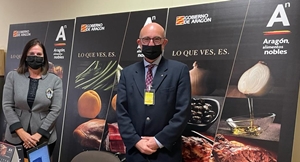
Meeting of Raúl Compés, Director of CIHEAM Zaragoza, and Carmen Urbano, General Director of Agrifood Promotion and Innovation of the Government of Aragon

On 20 December, Carmen Urbano, General Director of Agrifood Promotion and Innovation of the Government of Aragon, welcomed Raúl Compés, Director of CIHEAM Zaragoza, to the headquarters of the Department of Agriculture. During the meeting they analysed opportunities for collaboration between the two institutions and identified topics of common interest such as the processes of agrifood industrialization, business models and digital marketing, quality standards and the economics of wine. In the short term, the Director of CIHEAM showed his commitment to participate in the “Círculo Agroalimentario de Aragón”.

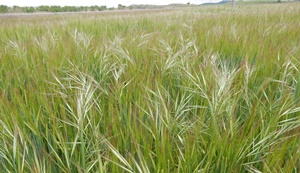
Advances in weed management for sustainable agriculture

Weeds cause severe yield losses in crops, which together with environmental and health concerns, make weeds one of the most important biotic constraints to agricultural production.

The Mediterranean region, characterized by severe water shortage, is particularly vulnerable to weed damage. All these problems are recently aggravated by invasive weeds, the rapid evolution of herbicide resistant weeds and the potential threat of global climate change.

In addition, the lack of new modes of herbicide action, the reduction in the number of registered herbicides, and the public concern for safer food and environmental health, further complicate the situation and emphasize the need for advanced knowledge on sustainable weed management.

In this context, the course is organized by CIHEAM Zaragoza, ICARDA, CITA, EWRS and SEMh to provide the most updated information so that you can: i) Be aware of the current challenges in weed control and the need to adapt weed management to the present requirements of sustainable agriculture; ii) apply weed biology and ecology concepts towards sustainable and improved weed management; iii) be familiar with new tools for weed detection and sustainable technologies for weed prevention and control; iv) appreciate the potential of integrating the preventive, cultural and direct methods for improving weed management; v) gain basic and applied knowledge on the safe and rational use of herbicides; and vi) analyse case studies using an integrated weed management approach. Likewise the course is an opportunity to network with professionals from other countries and share knowledge on recent trends in weed science and strengthen cooperation to address current production and environmental issues

Dates: 28 March to 2 April 2022

Venue: CIHEAM Zaragoza (Spain)

Organizers: CIHEAM Zaragoza, ICARDA, CITA, EWRS and SEMh

Application deadline: 14 January 2022

For more information: https://edu.iamz.ciheam.org/WeedManagement/en/

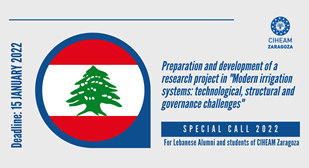
Special Call addressed to the Lebanese Alumni and students of CIHEAM Zaragoza – Modern irrigation systems: technological, structural and governance challenge

CIHEAM Zaragoza, in the context of the continuous work with Lebanese students, and in solidarity with the current critical situation in Lebanon, has taken the initiative to launch a special call aiming to support research programmes, technology transfer and innovative initiatives. This special call has one action aiming to finance a research mission/stay in Spain, with the support and supervision of CIHEAM Zaragoza staff, during the year 2022.

Action
Candidates should respond to the action “Preparation and development of a research project in Modern irrigation systems: technological, structural and governance challenges”.

Eligibility
All Lebanese alumni or students of CIHEAM Zaragoza are eligible to apply. Priority is given to candidates involved in scientific research of interest for our Institute and/or involved in agricultural development and/or technology transfer projects in public institutions or private enterprises in Lebanon. CIHEAM Zaragoza is committed to principles of gender equality.

How to apply
The call for applications follows a one-step procedure. The applicants shall provide, in brief, the following documents:
• A recent CV
• A letter of motivation
• Proposal: the candidate should provide a brief proposal (4,000 characters max.) of the mission requested, including the main objectives, methodology and expected outcome & impact
• Authorization/approval from the host institution (when needed).

The documents should be sent to aguinaco@iamz.ciheam.org indicating on the subject field: Special Call 2 – Lebanon 2022.

Evaluation criteria
The evaluation of the candidates will be conducted by a mixed jury composed of members of CIHEAM Zaragoza and members of other institutions that collaborate with our Institute. The evaluation will be based on the quality of the proposal, the scientific interest and urgency of the projects, the academic and research background of the candidates, and the expected utility of the results.

Grant
The grant will include a monthly subsistence allowance for a stay of 6 months in Spain.

Commitments
The successful candidate will submit an Interim Report on the activities carried out and results obtained to the supervisor at the Institute, who will be appointed by the Director, at the end of the third month of the stay. A Final Report will be submitted at the end of the stay following the same procedure.

Time frame and deadlines for the call for applications
• 1st December 2021 – Launch of the call
• 15th January 2022 – Deadline to receive applications
• 25th January 2022 – Communication of the final list of successful applicant
• Early February 2022 – Start of implementation and mobility