Way forward for regional collaboration

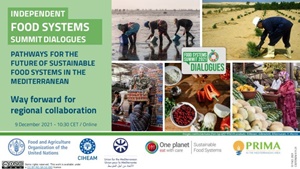
The third independent Food Systems Summit Dialogue for the Mediterranean Region (SFS MED dialogue) is co-convened by the International Centre for Advanced Mediterranean Agronomic Studies (CIHEAM), the Food and Agriculture Organization of the United Nations (FAO), the Secretariat of the Union for the Mediterranean (UfM), the One Planet Network’s Sustainable Food Systems Programme (OPN-SFSP) and the Partnership for Research and Innovation in the Mediterranean Area (PRIMA) Foundation, and it is the prosecution of two other Independent Dialogues on “Pathways for the future of sustainable food systems in the Mediterranean” held in April and June 2021.

Following these two Dialogues, the FAO, the CIHEAM and the UfM conducted a stocktaking exercise of national and independent dialogues that took place in the Mediterranean region, as a starting point to reflect on the ongoing efforts by countries and stakeholders in the preparation and follow-up to the UN Food Systems Summit (UNFSS).

More specifically, the stocktake will allow to highlight the main issues and national pathways identified within the UNFSS process across the Mediterranean region, identifying common patterns, trends, and opportunities that can help build strong regional collaboration.

The third SFS-MED Dialogue “Way forward for regional collaboration” will be held online next 9 December (10.30 CET) and is designed to:

  • take stock of regional and national efforts in support of the follow-up to the UNFSS;
  • exchange on the way forward and identify opportunities for collaboration at national and regional level.

For more information visit CIHEAM web site.

Advanced Course on Plant Health Control and Inspection at Border Control Points organized by CIHEAM Zaragoza and MAPA

CIHEAM Zaragoza, in collaboration with the Spanish Ministry of Agriculture, Fisheries and Food has organized an advanced course on “Plant Health Control and Inspection at Border Control Points” from 8 to 12 November 2021.

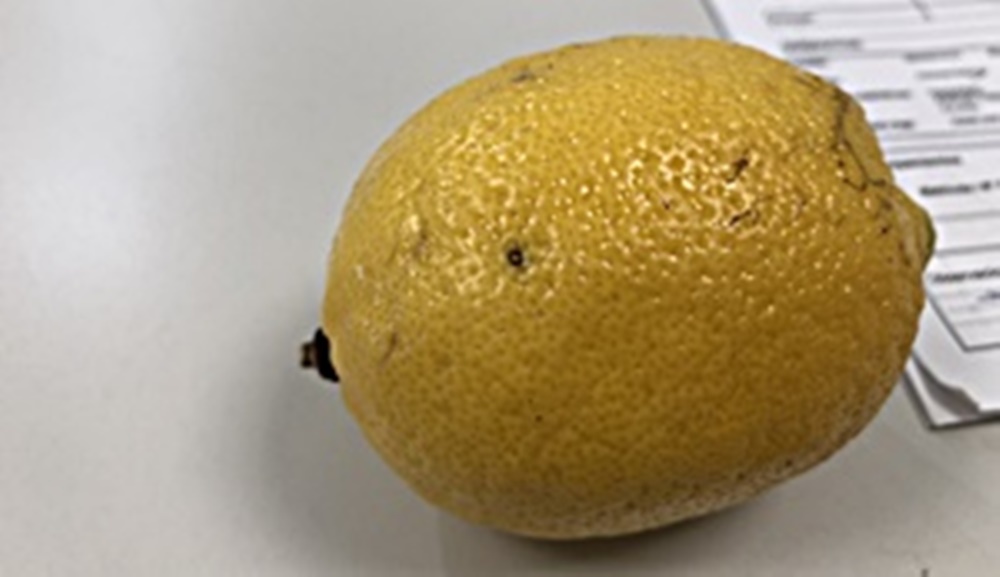
The main objective of the course was to address the procedures for the detection and identification of harmful organisms in plant products at border controls of imports and exports. The course was designed for civil servants employed in agriculture and fisheries, preferably plant health inspectors.

Fifteen inspectors followed the course that was given by twelve experts from different Spanish National Reference Laboratories. The course lasted 5 days, 3 of which consisted of online training to study the most serious quarantine pathogens (symptoms, detection, sampling and laboratory dispatch methods) and 2 days of face-to-face training to carry out laboratory practicals in Valencia.

Exhibition ‘Science according to Forges’ at CIHEAM Zaragoza

The exhibition ‘Science according to Forges’ was opened last 9 November at CIHEAM Zaragoza. The display is organized by Consejo Superior de Investigaciones Científicas on the occasion of its 80th anniversary, with the collaboration of the Fundación General CSIC through the ‘Cuenta la Ciencia’ grant scheme, as well as with the support of the Fundación Dr. Antoni Esteve and the Instituto Quevedo de las Artes del Humor, which belongs to the Fundación General Universidad de Alcalá.

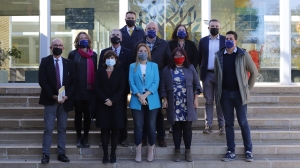
The presentation of the exhibition was attended by Mª Jesús Lázaro, CSIC Delegate in Aragón, and Maru Díaz, Councillor for Science, University and Knowledge Society, as well as the directors of the Aula Dei campus centres (IPE, EEAD, CIHEAM Zaragoza, CITA and Laboratorio Agroambiental).

The exhibition brings together a selection of cartoons by Forges featuring science and technology which were published in the newspaper El País between 1995 and 2018. The display can be visited until 25 November at CIHEAM Zaragoza.

Online round table discussion on agrofood exports: challenges after the pandemic

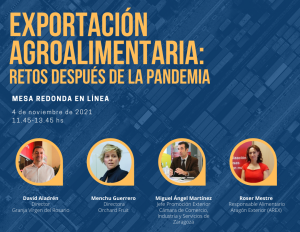
Next 4 November CIHEAM Zaragoza organizes an online round table discussion titled “Agrofood exports: challenges after the pandemic» in the framework of the 18th edition of the International MSc programme in Agrofood Marketing, which is held at the the Institute from  27 September 2021 to 3 June 2022.

The panelists are David Aladrén (Managing Director of ‘Granja Virgen del Rosario’), Menchu Guerrero (Managing Director of Orchard Fruit), Miguel Ángel Martínez (Head of Foreign Trade at Zaragoza’s Chamber of Commerce) and Roser Mestre (Head of the agrifood area at AREX).

Participation in the round table discussion is free upon registration.

Date: 4 November 2021

Time: 11:45 am a 1:45 pm

Registration: https://iamz-ciheam-org.zoom.us/webinar/register/WN_fLDWaSPBROq1eiJV5yW3ug

Raúl Compés, Director of CIHEAM Zaragoza, at the Future of Tourism World Summit

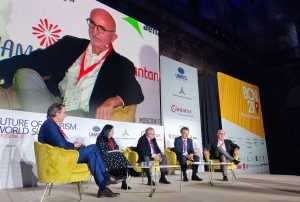
Last 27 October, Raúl Compés, Director of CIHEAM Zaragoza, participated in the BCN21 Conference “Future of Tourism World Summit” held in Barcelona and organized by the World Tourism Organization (UNWTO), the INCYDE Foundation and the Advanced Leadership Foundation. Raúl Compés spoke at the round table “A conversation on Wine Tourism and Rural Development” and discussed the factors that have made of wine tourism a strategic activity for wineries, wine growing regions and wine producing countries.

Tourism is the sector most affected by pandemic restrictions. Responsible for almost 11% of world GDP, it is also one of the most dynamic sectors with the ability to contribute to reactivating the economy worldwide due to its capacity to involve practically every productive sector, to generate more agile, inclusive and sustainable development processes.

For this reason, the Advanced Leadership Foundation, the World Tourism Organization (UNWTO) and the Incyde Foundation have organized  this World Summit to discuss the future challenges facing the global economy in the short, medium and long term, bringing together some of the most influential leaders and institutions in order to envision the future.

Summary of the advanced online course on olive growing and climate change organized by CIHEAM Zaragoza and the International Olive Council (IOC)

CIHEAM Zaragoza and the International Olive Council (IOC), organized the advanced online course “Olive Growing and Climate Change” from 27 September to 1 October.

The subject of the course was of great interest and attracted a large number of applications (124) from 26 countries in Europe, Africa, Latin America and Asia. Seventy six professionals from public institutions, universities, research centres and private companies (Algeria, Argentina, Brazil, Chile, Croatia, Cyprus, Egypt, France, Georgia, Greece, Iran, Israel, Italy, Jordan, Lebanon, Morocco, Pakistan, Palestine, Portugal, Slovenia, Spain, Tunisia, Turkey, United States and Uruguay) were selected to participate in the course.

The course was divided into 5 sessions transmitted live via the Zoom platform. Twenty two experts from universities, research centres, consultancy firms and international bodies in different countries delivered lectures on various topics related to olive growing and the impact of climate change. There were sessions on the current situation of olive growing and on the scientific evidence of climate change and future projections for the Mediterranean regions as well as aspects of climate change related specifically to olive growing (phenology, physiology, pests and diseases and adaptation in different environments). The participants became familiar with the process-based model OliveCan and use of models to predict flowering and production within the context of climate change.

The course began with a presentation of IOC and CIHEAM Zaragoza, the organizing institutions of the course. The scientific coordinator of the course Helder Fraga from UTAD in Portugal, presented the programme and lecturers during the ‘Class 0’ session. The following week, on the first day of the course, the IOC representative Catarina Bairrao spoke of the current situation and prospects for olive growing in a climate change scenario. Dr Joao Santos presented the latest scientific evidence of climate change and the projections for the Mediterranean area.

Several lectures were delivered on how climate change affected the biophysical aspects of the olive grove. The part addressing phenology was given between 3 lecturers (Drs Fabio Orlandi from the Università degli Studi di Perugia in Italy, Ali Ben Dhiab from the Institut de l’Olivier, Tunisia, and José Antonio Oteros from the University of Cordoba in Spain). The topic on evapotranspiration, water use efficiency and water balance and yield was addressed by Dr Luca Testi from IAS-CSIC, Cordoba. Use of sensors to characterize olive groves is a very important aspect in the use of models as tools to understand processes and interactions, and was explained by Dr Ignacio Lorite from IFAPA in Cordoba. Giora Ben Ari from the Volcani Center in Israel spoke about olive product quality and Dr Paula Baptista from the CIMO centre in Portugal spoke about pests and diseases.

Regarding the mitigation of climate change, Antonio Montilla from the firm CO2 Consulting in Cordoba presented the environmental assessment and carbon footprint analysis. Dr Georgios Koubouris from ELGO DIMITRA, Greece spoke about carbon sequestration and good climate-change mitigation practices.

As for adaptation of olive growing to climate change, Dr Javier Hidalgo from IFAPA, Cordoba, spoke of irrigation management and pruning severity in olive trees. Also from IFAPA, Dr Milagros Saavedra explained the importance of cover crops in olive groves. As far as the adaptation of varieties is concerned, Dr Carlos Trapero of the University of Cordoba spoke about the selection and improvement of adapted varieties and Dr Mariela Torres from INTA Argentina addressed the adaptation of varieties selected for new olive growing areas.

Case studies were also presented. Dr Jesús Rojo of the Complutense University of Madrid explained the use of models to predict flowering and production in the context of global warming and ran an exercise with R Studio. Dr Álvaro López-Bernal from the University of Cordoba presented the OliveCan model and Dr Ignacio Lorite addressed the integration of experimentation and modelling to assess the impacts of climate change in southern Spain. In the last two case studies Dr Helder Fraga presented a simulation of olive yield in areas of southern Europe in different climate change scenarios and Dr Takeyasu Kubota of the Shozu Olive Research Institute of Japan presented the challenges for adaptation of olive growing in new climates.

The course ended with a round table discussion that addressed the local, regional and national adaptation and mitigation measures as well as international coordination measures. The participants were requested to prepare, before the beginning of the course, a brief document on the initiatives of mitigation and adaptation to climate change in the olive groves of their specific regions. Besides sharing these documents among participants and lecturers, the round table provided the opportunity for participants to make brief presentations. There were also general questions on the course to encourage debate and make the session as dynamic as possible.