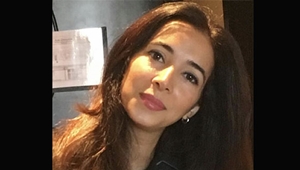
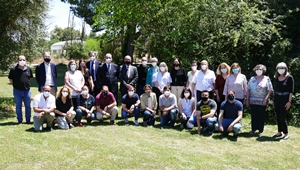
Prof. Lamiae Ghaouti (IAV Hassan II, Morocco): New President of the CIHEAM Advisory Board

Prof. Lamiae Ghaouti is in charge of the Department of Cooperation, Partnership and Development at the Agronomic and Veterinary Institute Hassan II (IAV Hassan II, Rabat, Morocco). She also holds the position of Head of the Department of Plant Production, Protection and Biotechnology where she has been teaching since 2011. She completed her PhD in Agronomy, Specializing in Plant Genetic Improvement at Georg-August Göttingen University in Germany, where she completed her PhD in Agronomy and received the Kurt von Rümker Prize in Quedlinburg in 2009. Since 2019, she has been a member of the Advisory Board, the scientific council for the CIHEAM.

Ms. Ghaouti was unanimously appointed president by the members of the board. In addition to the organization of the thesis prize, the CIHEAM Advisory Board supports the main strategic orientations of the Organization such as the initiatives of the corporate working groups, the policies of Social and Environmental Responsibility as well as in terms of publications.

New feeds and feeding technologies in aquaculture

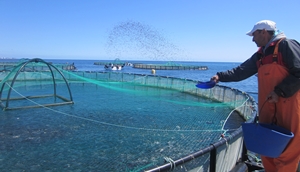
An advanced course for professionals on “New Feeds and Feeding Technologies in Aquaculture” was organized online from 14 to 23 June 2021 by CIHEAM Zaragoza and the EU H2020 funded project MedAID (Mediterranean Aquaculture Integrated Development. Grant agreement No 727315), with the collaboration of the EU H2020 projects PerformFISH (Integrating Innovative Approaches for Competitive and Sustainable Performance across the Mediterranean Aquaculture Value Chain) and NewTechAqua (New technologies Tools and Strategies for a Sustainable, Resilient and Innovative European Aquaculture).

The 166 applications received from 36 different countries of Europe, Africa, Latin America, and Asia are proof of the great interest in the subject matter of this course. The course was finally attended by a total of 49 professionals from 19 countries (Algeria, Belgium, Brazil, Colombia, Czech Republic, France, Greece, Ecuador, Egypt, Ireland, Italy, Morocco, Norway, Peru, Portugal, Spain, Tunisia, Turkey and the United Kingdom) from universities and R&D institutions as well as from aquaculture firms and the aqua feed industry.

During 8 online streaming sessions, 13 experts from the most renowned organizations and institutions delivered a programme of lectures, applied formulation exercises, group work and discussions on the topic to give an overview of existing and up-coming feed ingredients, what factors should affect the choices of feed and how feeding strategies and technologies are improving. Lecturers came from Univ. Bologna. IRTA, Bluegrove, NOFIMA AS, Seafoodmatter, Univ. Las Palmas de Gran Canaria, Dibaq Group and HCMR.

Topics covered during the course included sessions on: i) how to select the best feed for the fish farm, ii) how to evaluate a feed, iii) how to use the feed, iv) customers’ requirements and aquaculture feed legislation, v) feed trials, and vi) conclusions and recommendations from the MedAID project on improving zootechnical performance.

As regards the session on how to select the best feed for the farm, A. Bonaldo from Univ. Bologna gave three presentations to introduce participants to the different factors to be considered in fish feeding (nutritional requirements of the different species, production systems – intensive, RAS, extensive – and environmental conditions, including fish density). There were questions from participants related to the use of RAS and how to control water quality.

As regards the session on how to evaluate a feed, B. Hatlen from Nofima, gave an overview of protein raw materials, and their amino acid profile and new and potential sources of proteins, including micro and macroalgae, animal by-products, and industrial by-products. He also made a presentation about the use of carbohydrates and energy in aquafeeds and the use of starch as a binder, and a third presentation on starch and energy, focusing on the effects of protein substitution and increase in carbohydrates and problems related with hepatic size and composition. M. Carvalho (Univ. Las Palmas de Gran Canaria), gave a lecture about the importance of lipids in the diets and especially the essential fatty acids EPA and DHA and the balance between them. A large part of the presentation was also related to the new and potential sources of lipids (microalgae, krill, genetically modified plants) and their use in Europe. E. Gisbert (IRTA) spoke about the use of additives (prebiotics, probiotics, beta glucans, etc.) as immune-modulators, microbiome enhancers, etc. T.A. Samuelsen (Nofima) addressed feed technology and the different factors (temperature, humidity) needed for a good manufacture of pellets depending on required characteristics (size, floatability, etc,).

Finally, the practical group work on how ingredients affect feed formulation was organized by Nofima (T.A. Samuelsen, M. Moren). The participants were divided into 6 groups and asked to work with a pre-designed excel file to formulate 3 types of feed: (1) optimum feed in terms of nutritional composition; (2) feed covering the minimum requirement of nutrients and at a low price and; (3) a highly sustainable feed considering the CO2 footprint. The groups presented the results on the last day of the course.

The session on how to use the feed consisted of four lectures. L. Parma from Univ. Bologna presented the factors involved in fish feeding including environmental factors, fish physiology, pellet composition, attractiveness and size, etc. He presented the results of the trials carried out in the MedAid project (fish density, feeding frequency, changes in temperature and feeding) and the factors affecting feed intake such as chronic stress. Thereafter, N. Papandroulakis (HCMR) gave a very interesting lecture on feeding methods and technology for sea cages and the parameters to be considered. He also showed several systems used in sea cages for automatic feeding and for estimating the biomass of the fish in sea cages.

E. Meseguer from Dibaq, gave a detailed, practical lecture about how to programme feeding in sea cages or tanks (any type of aquaculture facility) depending on the species, maturation, growth during the year, number of cages or tanks, farming conditions and selection of number and quality of aquafeeds (summer and winter), frequency of feeding (depending on the size of the fish, farm location, environmental conditions), everything depending on the market plan of the fish farm. He had active interaction with participants giving information about feeding indicators, and practical details in terms of i.e. number of pellets/kg feed depending on the size. Finally, a presentation about the application of artificial intelligence in aquaculture feeding was made by O. Fretheim (Bluegrove, Norway) who provided information about the new software CageEye for measuring fish behaviour and distribution in sea cages and the reaction of stock during feeding, as well as water temperature, light penetration and other environmental conditions in the sea cages. The systems use that information to adjust the feeding depending on the feeding behaviour of the fish. The session finished with an open debate on the use of new technologies in different areas of Europe and the Mediterranean.

In the session on customer requirements and challenges, M. Hidalgo (Seafoodmatter) started with a presentation regarding the different certifications, and certification companies, related to feed ingredients, fisheries, fisheries improvement projects, alternative feed ingredients, etc., including working conditions (fisheries, companies, retailers, etc.) and organic production. A great deal of information was provided about the rules and organisms in charge of these certifications leading to a dynamic exchange of ideas and information with the participants. This was followed by a comprehensive, updated review of the legal framework by A. Tiana from Dibaq who spoke about how it affected the use of ingredients and feed formulation, sales and the use of GMOs in the production of aquafeeds. Tiana pointed out some important legal differences between countries, and gave detailed information about the list of ingredients and additives (antioxidants, colour additives, aromas, vitamins, minerals, amino acids, probiotics, etc.) permitted in feed production and what must be added on the label of the product. The session ended with an open debate based mainly on the EU regulation on ingredients or sustainability, the use of PAPs in feeds, fish imports from countries not following EU regulations, etc.

The session on feed trials aimed to help participants in designing feeding trials to better adapt feeds and feeding to their farm conditions and production systems. It started with a review presentation from A. Estevez (IRTA) on benchmarking and field trials, where different real cases, including the case study of the MedAID project trial on seabream, were presented. Thereafter, a practical group work was organized for the design of three trial cases: a) to assess the effects of 3 commercial feeds on the final quality of the fish in seabream ongrowing from 200 gr to 400 gr; b) to assess 5 different commercial feeds designed to improve growth and feed efficiency in rainbow trout or salmon juveniles; and c) to assess the use of a new ingredient (different inclusion levels of insect meal) in tilapia (100 g initial weight). The session ended with the presentation and discussion of results of the groups, and a presentation from M. Moren (Nofima) providing sound recommendations on how to design and perform a good feed trial.

The course ended with a presentation from A. Estevez of the main conclusions and recommendations from MedAID project on improving zootechnical performance (Work Package 2), where participants were also consulted and asked to give their feedback.

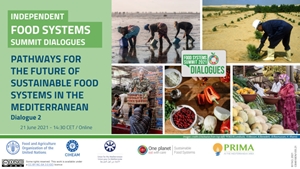
Towards a Mediterranean common vision for the sustainable food systems of tomorrow: 2nd Independent Dialogue of the United Nations Food Systems Summit

For the first time, a dozen Mediterranean countries, several cooperation and research actors participated in the 2nd independent Mediterranean Dialogue of the United Nations Summit on Food Systems. A new step to advance on common ambitions for the region. Organised by the CIHEAM, the FAO, the UfM, the One Planet network and the Prima Foundation for more sustainable and inclusive food systems in the Mediterranean region, this 2nd Dialogue follows the first one held on 27 April 2021. A common vision for the future and ambitious programmes emerged from the debates, particularly in the framework of the SFS-MED platform. The conclusions of this 2nd Dialogue will enrich the preparatory process for the United Nations Summit to be held in New York in September 2021 and the Programme of the 3rd World Conference on the Mediterranean Diet and Sustainable Food Systems in the Mediterranean scheduled for 2022. 

For more information: https://www.ciheam.org/agendas/towards-a-mediterranean-common-vision-for-the-sustainable-food-systems-of-tomorrow/

Wastewater Reuse in Agriculture

The Mediterranean Agronomic Institute of Zaragoza (CIHEAM Zaragoza), together with CIHEAM Bari, has recently organized an advanced course on “Wastewater Reuse in Agriculture” targeting specialists in water and irrigation management in the Mediterranean area. The course took place between 17 and 25 May 2021, with institutional support from ICARDA (International Center for Agricultural Research in the Dry Areas), IWMI (International Water Management Institute) the ReWater MENA Project and the Regional Office for the Middle East and North Africa of the FAO (Food and Agriculture Organization of the United Nations), and the Action Plan for the Water Strategy of the 5+5 Dialogue.

Nineteen specialists from the coorganizing institutions, research centres, universities and firms in different countries lectured on the course, all top experts in their fields of expertise. They shared their knowledge and expertise and answered questions posed by over 50 professionals working in the water sectors of 16 countries in and around the Mediterranean (Albania, Algeria, Egypt, Iraq, Italy, Jordan, Lebanon, Mauritania, Morocco, Palestine, Spain, Sudan, Syria, Tunisia, Turkey and Yemen). Due to the health and safety measures in force during the pandemic, the course was held online, fulfilling all the necessary technical requirements to ensure the smooth-running of the activity. A virtual campus with a repository for the course material was made available to participants, as well as an online simultaneous interpreting service in 3 languages (Spanish, French and English).

During the course, specific sessions addressed health and agronomic aspects related to regenerated water quality; national and international regulations and standards; implementation of new water treatment plants and existing wastewater treatment systems; short, medium and long-term effects of regenerated water use on crop production and soil contamination; the side effects that the use of this type of water can have on agriculture and on the environment, as well as related socioeconomic aspects. The course included practical sessions with virtual video-visits to see water treatment and reuse processes in the Region of Murcia (one of the most active areas in this type of reuse). A practical was also organized to discuss and develop a mock water reuse project where participants took on specific roles (water authority, treatment plant manager, end user, etc.). The aim of this role game was for participants to learn how to apply the technical knowledge acquired throughout the course and get an idea of the complexity and multidisciplinarity involved in developing a project of regenerated water use for the agricultural sector. The combination of theory and practice enabled participants to acquire the knowledge needed to apply water reuse practices in their respective countries, and choose the most suitable treatment system to be used, considering the conditioning agronomic factors in their irrigation systems, the importance of the social and environmental perception of the project and the precise cost analysis that the development of a project of these characteristics requires. The course aimed to harmonize action criteria among the participating countries by training their senior managers, so as to enable the whole Mediterranean area faced with the common challenge of scarce conventional water resources to apply similar water reuse approaches considering the importance of these irrigation practices in environmental, agronomic and social terms.

Members of the Interministerial Commission visit CIHEAM Zaragoza.

Last 8 June CIHEAM Zaragoza Director, Raúl Compés, welcomed members of the Interministerial Commission: Mr. Francisco Aguilera Aranda (Deputy Director General  at Deputy Directorate General for Multilateral Economic Relations and Maritime, Land and Air Cooperation, DG Economic Diplomacy, Ministry of Foreign Affairs, the European Union and Cooperation), Ms Inmaculada Paniagua (Technical Advisor of the Department of Cooperation with the Arab World and Asia, AECID, Ministry of Foreign Affairs, the European Union and Cooperation) and Mr Antonio Rodríguez de Liévana Sahagún (Deputy Director General of International Relations and Community Affairs, Ministry of Agriculture, Fisheries and Food). The Director presented his team and representatives of Training and Cooperative Research Projects who spoke of the main activities conducted at CIHEAM Zaragoza.

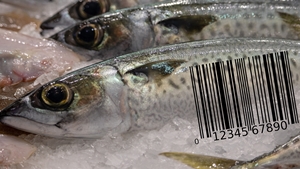
Innovative Tools and Methods for Ensuring Seafood Authenticity

An advanced course for professionals on “Innovative tools and methods for ensuring seafood authenticity” was organized online from 26 April to 6 May 2021, by CIHEAM Zaragoza, together with the INTERREG Atlantic Area Project SEA-TRACES and the Fisheries Division of the FAO.

The 178 applications received from 33 different countries of Europe, Africa, Latin America, and Asia shows the interest in the subject matter of this course. The course was finally attended by a total of 30 professionals from 17 countries (Algeria, Argentina, Egypt, Guinea Conakry, India, Lebanon, Libya, Morocco, Portugal, São Tomé, Spain, Sri Lanka, Sweden, Tanzania, Tunisia, Turkey and United Kingdom) from public institutions and the seafood industry, such as members of the competent authorities for official controls, ONGs, technical advisors and professionals from R&D institutions dealing with seafood control and management.

During 9 online streaming sessions, nine invited renowned experts from research centres, universities and private companies in different countries delivered a programme of lectures, which also included applied examples, real case studies and discussions, with the objective of of introducing participants to innovative tools and methods for ensuring seafood authenticity. Specific lecture topics covered during the course included sessions on: global seafood trade; Food fraud in the seafood value chain; ensuring seafood authenticity; methods for ensuring seafood authenticity; SEA-TRACES case studies; and a series of practical work exercises on the analysis of seafood labelling in different products and countries, protein and DNA analysis methods, FoodChain Lab, and the utilization of rapid and on-site methods.

The cost of food fraud to the overall global food industry is estimated at around 30 billion euro, which threatens the sustainability of supply chains. To ensure sustainability and to meet the current demands of the global seafood marketing chain to combat fraud, an effective, science-based traceability system must be able to identify species and the geographical origin, and to distinguish between wild-capture and farmed products. The system must also be able to identify fresh and frozen products, and the many different forms of processed seafood that are currently traded.

The course opened with the introduction of the organizers CIHEAM, FAO and SEATRACES. An overview about the SEATRACES project was presented by the coordinator Carmen G. Sotelo. The project aims to develop tools to address a better control of traceability and labelling of seafood. Two introductory sessions provided by John Ryder from FAO dealt with the world importance of seafood for human nutrition and the overall production and trade of this type of food. There was also another session where the problem of food fraud and, in particular seafood fraud, was addressed, providing many examples of this criminal activity and its impact for both business and consumers.

The course contained several lessons for explaining the theoretical basis of the main authenticity tools available. Dr. Monica Carrera from CSIC explained the use of proteomics tools for the identification of species. She focused on the use and power of mass spectrometry for the fast identification of fish species, providing the existence of a database that supports the correct identification of specific peptides present in the sample. Dr. Miguel Angel Pardo from AZTI and Dr. Carmen G. Sotelo from CSIC addressed the use of different DNA analysis methods to differentiate species. Among the methods explained, the following can be mentioned: PCR, real time-PCR, isothermal amplification, DNA sequencing (Forensically informative Nucleotide Sequencing, FINS), DNA probes and portable instruments and techniques. Dr. Françoise Denis from MNHN went on to describe other methods, generally described as omics, to solve different authenticity problems such as the presence of mixed species in processed products using Next Generation Sequencing, use the microbiota analysis to identify origin or production methods and Single Nucleotide Polymorphisms (SNP) to differentiate populations and geographic origin.

Dr. Idoia Olabarrieta from AZTI gave an overview of non-destructive and fast techniques such as NIR, Raman and NMR for the differentiation of wild from farmed fish. She also introduced chemometric analysis and the advantages coupling it with NIR spectroscopy and Time Domain Reflectance for the detection of added water or the use a previous freezing process in fish sold unfrozen. She showed that the use of these advanced technologies (e.g. vibrational spectroscopy and chemometrics) could contribute to improving the authenticity of seafood.

Validation and standardization are important requirements for any analytical method. This topic was covered by Mrs. Ute Schröder from MRI who gave some examples of the validation process of fish species identification DNA-based methods, such as DNA sequencing and qualitative qPCR methods. In the case of qPCR methods, she also discussed the concept and determination of important paremeters such as specificity, crosstalk, limit of detection (LOD), efficiency, linearity and robustness.

Another important key element to ensure seafood authenticity is traceability. The topic was addressed by Mr. Valur N. Gunnlangsson from Matis. During his lessons he presented important benefits produced by traceability, such as supply chain transparency, quality control, saving costs, fighting IUU fishing, among others. Important challenges for the fishery industry were also identified and discussed like the definition of Traceable Resource Units that could increase and decrease the granularity of the information transferred from one step to another along the seafood value chain, and the need for standardized formats to allow the exchange of this information.

Some of the SEATRACES case studies were also presented. Dr. Angeles Longa spoke about the Protected Designation Origin (PDO) “Mejillón de Galicia” for mussels and the economic and socioeconomic benefits associated to the brand for the region of Galicia (Northwest of Spain). Dr. Françoise Denis presented an overview of oyster denominations and brands in France, Dr. Miguel Angel Pardo explained the study carried out by AZTI about the label “Anchoa del Cantábrico” including a consumer study to value the potential PDO application for this traditional species in the North of Spain. Finally, Dr. Carmen G. Sotelo spoke of the economic and socioeconomic study performed in Galicia to evaluate the benefits of a brand that helps to recognize artisanal fisheries in Galicia.