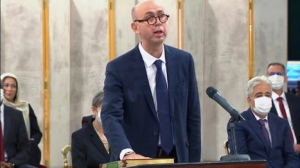
The delegate of Tunisia to CIHEAM, Mr Mahmoud Elies Hamza, has been appointed Minister of Agriculture

The Prime Minister, Najla Bouden, has introduced the members of the new Tunisian government, including the new Minister of Agriculture, Mr Mahmoud Elies Hamza, President of IRESA and delegate of Tunisia to CIHEAM.

CIHEAM Zaragoza would like to congratulate him on his new position and wishes him every success in this worthy mission.

Delegate of Tunisia on the CIHEAM Board of Governors since 5th June 2017, Mahmoud Elies Hamza has been at the helm of the Institution of Agricultural Research and Higher Education (IRESA) since the same year. The Institution of Agricultural Research and Higher Education includes several higher education institutions (including the National Agronomic Institute of Tunisia) as well as research institutions (including the National Institute of Agronomic Research of Tunisia, the National Institute for Research in Rural Engineering, Water and Forestry, the National Institute of Marine Science and Technology or the Arid Regions Institute of Medenine or the Olive Tree Institute of Sfax).

Mahmoud Elies Hamza has been a lecturer in agricultural machinery and director of the preparatory school of biology and geology of Soukra, as well as director of the National Agronomic Institute of Tunisia (INAT).

He was conferred the medal of Knight of the National Order of Merit in the field of education and science in July 2007.

He obtained a first degree in agricultural engineering and a doctorate in agronomic science from the National Agronomic Institute of Paris-Grignon and took postdoctoral studies at the University of Agronomic Science at Gembloux in the field of agricultural mechanization. He is also an expert in the agricultural sector and in rural areas, having worked for organizations such as ONIDO and the FAO.
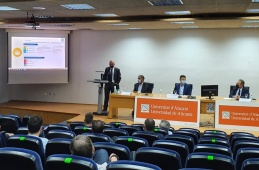
Raúl Compés participates in the opening ceremony of the 9th edition of the MSc programme in “Sustainable Fisheries Management”

The opening ceremony of the 9th edition of the University Master’s Degree in “Sustainable Fisheries Management”was held last 1st October in Alicante. The MSc programme is jointly organised by the University of Alicante (UA), the International Centre for Advanced Mediterranean Agronomic Studies (CIHEAM), through the Mediterranean Agronomic Institute of Zaragoza (CIHEAM Zaragoza), and the Ministry of Agriculture, Fisheries and Food (MAPA), through the General Secretariat for Fisheries (SGP); the General Fisheries Commission for the Mediterranean (GFCM) and the Fisheries and Aquaculture Department of the Food and Agriculture Organization of the United Nations (FAO) provide technical support within the limits of their mandates.

The opening ceremony was held in the Alfredo Orts Hall of the University of Alicante and was also broadcast live; it was attended by José Luis Sánchez Lizaso, Director of the Master; Manuel Barange, Director of the FAO Fisheries and Aquaculture Policy and Resources Division; Raúl Compés, Director of CIHEAM Zaragoza; Antonio Quintana Martínez, Director General of Agriculture, Livestock and Fisheries, Generalitat Valenciana; and Francisco Torres Alfonsea, Vice-rector of Studies, Quality and Languages of the University of Alicante.

More information about the MSc programme here: Sustainable Fisheries Management.

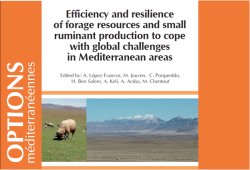
Efficiency and resilience of forage resources and small ruminant production to cope with global challenges in Mediterranean areas

The proceedings of the 1st Joint Meeting of the FAO-CIHEAM Network for Research and Development in Sheep and Goats (Subnetworks on Nutrition and Production Systems) and the FAO-CIHEAM Subnetwork for Research and Development of Mediterranean Forage Resources have been published in CIHEAM journal Options Méditerranéennes with the title “Efficiency and resilience of forage resources and small ruminant production to cope with global challenges in Mediterranean areas“.

The meeting was held at Morocco’s National School of Agriculture in Meknes, from 23 to 25 October 2019, and was of particular significance for three reasons: first, it coincided with the 50th anniversary of the Mediterranean Agronomic Institute of Zaragoza (CIHEAM Zaragoza); second, it was the first joint meeting of these FAO-CIHEAM Networks; and third, it addressed a major challenge for the Mediterranean region: the efficiency and resilience of feed resources and small ruminant production in the light of global challenges.

Small ruminant breeding plays an important role in the agricultural livelihood systems in different Mediterranean countries. However, farmers and shepherds find difficulties to earn a decent living or have a satisfactory lifestyle, due to many reasons: low product prices and high input prices, low productivity and capitalisation, harsh working conditions, decreased attractiveness of farming, social disregard, lack of services in rural areas, competition for land or conflicts of land use with other activities that are considered more profitable, etc. The pillars of sustainability, productivity, profitability and environmental and social benefits of this sector are mainly linked to grazing resources that unfortunately undergo continuous and often severe degradation due to the changes to which they are submitted. In some cases, they are subject to abusive and often excessive use and conversely, in other cases they are almost abandoned.

The effects of climate change are already being felt: reduction in rainfall, rise in temperatures, and successive years of drought or with extreme climatic events, etc. This situation has led to a mutation of extensive grazing systems to farming systems based on feed supplementation. A sustainable management of small ruminant farms requires a better knowledge of the “soil-plant-animal” interactions and integrated approaches, taking into account the socio-economic system. Especially, the resilience of small ruminant systems requires an efficient management of natural and cultivated forage resources in order to face climatic and social challenges.

The objective of the Meeting was to encourage the participation of and interaction between scientists, technicians and professionals to exchange their experiences and to update knowledge on the promising options that would improve small ruminant productivity and enhance the conservation of pastoral forage resources in the Mediterranean countries. This Meeting was organised by the National School of Agriculture of Meknes (ENA) under the aegis of Morocco’s Ministry of Agriculture, Maritime Fisheries, Rural Development, Water and Forests (MAPMDREF), and by the Mediterranean Agronomic Institute of Zaragoza – International Centre for Advanced Mediterra nean Agronomic Studies (CIHEAM Zaragoza), with the collaboration of the Food and Agriculture Organization of the United Nations (FAO) and the H2020 Project iSAGE (Innovation for Sustainable Sheep and Goat Production in Europe, Grant Agreement n679302).

This Joint Meeting gathered 136 participants from 15 different countries and lasted for three days, including a day’s field visit organised with the collaboration of the Moroccan “Association Nationale Ovine et Caprine (ANOC)”. The scientific and technical presentations were structured in different plenary and parallel sessions providing a framework for scientific and technical exchanges, with invited lectures and oral or poster contributions. The plenary sessions were devoted to questions of common interest for the two Networks: What production systems and product chains to meet the societal demand; how to meet the challenge of climate change in Mediterranean agro-pastoral systems; and how to improve the contribution of grazed and cropped forages in feeding systems. The parallel sessions provided time to present and discuss specific issues of interest of the Sheep and Goat Nutrition Subnetwork (Nutritional strategies to improve adaptation and production effi- ciency) and of the Mediterranean Forage Resources Subnetwork (Promising forage resources for Mediterranean production systems). Finally, a workshop presenting the main results and recommendations from the 4-year EU research project iSAGE (Innovation for Sustainable Sheep and Goat production in Europe) was included in the programme.

Your can read the full proceedings here: https://om.ciheam.org/option.php?IDOM=1038

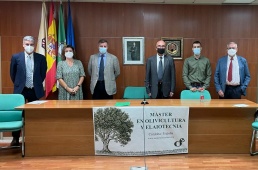
Opening ceremony of the 14th MSc Programme in Olive Growing and Olive Oil Technology

The University of Cordoba (UCO) hosted on September 30 the official opening ceremony of the 14th edition of the MSc Programme in Olive Growing and Olive Oil Technology  co-organized by CIHEAM Zaragoza.

The event was attended by the director of the Secretariat of Masters of the UCO, Álvaro Martínez; the director of CIHEAM Zaragoza, Raúl Compés; the director of the Institute of Sustainable Agriculture of Córdoba (IAS-CSIC), María Leire Molinero; the head of the Department of Olive Technologies and Environment of the International Olive Oil Council (IOC), Pablo Morello; the coordinator of IDF Activities of IFAPA, Ignacio Jesus Lorite; and the director of the Master in Oliviculture and Elaiotechnics of the UCO, Ricardo Fernandez.

The MSc programme in Olive Growing and Olive Oil Technology has been held every two years since 1995 and is organized by the University of Cordoba (UCO), the Ministry of Agriculture and Fisheries of the Andalusian Regional Government, the Andalusian Institute of Agricultural Research and Training, Fisheries, Food and Organic Production (IFAPA), the Higher Council for Scientific Research (CSIC), the International Centre for Advanced Mediterranean Agronomic Studies (CIHEAM), the International Olive Council (IOC) and the Fundación Patrimonio Comunal Olivarero (FPCO). Since the 7th edition, the MSc programme is an official Master of the Spanish university system and also an International Master of the CIHEAM recognized by the Spanish State as equivalent to the official Master degree of the Spanish university system.

From the very beginning, the MSc programme has counted on the participation of international, national and regional institutions since they all have a common interest in sharing their experiences and resources to jointly organize an international training programme for specialists that facilitates the scientific and technical specialization of graduates from different countries, and offers an opportunity to increase international cooperation in this area, especially in the Mediterranean.

To date, more than 1,350 applications have been received, with a participation of 292 students. The students come from 24 countries: Spain, Algeria, Tunisia, Morocco, Portugal, Egypt, Albania, Chile, Turkey, Syria, Argentina, Italy, Greece, Lebanon, Palestine, Peru, Belgium, Croatia, Israel, Libya, Mexico, Montenegro, Jordan and Iran.

Mediterranean forest health in the context of global change

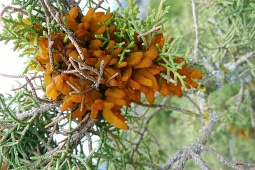
Mediterranean forests are considered as a hotspot of global change impacts and risks. Promoting forest health and adaptation to global change is particularly challenging because of considerable uncertainty in future socio-economic and climatic scenarios, ecosystem responses, and impacts of forest management practices, among other factors.

Forest health is an essential part of sustainable forest management. A shifting pattern in the incidence of the traditional, endemic threats to the Mediterranean forest is foreseen and this will increase the vulnerability of forests and the communities involved in ecosystem processes. Furthermore, new threats are emerging for forest health, either from trade globalization, environmental pollution or climate change.

In this context, EFI, IUFRO and CIHEAM Zaragoza organize this course to: i) provide an overview of global change trends in Mediterranean forests, as well as understand how this change impacts on forest; ii) gain a perspective of the most important climate change drivers threatening forest health in the Mediterranean and the health issues caused by different invasive plant species and forest pests and pathogens; and (iii) provide an integrated overview of the use of methods and tools for an improved assessment, monitoring and surveillance of forest health and to support informed decision making.

Besides, the course is a unique opportunity to meet and network with professionals from all over the world who are working in forest health.

More information: https://edu.iamz.ciheam.org/ForestHealth/en/

New course: Predictive Breeding Tools for Intensive and Sustainable Production under Climate Change Scenarios

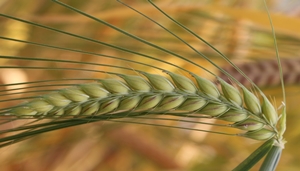
The integration of conventional breeding with high-precision phenotyping, genetic modelling and crop growth simulation methods can improve current predictive breeding to deliver new strategies and toolkits, leading to new, high-yielding varieties selected to cope with anticipated future climatic conditions.

In this context, CIHEAM Zaragoza –together with the EU Projects ERA-Net SusCrop BARISTA (Advanced tools for breeding BARley for Intensive and SusTainable Agriculture under climate change scenarios) and PRIMA GENDIBAR (Utilization of local genetic diversity to understand and exploit barley adaptation to harsh environments and for pre-breeding), and ICARDA (International Center for Agricultural Research in the Dry Areas)– organize this course to raise awareness of the extra challenges imposed by climate change to food security and cereal breeding; give guidance on the possibilities offered by crop and climate models to improve predictions; and provide an integrated overview of the strategies that must be considered to increase breeding effectiveness combining recent advances on genomics and phenomics with crop and climate modelling. Although the course will be focused on small-grain cereals, the predictive tools presented are amenable to other crops. Besides, the course is a unique opportunity to connect and network with professionals from other countries who are interested in breeding predictive tools to cope with climate uncertainty.

For more information -> https://edu.iamz.ciheam.org/PredictiveBreedingTools/en/