CIHEAM partners with UfM to co-organize a session dedicated to women in agriculture

The Union for the Mediterranean organized a Webinar on women in leadership on 5 March. The webinar analysed the challenges that women and girls face to access leadership positions. The discussion brought together a variety of stakeholders from across sectors, who analysed the gendered barriers to leadership. Speakers also shared best practices on how to foster women and girls’ leadership across the region.

The event counted on DG NEAR to present the recently published gender action plan GAP III and shared insights on how it will empower women and girls to participate and lead equally in social, economic and political life. The webinar also presented the UfM’s labelled projects with UNIDO and CEED and launch of the 2021 UfM Women Business Forum.

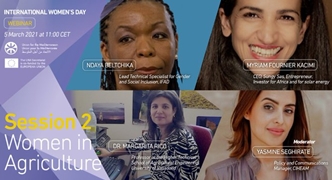
CIHEAM is a partner of the UfM International Women’s Day webinar “Women in Leadership: towards an equal region in a covid-19 world” and co-organised a session dedicated to Women in Agriculture featuring talented speakers Ndaya Beltchika (Lead Technical Specialist for Gender and Social Inclusion, IFAD), Myriam Fournier Kacimi (CEO of  Sungy Sas), Dr. Margarita Rico (Professor at the Higher Technical School of Agricultural Engineering, University of Valladolid in Spain) and Yasmine Seghirate (Policy and Communications Manager and Gender Policy and Women Empowerment focal point at CIHEAM’s Headquarters)

Recording of the session on Women and Agricuture: https://m.facebook.com/ufmsecretariat/videos/1869112126599145/?refsrc=http%3A%2F%2Ft.co%2F&_rdr

Information about the event: https://ufmsecretariat.org/event/international-womens-day-2021/
Training for EFSA FEEDAP panel staff on risk assessment for feed additives

CIHEAM Zaragoza has organised a three part training course for the staff of EFSA´s FEED Unit on risk assessment for feed additives. CIHEAM Zaragoza was selected by EFSA, following a competitive bidding process, to provide the expert training. The course was delivered face-to-face in Parma in December 2019, January 2020 with a final on-line course being provided in February 2021. A subsequent two-day field trip to feed producing facilities will be organised in Spain following Summer 2021. The course has been organised along similar lines of the institute´s well-established training model which engages leading external experts to deliver high-level training on behalf of CIHEAM. The course counted on the participation of over 15 international experts and scientists and covered a wide range of animal species including ruminants, poultry, fish, pets, bees, and snails. The following technical and scientific areas were covered during the course: animal nutrition, animal physiology and production (including feeding techniques, feed formulation, nutrient requirements, etc.), design, conduct and evaluation of feeding trials with food producing animals, pharmacokinetics, pharmacodynamics, metabolism and residue studies and exposure assessment.

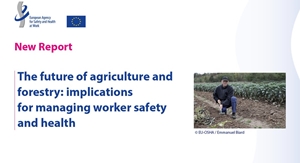
EU report on the future of agriculture and forestry: implications for managing worker safety and health

The EU report “The future of agriculture and forestry: implications for managing worker safety and health” has recently been published and was co-written, edited and designed by CIHEAM Zaragoza projects team. Occupational safety and health (OSH) risks in Europe’s agriculture and forestry sector threaten its long-term viability. This publication explores the OSH challenges facing the sector. It looks at new and emerging risks from smart farming and climate change and examines socio-economic issues, such as adapting to societal pressures and labour market developments.

The report can be downloaded here: https://osha.europa.eu/en/publications/future-agriculture-and-forestry-implications-managing-worker-safety-and-health/view

How women are changing the world of science

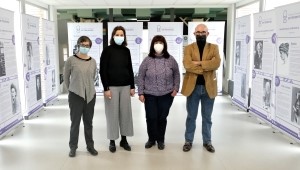
To celebrate the International Day of Women and Girls in Science, last Friday CIHEAM Zaragoza hosted the exhibition “Women that Changed the World” as part of the activities coordinated by the National Association of Scientific and Technological Parks within the “Women in Science and Technology” Project involving the Aula Dei Scientific and Technological Park Foundation and another 17 scientific parks. One of the aims of this project is to bridge the gender gap in the scientific world and encourage young women to consider a career in the field of science and technology.

The exhibition takes a look at the history of science though its most prominent female scientists and includes current examples of women engaged in research on the Campus of Aula Dei; at the Experimental Station of Aula Dei (EEAD), the Pyrenean Institute of Ecology (IPE), the Agrifood Research and Technology Centre of Aragon (CITA), and the Scientific and Technological Park of Aula Dei (PCTAD). The exhibition has already travelled to several schools and, to quote Ana de Diego and María Martin of the PCTAD, the idea is to take it to more education centres, giving greater visibility to women in science, and to inspire more students to take subjects in the field of science and technology.

Now in its third edition, the Women in Science Project has incorporated other activities such as an escape room, virtual workshops, guides, and talks, in an effort to inform of the many professional opportunities for those pursuing scientific careers.

The “Women that Changed the World” exhibition sends out a clear message that things are changing, confirmed by Azucena Gracia, a researcher at the Unit of Agrifood and Natural Resource Economics of the CITA, who points out that in recent years, not only are we seeing more women involved in research and teaching, but they are also taking on senior roles in research management.

For more information:

The Women in Science and Technology Project (Ciencia y Tecnología en Femenino

Digital exhibition “Women that changed the world” (Mujeres que cambiaron el mundo) (in Spanish)

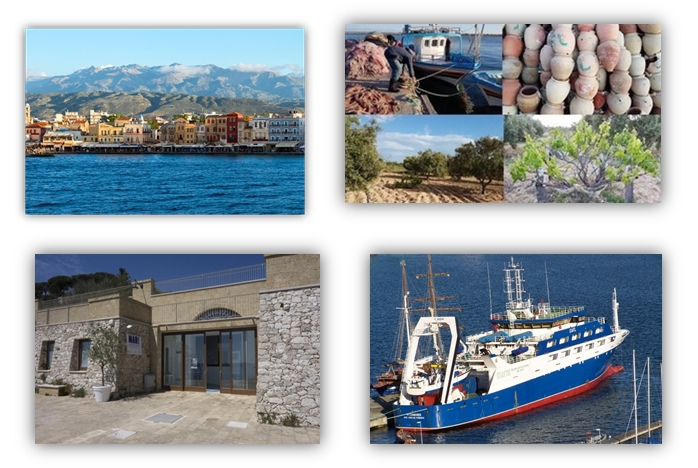
CIHEAM is looking for 4 young consultants to develop an analysis of the priorities and needs for coastal zone management and fisheries in the Mediterranean, and the impact of the coronavirus crisis on this field

CIHEAM is seeking to recruit four young specialists on Sustainable Coastal Zone Management and Sustainable Fisheries Development In the framework of the Working Plan for 2021 of the CIHEAM Working Group on Coastal Zone Management and Fisheries. The selected young consultants will be hired by the CIHEAM Mediterranean Agronomic Institute (MAI) responsible for the section of the analysis to be implemented and directly supervised by the WG member of that Institute.

The Consultant should perform the following tasks:

  1. Identify the major regional and local stakeholders in the Mediterranean, concerned with Sustainable Coastal Zone Management/Sustainable Fisheries. The consultant should seek stakeholders from all the segments involved in the field they are assigned. They are advised to follow the guidance from FAO about developing sustainable food value chains (http://www.fao.org/3/a-i3953e.pdf).
  2. Collect data on the   problems and issues that Sustainable Coastal Zone Management/Sustainable Fisheries is facing, particularly during the pandemic of Covid-19. Information and data should be obtained from existing reports, technical documents and publications produced by relevant stakeholders.
  3. Following the identification of stakeholders from all segments of the studies subsector, the consultant should conduct interviews and questionnaires in order to elicit experts’ and stakeholders’ opinions and experiences.
  4. Collaborate with the other consultants/specialists recruited in this call by the Mediterranean Agronomic Institutes.
  5. Conduct a SWOT Analysis using the above-mentioned collected information. Consultants are advised to follow the SWOT analysis methodology and other Consultation tools presented in the EAF Toolbox (http://www.fao.org/fishery/eaf-net/toolbox/en) developed by FAO.
  6. Generate a harmonised report based on the gathered information as well the subsequent SWOT analysis.

Mr Raúl Compés elected new Director of CIHEAM Zaragoza

Zaragoza, 2nd December 2020

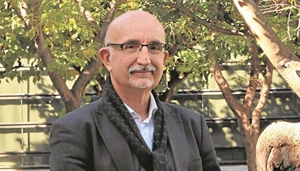
The CIHEAM Governing Board has ratified the appointment of Mr Raúl Compés as the new Director of CIHEAM Zaragoza.

The Governing Board of the International Center for Advanced Mediterranean Agronomic Studies (CIHEAM) agreed on 27th November to ratify the appointment of Mr Raúl Compés as the new Director of CIHEAM Zaragoza. Mr Compés, professor in the Department of Economics and Social Sciences at the Polytechnic University of Valencia (UPV) will begin to perform his duties on 4th January 2021 replacing Mr Javier Sierra Andrés, former Director of CIHEAM Zaragoza, who served as the leading representative of this Institution from September 2015 to June of this year.

Mr Raúl Compés will be leading the only international organization located in Aragon, being the Spanish Delegation of the CIHEAM, an intergovernmental organization created in 1962 by the OECD and the Council of Europe, whose foremost mission is to promote international cooperation between the two shores of the Mediterranean; that is, between the South of Europe and North Africa and the Middle East, to generate, transfer and apply knowledge in the areas of agro-food, environment and rural development. Throughout this journey of 50 years, CIHEAM Zaragoza has trained over 15,000 leaders in the agro-food sector, especially from the Mediterranean basin and Africa, as well as from Latin America and, in recent years, from Asia. CIHEAM Zaragoza has also delivered more than 400 advanced courses, in which over 1,000 lecturers, as well as experts from universities and reference centers from around the world, have participated. Finally, to facilitate access to this specialized training, CIHEAM Zaragoza has awarded 6,700 scholarships to students.

Mr Raúl Compés López holds a PhD in Agricultural Engineering from the Polytechnic University of Valencia (UPV). His teaching, research, transfer and technical assistance activities are framed in the area of Economics and Politics of the agro-food sector. His recent work comprises wine, citrus, production costs, trade agreements, climate change, competitiveness and international markets, big data, sustainability, social economy and ethics. He has been President of the Spanish Association of Agricultural Economics (AEEA) between 2013 and 2019, and consultant for the CAF-Development Bank of Latin America. He is currently Vice President of the European Association of Wine Economists; academic coordinator of the area of economics of the Wine Technology Platform (PTV), and member of the Spanish Commission of the International Organization of Vine and Wine (OIV). He has coordinated two award-winning books by this organization: “Wine economy in Spain and in the world”, in 2015; and “The wine sector in the face of climate change challenge. Public and private mitigation and adaptation strategies in the Mediterranean”, in 2019.