CIHEAM Zaragoza and Spain’s Ministry of Agriculture, Fisheries and Food (MAPA) organize an online course on One Health

CIHEAM Zaragoza and Spain’s Ministry of Agriculture, Fisheries and Food (MAPA) organize the online advanced course “One Health approach to early detection and rapid response in the face of emerging and re-emerging zoonoses” next 15-24 March 2021.

Recent epidemic events such as SARS-CoV-2 and COVID-19 are putting us under pressure, reminding us of the importance of this multidisciplinary approach at all levels. Application of the One Health concept is now more necessary than ever to tackle new and emerging epidemics. Providing a truly applied approach, the course offers an insight on the One Health concept in the context of emerging and re-emerging zoonotic diseases (EZD), through online live sessions, case studies and discussions. Participants learn about the implementation and evaluation of this approach, the design of surveillance programmes and contingency plans for emerging and re-emerging zoonotic diseases (EZD), as well as the importance of communication strategies. Besides, the course is a unique opportunity to meet and network with professionals from all over the world who are working in animal health or food safety and are involved or interested in the diverse strategies to prevent and cope with zoonosis.

Dates: 15-24 March 2021.

Organizers: CIHEAM Zaragoza and MAPA

Application deadline: 1 February 2021

More information: http://edu.iamz.ciheam.org/OneHealth/en/

CIHEAM and UfM work together for mainstreaming gender in Covid-19 recovery responses of agro-food sectors and rural areas

20 November 2020


In the framework of the 5th Women4Mediterranean high level conference of the Union for the Mediterranean (UfM) on the theme “Accelerating gender equality in the context of the Covid-19 pandemic” that was held online between 16 and 20 November, the International Centre for Advanced Mediterranean Agronomic Studies (CIHEAM) has organised with the UfM a side event entitled “Mainstreaming Gender in Covid-19 Recovery Responses of Agro-Food Sectors and rural Areas”.


During this side-event, the importance of the agricultural and food sectors was recalled, particularly with regard to the consequences of the COVID-19 crisis. It was also reminded that women were on the frontline in agricultural professions, production, processing and distribution. They play an essential role in our food security that unfortunately strongly exposes them to infectious risks. It was also recalled that in rural areas, women had less access to education, health or social protection systems. Moreover, in the event of a crisis, this access is further compromised. Existing gender inequalities, but also development inequalities between urban and rural areas, have been identified as factors that aggravate the vulnerability of already vulnerable populations.

During the opening session, Mrs Akissa Bahri, Minister of Agriculture, Water Resources and Fisheries of Tunisia seized the opportunity to highlight the fact that “women who are active in the agricultural, fisheries and agro-food sectors suffer from the multiplicity of roles they must play in a context marked by a health threat and with rudimentary means to protect their homes, preserve the health of their families and ensure the continuity of agricultural and agro-food activities”.


The intervention was followed by a presentation made by Mr Plácido Plaza López, Secretary General of the CIHEAM, who recalled the importance of this theme for the CIHEAM and in his mandate. Indeed, a momentum associating the 5 bodies of the CIHEAM as well as partners such as the European Union, the FAO and the UfM is at work with the aim to meet the specific needs of women. The 12th Ministerial meeting of the CIHEAM will particularly focus on this issue.


He was followed by the interventions of Mrs Marcela Villarreal, Director of Partnerships and Collaboration with the United Nations Food and Agriculture Organisation (FAO) and Mr Leonard Mizzi, Head of Unit at the European Commission, Directorate General (DG) for International Cooperation and Development – Rural Development, Food Security and Nutrition. Two other sessions followed, giving the floor especially to representatives of intergovernmental organisations, civil society, the economic and research spheres. The speakers stressed the need to improve accessibility to technologies, so as to bridge the digital gap in rural areas because mobile phones and Internet connections have proven to be essential to ensure the continuation of agricultural activities, to study or to train during this time of COVID-19.


Besides technological innovation, the speakers also called for investments in social and economic innovations that mobilise hybrid mechanisms, agile solutions and bottom-up approaches. The recalled that today, there is a new generation of intermediary bodies, locally based aggregators from civil society and the entrepreneurial world which can help reinvent a better coordinated and more efficient modus operandi to respond to the challenges brought by the crisis. Innovation in research was also discussed and good practices related to the mainstreaming of gender in agricultural research and life sciences were presented.


The speakers also called for the improvement of the mechanisms of representation and participation of women. They recalled the importance of involving rural women at the earliest stages as possible and throughout the life cycles of projects. Since this increased participation is only possible with the support of public authorities and cooperation and development stakeholders, the speakers recalled the importance of national and international public decision-makers to ensure the availability of date and analysis by gender, in order to support measures for equal access to productive resources, financial services and markets by targeting the economic activities of rural women as producers, processors, traders and entrepreneurs, or in women’s leadership.
Lastly, the speakers commended the several emergency measures that have been implemented in favour of women in rural areas and in the agricultural sectors, such as extended health and social insurance, financial and economic aid or the digitisation of some services, and demanded that they be sustained to lead to systemic change.

You can watch the recorded sessions here.

CIHEAM Zaragoza and the International Olive Council organize an online course on monitoring and surveillance of olive pathogens

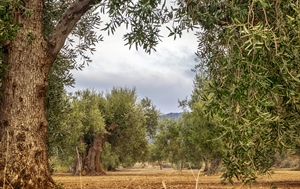
Olive is a strategic crop of huge importance for the temperate regions, not only grown for its economic relevance but also for preserving social, cultural and environmental values. It is threatened by numerous harmful organisms, including emerging, re-emerging and quarantine pathogens. Therefore, their prevention and timely detection are of paramount importance for olive production areas before implementing any control measure. Surveillance and monitoring are key actions for successfully meeting this objective, using fit for purpose methodologies.

In this context, the IOC and the CIHEAM organize this online course to provide the most up to date information relevant for improving preparedness of the competent authorities in plant health certification and inspection.

Providing a truly applied approach, this course offers an insight on the biology, ecology and epidemiology of the main pathogens threatening olive through live sessions and practical demonstrations and exercises. Participants also learn about the regulatory context and international standards under which the surveillance and monitoring of olive pathogens are performed, or the relevant parameters for survey design and efficient monitoring. Besides, the course is a unique opportunity to network with professionals and key actors in IOC member countries, exchange experiences and strengthen cooperation to deal with emerging and re-emerging diseases in olive.

Dates: 2-4 / 9-11 /14-16 December 2020.
Organizers: CIHEAM Zaragoza and International Olive Council (IOC)
Application deadline: 2 November 2020
For more information: http://edu.iamz.ciheam.org/olive_pathogens/en/

New online course with FAO on the organization of fisheries statistics systems

Experts from FAO as well as from ICCAT, Eurostat or ELSTAT will be teaching in the on-line advanced course “Organization of Fisheries Statistics Systems”, organised by the Mediterranean Agronomic Institute of Zaragoza (CIHEAM Zaragoza) and the Food and Agriculture Organization of the United Nations (FAO).

There is a global need for timely, reliable and comprehensive fisheries statistics. Fishery statistics are the primary means to measure the performance of a fishery within the social, economic, biological and environmental framework in which it is conducted.

Providing an applied approach, this online course helps professionals of national fisheries administrations and institutions go through a comprehensive learning cycle, starting with the definition of the needs for statistics in support to fisheries management and policy making; continuing with the different types of required data and collection systems; and concluding with the implementation of robust fisheries statistics and management information systems.

The course is intended not only to present the theoretical elements of designing and implementing fisheries statistical systems but also to guide participants in the pathway on the why, what and how to put theory into practice, illustrated by concrete examples and detailed case studies. The course goal is to enable trainees to directly use acquired knowledge for improving the performance of national systems in which they are involved. Besides, the course is a unique opportunity to meet and work with professionals from all over the world and share experience on the organization of fisheries statistical systems.

Dates: 9-19 November 2020 from14.00 to 18.30 CET.
Organizers: CIHEAM Zaragoza and FAO
Application deadline: 1 October 2020
For more information: Organization of Fisheries Statistics System

Covid-19: CIHEAM rises to the challenge

As the Mediterranean region was hit strongly by the Covid-19 pandemic, there have been many actions of solidarity in various countries, especially to support the health care workers who were on the front line to save lives. Within CIHEAM, expressions and actions of solidarity have helped the CIHEAM community keep spirits high during these hard times.

Have a look at the actions and initiatives implemented by CIHEAM:

https://www.flipsnack.com/iamzciheam/covid-y-ciheam-vunlutzy6z.html

Livestock and climate change: Assessment of emissions, mitigation options and adaptation strategies: New online advanced course from 19 to 30 October 2020

CIHEAM Zaragoza has organized a high-level online course on Livestock and Climate Change together with the Global Research Alliance on Agricultural Greenhouse Gases, the FAO, ICARDA, Red Remedia and the 4 per 1000 Initiative, who will contribute by providing scientific support in terms of contents and lecturers.

Livestock occupies 30% of the global land area and contributes 80% of all agriculture’s direct emissions. There is a challenge in developing complementary adaptation and mitigation strategies for the sector, in accordance with the Paris Agreement on climate change and Sustainable Development Goals.

Combining live streaming sessions and personal work with supporting material, this online course offers a holistic view of available tools to support informed decision making. It is a unique opportunity to network with professionals from other countries to generate new ideas, work on real case studies in different conditions and learn about processes underlying GHG emissions and soil carbon sinks, measuring methodologies and modelling tools in livestock systems, methods for national GHG inventories and mitigation options analysis, including socio-economic assessment, as well as adaptation and mitigation strategies.


For more information visit the course website.