SmartCulTour (Smart Cultural Tourism as a Driver of Sustainable Development of European Regions) is a four-year project, funded by the European Union in the frame of Horizon 2020. The goal of SmartCulTour is to support regional development in all European regions with important tangible and intangible cultural assets, including those located in rural peripheries and the urban fringe, through sustainable cultural tourism.
SmartCulTour redefines cultural tourism through a contemporary lens and provides a comprehensive measurement framework for supply, demand and impacts. In order to support knowledge-led destination management, a decision-support system (DSS) will be developed for wide-scale monitoring purposes across European regions. The DSS will synthesize both traditional and non-traditional data sources, the latter particularly related tobig data analytics, thereby assisting smart regional development. Besides a contribution to conceptual development and cultural tourism measurement, the main objective of SmartCulTour relates to the facilitation of community-led rural development through field experimentation in 6 living labs. Prior to these living labs, a comprehensive desk research will identify significant sustainable cultural tourism policies, their impacts and critical success factors. These best cases will inspire a series of possible local interventions. Within the living labs, novel creative approaches to stakeholder engagement are tested, notably arts-based methods, serious games, and service design which will help to provide local context and support. A toolkit will be designed to help destinations implement local actions towards sustainable cultural tourism development. SmartCulTour will therefore contribute to theory development, empirical validation of best practices within a living labs setting, and procedural development, particularly by providing European regions with a set of strategies to optimally engage with stakeholders and co-create sustainable cultural tourism experiences.
For more information visit the project’s website: http://www.smartcultour.eu/
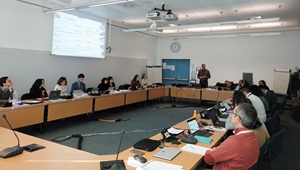
CIHEAM Zaragoza organized an ad-hoc training activity for officers from EFSA FEED Unit with the objective of enhancing their expertise on the assessment of the safety and efficacy of additives and products or substances used in animal feeds.
The training covered animal nutrition, physiology and production of food producing animals and pets (including feeding techniques, feed formulation, nutrient requirements, etc.) as well as design, conduct and evaluation of feeding trials, pharmacokinetics, pharmacodynamics, metabolism and residue studies and exposure assessment. For each of the curricula sections covered, the rationale, mode of action, current issues and new challenges were addressed. The most updated information was presented by recognised and leading experts in the field of animal feed additive risk assessment who are also familiar with EFSA risk assessment practices through their participation in FEEDAP and other EFSA panels.
Considering that FEED Unit staff are themselves experts in the area, this training offered a tailored syllabus in order to expand the collective knowledge and expertise of FEED staff about additives, based on prior informative feedback from staff members on their needs (gaps, strengths, weaknesses. etc.), expectations and ambitions for their further and continous training through this course.
Furthermore, an applied and intensive hands-on field training experience is programmed for the end of the year, where staff members will not only see and absorb activities at real-life production and assessment sites but will also have the chance to hear from the technical staff carrying out such tasks.
![[POSTPONED] – Given the current status and uncertainties surrounding the COVID-19 virus, we are postponing the course on wastewater reuse for agriculture until the autumn. The new dates will be announced in due time.](https://www.zaragoza.ciheam.org/wp-content/uploads/2022/08/postponed-wastewater.jpg)
CIHEAM Zaragoza, CIHEAM Bari and and ICARDA, in collaboration with the Regional Office for Near East and North Africa of FAO and the Action Plan for the Water Strategy of the 5+5 Dialogue, organize an international course on wastewater reuse for agriculture from 11 to 15 May 2020 in Zaragoza.
Water reuse in agriculture is a relevant solution to be further promoted to address growing water scarcity in arid and semiarid regions and respond to the increasing food demand of the rapidly and ever-growing population. This course offers an applied approach and, through lectures, practical work, case studies and visits, aims to integrate the key elements and technologies involved in the reuse of wastewater for agriculture to enhance the capacity of professionals working in this field. The programme focuses on the adoption of evidence-based solutions of reuse of treated wastewater at watershed and farm levels and its environmental and safety impacts, according to the principle of integrated water resources management and the circular economy approach. Likewise, the course is a unique opportunity to network with professionals from all over the world and share practical experience on the development and implementation of wastewater reuse projects.
Dates: 11-15 May 2020.
Venue: CIHEAM Zaragoza (Spain)
Organizers: CIHEAM Zaragoza, CIHEAM Bari and and ICARDA (International Center for Agricultural Research in the Dry Areas), in collaboration with the Regional Office for Near East and North Africa of the Food and Agriculture Organization of the United Nations (FAO) and the Action Plan for the Water Strategy of the 5+5 Dialogue.
Application deadline: 24 February 2020
For more information: http://edu.iamz.ciheam.org/WastewaterReuse/en/
![[POSTPONED] – Given the current status and uncertainties surrounding the COVID-19 virus, we are postponing the course on GHG assessment and mitigation in agriculture until the autumn. The new dates will be announced in due time.](https://www.zaragoza.ciheam.org/wp-content/uploads/2022/08/postponed-ghg.jpg)
CIHEAM Zaragoza, together with Global Research Alliance on Agricultural Greenhouse Gases (GRA), Food and Agriculture Organization of the United Nations (FAO), Red REMEDIA and 4 per 1000 Initiative will host an international course on GHG assessment and mitigation in agriculture from 30 March to 3 April 2020.
In the context of the Paris Agreement on climate change, all the economic sectors have to reduce GHG emissions. The challenge is to position agriculture to further reduce GHG emissions without compromising competitiveness or its ability to meet growing global food demand. Providing a truly applied approach, the course offers an insight on the processes underlying GHG emissions and soil C sinks, through in-class training, practical work and debate. Participants learn about measuring approaches, modelling tools in cropping systems, methods for national GHG inventories and mitigation options analysis, including socio-economic assessment. Besides, the course is a unique opportunity to meet and work with professionals from all over the world and share hands-on experience on Greenhouse gas assessment and mitigation in agriculture.
Dates: 30 March to 3 April 2020.
Venue: IAMZ-CIHEAM, Zaragoza (Spain)
Organizers: IAMZ-CIHEAM, Global Research Alliance on Agricultural Greenhouse Gases (GRA), Food and Agriculture Organization of the United Nations (FAO), Red REMEDIA and 4 per 1000 Initiative
Application deadline: 13 January 2020
For more information: http://edu.iamz.ciheam.org/AssessmentAndMitigation/en/
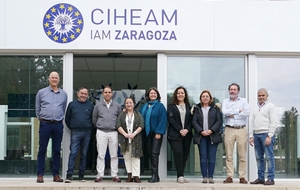
A high-level training on monitoring and surveillance of olive pathogens will be held in Zaragoza (Spain) from 30 November to 4 December 2020 co-organized with the International Olive Council (IOC).
A one-week training course will be organized at the Mediterranean Agronomic Institute of Zaragoza (CIHEAM Zaragoza) next November 2020 on different aspects related to the monitoring and surveillance of olive pathogens.
The International Olive Council (IOC), the XF-ACTORS project, the European and Mediterranean Plant Protection Organization (EPPO), the European Food Safety Authority (EFSA) as well as national and international plant health agencies will contribute to the scientific sessions, which will include lectures and practical sessions.
Last month, a preparatory discussion was held at the facilities of CIHEAM Zaragoza with the participation of the local organizers and experts from the Institute for Sustainable Plant Protection IPSP-CNR (Italy), Institute of Sustainable Agriculture, IAS-CSIC (Spain), University of Cordoba (Spain), the Plant Health Dep. of Valencia’s Regional Government (Spain), as well as from EPPO, EFSA andIOC to prepare the preliminary draft of the program.
More detailed info will be available soon on the website of CIHEAM Zaragoza: https://www.zaragoza.ciheam.org/
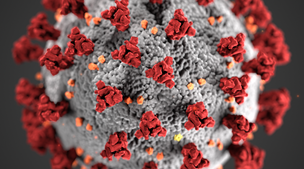
CIHEAM Zaragoza is closely monitoring the ongoing Coronavirus Disease 2019 (COVID-19) outbreak. The health, safety, and well-being of our staff, students and visitors is our top priority.
On March 14, the Government of Spain declared a 15-day, countrywide State of Alarm that severely restricts the movement of people and goods, as well as most commercial activity. Everyone in Spain is restricted from movement outside their home or place of temporary residence except for very limited purposes. Last week we informed of the cancellation of face-to-face classes at our MSc programmes in response to COVID-19 and the postponement of all our courses due in the spring term.
We are all temporarily working from home but you can reach us by email as usual.
This is a difficult time for everyone. Thank you for your understanding and support as we adapt to this new situation.
For daily updates on COVID-19 please visit these official sites:
– WHO
– European Centre for Disease Prevention and Control
– Spain’s Ministry of Health, Consumption and Social Welfare
– Regional Government of Aragón