



18 June 2020
CIHEAM Zaragoza will be returning to the ‘new normality’ as from 21 June, when the ‘state of alarm’ ends in Spain. When the state of alarm was declared in March, CIHEAM Zaragoza set up a committee to monitor the Covid-19 situation closely and determine the measures to be implemented, making sure that the health, safety, and well-being of our students, staff and visitors were our top priority.
After these months of working from home and intense online activity, we are resuming face-to-face work at CIHEAM Zaragoza, with appropriate health protection measures in place to keep everyone safe.
In addition, we have been working around the clock to respond to the challenges posed by Covid-19 and adapt and convert our training activities to online solutions. There will be no face-to-face activities before 2021 to prevent exposure to the disease.
During the first term of the forthcoming academic year, our MSc programmes and advanced courses will be online. For updates on our training activities, visit the ‘education‘ section on our website.
Archives: Agenda
Description.
COVID-19: What has the CIHEAM done so far?
COVID-19: What has the CIHEAM done so far?
The 13 Member States of the CIHEAM (Albania, Algeria, Egypt, Spain, France, Greece, Italy, Lebanon, Malta, Morocco, Portugal, Tunisia and Turkey) have been facing a very serious pandemic due to the spread of the coronavirus (COVID-19) for several weeks since February 2020. The host countries of the CIHEAM Mediterranean Agronomic Institutes located in Bari (Italy), Chania (Greece), Montpellier (France) and Zaragoza (Spain) are amongst the most affected in the Mediterranean region.
The CIHEAM has obviously implemented the preventive measures taken by the host countries, including lockdown.
The CIHEAM fully supports these preventive measures, such as washing hands regularly and physical distancing measures.
They should be strictly respected by the entire CIHEAM community to help defeat the coronavirus.
In addition, the CIHEAM has decided to set up a new corporate working group composed of representatives of the General Secretariat and of its 4 Institutes to tackle this issue.
MISSION OF THE COVID-19 WORKING GROUP
- To closely monitor the situation in host countries and in the Institutes and to report main updates to each corresponding Director.
- To strengthen internal communication and share procedures and good practices related to working conditions, sanitary equipment, continuity of service, by adopting a common approach on detection measures and the best ways to deal with the situation.
- To keep updated and informed on the new measures implemented to protect both the staff (including those working remotely) and the students, while maintaining close contact with them, i.e. dealing with issues such as online training courses, internships, life in the campus (accommodation, food, sanitary measures); follow-up on the research and/or cooperation activities as well as personnel abroad.
Measures taken by the CIHEAM Headquarters (Paris, France) against the spread of COVID-19
At the CIHEAM General Secretariat headquartered in Paris, the following measures have been enacted against COVID-19 to protect the staff and guests and to respect the decisions made by the French authorities:
HEADQUARTERS CLOSED
The headquarters have been closed and remote working has been implemented for all since Friday 13 March.
Exceptionally, few members of the staff are allowed to go to the headquarters once or twice a week to carry out the tasks that cannot be accomplished at home.
A prior written authorization by the Secretary General is required.
CONTINUITY OF ACTIVITIES AND TEAM SPIRIT
The continuity of activities is ensured by video call meetings with all the staff members on a regular basis. Several times per week, staff members meet online to follow the progress of the main activities and to maintain the team spirit during lockdown.
TELEWORKING AND WORK-LIFE BALANCE
To support employees working at home, good practices on teleworking have been shared and arrangements have been made to facilitate balance between private and professional life.
REGULAR INFORMATION
Since the beginning of the pandemic, staff members have been regularly provided with information about COVID-19 in the Member States of the CIHEAM as well as recommendations and tips to minimize risks.
Some good news including signs of hope and solidarity around the Mediterranean have also been shared every two days.
Moreover, regular information on the effects of the pandemic of COVID-19 on agriculture and food in the Mediterranean is shared among the CIHEAM community via the Scoop it Press Review
Coronavirus (COVID-19) update
23 March 2020
CIHEAM Zaragoza is closely monitoring the ongoing Coronavirus Disease 2019 (COVID-19) outbreak. The health, safety, and well-being of our staff, students and visitors is our top priority.
On March 14, the Government of Spain declared a 15-day, countrywide State of Alarm that severely restricts the movement of people and goods, as well as most commercial activity. Everyone in Spain is restricted from movement outside their home or place of temporary residence except for very limited purposes. Last week we informed of the cancellation of face-to-face classes at our MSc programmes in response to COVID-19 and the postponement of all our courses due in the spring term.
We are all temporarily working from home but you can reach us by email as usual.
This is a difficult time for everyone. Thank you for your understanding and support as we adapt to this new situation.
For daily updates on COVID-19 please visit these official sites:
– European Centre for Disease Prevention and Control
– Spain’s Ministry of Health, Consumption and Social Welfare
Joint Communication of Mohammed Sadiki, President of the CIHEAM Governing Board and Plácido Plaza Secretary-General of the CIHEAM
Like many other countries in the world, the 13 Member States of the CIHEAM (Albania, Algeria, Egypt, France, Greece, Italy, Lebanon, Malta, Morocco, Spain, Portugal, Tunisia and Turkey) have been facing a serious health situation for several weeks due to the spread of the coronavirus (COVID-19).
The host countries of the CIHEAM Mediterranean Agronomic Institutes located in Bari (Italy), Chania (Greece), Montpellier (France) and Zaragoza (Spain) are amongst the most affected in the Mediterranean region. The CIHEAM has obviously decided to respect the health security measures implemented by the host countries, obliging us to significantly slow down, or even interrupt, many activities.
In this difficult context, the CIHEAM wishes to ensure its full support to the entire CIHEAM community, particularly the students hosted in the Institutes. The Directors of the Institutes are doing their utmost to ensure that the basic student services are provided. In the Institutes, as in the premises of the General Secretariat of the CIHEAM, the maintenance has been reinforced and the barrier measures against the spread of the virus have been made compulsory.
A monitoring group led by the General Secretariat composed of representatives of the 4 Institutes has been set up to promote internal communication and facilitate the harmonised implementation of prevention measures while strengthening solidarity between the teams that contribute to the daily dynamism of the CIHEAM.
Breaking the chain of virus transmission
The CIHEAM calls for the mobilisation of all its staff, lecturers, researchers, students, and service providers to strictly respect the barrier gestures, starting with: regular hand washing, recommended physical distances and containment measures taken by national authorities. As recommended by scientists and political authorities, minimising direct contact with others is necessary in order to break the chain of virus transmission.
By demonstrating responsibility and solidarity, the CIHEAM community will be able to come out of this crisis stronger and resume their teaching, research and cooperation activities as soon as the virus has been overcome.
This individual and collective challenge can only strengthen the spirit of cohesion that characterises the CIHEAM. We know that we can count on you and we are convinced that you will be up to the challenges for Our Mediterranean.
XXIII International Master in Plant Genetics, Genomics and Breeding
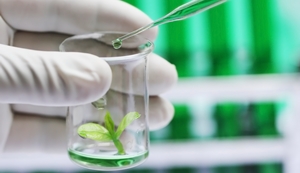
Agriculture has been extremely successful in providing food security for humankind. We have never eaten so much and of such good quality. In the last decade, we have increased production in such a way that we need less than half the amount of land to feed each person; but there are many challenges ahead. Changes in diet, an increasing population, and yet there are still people suffering from hunger. In this context, plant breeding is a key discipline, and represents an integration of old and modern science, all the way from basic agriculture or horticulture, to the newest developments in mapping technology, genome editing or bioinformatics.
Based on the expertise of internationally renowned lecturers and experts, this highly interdisciplinary master’s degree is completed over two years, full-time. The programme includes an engaging blend of face-to-face coursework, practicals, individual and group work, an independent research project, as well as visits to firms and research centres. Each edition the syllabus is fine-tuned to suit current issues in plant biotechnology, genomics and breeding.
This MSc programme is a truly enriching multicultural experience and a unique opportunity to network with professionals from all over the world and share practical experience on plant breeding, genetics, genomics, bioinformatics, as well as classical and advanced breeding methods.
For more information -> http://www.masterplantbreeding.com/
Dates: September 2020 – June 2022.
Venue: CIHEAM Zaragoza (Spain)
Organizers: CIHEAM Zaragoza
Application deadline: 29 May 2020
New MSc programme to train future policy makers, leaders and researchers in sustainable water management and governance

Water is a natural resource that requires careful management to ensure its availability and quality for future generations. In order to face the challenges of water management and governance we need to work in an integrated and interdisciplinary manner, involving hydrological, biophysical, economic, institutional, regulatory, policymaking and planning efforts.
This new international Master programme builds on CIHEAM’s 50 years of solid training experience in the area of water, environment, agriculture and economics. It has an innovative, multidisciplinary focus aimed to equip future water professionals with the blend of skills necessary to make a significant contribution to sustainable water management and governance both in agriculture as well as in natural environments.
Developed in partnership with leading organisations in the water sector, this MSc programme offers an integrated and applied approach with lectures and practicals, individual and team study and work, and technical visits. It is a truly international and multicultural experience and a unique opportunity to network with professionals from other countries and generate the necessary knowledge and capabilities to prepare you for a successful and rewarding career.
For more information, visit the Master’s website: http://www.masterwatermanagement.com/