CIHEAM official visit to Spain: Exchanges and avenues of collaboration on priority areas

Tuesday 04 February 2020

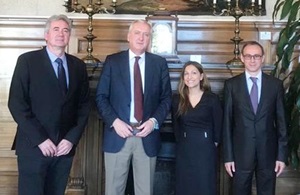
After a visit to the CIHEAM Institute in Zaragoza and a meeting with the staff to discuss the numerous projects underway in the fields of training and cooperation, the Secretary General of the CIHEAM, Plácido Plaza, and the Spanish Delegate of the CIHEAM, María José Hernández were invited by the Spanish Ministry of Agriculture, Fisheries and Food in Madrid.

During the one-day working meeting, they met Mr Luis Álvarez-Ossorio Under-Secretary for Agriculture, Fisheries and Food, Mr Fernando Miranda Sotillos, Secretary General at the General Secretariat for Agriculture and Food, Ms Isabel Bombal, Director General of Rural Development, Training and Innovation and Ms Alicia Villauriz Iglesias Secretary General of Fisheries.

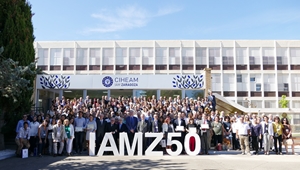
These exchanges were an opportunity to recall, in the presence of the Director of the CIHEAM Zaragoza, Mr Javier Sierra, the importance of this Institute – which celebrated its 50 years in 2019 – in addressing key issues of multilateral cooperation and development.  

The discussions focused on priority themes of the CIHEAM in the framework of the CAPMED and the SDGs, and the support of Spain to the priority areas of action of the Organisation, namely the empowerment of young people and women empowerment; Coastal development and sustainable fisheries; sustainable food systems.

Advanced course on GHG assessment and mitigation in agriculture to be held at CIHEAM Zaragoza from 30 March to 3 April 2020.

CIHEAM Zaragoza, together with Global Research Alliance on Agricultural Greenhouse Gases (GRA), Food and Agriculture Organization of the United Nations (FAO), Red REMEDIA and 4 per 1000 Initiative will host an international course on GHG assessment and mitigation in agriculture from 30 March to 3 April 2020.

In the context of the Paris Agreement on climate change, all the economic sectors have to reduce GHG emissions. The challenge is to position agriculture to further reduce GHG emissions without compromising competitiveness or its ability to meet growing global food demand. Providing a truly applied approach, the course offers an insight on the processes underlying GHG emissions and soil C sinks, through in-class training, practical work and debate. Participants learn about measuring approaches, modelling tools in cropping systems, methods for national GHG inventories and mitigation options analysis, including socio-economic assessment. Besides, the course is a unique opportunity to meet and work with professionals from all over the world and share hands-on experience on Greenhouse gas assessment and mitigation in agriculture.

Dates: 30 March to 3 April 2020.

Venue: IAMZ-CIHEAM, Zaragoza (Spain)

Organizers: IAMZ-CIHEAM, Global Research Alliance on Agricultural Greenhouse Gases (GRA), Food and Agriculture Organization of the United Nations (FAO), Red REMEDIA and 4 per 1000 Initiative

Application deadline: 13 January 2020

For more information: http://edu.iamz.ciheam.org/AssessmentAndMitigation/en/

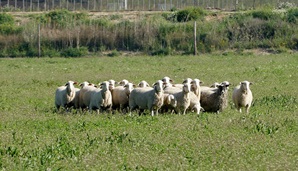
Innovations to improve sustainability in the sheep and goat sectors: iSAGE Training Course and Workshop

The European iSAGE Project (Innovation for Sustainable Sheep and Goat Production in Europe) will put on a course and workshop entitled “Innovations to Improve Sustainability in the Ovine and Caprine Sectors” at the Mediterranean Agronomic Institute of Zaragoza (IAMZ-CIHEAM) 10-13 December 2019.

The event is geared towards the production sectors of Spain, France, Italy, and Portugal and the objective is to present, debate, and convey the main results of the project throughout its four years of life , covering a variety of topics such as evaluation of sustainability and farms in Europe, the challenges of climate change and possible strategies for adaptation, consumer trends and the development of new products, and innovations in flock management, feeding, genetics, insemination, marketing, social initiatives, etc.

The event will consist of three activities:

  • A Training Course (10-11 December), led by experts in the field, outreach services, associations, young researchers, involved in management and consulting for livestock farmers and businesses in the sector. The aim of the course is to convey the work that has been done, explaining and discussing what methods were used, how the sector has participated, and what results can be applied and adapted for the sector´s improvement and adaptation strategies.
  • A Field Visit (12 December), organised by Oviaragón-Grupo Pastores (a shepherds´cooperative), which is a member of the project. This visit will be open to those participating in the course as well as in the workshop.
  • A Dissemination Workshop (13 December), for a wider audience than just users of iSAGE, including livestock farmers and their representatives, administrative officials, as well as experts in the field and other possible interested parties. The objective is to present the project in a concise way and discuss the results with participants.

Due to the international nature of the event, all activities will take place in Spanish, English, and French, with simultaneous interpretation for all three languages.

Registration is open until 4 December and can be done online: http://projects.iamz.ciheam.org/isagetrainingcourse/es/

Contact: Mediterranean Agronomic Institute of Zaragoza (isage@iamz.ciheam.org)

IAMZ reunites more than 200 former students from 24 countries for 50th anniversary

The Mediterranean Agronomic Institute of Zaragoza (IAMZ-CIHEAM) put together a very special day on Friday with an event that brought together more than 200 students from 24 countries for events organised in honour of this year’s 50th anniversary of the institute´s founding. In addition to Spain, participants came largely from Latin American countries, Europe, and North Africa.

The event featured Plácido Plaza, Secretary General of CIHEAM (International Centre for Advanced Mediterranean Agronomic Studies), an international organisation based in Paris which comprises 13 member countries, and of which IAMZ is a part; Joaquín Olona, Minister of Agriculture, Livestock and Environment for the government of Aragón; and Javier Sierra, director of IAMZ.

It was a day of reuniting and remembering in which former IAMZ directors Miguel Mut, Miguel Valls, Luis Esteruelas and Ignacio Romagosa spoke about their experiences at the helm. Following that, José Manuel Moreno, Dean of Ecology at Castilla-La Mancha University and member of the Intergovernmental Panel on Climate Change (IPCC) at the United Nations, gave remarks on scientific agreement surrounding climate change.

IAMZ was founded in 1969 on the campus of Aula Dei in Montañana by Ramón Esteruelas, from Aragon who was also a driving force behind the creation of CIHEAM seven years earlier, based on the need to create structures to encourage technical progress and prosperity after WWII and promote institutions in the emerging European structure.

During the ceremony, awards of recognition for continued collaboration with IAMZ were given to the directors of the other 6 centres, which work for various public administration offices, that operate on the Aula Dei campus.

More than 15,000 well-prepared leaders

More than 15,000 young leaders in the agro-food sector from Mediterranean and Latin American countries have studied at the Agronomic Mediterranean Institute of Zaragoza over its 50 year lifespan. IAMZ has offered more than 400 advanced courses taught by more than 1,000 experts and professors from universities and research centres from all over the world.  Moreover, the Institute has established partnerships with more than 60 national and international organisations.

IAMZ is one of the four institutes that comprise the International Centre for Advanced Mediterranean Agronomic Studies (CIHEAM), headquartered in Paris, together with the institutes in Bari (Italy), Montpellier (France) and Chania (Greece). 

IAMZ is a centre of excellence which offers advanced continuing education and postgraduate courses with a consolidated programme that relies on cooperative resource networks and coordinates international projects.

Nowadays, it represents an international paragon of high-quality and excellent programmes in the Mediterranean agro-food sector. At present it offers 7 master’s programmes and every year organises 10 advanced courses, summer courses and workshops that take place over several days.

Gallery of pictures: https://www.flickr.com/photos/iamzciheam/albums/72157711245983623

IAMZ-CIHEAM Housing Scholarships to Attend DATAGRI 2019

On November 14 and 15, 2019 Zaragoza will host the IV edition of the DATAGRI Forum. This is a benchmark event for the promotion of digital transformation in the agro-food sector, organised by the COAG (Coordinator of Farmer and Agriculture Organisations), the Spanish Agro-Food Cooperatives, the technology company HISPATEC and the ETSIAM of the University of Cordoba.

This event aims to promote digital transformation in the agro-food chain, raise awareness of successful cases in digital transformation, technologies and innovation, contribute to the reduction of the introduction barriers of digital transformation and create standards for best practice and opportunities for collaboration.

On November 14, participants will be able to compare the visions of more than 20 international experts and get to know the details of various worldwide success stories with regard to the digitalisation of the agro-food value chain. On November 15 there will be a field trip day, in which those in attendance will be able to learn about the most innovative solutions in artificial intelligence, big-data, IOT (Internet of Things), sensorisation, satellite connections, etc., used for decision-making in the agro-food sector.

IAMZ-CIHEAM is collaborating on this event and is offering its former students 16 housing scholarships to stay in the Residence on the Aula Dei Campus. Those interested in participating should fill out the following form: http://intranet.iamz.ciheam.org/forms/datagri/en/

More information on DatAgri: https://www.datagri.org/

Precision Agriculture, Social Innovation and Wastewater Reuse, in IAMZ’S training offer for professionals in the forthcoming academic year

The Mediterranean Agronomic Institute of Zaragoza (IAMZ) offers 9 new advanced courses in 2019-2020. Parasite Control in Aquaculture in October and Social Innovation in Rural Areas in November are the first courses to be held during the first term.

The Mediterranean Agronomic Institute of Zaragoza (IAMZ-CIHEAM) commences the academic year 2019-2020 with a training offer of 9 advanced courses for professionals. The offer will respond to the needs and concerns of producers, businesses and institutions in the areas of plant production, animal production, aquaculture and fisheries, and the environment. All courses are delivered by renowned international lecturers and developed in collaboration with centres and institutions of reference such as FAO and ICARDA, together with top universities and with European projects. Further information and instructions for registration are available on the IAMZ website: https://www.zaragoza.ciheam.org/.

The first course ‘Diagnostics and Prevention for Fish Parasite Control in Aquaculture’, on 21-25 October 2019, will deal with the current status of the main parasite diseases, diagnostics methods, assessment of diseases and prevention methods and fish parasite control in marine and freshwater aquaculture in the Mediterranean region.

Still in the area of fisheries and aquaculture, but in 2020, the course ‘Sustainability Assessment and Social Acceptance of Aquaculture Production’, will run from 24 to 28 February. Another matter of great interest for the sector, especially in developing economies, will be discussed in the course ‘Innovative Tools and Methods for Ensuring Seafood Authenticity’ on 8-12 June.

Concerning the environment, given the rising importance of communities and civil society in setting up social innovation initiatives, the course ‘Social Innovation in Rural Areas’, will be held on the forthcoming 18 to 22 November in collaboration with the European project Social Innovation in Marginalised Rural Areas (SIMRA). Still within the context of the environment, the course ‘Greenhouse Gas Assessment and Mitigation in Agriculture: Concepts, Methods and Simulation Tools’ will run from 30 March to 3 April and ‘Wastewater Reuse for Agriculture’ will be organized from 11 to 15 May.

In the area of plant production IAMZ offers the courses ‘Statistical Tools for Plant Phenomic Data Analysis’, from 20 to 24 January; ‘Use of Sensors in Precision Agriculture’, from 3 to 8 February, and ‘Technological Innovation for Intensive Greenhouse Production’, from 9 to 13 March. The course on intensive greenhouse production will not be held at the IAMZ on the Campus of Aula Dei in Zaragoza, but in Almeria, at the Experimental Station of Cajamar.

Meanwhile, IAMZ’s training activity continues with lectures and presentation of theses of its international Masters in Plant Breeding, Animal Breeding and Reproduction Biotechnology, Aquaculture; Agro-Food Marketing; Olive Growing and Oil Technology; Sustainable Fisheries Management and Animal Nutrition, as well as a summer program on the Mediterranean Diet and the agrifood system (MABS).