Agreement of cooperation between the Mediterranean Agronomic Institute of Zaragoza and the National Institute of Field Crops of Tunisia

Joint actions will be promoted in the areas of plant breeding, protected crops, water governance and irrigation

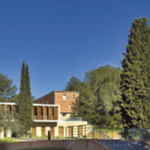
The Mediterranean Agronomic Institute of Zaragoza (IAMZ) and the National Institute of Field Crops of Tunisia, of the Tunisian Ministry of Agriculture, have signed a Memorandum of Understanding (MoU) for cooperation in research and exchange of information and training in agriculture and related sciences.

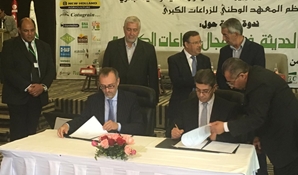
Ousama Khriji, President of the National Institute of Field Crops of Tunisia and Javier Sierra, director of the Mediterranean Agronomic Institute of Zaragoza (IAMZ), signed the agreement of cooperation on Tuesday in the city of Tunis, in the presence of the Minister of Agriculture, Samir Betaib.

The MoU involved development of cooperation actions in the area of plant breeding, protected crops, water governance and upscaling and modernisation of irrigation systems. Work conducted together will support efforts to overcome the challenges faced in the agricultural and food producing systems in Tunisia, such as climate change, increasing populations in urban areas and the lack of opportunities for young people and women, especially in rural areas.

This new alliance reinforces collaboration between both countries through research and training led by the Mediterranean Agronomic Institute of Zaragoza, an international reference point that has trained over 1000 young people and professionals from Tunisia.

This agreement is signed within the framework of events scheduled to celebrate the tenth anniversary of the National Institute of Field Crops of Tunisia.

The Mediterranean Agronomic Institute of Zaragoza is commemorating its 50th anniversary throughout 2019. It is a centre of excellence offering life-long advanced post-graduate education through a consolidated programme of cooperative research networks and coordinates international research projects. Over 15 000 young leaders of the agrifood sector in the Mediterranean and Latin America, among other countries, have received training at IAMZ over the past five decades.

IAMZ is one of the four institutes that comprise the International Centre for Advanced Mediterranean Agronomic Studies (CIHEAM), whose headquarters are in Paris, together with the institutes of Bari (Italy), Montpellier (France) and Chania (Greece). It was created upon the initiative of the OECD and the Council of Europe. It is financed with the support of the Ministry of Foreign Affairs of the Government of Spain and its own resources.
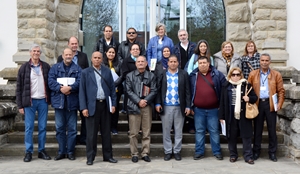
Training in innovative extension methods for Tunisian delegates

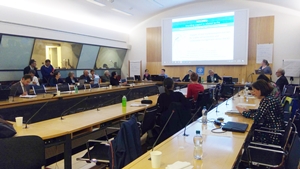
IAMZ-CIHEAM, in collaboration with the International Center for Agricultural Research in the Dry Areas (ICARDA), has organized a training week from 8 to 12 April 2019 within the framework of the project titled “Mind the Gap: Improving Dissemination Strategies to increase Technology Adoption by Smallholders”.

The training was targeted to Tunisian professionals from extension services, ministry departments and research centres and focused on innovative extension methods, showcasing extension services models in Spain and innovation and technology transfer in the agricultural sector.

Participants were welcomed by IAMZ-CIHEAM Director, Javier Sierra, and had an introductory session on extension services models in Spain and innovation and technology transfer in the agriculture sector. Following this session, they visited ‘Oviragón’ sheep cooperative and learnt about benchmarking of cooperatives for the sustainable development of sheep and how to improve the profitability and quality of life of partners and collaborators. They heard from INTIA in Pamplona (Navarra’s Institute of Agrifood Transfer and Innovation) about agricultural holding management and applied research and transfer in the area of arable crops, and went on to visit Neiker facilities in Vitoria and listened to experts from the departments of animal production systems and plant health. Participants also visited IRTA FruitCentre in Lleida and several pilot plants (‘New technologies for fruit conservation’, ‘Classification, preparation and packaging of fruit’, ‘Development of minimally processed fruit -4th range’, ‘5th range fruit’ and ‘Domestication of microorganisms -Biocontrol Agents’). The last day was devoted to water management and irrigation, and researchers from EEAD-CSIC and CITA spoke about agroclimatology and water needs of crops, management of irrigation systems, management of irrigators’ associations, sustainable use of water and soil resources, environmental impact of agricultural activities and crop agronomy. The training week ended with a wrap-up session and a round table discussion, followed by a visit to the Aljafería Arab Palace.

IAMZ-CIHEAM participated in Soils4EU Workshop No. 3, held during the 6th Plenary Assembly of the European Soil Partnership on 28 and 29 March at FAO in Rome

IAMZ-CIHEAM participated in Soils4EU Workshop nº3, held during the 6th Plenary Assembly of the European Soil Partnership on 28 and 29 March at FAO in Rome.

The objective of the Soils4EU Workshop was to present one of the reports produced by the project aiming at supporting the implementation of the EU Soil Thematic Strategy whose subject was “Review of economic, social and environmental impacts and implementation barriers for soil protection and sustainable management measures for arable land across the EU”.

Soils4EU (Providing support in relation to the implementation of the EU Soil Thematic Strategy) is a three-year contract commissioned by DG Environment (DG ENV) (Service contract No 07.0201/2016/742739/SER/ENV.D.I) with the general objective of supporting DG ENV in technical, scientific and socioeconomic matters pertaining to soil protection and the sustainable use of the land, in the context of implementing the non-legislative pillars (awareness, research, integration) of the Soil Thematic Strategy and the European Soil Association. Support includes drafting six reports which provided scientific background on various subjects related to soils and soil policies in Europe, three reports on policies, logistic and organizational support for six workshops, and the organization and provision of contents for the European web site and wiki platform on soil-related policy instruments. The contract is coordinated by Deltares (The Netherlands), with the support of the Institute of Soil Science and Plant Cultivation, LUNG (Poland), Helmholtz Center for Environmental Research, UFZ (Germany), Experimental Station of Aula Dei, EEAD-CSIC (Spain), and the Mediterranean Agronomic Institute of Zaragoza, IAMZ-CIHEAM (Spain).

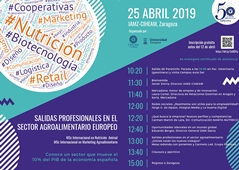
Career opportunities in the European agrifood sector

The agrifood sector extends beyond the farm gates to include a wide range of farm- and food-related industries, from IT, sales, marketing, logistics, engineering to food product design and development, nutrigenomics or winery management, the range of jobs under the umbrella of food and agriculture is broader than ever before; it is an employment market that is now full of opportunities.

Organized by IAMZ-CIHEAM and the University of Zaragoza, the Open Day event is designed to showcase what the agrifood sector has to offer and is targeted to undegraduates and young professionals who wish to pursue a career in the agro-food industry, a vibrant and dynamic sector that accounts for 10% of the GDP in Spain.

IAMZ Director, Javier Sierra, will welcome participants to the Open Day event and will introduce education and training career options at IAMZ-CIHEAM (MSc in Animal Nutrition and Agrifood Marketing). Speakers from renowned firms from the sector will address students and discuss employment opportunities, professional profiles and new trends in a globalized market. This year’s speakers are Laura Cortel (Mercadona), Jorge G. de Opazo (Integral Media & Huerta Digital), Carmen Martín de Lara (NANTA-NUTRECO), Eduardo Berges (DSM Iberia) and Carmelo Led (Grupo Pastores).

Following the presentations and round table, there will be a reception for all attendees and speakers. Registration is free by filling in the following form before 12 April 2019: https://bit.ly/2ulfDYq

Big data techniques and applications in the agri-food system

From 17 to 21 June 2019, CIHEAM Zaragoza will be organizing an advanced course for professionals on big data techniques and applications in the agri-food system. The course will involve international expert lecturers and is organized together with ICARDA.

The volume of available data has doubled in the past five years. This is creating new opportunities for business and science alike, and can assist the agrifood system to create more powerful processes. This course offers an applied approach covering the whole agrifood system from primary production to food consumption. Combining face-to-face learning with practical work, debate, and real world examples of business and science success stories, the course is a unique opportunity to network with professionals from other countries and learn about the analytical techniques that can be applied to big data, including traditional statistical methods, machine learning and artificial intelligence.

Dates: 17-21 June 2019

Venue: IAMZ-CIHEAM, Zaragoza (Spain)

Organizers: IAMZ-CIHEAM and ICARDA.

More information: http://edu.iamz.ciheam.org/BigData/en/

Mediterranean Agribusiness School (MABS)

The MABS summer program “Spanish Food Culture: the Mediterranean Diet and the Agro-Food Industry” is targeted to undergraduates, recent graduates or young professionals from all over the world who are studying or working in areas related to the agrifood sector, from the food industry to food science and technology, including gastronomy, tourism, international marketing etc. or who are interested in food, gastronomy and Spain’s culture.

The objective of the course is to offer students a global and integrated vision of the agrifood sector, one of the most powerful and innovative in Spain. Through lectures, hands-on classes, visits, tasting sessions, round tables and dialogue with professionals from the sector, students analyse the main value chains of Mediterranean products such as fruit, seafood, wine, olive oil and ham. Throughout the course, students become acquainted with the Mediterranean Diet –in terms of its cultural heritage and its importance for nutrition and health, rural and gastronomic tourism as an economic driver, the consumption patterns for Mediterranean products, the food safety and quality models in the EU and their link with international trade, the latest initiatives and trends in the Spanish food sector and the international positioning of Spanish gastronomy.

An equally important objective of the program is to offer international students the opportunity to experience first-hand the potential of Spain’s agrifood sector as well as the Spanish language and culture, besides creating a forum for the exchange of experiences and ideas that will enhance future professional networks.

The program addresses the following topics:

1. The Mediterranean Diet (Intangible cultural heritage of humanity)

2. Spain and Aragon as a tourist destination

3. Consumption of Mediterranean products

4. Agrifood systems: Global strategies

5. The Spanish agrifood system

6. European safety and quality models

7. Designations of Origin and quality symbols in Aragon

8. The European agrifood value chains

9. Case study of wine (visit to vineyards and wineries in Somontano and Rioja)

10. Case study of fresh fruit and vegetables (visit to fruit farms and packing units in Almunia)

11. Case study of seafood (visit to mussel and oyster farms at Ebro Delta)

12. Case study of extra virgin olive oil (visit to oil mills in Somontano and Zaragoza)

13. Case study of gastronomy (showcooking at a Gastronomc Society)

14. Latest nutritional and health issues

15. Communication, marketing and branding strategies

The program also includes a specialized Spanish course delivered by the University of Zaragoza as well as various complemenatry activities to reinforce and support the academic program out of the classroom:

> Interactive sessions: Tasting sessions (olive oils, wine, cheese, etc.), visits to agrifood companies (brewery, bakery, etc.)

> Hands-on experience: Tapas tour in Zaragoza, show cooking, etc.

> Field trips: Pyrenees (start-ups in rural areas, craft brewery, artisanal pacharán liquor, organic farm, etc. as well as historic monuments and ethnographic museum), Somontano (wineries, oilmills and historic landmarks and villages), Rioja and Basque country (vineyards, wineries, wine museum, pintxos tour, etc.).

The program includes an additional period of one month for an optional traineeship with firms or institutions in the agrifood sector (upon request).

More information: http://mediterraneanagribusinessschool.education/

Contact e-mail: mabs@iamz.ciheam.org