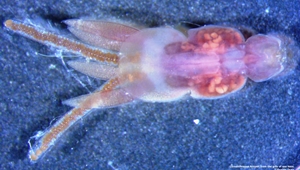
From 25 February to 1 March 2019, CIHEAM Zaragoza will be organizing an advanced course for professionals on the application of epidemiology in aquatic animal health. The course will involve international expert lecturers and is organized with the collaboration of the EU H2020 funded project MedAID.
Epidemiology is critical to developing disease control strategies and is fundamental for effective aquatic health management. Providing over 15 hours of in-class training and 20 hours of practical work, this course offers a comprehensive view of epidemiological approaches and principles in aquatic animal health. It is a unique opportunity to meet and work with specialists from all over the world and share hands-on experience in epidemiology tools with top experts.
This course is targeted to veterinarians and other aquatic animal health professionals, with or without previous formal training in epidemiology, but involved in delivering aquatic animal health services in either the private or public sector.
Dates: 25 February – 1 March 2019
Venue: CIHEAM Zaragoza (Spain)
Organizers: CIHEAM Zaragoza, with the collaboration of the EU H2020 funded project MedAID.
For more information visit the course website.
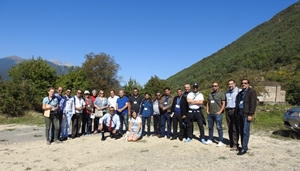
CIHEAM Zaragoza organized a study visit for an Algerian delegation of experts in rural development from Laghouat, Ain Témouchent and Tlemcen wilayas. PAP-ENPARD enabled delegates to spend a week, from 24 to 28 September, travelling the region of Aragon to learn about the LEADER approach, as well as different projects developed in the rural environment.
The Pilot action programme for rural development and agriculture in Algeria (PAP-ENPARD) is part of the ENPARD initiative (European Neighbourhood Programme for Agriculture and Rural Development) of the European Commission whose objective is to support neighbouring countries in matters of agriculture and rural policies.
More specifically, the ENPARD initiative aims at supporting the design and implementation of renewed public policies to face the challenges of food security, diversification of rural economies and the improvement of local governance in rural areas.
Therefore, PAP-ENPARD was designed to support the implementation of agricultural and rural development policies in Algeria, whose innovative and proactive approach aims at revitalizing the territories through integrated and sustainable rural development projects and initiatives.
During their visit to Aragon, CIHEAM Zaragoza showed Algerian delegates how local action groups ‘CEDER Somontano‘ and ‘ADECUARA‘ work. They also visited and shared ideas with stakeholders involved in several projects related to the valorization, promotion, and development of agriculture, husbandry, crafts, tourism and landscape.

CIHEAM Zaragoza has announced the launch of an advanced course on the reduction and management of food waste to build knowledge, improve good practice guidance and train future leaders in this area. From 21 to 25 January, professionals from all over the world will gather to discuss food loss and waste issues with 12 of the most renowned international experts in the subject.
According to FAO data, a third of food produced globally is either lost or wasted before it can be consumed by people, that is, almost 1.7 billion tonnes per year. Food waste has an enormous impact on the environment and on food security worldwide (a quarter of the food that is lost or wasted would feed 870 million people). Each year 250 km3 of water and 1.4 million hectares (28% of the world’s agricultural area) are used to produce food that is either spoiled or squandered, leaving a carbon footprint of 3.3 billion tonnes of CO2 equivalent of greenhouse gases.
As pointed out by Javier Sierra, Director of CIHEAM Zaragoza, “this course lies within the framework of CIHEAM’s Strategic Agenda and is aligned with the first of the 4 thematic axes – the fight against triple waste: of natural resources, food and knowledge. One of the main objectives of our Agenda 2025 is training, awareness and knowledge-building to achieve zero waste in the Mediterranean, also in line with the actions set out in the Strategy for 2017-2020 «More food, less waste», of Spain’s Ministry of Agriculture, Fisheries and Food”.
The course is organised by CIHEAM Zaragoza, the EU H2020 funded Project REFRESH (Resource Efficient Food and dRink for the Entire Supply cHain) and ICARDA (International Center for Agricultural Research in the Dry Areas). Providing over 20 hours of in-class training and 15 hours of practical tutorials and case studies, this course offers an integrated approach to the issue of food loss and waste. It is a unique opportunity to network with professionals from other countries to generate new ideas, identify the causes and hot spots of food loss and waste, learn more about key initiatives and public and private actions, work with new assessment tools and raise public awareness about the importance of reducing food waste.
For more information visit the website: http://edu.iamz.ciheam.org/FoodLossAndWaste/en/
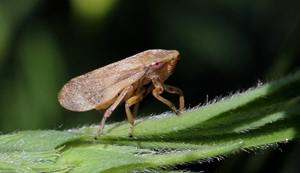
From 12-16 November 2018, the CIHEAM Mediterranean Institute for Advanced Agronomic Studies in Zaragoza will be organizing an advanced course for professionals on “Plant diseases caused by Xylella fastidiosa: detection, identification, monitoring and control”. The course will involve 14 European and international expert lecturers and is being sponsored by the Spanish Agriculture Ministry and supported by several EU projects – XF-Actors, POnTE and MSCA-RISE CURE XF.
The week long course will consist of 40 hours of expert training and will include 10 hours of practical hands-on learning sessions. It will count on the participation of some of the top plant health and “Xylella” experts in Europe and the rest of the world and will provide one of the most comprehensive expert trainings on this new and emerging disease to date. The course has been designed to provide training and share expert knowledge with professionals, technical experts and scientists who need to update or improve their knowledge to assess and manage this emerging disease in Europe. The course has been developed for Mediterranean and European professionals and is also open to a number of experts from other global regions who need to update their scientific and technical knowledge in this area.
For full programme, participation and scholarships details: http://edu.iamz.ciheam.org/en/Xylella
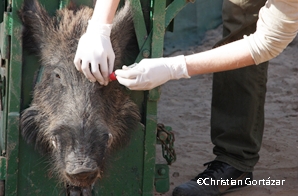
From 26-30 November 2018, IAMZ-CIHEAM will be organizing an advanced course for professionals on “Managing disease at the wildlife-livestock interface”. The course will involve international expert lecturers and is coorganized with Spain’s Ministry of Agriculture, Fisheries and Food, through the General Directorate of Agricultural Production Health.
There is a growing recognition of the potential importance of pathogen transmission at the wildlife-livestock interface in the epidemiology of diseases that impact on agriculture, human health and biodiversity. In our rapidly changing world the interface between human and wildlife populations has been profoundly modified by human activity. Effective management of disease risks at the wildlife-livestock interface should be sustainable, based on sound epidemiological and ecological knowledge, and must balance the requirements for preserving biodiversity, protecting human health and social and economic well-being.
This week long course will consist of 40 hours of expert training and will include 10 hours of practical work as well as case studies and modelling sessions. The course has been designed for professionals involved in disease prevention and control in livestock or/and wildlife in either the private or public sector, such as competent authorities in animal health services and regulatory bodies, veterinarians, livestock farmers, wildlife managers, technical advisors and researchers.
Dates: 26-30 November 2018
Venue: IAMZ-CIHEAM, Zaragoza (Spain)
Organizers: IAMZ-CIHEAM and Spain’s Ministry of Agriculture, Fisheries and Food
For more information visit the course website.

The Welcome ceremony marks the official start of the new academic year at IAMZ and is organized for all students, staff and external partners. The MSc programmes held during this academic year are Plant Breeding (IAMZ-CIHEAM/UdL, Zaragoza), Animal breeding and reproduction biotechnology (IAMZ-CIHEAM/UAB/UPV/IVIA/INIA, Valencia and Barcelona), and Aquaculture (IAMZ-CIHEAM/ ULPGC, Las Palmas de Gran Canaria).
Representatives from Universities and Ministries will accompany IAMZ Director, Javier Sierra, in officially welcoming students to IAMZ on Monday 24 September. New students will hear about the main activities carried out by IAMZ and, as in previous years, renowned speakers have been invited to a round table to address CRIPSR and the new scientific advances that are shaping the future of agriculture. On this occasion the guest speakers are Diego Orzáez (Head scientist, Institute of Plant Molecular and Cell Biology, IBMCP-CSIC, Valencia), Pablo Vargas (Research Lecturer, Royal Botanic Garden, CSIC, Madrid), Elena Sáenz (Director of the National Association of Plant Variety Developers, ANOVE, Madrid) and Jesús Val (Director of Aula Dei Experimental Station, EEAD – CSIC, Zaragoza).
Following the ceremony, there will be a welcome reception. Attendees are encouraged to stay and meet fellow new students and IAMZ staff and representatives of partner institutions.