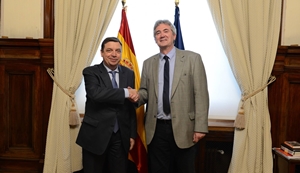
CIHEAM Secretary General, Plácido Plaza, was in Madrid last 6 March as part of his first official visit.
On this occasion, he met Luis Planas Puchades, Spain’s Minister of Agriculture, Fisheries and Food, to discuss major issues of cooperation in the Mediterranean, including the development of rural and coastal areas, capacity building and employment of vulnerable groups.
Technical cooperation and knowledge transfer
During this visit, a university cooperation agreement was also signed between CIHEAM, GFCM-FAO (General Fisheries Commission for the Mediterranean) and the University of Alicante concerning the management of fisheries resources, the development of coastal zones, the diversification and integration of fishing systems production. The signing took place in the presence of Alicia Villauriz, Secretary General for Fisheries.
The diversification of production systems and the economic development of Mediterranean coastal zones are among the priorities of the new Secretary General’s mandate.

From 1 to 5 April 2019, IAMZ-CIHEAM will be organizing an advanced course for professionals on precision livestock farming (PLF).
FAO expects the worldwide demand for animal products to increase by 75% before 2050. Precision livestock farming (PLF) provides an opportunity for better farm management and sustainable development, creating added value for the farmer and improving animal health and welfare as well as increasing animal productivity.
This course offers an applied approach with more than 18 in-class hours, as well as practical work, debate and technical visits. It is a unique opportunity to network with professionals from other countries and generate the necessary knowledge and capabilities to set up PLF systems and come up with proposals for the Mediterranean conditions and species.
Dates: 1-5 April 2019
Venue: IAMZ-CIHEAM, Zaragoza (Spain)
Organizers: IAMZ-CIHEAM
For more information visit the course website

Antimicrobial Resistance (AMR) is a global threat to human, animal, and environmental health, puting food safety, food security and sustainable economic development at serious risk. Staying ahead of AMR is a cross-sectoral responsibility and requires the coordinated action of all actors involved, including the agri-food chain.
The course has an applied approach combining lectures with case studies and debate, and is an opportunity to network with professionals from other countries to generate new connections, brainstorm and exchange ideas and solutions and be aware of the responses of the international community to curb AMR.
Visit the course website for more information: Antimicrobial resistance and One Health: Implications for agricultural systems, food safety and the environment
Dates: 18-22 March 2019
Venue: IAMZ-CIHEAM, Zaragoza (Spain)
Organizers: Coorganized by IAMZ-CIHEAM and OIE, with the technical support of FAO.
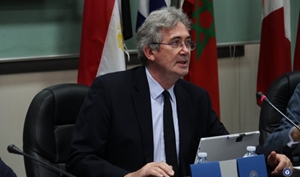
On 22 February 2019, at the 42nd Governing Board meeting of the International Centre for Advanced Mediterranean Agronomic Studies (CIHEAM) held in Paris, Plácido Plaza was elected unanimously as new Secretary General of the CIHEAM.
The Spanish authorities’ candidate will take up office on 1st March 2019, for a first term of four years, after completing an interim period. With his strong passion for the Mediterranean, Plácido Plaza has been working on issues related to agriculture, food security and rural development for over 30 years in this region. He is an Agricultural Engineer with extensive experience in applied agronomy both in Latin America and in the Mediterranean. He was in charge of the management of the cooperation framework programme between the European Commission and the CIHEAM in the fields of specialized training, support to research and decision-making in the field of resource management, water, support to agricultural and rural development policies, extensive production systems and biotechnologies. Four major areas of action that have associated the 4 CIHEAM Agronomic Institutes for more than 10 years and mobilized a budget of 12 million Euros. He has also conducted research projects with regional networks and cooperation projects with International Organizations for agricultural research and development such as the FAO, the Union for the Mediterranean (UfM), the International Olive Oil Council (IOOC), ICARDA, or GFAR. The Delegates of the CIHEAM Member States warmly thanked Plácido Plaza for all his work since 12 December 2017 as ad interim Secretary General, following the passing away of Cosimo Lacirignola (CIHEAM SG from 2013 to 2017).
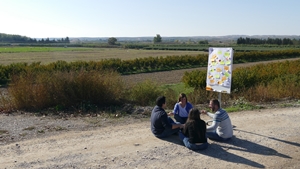
Social innovation has been heralded as a vital part of the European recovery project since the economic crisis in 2008. It is of particular importance to rural areas, especially more disadvantaged rural areas, where multiple problems of depopulation, environmental quality decline and low levels of economic activity have been recurrent. With the trend of rapid urbanisation, the remoter rural areas will continue to be adversely affected.
In these areas, the state and municipalities often struggle to maintain basic public services because of public sector austerity. Markets are weak and there is still a high dependency on primary industries. This creates space and opportunities in which civil society can take on an increasingly important role in sustaining and improving conditions. Further information on social innovation examples in rural areas is available in SIMRA’s database or the brochures of initiatives.
The course, which will focus on rural areas from Europe and non-European Mediterranean countries and that will take place on 18-22 November 2019, is part of the H2020 EU-funded project Social Innovation in Marginalised Rural Areas (SIMRA) (www.simra-h2020.eu), which aims to advance understanding of social innovation and innovative governance in agriculture, forestry and rural development. The project is built on more effectively linking the practice community with the research community fostering to allow the integration and cross fertilisation of knowledge and understanding in order to boost social innovation in (marginalised) rural areas.
A preparatory meeting was held from 4-5 February at the IAMZ in Zaragoza to design the course objectives and prepare the preliminary draft programme. The following SIMRA project representatives participated in the meeting: The James Hutton Institute (United Kingdom), University of Padova (Italy), University of Natural Resources and Life Sciences (Austria), Perth College (United Kingdom), Wageningen University (The Netherlands), The Rural Development Company Limited (United Kingdom) and The Mediterranean Agronomic Institute of Zaragoza (Spain).
More detailed information will be available soon on the website of SIMRA project.
Contact: Lucía López Marco at lopez-marco@iamz.ciheam.org or +34 976 716 000
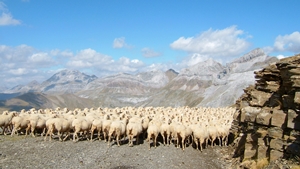
From 11 to 15 February 2019, CIHEAM Zaragoza together with FAO, the GRA (Global Research Alliance on Agricultural Greenhouse Gases), ICARDA (International Center for Agricultural Research in the Dry Areas), the Red REMEDIA (Scientific network for greenhouse gas mitigation in the agroforestry sector) and the 4 per 1000 will be organizing an advanced course for professionals on Livestock and climate change, assessment of emissions, mitigation options and adaptation strategies.
Livestock occupies 30% of the global land area and contributes 80% of all agriculture’s direct emissions. There is a challenge in developing complementary adaptation and mitigation strategies for the sector, in accordance with the Paris Agreement on climate change and Sustainable Development Goals.
Providing over 20 hours of in-class training and 14 hours of practical work and debate, this course offers a holistic view of available tools to support informed decision making. It is a unique opportunity to network with professionals from other countries to generate new ideas, work on real case studies in Mediterranean conditions and learn about processes underlying GHG emissions and soil carbon sinks, measuring methodologies and modelling tools in livestock systems, methods for national GHG inventories and mitigation options analysis, including socio-economic assessment, as well as adaptation and mitigation strategies.
Dates: 11-15 February 2019
Venue: CIHEAM Zaragoza (Spain)
Organizers: CIHEAM Zaragoza, FAO, GRA, ICARDA, Red REMEDIA, 4 per 1000 Initiative.
For more information visit the course website.