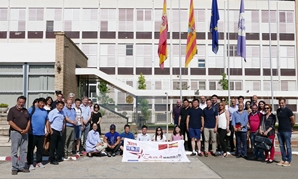
Representatives from the Spanish and Chinese alfalfa sector meet at IAMZ-CIHEAM

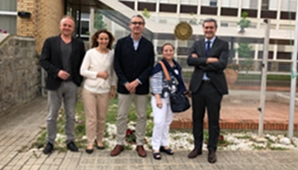
On 24 July IAMZ-CIHEAM Zaragoza welcomed a Chinese delegation on a business trip to Spain as part of the Campaign for the Promotion of the Spanish Alfalfa in China organized by the Spanish Association of Manufacturers of Dehydrated Alfalfa (AEFA) and Eibens consulting, in cooperation with the Spanish Institute for Foreign Trade (ICEX).

The meeting brought together Chinese companies and professionals from the industry with Spanish producers and exporters of alfalfa, which is largely produced in Aragon and it is not surprising that during the 2017-2018 season (from March to March), AEFA members produced 1,453,000 tons of alfalfa, 829,000 of which were grown in Aragón

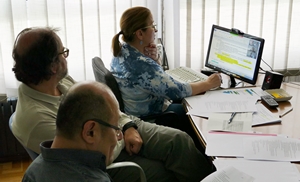
Pablo Recio, CEO at Eibens Consulting, chaired the meeting, hearing from representatives from China Grassland Industry Association and Hesitan, as well as Alun Jones, Director of Innovation and International Projects at IAMZ-CIHEAM, who presented the host institution and stressed the importance of international cooperation in terms of research and training in the agrofood sector. The coordinators of Animal Production and Food Marketing and Technology also spoke about MSc programmes and other training activities carried out by IAMZ-CIHEAM and related to forage production, animal nutrition or marketing.

Ignacio Delgado, from the Center for Agro-Food Research and Technology of Aragon (CITA), gave a quick review of the history of alfalfa and spoke about its productivity and importance as feed for livestock. Aragón is one of the main alfalfa producing regions (32% of total surface area in Spain) and plays a leading role in research, 18 out of the 22 alfalfa varieties registered in Spain are studied at CITA on the Campus of Aula Dei.

Alfalfa is one of the most important forage species in the world because of its content in protein, vitamins, minerals and carbohydrates, which contributes to animal growth and increased milk and meat production. Alfalfa has always been an important crop in Spain, but now –according to ICEX– the sector is undergoing many changes leading to increased exports and new markets for dehydrated alfalfa; increasing sales from 15-20% of production on international markets to around 75%.

The session ended with a networking activity where Chinese companies had the opportunity to hold business meetings with Spanish producers and exporters. Later, the delegation proceeded to visit Los Monegros cooperative in Sariñena.
IAMZ-CIHEAM at Forum on leadership in Agriculture, Food and Gastronomy on the world scene

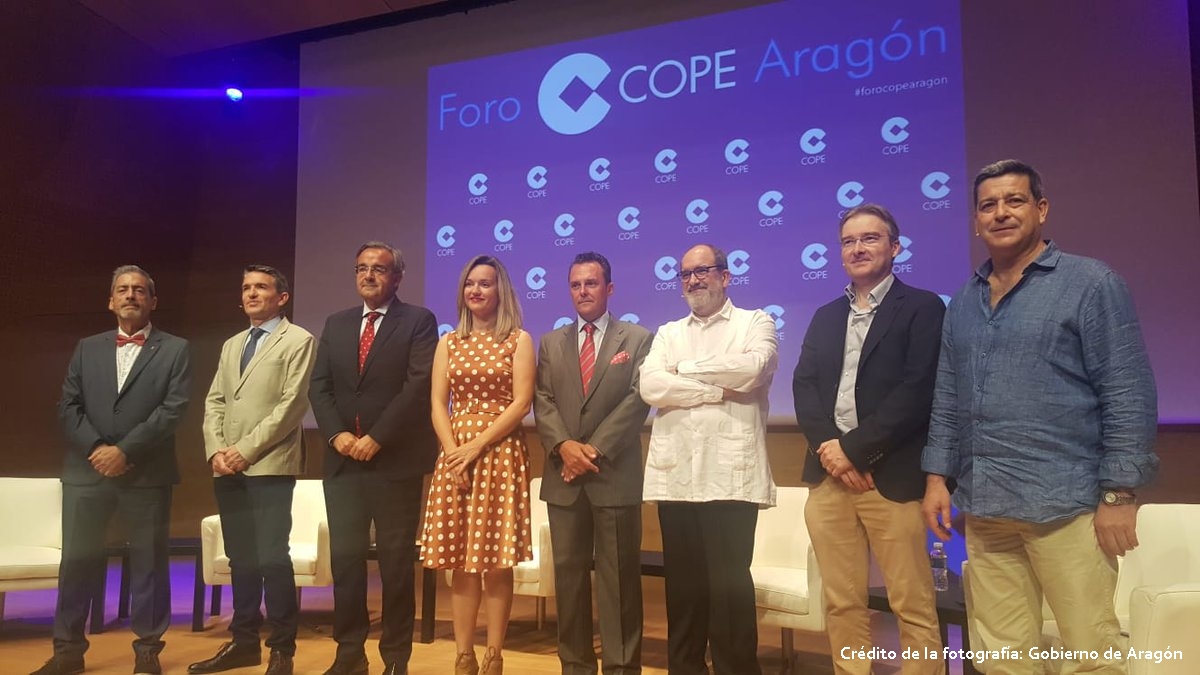
Alun Jones, Director of Innovation and International Projects at IAMZ-CIHEAM, participated in a Forum organized by COPE on 26 June in Zaragoza chaired by Juan Barbacil, from Aragon’s Academy of Gastronomy, and titled “Aragón: Leadership in Agriculture, Food and Gastronomy on the world scene”.

Alun Jones took part in the Forum together with Jesús Val (Director of the Experimental Station of Aula Dei/Higher Council of Scientific Research – EEAD-CSIC), José Antonio Domínguez (Director of the Agro-food Research and Technology Centre of Aragon – CITA, of the Government of Aragon) and Rafael Pagan (Director of the Agro-Food Research University Institute of Aragon – IA2). These institutions place Aragon at the heart of agro-food scientific research in Europe.

During the session Jones spoke about IAMZ’s solid experience as a centre of educational excellence with a track record of 50 years in post graduate training. He highlighted the unique opportunities offered by these training activities as a a highly valuable hub of knowledge bringing together students and the best experts in food and agriculture from all over the world.

The Forum was closed by Pilar Alegría, Minister for Innovation, Research and University of the Regional Government of Aragon, who noted that the agro-food sector has to face 3 challenges: increase production, protect the environment and provide healthier products. Solutions require applied science, technology and innovation. Alegría concluded that Aragón has the research capacity, potential and resources to become one of the leading regions in the agro-food sector.

Advanced course on Precision Livestock Farming (PLF) at IAMZ-CIHEAM in April 2019

An advanced course on Precision Livestock Farming (PLF) will be held in Zaragoza (Spain) in April 2019. The University of Copenhagen (Denmark), KU Leuven (Belgium), Supagro Montpellier (France), Agroscope (Switzerland), UAB (Spain) and the Volcani Center (Israel) will contribute by providing scientific support in terms of contents and lecturers.

A one-week training course will be organized at the Mediterranean Agronomic Institute of Zaragoza (IAMZ-CIHEAM) next April 2019 on different aspects related to Precision Livestock Farming.

The demand for products of animal origin is increasing year by year and is related to the growing world population and changes in food consumption patterns. FAO expects that the worldwide demand for animal products will increase by 75% by 2050. Consumers increasingly demand healthy food, animal welfare, sustainability and traceability. At the same time economic considerations frequently lead to significant intensification. Even if PLF applications are often associated with intensification, we will demonstrate that PLF also offers solutions for extensive systems in harsh environments and for small scale farming.

PLF comprises systems and technologies to remotely monitor grouped or individual animals. It provides information that enables the highest quality husbandry leading to good health and welfare and sustainable and efficient productivity. A wide range of technologies can be used to continuously record real-time data by using modern information and communication technologies (ICT), such as sensors, cameras, microphones, wireless networks, etc.

Early this month, a preparatory discussion was held with the participation of the local organizers and representatives from The University of Copenhagen (Denmark), KU Leuven (Belgium), Supagro Montpellier (France), Agroscope (Switzerland), UAB (Spain) and the Volcani Center (Israel) to prepare the preliminary draft of the program.

More detailed info will be available soon on the website of IAMZ-CIHEAM: https://www.zaragoza.ciheam.org/

XXII International Master in Plant Breeding: Looking for plant breeding specialists

The XXII International Master in Plant Breeding os one of the oldest and most international Plant Breeding Masters in Europe and is designed to train professionals in the area of plant breeding, enabling them to develop new varieties that are adapted to the different environmental conditions, making a better use of inputs and integrated in environmentally and economically viable agricultural systems. The Master integrates the tools of molecular biology, cell biology, genomics, biotechnology and bioinformatics in order to improve classical breeding programmes.

The specialization profile of this degree enables students to undertake technical responsibilities in this domain as well as to perform high-level scientific research. The working activity of this Master’s graduates focuses on plant and seed companies, plant biotechnology enterprises, public agencies for seed quality control and variety certification, on research and on education.

The Master is organized by the Mediterranean Agronomic Institute of Zaragoza (IAMZ) of the International Centre for Advanced Mediterranean Agronomic Studies (CIHEAM) and the School of Agricultural and Forestry Engineering (ETSEA) of the University of Lleida (UdL). It is an official Master of the Spanish university system with a clear international character, and it has been on offer since 1982, its contents being updated and revised for each new edition. The Master has a duration of two years (120 ECTS) and is delivered on a face-to-face mode, full time basis. The Master begins every second year.

In the Master, 72 lecturers from 9 different countries participate, coming from universities, research centres, public administration services, private enterprises and international institutions. The quality of the lecturers guarantees high-level training and constant updating of topics. The diversity of their origin, both geographical and institutional, contributes to the dynamism of the courses and enables the students to contrast different theories, methods and results.

For more information visit the Master’s website: http://www.masterplantbreeding.com/

Training course on antimicrobial resistance: implications for animal health and food safety at IAMZ-CIHEAM in March 2019

A high-level training course on antimicrobial resistance: implications for animal health and food safety will be held in Zaragoza (Spain) in March 2019. FAO (Italy), University of Burgos (Spain), VISAVET-UCM (Spain) and ANSES (France) will contribute by providing scientific support in terms of contents and lecturers.

A one-week training course will be organized at the Mediterranean Agronomic Institute of Zaragoza (IAMZ-CIHEAM) next March 2019 on different aspects related to antimicrobial resistance: implications for animal health and food safety.

Antimicrobial Resistance (AMR) is a major global threat of increasing concern to human, animal and environmental health. It has strong implications for both, food safety and food security and the sustainable economic development. AMR refers to when microorganisms – bacteria, fungi, viruses and parasites – evolve resistance to antimicrobial substances, like antibiotics. This can occur naturally through adaption to the environment or due to inappropriate and excessive use of antimicrobials. Fighting against AMR is a cross-sectorial responsibility and requires coordinated action of all actors involved, including the agri-food chain.

Early this month, a preparatory discussion was held with the participation of the local organizers and representatives from FAO (Italy), University of Burgos (Spain), VISAVET-UCM (Spain) and ANSES (France) to prepare the preliminary draft of the program. The course aims to support participants to analyse and understand the cross-sectoral and multifaceted nature of AMR, and provide a comprehensive view of the public health implications of the use of antimicrobials in livestock, aquaculture and crop sectors in the generation and spread of AMR. It will serve to identify current gaps in knowledge, capacity and awareness as barriers for combating AMR, to show current opportunities for sustainable changes against AMR, and to provide foresight on future perspectives.

More detailed info will be available soon on the website of IAMZ-CIHEAM: https://www.zaragoza.ciheam.org/

Training course on food loss and waste reduction and management at IAMZ-CIHEAM in January 2019

A high-level training course on food loss and waste reduction and management will be held in Zaragoza (Spain) in January 2019. CREDA-UPC-IRTA (Spain), University of Bologna (Italy), International Food Waste Prevention Program (UK) and MAPAMA (Spain) will contribute by providing scientific support in terms of contents and lecturers.

A one-week training course will be organized at the Mediterranean Agronomic Institute of Zaragoza (IAMZ-CIHEAM) next January 2019 on different aspects related to food loss and waste reduction and management

Despite the growing attention from the academic world, civil society and policy makers, the debate on food losses and waste (FLW) is still affected by a lack of a consensus over its definition and scope boundaries, the conditions that lead to their creation and the quantification along the food supply chain. Moreover, as policies and policy proposals are emerging, there is a greater need for quantification and analysis of policy interventions.

Early this month, a preparatory discussion was held with the participation of the local organizers and representatives from CREDA-UPC-IRTA (Spain), University of Bologna (Italy), International Food Waste Prevention Program (UK) and Spain’s Ministry of Agriculture and fisheries, Food and the Environment to prepare the preliminary draft of the program.

More detailed info will be available soon on the website of IAMZ-CIHEAM: https://www.zaragoza.ciheam.org/