A high-level training course on controlling disease at the wildlife-livestock interface organized by IAMZ-CIHEAM and MAPAMA and to be held in Zaragoza (Spain) in November 2018. University of Zaragoza (Spain), Hunting Resources Research Institute, IREC (Spain), Spain’s Ministry of Agriculture, Fisheries, Food and Environment (MAPAMA), Autonomous University of Barcelona (Spain), Department for Environment, Food and Rural Affairs, DEFRA (UK) and the University of Turin (Italy) will contribute by providing scientific support in terms of contents and lecturers.
A one-week training course will be organized at the Mediterranean Agronomic Institute of Zaragoza (IAMZ-CIHEAM) next November 2018 on different aspects related to controlling disease at the wildlife-livestock interface.
There is a growing recognition of the potential importance of pathogen transmission at the wildlife-livestock interface in the epidemiology of diseases that impact on agriculture, human health and biodiversity. In our rapidly changing world the interface between human and wildlife populations has been profoundly modified by human activity. Effective management of disease risks at the wildlife-livestock interface should be sustainable, based on sound epidemiological and ecological knowledge, and must balance the requirements for preserving biodiversity, protecting human health and social and economic well-being.
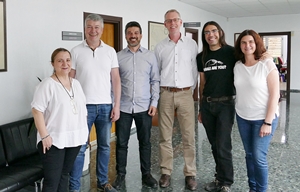
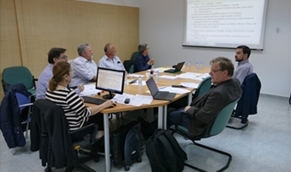
Early this month, a preparatory discussion was held at the facilities of IAMZ-CIHEAM in Zaragoza with the participation of the local organizers and representatives from University of Zaragoza (Spain), Hunting Resources Research Institute, IREC (Spain), Spain’s Ministry of Agriculture, Fisheries, Food and Environment (MAPAMA), Autonomous University of Barcelona (Spain), Department for Environment, Food and Rural Affairs, DEFRA (UK) and the University of Turin (Italy) to prepare the preliminary draft of the program.
More detailed info will be available soon on the website of IAMZ-CIHEAM: https://www.zaragoza.ciheam.org/
“Spanish food culture: the Mediterranean diet and the agro-food industry” is a course aimed at undergraduates, recent graduates and young professionals, who want to learn first-hand from Spanish food and culinary experts about the A to Z of Spanish food and the Spanish food sector. In addition to learning Spanish, this interactive course will help the student build in-depth knowledge on the Spanish food sector through practical hands-on courses, field trips and visits to food producers, lectures and interaction with some of the top food and culinary experts in the region. An optional one month internship in a Spanish food company is also possible.
At the end of the course, students will have a full grounding in:
- The Mediterranean Diet both in terms of cultural heritage and health and nutrition
- An introduction to the consumption of Mediterranean products (consumption patterns, lifestyle, product diversification and market segmentation)
- The EU Food model, safety and quality and its relation to international trade (especially the differences and similarities of the EU and US models)
- Developments and trends in the Spanish Agro Food system
- The positioning and secrets of Spanish gastronomy worldwide
- 30 hours intensive Spanish language course
The Program will include field trips and educational visits to a Rioja vineyard, the Basque Culinary Center in San Sebastian, a weekend trip to an Ebro river delta mussel farm and rice fields (Valencian coast), an organic mill and bakery, a processing and canning plant, an olive oil mill and a cheese factory amongst others. A full program of weekend and leisure activities will be available, such as a visit to a national park in the Pyrenees, the Camino de Santiago, full moon kayaking, as well as free weekends to explore the beauty of Spain.
For further information:
E-mail: mabs@iamz.ciheam.org
Tel: + 34 976 716 000
http://mediterraneanagribusinessschool.education/
A high-level training course on Livestock and climate change will be held in Zaragoza (Spain) in February 2019. INRA (France), FAO, the Polytechnic University of Valencia (Spain), Bangor University (UK) and BC3-Basque Centre for Climate Change (Spain) will contribute by providing scientific support in terms of contents and lecturers.
A one-week training course will be organized at the Mediterranean Agronomic Institute of Zaragoza (IAMZ-CIHEAM) next February 2019 on different aspects related to livestock and climate change, the assessment of emissions, mitigation options and adaptation strategies
While Mediterranean livestock are particularly vulnerable to climate change, the livestock sector is responsible for about 14.5% of anthropogenic GHG emissions worldwide. There is a challenge in developing complementary adaptation and mitigation strategies for the sector, in accordance with the Paris Agreement on climate change and Sustainable Development Goals.
Early this month, a preparatory discussion was held at the facilities of IAMZ-CIHEAM in Zaragoza with the participation of the local organizers and representatives from INRA (France), FAO, the Polytechnic University of Valencia (Spain), Bangor University (UK) and BC3-Basque Centre for Climate Change (Spain) to prepare the preliminary draft of the program.
More detailed info will be available soon on the website of IAMZ-CIHEAM: https://www.zaragoza.ciheam.org/
A high-level training course on seafood value chain analysis (VCA) will be held in Zaragoza (Spain) in May 2019. FAO, UiT-The Artic University of Norway, Belco Ltd. (Denmark), the University of Cantabria (Spain) and the University of Nantes (France) will contribute by providing scientific support in terms of contents and lecturers.
A one-week training course will be organized at the Mediterranean Agronomic Institute of Zaragoza (IAMZ-CIHEAM) next May 2019 on different aspects related to the seafood value chain analysis. Food systems and seafood value chains, in particular, are increasingly contributing to the economic growth and the achievement of the UN Sustainable Development Goals. Globalization and the increasing complexity of markets, along with international concerns about the sustainability of natural resources, require improved knowledge about how seafood value chains are functioning.
Early this month, a preparatory discussion was held at the facilities of IAMZ-CIHEAM in Zaragoza with the participation of the local organizers and representatives from FAO, UiT-The Artic University of Norway, Belco Ltd. (Denmark), the University of Cantabria (Spain) and the University of Nantes (France) to prepare the preliminary draft of the program.
More detailed info will be available soon on the website of IAMZ-CIHEAM: http://www.iamz.ciheam.org/
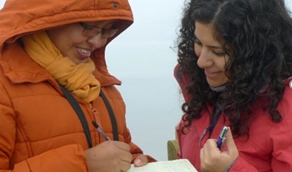
On International Women’s Day 2018, the CIHEAM embraces the official UN theme “Time is Now: Rural and Urban Activists Transforming Women’s Lives” by reinforcing its commitments to step up efforts to invest in the capacity of rural women.
Over the years, the programmes and the activities of the CIHEAM have grown along the lines of the 2030 Agenda for Sustainable Development by having among the main goals, Gender Equality. The CIHEAM Action Plan for the Mediterranean (CAPMED 2025) gives prominence to issues of capacity building and empowerment of women in agriculture, fisheries and more generally in rural and coastal Mediterranean areas. Whether in the struggle against the waste of natural and human resources, in the formulation of poverty alleviation policies, the support of entrepreneurship and in decision-making processes, the participation of rural women should be fostered and greater investment should be made in building their capacities aiming at their empowerment.
CIHEAM Zaragoza is carrying out several projects and initiatives with member countries and other partners, in order to empower and to promote the role of women in rural areas, as well as to reduce gender inequalities in agriculture and rural development:
Social innovations focusing on women in marginalised rural areas across Europe and the Mediterranean.
We need to remember that the empowerment of women is highly important to combat poverty and is essential for the achievement of sustainable development.
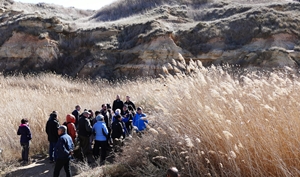
From 5 to 10 February IAMZ-CIHEAM, together with IUCN (Centre for Mediterranean Cooperation of the International Union for the Conservation of Nature), ICARDA (International Center for Agricultural Research in the Dry Areas) and with the collaboration of SER Europe (European Chapter of the Society for Ecological Restoration) held a course on Restoration of degraded drylands and monitoring of desertification processes.
Drylands are a key terrestrial biome, covering 45% of Earth’s land surface and supporting over 38% of the total global population. They are highly vulnerable to global environmental change. Desertification and land degradation, driven by increasing human pressure on land and water resources, are the most important and pressing environmental and socio-economic issues currently faced by dryland people. The sensitivity of drylands to these problems is amplified from the fact that their primary productivity is strongly limited by precipitation and soil nutrient availability, and both of these factors are undergoing changes associated with increasing atmospheric greenhouse gases and air pollutants. Because of the extent of dryland ecosystems globally, and the dependence of an important part of the human population on them for goods and services, it is crucial to establish effective programmes to monitor land degradation processes that can detect the onset of desertification and restore degraded land before degradation becomes irreversible or restoration too costly.
During the course participants from around 20 countries learnt about the latest scientific and technical advances in land restoration with the purpose of combating desertification, gained updated knowledge on how to effectively restore degraded drylands, from project planning to the implementation and monitoring phases; and heard about available tools to monitor desertification processes. Case-studies from Mediterranean countries were also discussed, as well as relevant high profile international initiatives. The course included practical work, interesting discussions to share knowledge and experiences and a visit to traditional grazing areas to learn more about the characteristics and effects of different grazing intensities on semi-arid gypsiferous ecosystems, as well as a successful restoration project involving the development of wetlands to improve water quality and biodiversity.