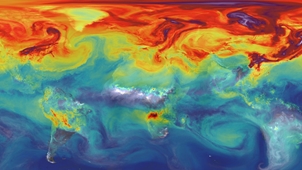
IAMZ-CIHEAM, ICARDA (International Center for Agricultural Research in the Dry Areas) and Red REMEDIA (Scientific network for greenhouse gas mitigation in the agroforestry sector) are launching an international course on Greenhouse gas assessment and mitigation in agriculture.
In the context of the Paris Agreement on climate change, all the economic sectors have to reduce GHG emissions. The agricultural sector is responsible for about 10-12% of anthropogenic GHG emissions worldwide. Many studies have shown that there is potential to reduce GHG emissions and enhance soil carbon sequestration in agriculture. However, emissions in the agricultural sector are mostly biogenic and driven by multiple and interacting processes, which hampers reliable/robust estimates. Moreover, bridging the gap between scientific knowledge in GHG mitigation, decision making and policy implementation remains challenging.
This course will provide knowledge on the processes underlying GHG emissions and soil C sinks, measuring methodologies and modelling tools in cropping systems. Methods for national GHG inventories and mitigation options analysis, including socio-economic assessment, will be presented. Practical work based on real case studies in Mediterranean conditions will also be organized.
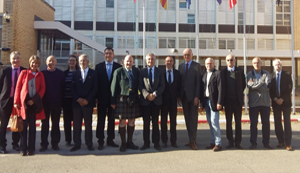
The European Economic and Social Committee (EESC) today visited CIHEAM Institute in Zaragoza (IAMZ-CIHEAM) which is one of the longest standing international organizations with a permanent office in Spain. During the visit, members of the EESC’s specialized Section on agriculture, rural development and the environment heard first-hand how the IAMZ has played a key role for 50 years in preparing the next generation of future leaders in the Mediterranean Agro-food sector. EESC members discussed with IAMZ’s Director Javier Sierra the importance of investing in human capital through education, training and capacity building to improve the productivity of the agro-food sector across the Mediterranean and foster employment. Between 20 and 30% of the active population in Southern Mediterranean countries are employed in agriculture.
Aragonese Regional Government Minister for Rural Development and Sustainability Joaquin Olona also addressed the EESC on the on-going challenges and realities for one of Spain’s least densely populated regions in implementing EU agricultural and rural development policies.
IAMZ Director Javier Sierra told the EESC that “There is an increasing need to improve food production to meet demand for the world´s growing population in line with the UN SDGs and CIHEAM´s CAPMED 2025 Action Plan. By investing in human capital through training and education in the agro-food sector, CIHEAM believes that not only can we achieve this goal but we can also provide rural development opportunities for rural youth and help mitigate the impact of distress migration in the region.”
Brendan Burns, President of the EESC agriculture, rural development and environment section stressed his support for the activities of the CIHEAM-IAMZ; “We have heard today how this modest organization has been working tirelessly behind the scenes for almost 50 years to provide young people and professionals from across the Mediterranean with life-changing opportunities in agriculture and rural development. CIHEAM-IAMZ´s capacity building activities are more relevant than ever as we need to feed over 2 billion more people by 2050 in an increasingly resource stressed world and ensure that young people in particular are not compelled to migrate from rural areas.”
During their visit, the EESC members also met with two previous Masters’ students from Albania and Tunisia on food marketing and rural development/environmental management respectively to learn about their IAMZ experience and how they had applied their recently gained expertise in the labour market. The two-day EESC visit to IAMZ is combined on the first day with a visit to an olive oil mill in the Sierra del Moncayo area and a wine vineyard in the Borja region in order to learn more about two typical aspects of local agro-food production, the organization of cooperatives in Aragón and the economic development of the local agro-food business. The second day of the visit will also include a visit to the Natural Park of Moncayo to learn how the park manages the natural environment and its activities in the park and to see how the local EU regional development programme LEADER from the Tarazona and Moncayo area is managed.
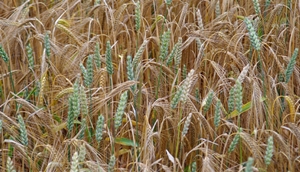
IAMZ-CIHEAM, the ClimBar project of the EU Joint Programming Initiative on Agriculture, Food Security and Climate Change (FACCE-JPI ERA-NET Plus on Climate Smart Agriculture) and the International Center for Agricultural Research in the Dry Areas (ICARDA) are launching an international course on breeding small grain cereal crops in a climate change scenario.
Small grain cereals (mainly barley and bread and durum wheat) are the most important staple crops in Europe and in the Mediterranean region. Over the past century, breeding has been able to provide the highest yield increase ever seen, although now in many regions a yield plateau is evident.
Climate change may be the single unifying, and chronic issue that will affect everyone and every aspect of the economy. Changes in weather patterns and variability, as well as differential combinations of effects in different parts of Europe and the Mediterranean region are expected. The North will see warmer and wetter weather, whereas the South will experience more frequent and severe droughts and heat waves, and in both cases there will be a shifting pattern of incidence of pests and diseases.
The Intergovernmental Panel on Climate Change (IPCC) models predict that average yields of cereals will fall due to drought, insect predation and diseases, whilst the demand for food will rise significantly due to population growth. The identification of new varieties adapted to the expected climatic conditions requires the accurate prediction of the new scenarios and the efficient use of genetic resources and advanced genomic tools. The recent progress in plant genomics and phenotyping offers the opportunity for a next generation breeding era to overcome the limitations of traditional breeding.
The course will present, using a multidisciplinary approach, the most recent research for an advanced knowledge-based breeding to cope with climate uncertainty. The aims of the course are to raise awareness of the extra challenges imposed by climate change to food security and cereal breeding; to give guidance on the impact and uses of recent advances on genomics, phenomics and modelling for cereal breeding; and to provide an integrated overview of the strategies that must be considered to increase breeding effectiveness.
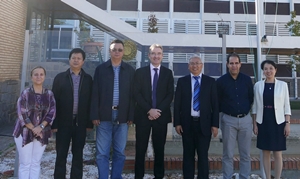
A high-level delegation from Sichuan Agricultural University (SAU) in China visited IAMZ-CIHEAM on 10 October to discuss cooperation in educational programmes. The delegation was informed about the full IAMZ-CIHEAM educational and cooperation programme. With the help of visiting lecturer Rachael Goodhue from California Davis University, IAMZ-CIHEAM introduced the delegation to the unique IAMZ-CIHEAM model of post graduate education which involves around 30 international visiting lecturers in delivering each of the specialized IAMZ-CIHEAM international Master´s programmes.
SAU was represented by the Vice President of SAU, Prof. Wu De, Vice Director of the International Office of Exchange and Cooperation, Prof. Xinrong Xia, the Dean of the College of Resources, Mr. Wang Changquan, and the Dean of the College of Agronomy, Mr Huang Yubi.
The Sichuan Delegation was very impressed to be able to access such a powerful academic and teaching network from one educational focal point in the Mediterranean and saw much value in encouraging active exchange between the two organisations. Mr De and Mr Yubi were particularly interested in discussing student exchange activities for IAMZ’s MSc. in Plant Breeding and MSc. in Animal Nutrition which were their respective areas of expertise. Other IAMZ-CIHEAM MSc. programmes such as Food Marketing were also identified as future potential cooperation areas.
The delegation was welcomed by IAMZ-CIHEAM staff, Alun Jones, Director of Innovation and International Projects, Manuela Cerezo, Head of Educational Programmes and Ramzi Belkhodja, Coordinator of Plant Breeding studies.
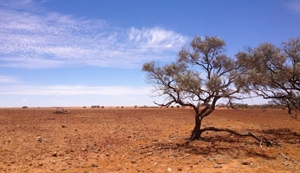
IAMZ-CIHEAM, IUCN (Centre for Mediterranean Cooperation of the International Union for the Conservation of Nature), and ICARDA (International Center for Agricultural Research in the Dry Areas), with the collaboration of SER Europe (European Chapter of the Society for Ecological Restoration) are launching an international course on the restoration of degraded drylands and monitoring of desertification processes.
Drylands are a key terrestrial biome, covering 45% of Earth’s land surface and supporting over 38% of the total global population. They are highly vulnerable to global environmental change. Desertification and land degradation, driven by increasing human pressure on land and water resources, are the most important and pressing environmental and socio-economic issues currently faced by dryland people. The sensitivity of drylands to these problems is amplified from the fact that their primary productivity is strongly limited by precipitation and soil nutrient availability, and both of these factors are undergoing changes associated with increasing atmospheric greenhouse gases and air pollutants. Because of the extent of dryland ecosystems globally, and the dependence of an important part of the human population on them for goods and services, it is crucial to establish effective programmes to monitor land degradation processes that can detect the onset of desertification and restore degraded land before degradation becomes irreversible or restoration too costly.
Dryland countries have a long history of restoration of degraded lands, a task that traditionally has been conducted by planting trees, whether native or not, paying little attention to the views of the local communities and to ecosystem functioning. The last decades have seen unprecedented interest and research efforts in the development of new technologies and participative approaches to effectively restore degraded drylands. Yet, new approaches have not been widely implemented, despite the renewed interest in restoration actions imposed by global initiatives such as the Bonn Challenge. At the same time, important conceptual progress has substantially advanced our understanding of desertification processes and produced new tools to monitor dryland status by means of biophysical and socio-economic indicators, including ecosystem functioning. In parallel, several high profile international initiatives launched in the framework of the United Nations Convention to Combat Desertification (UNCCD), such as the “2030 Agenda for Sustainable Development”, have placed concepts such as Land Degradation Neutrality and desertification at the forefront of political and environmental issues.
This course will present the latest scientific and technical advances in land restoration with the purpose of combating desertification; improve knowledge on how to effectively restore degraded drylands, from project planning to the implementation and monitoring phases; and introduce available tools to monitor desertification processes. Case-studies from Mediterranean countries will be discussed, relevant high profile international initiatives will be introduced, and practical work will be performed by the participants to get familiar with state-of-the-art tools.
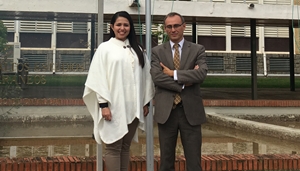
Vanessa Cordero, Ecuador’s Minister for Agriculture and Livestock visited IAMZ-CIHEAM last Friday 22 September as part of an official visit to establish agreements and lines of cooperation to promote research, development, training and technology transfer in the agro-food sector in Ecuador. During her meeting with IAMZ Director Javier Sierra, the Minister discussed ways of enhancing education for those working in the farming sector in Ecuador, devising joint projects based on the exchange of knowledge and the possibility of establishing scholarship opportunities for postgraduate education and courses for technical staff in her country.
During her visit to the Aula Dei Complex which was coordinated by the Agro-food Research and Technology Centre of Aragon (CITA), the Minister showed keen interest in the Campus, one of the agricultural science complexes with the greatest capacity and prestige in Spain that brings together more than 250 researchers and specialists in agriculture.