European Research project to boost Mediterranean fish farming

MedAID (Mediterranean Aquaculture Integrated Development), a four year EU H2020 research project, will address key factors to improve aquaculture production in the Mediterranean.

The project brings together the best aquaculture experts from over 30 organisations from 12 countries. 

Europe presently consumes twice as much seafood as it produces, with imports filling the gap. Despite this fact, aquaculture accounts for about 20% of production in Europe and directly employs some 85 000 people, mostly in rural and coastal areas. In contrast with the development seen in other non EU Mediterranean countries, aquaculture production is stagnating in Europe. This is the reason why the European Comission has proposed the target of a 20% increase in sustainable aquaculture production in the Mediterranean. With the aim of supporting this objective the MedAID project has been born, and its outcomes are expected to be vital in strengthing European marine fish production. 

MedAID (Mediterranean Aquaculture Integrated Development) was launched at the beginning of May 2017 and will play a key role in identifying the main success factors for enhancing growth in this increasingly important food production sector.  Focusing on sea bream and sea bass, which are two of the key produced species in the Mediterranean, the project will take a comprehensive look at competitiveness and sustainability of the Mediterranean marine fish farming sector. Therefore, all components of the value chain will be addressed by MedAID, these being nutrition and feeding practices, animal health and welfare, genetics and breeding, environmental impact, consumer perception and marketing aspects, the economic efficiency and performance of the sector and regulatory constraints.  Working with stakeholders from across the sector, MedAID will propose best practices, innovative tools and practical solutions to the above challenges in order to increase growth and productivity.

MedAID, funded by a 7 million Euro grant from the European Commission´s H2020 Research and Innovation Programme, is coordinated by the Mediterranean Agronomic Institut of Zaragoza (IAMZ-CIHEAM) together with the Institute of Agrifood Research and Technology of Catalonia (IRTA), and involves over 30 different organisations from 12 countries, including research institutes, leading universities, producers and international organisations.

According to Bernardo Basurco (IAMZ-CIHEAM) and Dolors Furones (IRTA), coordinators of MedAID, “with the involvement of Europe´s leading aquaculture experts, MedAID will support the development of the sector by contributing knowledge, innovative tools and recommendations for improvements to the sector”.

Contact:

IAMZ-CIHEAM (Bernardo Basurco – + 34 976 716 000 )

Further information:

Website: www.medaid-h2020.eu

Twitter: @MedAID_

Facebook: Medaid – Mediterranean Aquaculture Integrated Development
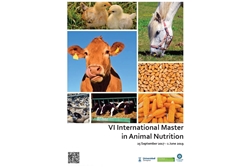
VI International Master in Animal Nutrition (September 2017 – June 2019)

Animal nutrition is one of the main bases of livestock production, therefore specialist training is required to produce safe, quality food products and design sustainable production systems. This innovative MSc programme provides in-depth knowledge of nutrition systems for cattle, sheep, pigs, goats, poultry and rabbits through analysis of modern and sustainable techniques and methods. It is a multidisciplinary programme delivered by 81 highly qualified professionals from 9 countries, chosen for their expertise and reputation. The Master also includes at least 13 technical visits to compound feed mills, forage shrub plots and pastures, beef and dairy cattle farms, meat and dairy sheep farms, extensive and intensive systems, goat farms, an organic production system, poultry, pig and rabbit farms and milk recording and quality control laboratories.

The MSc in Animal Nutrition is an official master of two years’ duration (120 ECTS), delivered in Zaragoza and jointly organized by IAMZ-CIHEAM, the University of Zaragoza (UZ) and the Spanish Foundation for the Development of Animal Nutrition (FEDNA), with the collaboration of the Polytechnic University of Madrid (UPM).

The first part of the programme (60 ECTS) consists of lectures and tutorials, laboratory and IT practicals to learn to design animal feed programmes and technical visits to various livestock farms. During this time students have the opportunity to design a project on new techniques or methodologies in animal nutrition and apply them in a productive context.  The Master is flexible and students can take independent modules. Lectures are delivered in English, French or Spanish with simultaneous interpretation. Furthermore, for students that do not have a basic knowledge of Spanish the UZ delivers an intensive Spanish language course to help them adapt to the IAMZ experience. The course takes place from July to September, and includes a month in the Pyrenean city of Jaca.

In the second part of the programme (60 ECTS) students go on to do their Practicum and Final Master Project at national or international universities, research centres or firms. The collaboration with these institutions is fundamental for the success of the programme. Students receive training in an environment of team research work, and benefit from excellent resources and sound advice. The experience acquired during this period goes beyond the acquisition of knowledge and practical skills. It provides a full introduction to the reality of the professional world.

The multicultural environment with students and lecturers from different countries provides the opportunity to create a network of contacts and collaborators, a key asset for their career.

For more information on the International Master in Animal Nutrition you can download the brochure and visit the Master’s page.

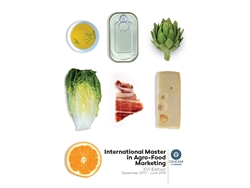
XVI International Master in Agro-Food Marketing (September 2017 – June 2019)

Considering the expansion of the agro-food sector, the strong competition between firms in the industry and the increasing globalization of trade, marketing has become the main tool for agro-food businesses seeking to stand out and be successful. With 30 years of experience, this Master provides a global and integrated vision of the components of agro-food marketing, placing particular emphasis on the international dimension of agribusiness marketing strategies. The comprehensive teaching system combines lectures, practicals, tutored group work, visits to firms and round table discussions with experts from firms in the sector.

The MSc in Agro-Food Marketing is a 2 year programme (120 ECTS), organized by IAMZ-CIHEAM and is recognized as equivalent to the official Master’s Degree of the Spanish university system.

The first part of the programme (60 ECTS) consists of lectures, case studies, group work, practical sessions with statistics software, tutored individual and group work, round tables and visits to firms in the agro-food sector. Students form working groups and do market research to seek solutions for a marketing issue proposed by collaborating firms. The Master’s flexible structure enables students to take independent modules. Lectures are delivered in English, French or Spanish with simultaneous interpretation. Furthermore, for students without a basic knowledge of Spanish, IAMZ organizes an intensive pre-sessional Spanish language course delivered by the University of Zaragoza to help them make the most of the IAMZ experience. The course takes place from July to September and includes a month in the Pyrenean city of Jaca.

In the second part of the programme (60 ECTS) students go on to conduct their Practicum and Final Master Project at national or international universities, research centres or firms. Students receive training in a research team environment and benefit from excellent resources and valuable advice. The experience acquired during this period goes beyond gathering knowledge and practical skills. It provides a full introduction to the reality of the professional world.

The multicultural environment with students and lecturers from over 30 countries provides the opportunity to create a network of contacts and collaborators, a key asset for their career.

For more information on the International Master in Agro-Food Marketing you can download the brochure and visit the Master’s page.

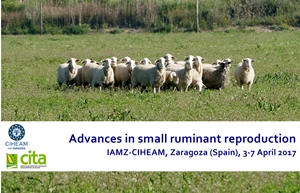
Advances in small ruminant reproduction (Zaragoza, Spain, 3-7 April 2017)

The International Centre for Advanced Mediterranean Agronomic Studies (CIHEAM), through the Mediterranean Agronomic Institute of Zaragoza (IAMZ), with the collaboration of the Agrifood Research and Technology Centre of Aragón (CITA-GA), through the Animal Production and Health Unit, is organizing an advanced course on “Advances in small ruminant reproduction” in Zaragoza (Spain) from 3 to 7 April 2017. This course provides professionals and researchers with the most advanced knowledge in reproductive physiology, focused on sheep and goat, and with strategies using reproductive biotechnologies for flock management.

In April 2017, the Mediterranean Agronomic Institute of Zaragoza (IAMZ-CIHEAM) will host an international course on advances in small ruminant reproduction. Small ruminant productions are of particular relevance in Mediterranean countries, covering a significant part of the demand of animal foodstuffs and playing an important role in socioeconomic development and landscape preservation. Animal production is facing increasingly challenging conditions due to climate change, socioeconomic constraints and evolving consumer’s needs and regulations. Under this increasing pressure, the mastering of reproductive functions becomes critical for breeding industry sustainability. This requires a precise knowledge of reproductive physiology at different levels (flock, animal, tissue, molecules). Besides, well established reproductive technologies are now available in different livestock production systems and will allow some of the impact of upcoming constraints on small ruminant breeding to be overcome. In addition, emerging biotechnologies may pave the way for further progress over new unexpected challenges.

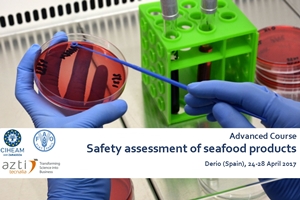
Advanced course on safety assessment of seafood products (Derio, Spain, 24-28 April 2017)

In April 2017, the Mediterranean Agronomic Institute of Zaragoza (IAMZ-CIHEAM), the Food and Agriculture Organization of the United Nations (FAO), through its Fisheries and Aquaculture Department, and AZTI (experts in marine and food innovation), with the collaboration of IES Escuela Agraria Derio, will host an international course on safety assessment of seafood products.

Safety assessment of seafood products is essential to ensure the provision of safe fish and fish products to consumers and to facilitate international trade. Seafood comprises a great diversity of species, including finfish species, molluscs, cephalopods and crustaceans. These originate from both capture fisheries and aquaculture. Different hazards are associated with each species and can occur at all stages of the value chain, influencing seafood quality and safety. There are many food safety hazards associated with seafood and some, such as biotoxins and Vibrio spp., are exclusive to the aquatic environment. Monitoring and surveillance of these and other relevant hazards is a crucial component of any food control system and central to this task is accurate analytical assessment. This assessment provides the evidence base for any seafood safety management decisions.

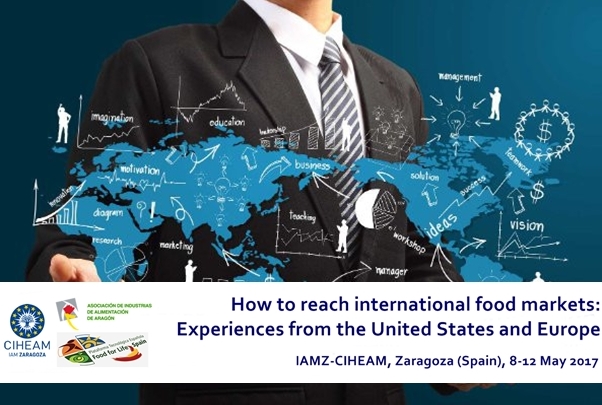
Advanced Course “How to reach international food markets: experiences from the United States and Europe” (Zaragoza, Spain, 8-12 May 2017)

In May 2017, the Mediterranean Agronomic Institute of Zaragoza (IAMZ-CIHEAM), with the collaboration of the Technology Platform Food for Life-Spain and the Association of Food Industries of Aragón (AIAA), will host an international course on how to reach international food markets: experiences from the United States and Europe. World markets offer a great number of opportunities, not only for large multinationals but also for a myriad of small and medium-sized firms. There are many approaches that need to be screened and analysed to be successful, for instance firms selling in international markets have to find stable agreements between partners. Planning strategic activities is also part of the success.

Participants will learn to identify food trade trends and market opportunities in the US, Europe and other markets, understand the different options for entry into foreign markets, identify opportunities to enter new markets with existing or new products, analyse timing and factors affecting the success and failure of international operations as well as gain further insight into strategies currently followed by companies in international business.