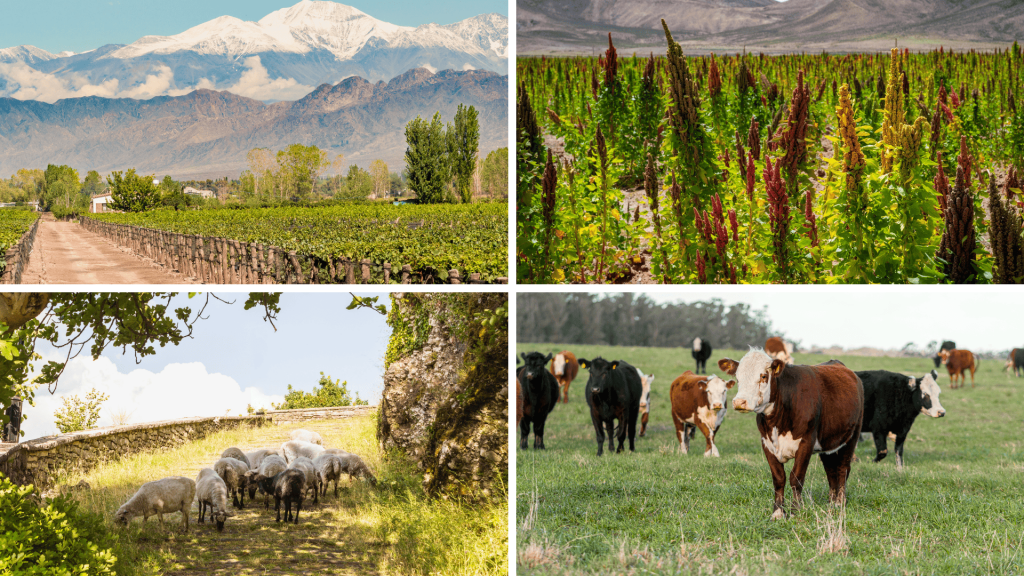
CIHEAM Zaragoza will provide expertise in key areas such as organic farming, socio-economic analysis, crop protection, livestock production, animal health and welfare, and food safety and control.
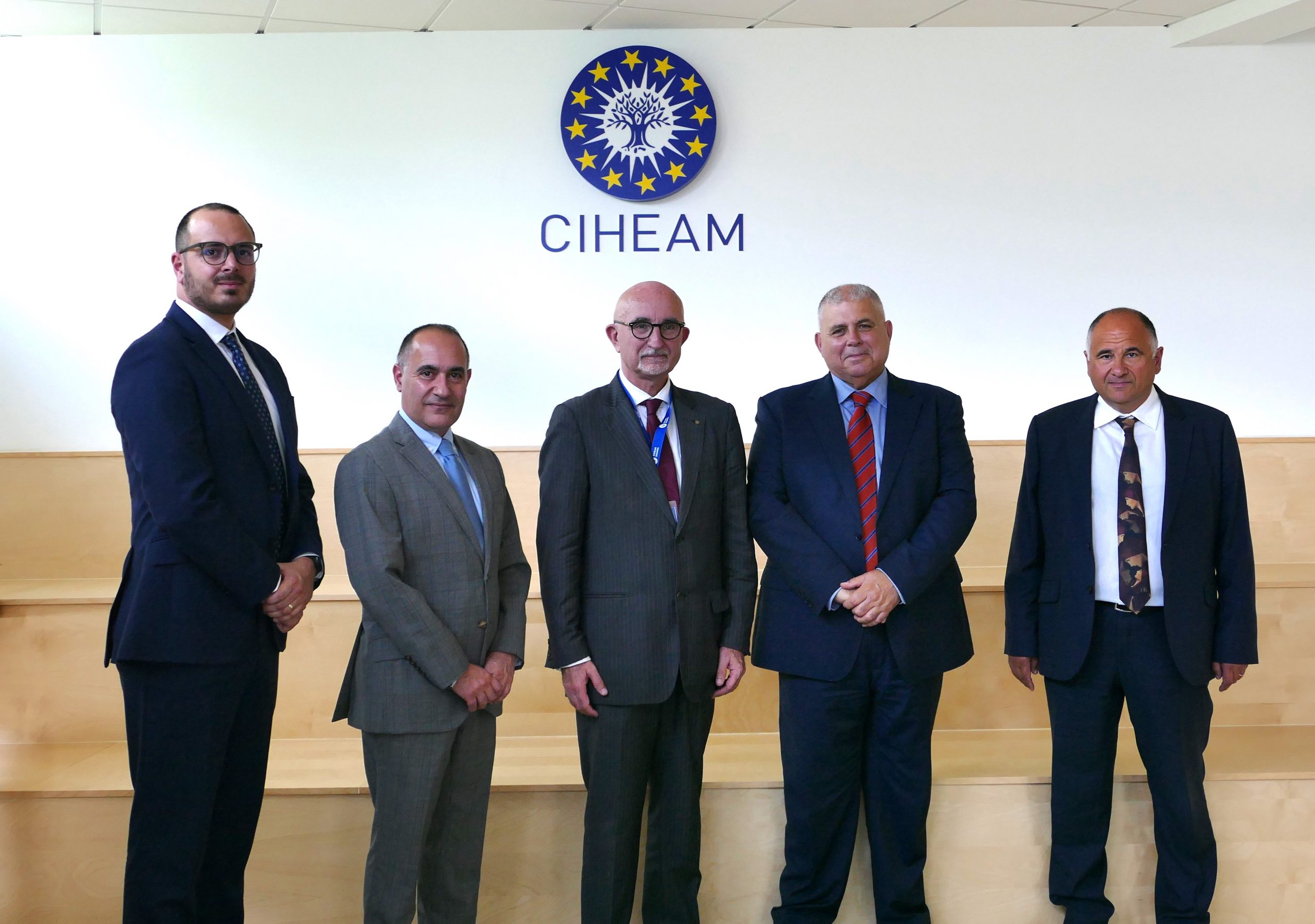
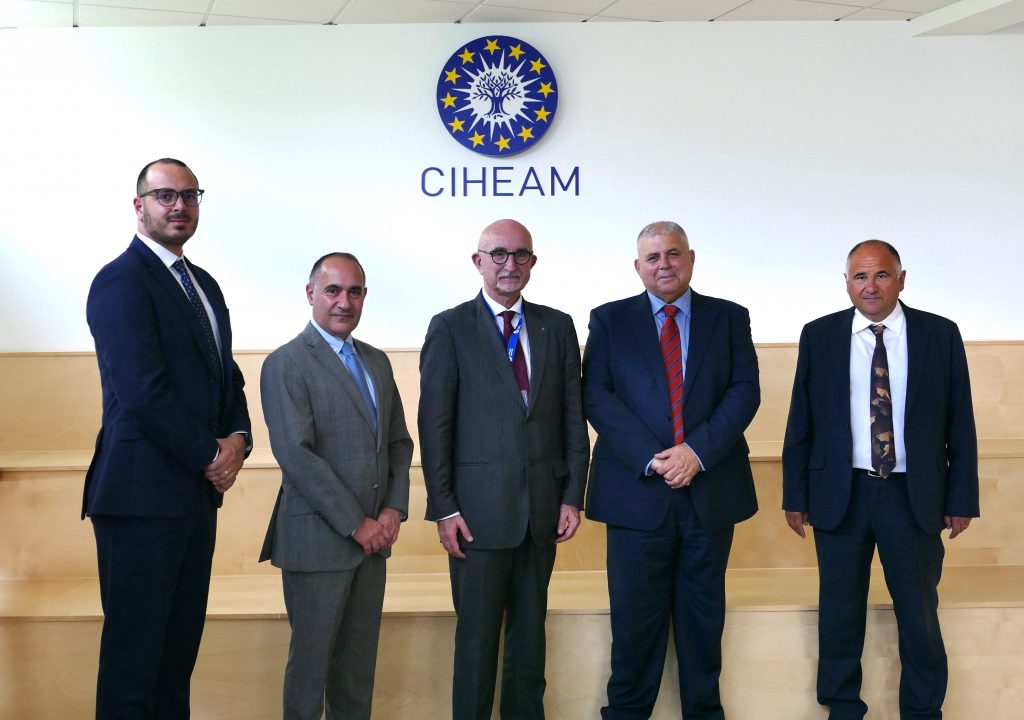
The agreement, signed by Sharlo Camilleri, Permanent Secretary of MAFA, and Raúl Compés López, director of CIHEAM Zaragoza, builds upon the Memorandum of Understanding established between the parties on 19 June 2024. This collaboration aims to advance knowledge dissemination, institutional networking, and awareness-raising in key agricultural areas such as organic farming, socio-economic analysis, crop protection, livestock production, animal health and welfare, and food safety and control.
Under the terms of the agreement, CIHEAM Zaragoza will provide technical assistance through the deployment of senior experts and technical specialists to Malta. These professionals will conduct technical visits, provide advisory services to farmers and local consultants, and support training initiatives. Additionally, technical professionals will be engaged long-term in Malta to implement best practices and recommendations provided by the experts. The cooperation will be structured around yearly work plans, ensuring that the activities align with Malta’s agricultural development priorities.
Camilleri highlighted Malta’s dedication to strengthening its agricultural framework: “Our partnership with CIHEAM Zaragoza will provide access to specialised expertise in crucial areas, including organic farming, livestock production, animal health and welfare, and food safety and control. This collaboration will not only enhance the sustainability and resilience of our agricultural sector but also further strengthen our ties with the CIHEAM organisation. We look forward to the successful implementation of this agreement and the positive impact it will deliver”.
Speaking about the agreement, Compés emphasised the importance of regional collaboration: “At CIHEAM Zaragoza, we are committed to fostering sustainable agricultural practices and capacity building in all the Mediterranean countries. This agreement with MAFA is a significant step towards enhancing technical expertise and supporting Malta’s agricultural sector through technical knowledge and innovation”.
The agreement, effective from 1 February 2025, is set for an initial period of one year, with provisions for renewal. Activities will be jointly planned, and CIHEAM Zaragoza will produce an annual report detailing the progress and outcomes of the collaboration.
Applications are now open for the 2025-2027 edition of CIHEAM Zaragoza’s international master’s programmes, organised in collaboration with leading universities and prestigious national and international institutions.
Founded in 1969, CIHEAM Zaragoza specialises in postgraduate education for international cooperation in agriculture and food and has trained thousands of professionals from across the world.
This year’s offer also includes two master’s programmes delivered at other locations in Spain. The 16th edition of the International Master in Olive Growing and Oil Technology will commence in Cordoba, Andalusia (organised with the University of Cordoba; with the collaboration of the Ministry of Agriculture, Fisheries, Water and Rural Development of the Autonomous Government of Andalusia; the Andalusian Institute of Research and Training in Agriculture, Fisheries, Food and Organic Production; the International Olive Council; the Spanish National Research Council; and the Fundación Patrimonio Comunal Olivarero). Alicante will be hosting the 11th edition of the International Master in Sustainable Fisheries Management (organised together with the University of Alicante, with the collaboration of the Spanish Ministry of Agriculture, Fisheries and Food through the General Secretariat of Fisheries, and Casa Mediterráneo).
Founded in 1969, CIHEAM Zaragoza specialises in international postgraduate education and cooperation, pursuing academic excellence, through a unique training model based on the participation of top specialists from universities, research centres, government bodies, international organisations and businesses across the world. Raúl Compés, director of CIHEAM Zaragoza, describes this model: “We select the best experts in each discipline, ensuring that our programmes provide up-to-date, world-class training that leads to high employability rates globally”.
The international nature of the training model is also reflected in the diverse student body, from countries in the Mediterranean region and beyond. CIHEAM Zaragoza’s scholarship programme supports outstanding students from the southern and eastern Mediterranean countries, building a transnational cooperation network in agriculture, fisheries and food.
Applications are now open for October 2025. Find more details on CIHEAM Zaragoza’s master’s programmes at: https://www.zaragoza.ciheam.org/education/master-programmes/.
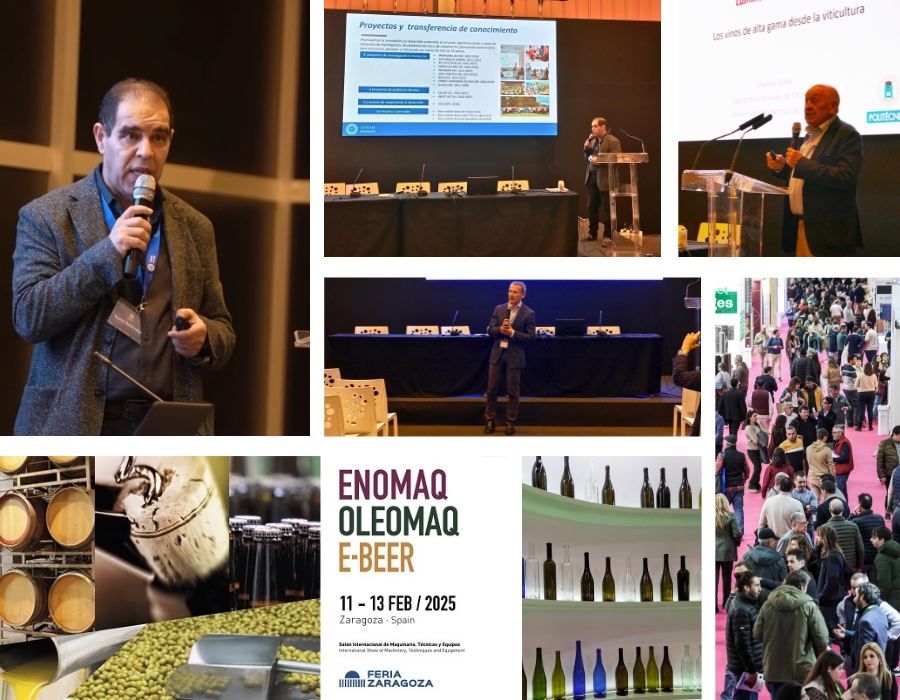
CIHEAM Zaragoza played an active role in the Organising Committee of the international trade fair for the wine and olive-growing sectors ENOMAQ held from 11 to 13 February 2025 at the exhibition centre Feria Zaragoza. As a point of reference for technology and innovation in these sectors, the event brought together professionals from academia and business to address key challenges and opportunities. Through conferences, round tables, and discussions, participants exchanged ideas and built strategic alliances in a rapidly evolving market.
On the opening day, CIHEAM Zaragoza presented its training programmes in winegrowing, olive growing and oil technology. Ramzi Belkhodja, coordinator of the area of Plant Production, Health and Breeding, spoke of the importance of capacity-building for the sustainable development of the sector. CIHEAM Zaragoza offers advanced training courses and research and cooperation projects in winegrowing and olive growing focused on adapting the sector to climate change, digitalisation, quality enhancement and sustainability of production. Initiatives include international courses organised in collaboration with institutions such as the International Organisation of Vine and Wine (OIV) and the International Olive Council (IOC); the International MSc Programme in Olive Growing and Oil Technology together with the University of Cordoba, the Regional Government of Andalusia, IFAPA, the International Oil Council (IOC), the Spanish National Research Council (CSIC) and the Fundación Patrimonio Comunal Olivarero (FPCO); and the OLIB cooperation project in Lebanon (Strengthening sustainable local development and coexistence in Lebanon through improved olive tree yield and productivity), funded by the Provincial Council of Zaragoza.
CIHEAM Zaragoza also featured in a presentation by Ignacio Atance Muñiz, Director of the Studies and Publications Service of the Cajamar Group Foundation. Additionally, Vicente Sotés, Professor Emeritus in Viticulture at the Polytechnic University of Madrid introduced the book Premium Wine in Spain: On the Road to Excellence, co-edited together with Carlos Moro, President of Bodegas Familiares Matarromera, and Raúl Compés López, Director of CIHEAM Zaragoza.
Through its participation in ENOMAQ 2025, CIHEAM Zaragoza reaffirms its commitment to training, innovation and sustainable development of the agrifood sector.
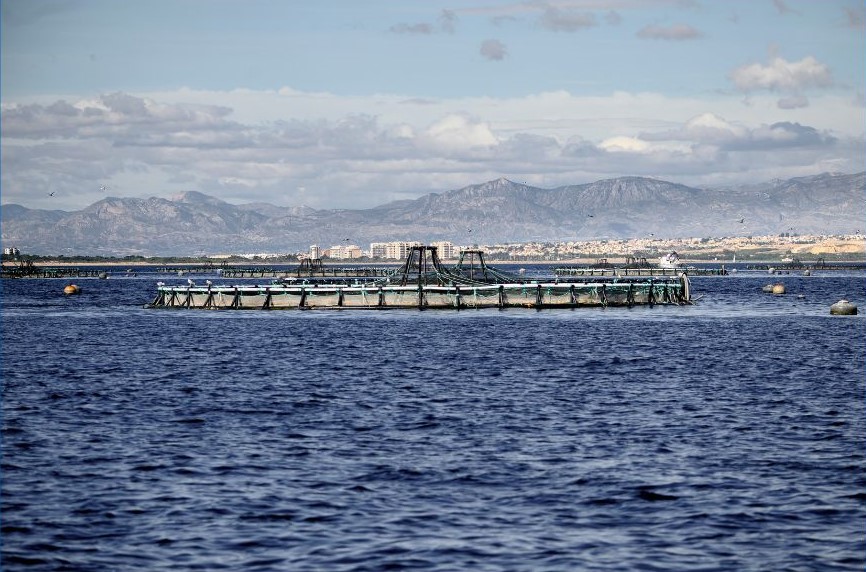
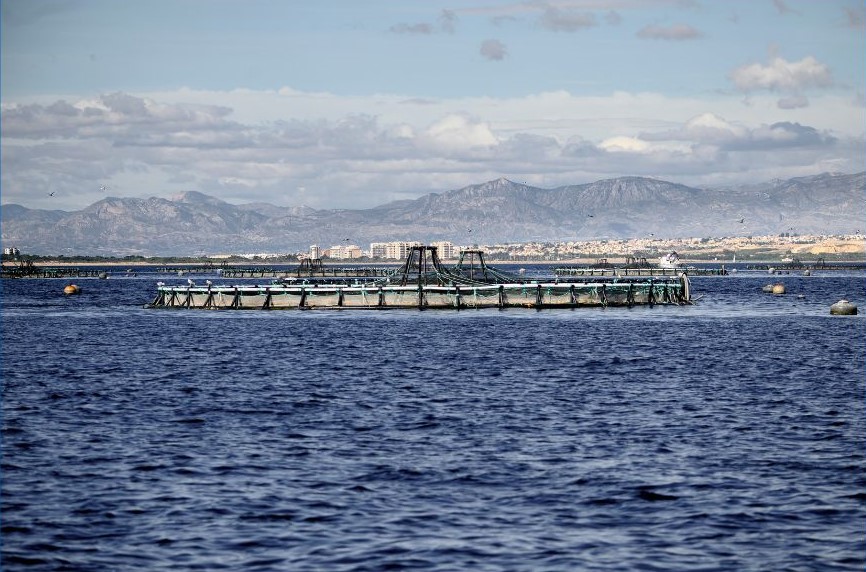
Seabass production in the Mediterranean (Torrevieja, Spain)
12 February 2025.- Aquaculture finfish species must constantly adapt to changing environmental conditions, while their diets fluctuate due to socioeconomic factors and ingredient availability. Furthermore, climate change increases their exposure to shifting environmental factors, emerging pathogens, and pollutants.
These challenges can compromise fish welfare, affecting not only the animals’ health but also the economic profitability and environmental sustainability of aquaculture production.
The study of innovative strategies to enhance fish welfare in aquaculture can contribute to the sustainability and development of the sector.
Master’s thesis in marine aquaculture
Valery Ravelo recently earned her official master’s degree ‘University Master in Marine Aquaculture’ upon completing and presenting her thesis ‘Improvement of Seabass Welfare (Dicentrarchus labrax) with Adaptogens and Environmental Enrichment’, focusing on innovative approaches to enhance fish welfare.
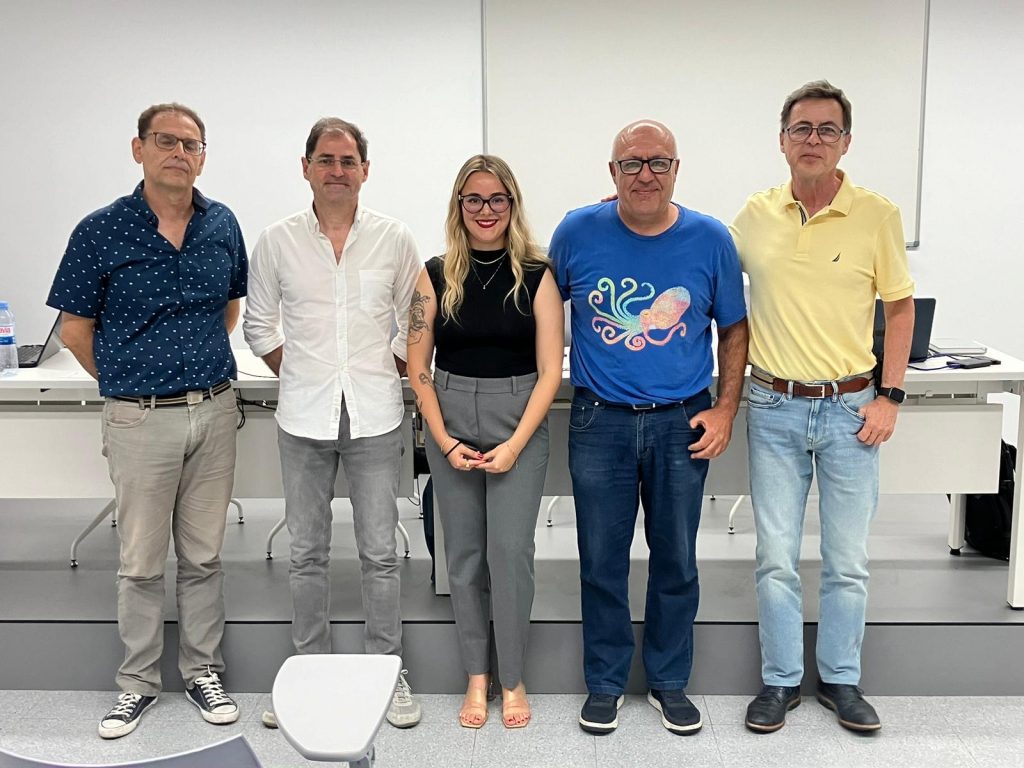
Photo taken at the thesis defence (from left to right: Pedro Luis Castro, ULPGC; Daniel Montero Vítores, ULPGC; Valery Ravelo; Félix Antonio Acosta, ULPGC; and Bernardo Basurco, CIHEAM Zaragoza
The results of this work were presented at the National Aquaculture Congress 2024, organised by the Spanish Aquaculture Society in Las Palmas de Gran Canaria, and AQUA 2024, co-organised by the European Aquaculture Society and the World Aquaculture Society in Copenhagen.
Reflecting on her experience, Ravelo commented:
‘’During the second year of the master’s, my scientific progress grew exponentially. I specialised in animal welfare in aquaculture, gaining in-depth knowledge, while refining my technical expertise and research skills. This experience helped me to grow academically and professionally, enabling me to present my findings at national and international congresses – an incredibly enriching opportunity”.
The work was conducted under the supervision of DrDaniel Montero Vítores, professor of the University of Las Palmas de Gran Canaria (ULPGC), and Dr Silvia Torrecillas Burriel, researcher in aquaculture health and nutrition of the Institute of Agrifood Research and Technology (IRTA), of the Government of Catalonia.
Environmental enrichment and cannabidiol
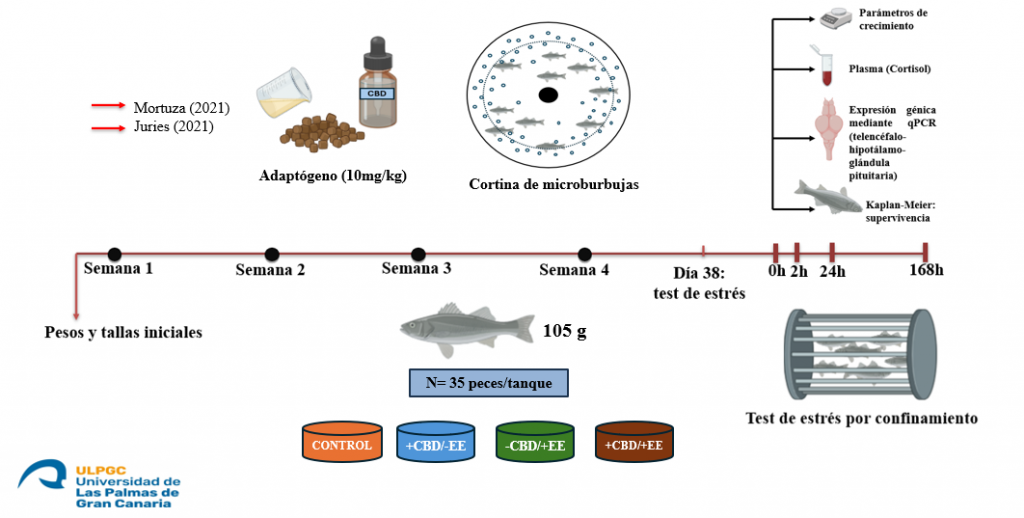
The main objective of Ravelo’s research was to assess how environmental enrichment using microbubbles and adaptogens such as cannabidiol, individually or in combination, can affect the welfare of European seabass juveniles.
Experimental rearing conditions in Valery Ravelo’s TFM
The study analysed different performance indicators such as final growth, weight gain, specific growth rate, and feed conversion factor. Additionally, a confinement stress test was conducted to examine survival rates and blood parameters related with stress response, such as cortisol levels. The research also analysed stress-related gene expression in different regions of the brain, including the telencephalon, the hypothalamus and the pituitary gland.
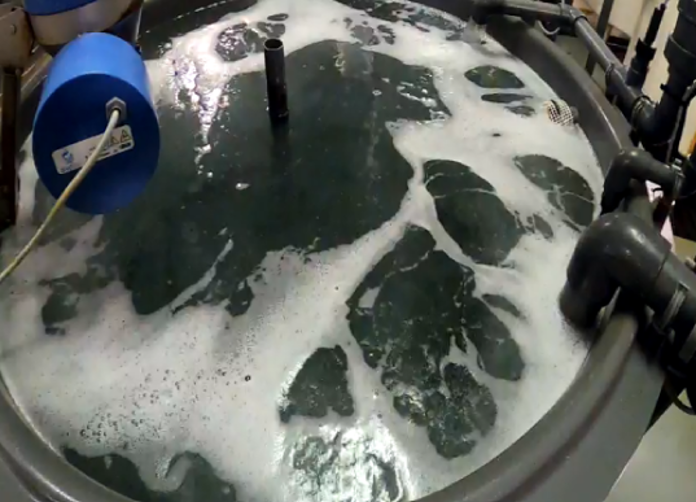
Tank with microbubble curtain (environmental enrichment)
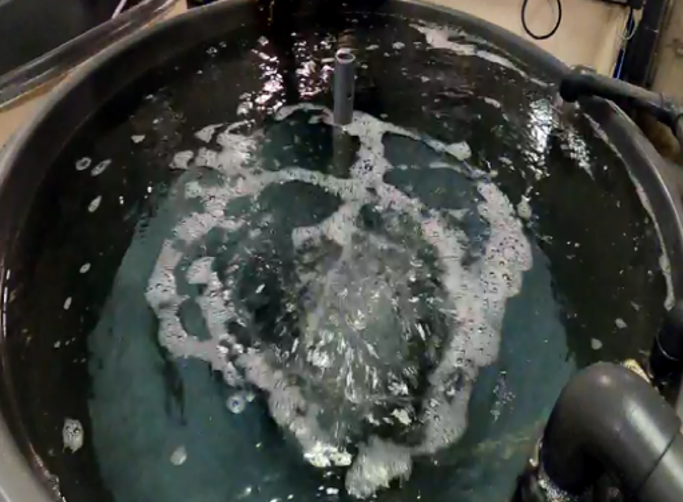
Tank with standard aerator
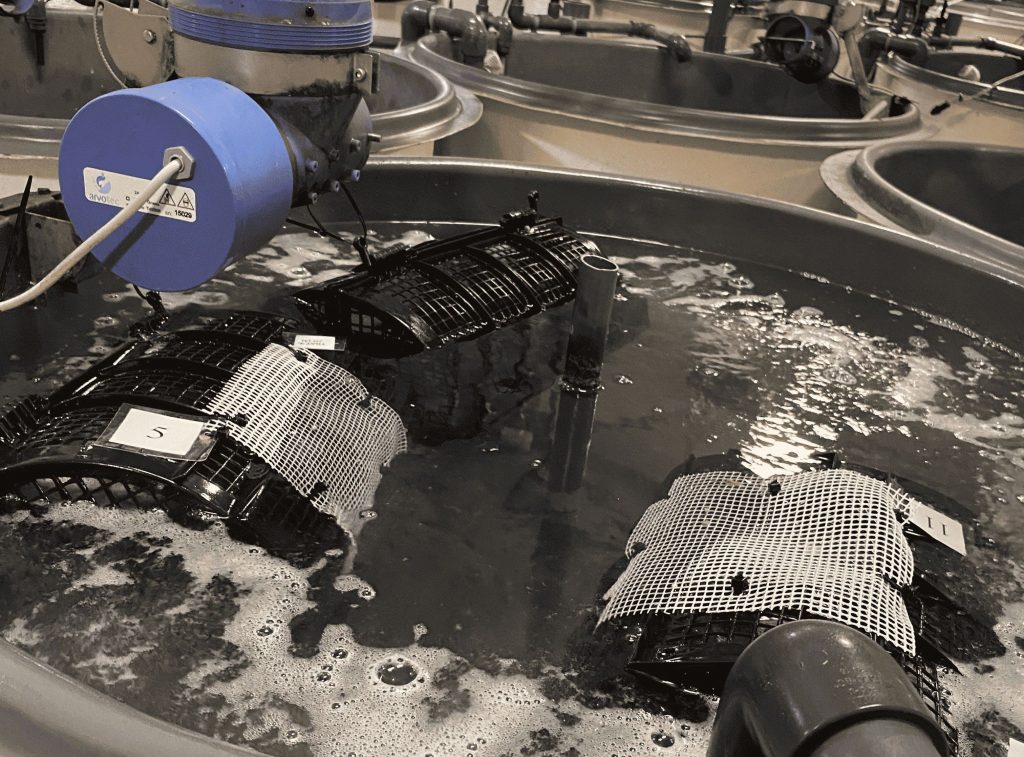
Confinement stress test
Strategies to improve seabass welfare
Results showed that environmental enrichment using microbubbles significantly improved growth parameters such as weight gain, final weight, specific growth rate, and feed conversion factor, whereas cannabidiol did not have any negative effects on fish growth.
Concerning welfare parameters, these strategies improved survival rates and reduced stress levels in fish.
About the author
Valery Ravelo holds a degree in Biological Sciences from the Complutense University of Madrid, focusing on the environment. She went on to specialise in aquaculture and completed the International Master in Marine Aquaculture jointly organised by CIHEAM Zaragoza and ULPGC.
Her areas of research include the diversification of strategies to enhance animal welfare, particularly the use of functional additives, essential oils, and natural extracts to improve the general state of fish health. She is currently pursuing this line of research in her doctoral work at the ECOAQUA Institute of the ULPGC.
The event marked another step forward in IPMWORKS’ policy engagement activities, led by CIHEAM Zaragoza
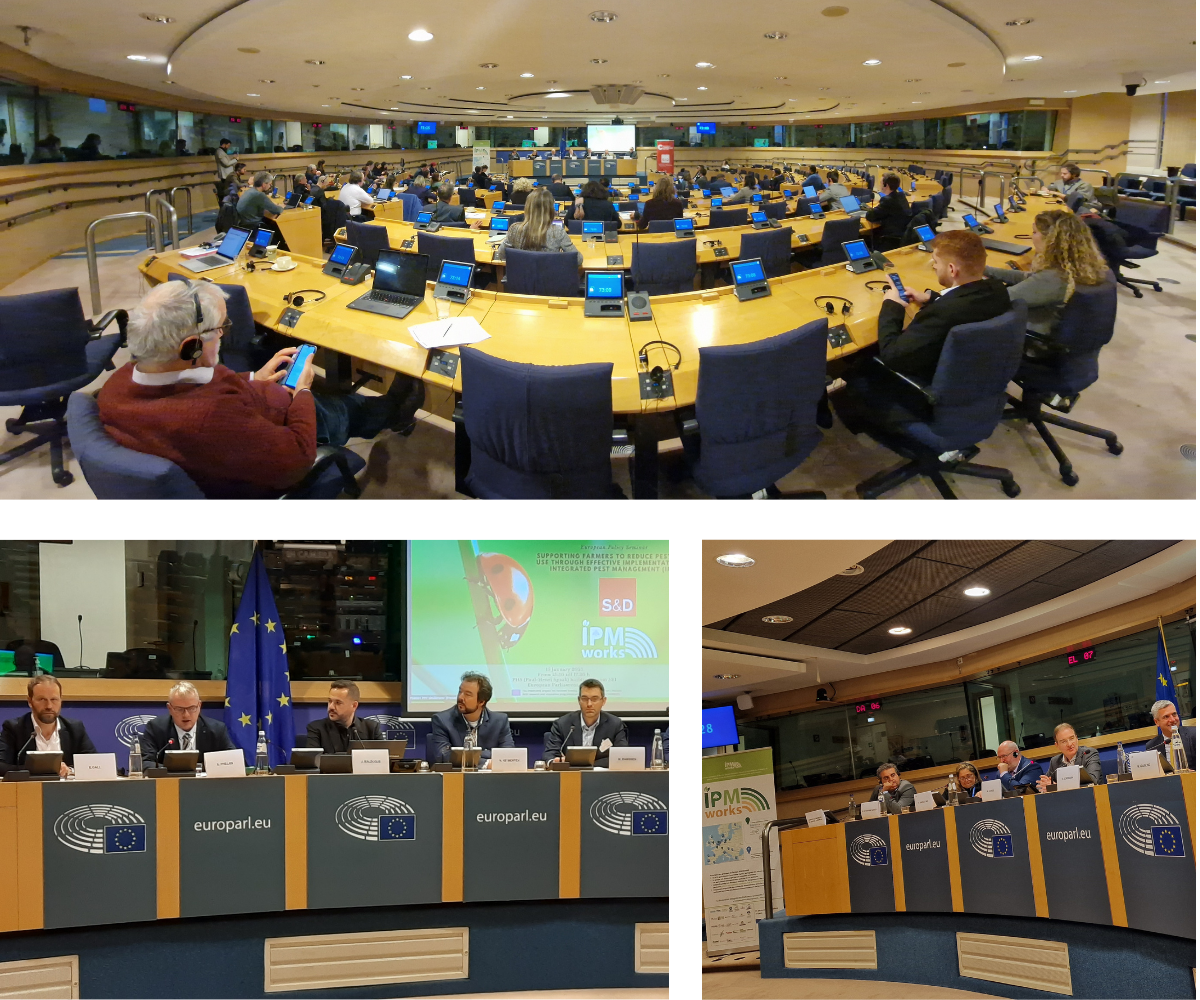
On 15 January 2025,IPMWORKS, together with MEP Christophe Clergeau, organised the European Policy Seminar “Supporting farmers to reduce pesticide use through effective implementation of Integrated Pest Management (IPM)”.
This event marked another step forward in IPMWORKS’ policy engagement activities, led by CIHEAM Zaragoza. A total of 70 participants attended in person, while more than 140 registered online. The event also featured the active participation of six members of the European Parliament (MEPs) and representatives of the European Commission.
The seminar began with opening remarks from MEP Christophe Clergeau, who discussed ways to improve IPM agricultural extension and management practices to reduce pesticide use in line with the Sustainable Use of Pesticides Directive (SUD).
“The IPM approach is, per se, a solution and we need to determine how we could make a package out of it with a view to have it adopted and then we’ll have to see how to support farmers, which will be of paramount importance. Farmers need direct financial support, with a view to switch to another model and get some compensation in terms of cost.”
“Regarding specification / labels, we need an independent committee as a standalone group which would be completely independent from the agrochemical industries.”
Christophe Clergeau, MEP
IPMWORKS Project Coordinator Nicolas Munier-Jolain (INRAE) presented a holistic approach to IPM for pesticides reduction.
“Although some pioneer farmers are in favour of IPM solutions, they are probably not widely adopted, simply because there is a lack of economic incentives. Therefore, we believe that it is possible to change farmers’ practices at the European level, as long as we are able to identify solutions that facilitate the adoption of these new practices, so that farmers do not see them as a constraint, but as an economic opportunity.”
“The IPMWORKS approach working with farmers and based on peer-to-peer exchanges proved to be efficient to promote IPM, and should be extended after the end of this H2020 project, with much more hubs of demo farms in all regions of EU.”
Nicolas Munier-Jolain, IPMWORKS Project Coordinator
The second session, chaired by Joaquín Balduque (CIHEAM Zaragoza), addressed how IPM can be boosted through basic IPM principles. Shay Phelan (TEAGASC) exposed how to deliver on IPM management practices for farmers through advisory and extension support.
“It’s important that in TEAGASC, as a completely independent advisory body entity, we can work exclusively without influence from any chemical companies in terms of how we can implement IPM on farms. One of the most important parts of any advisory service is identify demonstration farms, which are critical for any success of any IPM project to demonstrate the IPM tools and techniques on farm in real-world situations. Peer-to-peer learning is hugely important for the adoption of any practice, because you need to see it on your own level, on your own terms, in somebody’s farm or situation that’s quite similar to yours. That’s not a research centre that’s hundreds of kilometres away.”
“From the perspective of the advisory service’s role, we need to be able to show farmers that IPM practices are sustainable not only from the environment point of view but also financially from a farmer’s own point of view that they are financially sustainable as well. Ultimately, farmers are concerned, obviously, about the environment but they’re also concerned about their own profitability and sustainability of the farm.”
Shay Phelan, TEAGASC/IPMWORKS
Mark Ramsden (ADAS) presented improved digital decisions for improved crop protection (DSSs tools).
“Decision Support Systems and other digital tools for IPM are effective, but uptake across Europe is being hindered by that lack of access, a lack of transparency about what the assumptions and limitations of individual tools are, a lack of validation of DSSs in different regions, and a lack of demonstration of the benefits. We’ve made some really good strong steps forwards over the last few years on these points but we need to keep going. We don’t want this to be limited to project by project progress, this needs to be a pan-European drive to coordinate and advance efforts.”
“The range of systems available, their independent validation and demonstration need to be improved. That requires a fair amount of technical knowledge and support. Advisors and farmers across Europe see projects come and go, so it’s quite difficult for them to engage in a long-term initiative. We need to make sure that these decision support systems are something that are seen as a long-term effort embedded into holistic IPM approaches.”
Mark Ramsden, ADAS, IPMWORKS, and IPM Decisions Coordinator
A round table on the future of IPM, chaired by Alun Jones (CIHEAM Zaragoza) and with the participation of the MEPs, was held at the end of the seminar, assessing if SUD and its present IPM practices will be sufficient to reach the European Union’s commitments on pesticides reduction.
“I would like to have a joint conference from the ENVI and AGRI committees with Commissioner Hansen to talk about biocontrol and the alternatives to pesticides and with the European Biotech Act presenting a research program and roadmap in order to put forward the biocontrol and alternatives to pesticides. We should also have a IPM European initiative. IPMWORKS momentum must be maintained, you need to be able to keep on working. This requires funding.”
“We will need to wait for the next reform of the CAP in order to have powerful financial tools for support of farmers. But on advice, on positive communication, we need to up the pace quite soon. With the support from the EESC and the Committee of the Regions we may make progress so that we have concrete improvements now and not in a few years after the negotiations of new legislations in 2027.”
Christophe Clergeau, MEP
The seminar was a great success in bringing together pivotal actors and stakeholders, alongside EU policymakers, to address support and incentives for farmers to make the sustainable use of pesticides a reality on all farms. The seminar highlighted that collaborative efforts are crucial and that IPM has immense potential to enhance the sustainability of agriculture.
Now is the time to look forward to progress in IPM implementation in the EU. There was wide agreement on the necessity of revising and adapting the SUD dossier to support farmers in applying sustainable agricultural practices through effective implementation of IPM.
CIHEAM Zaragoza, as co-organiser of the seminar, thanks MEP Christophe Clergeau and his team, IPMWORKS Project Coordinator Nicolas Munier-Jolain for his leadership, as well as all the IPMWORKS colleagues, EU Commission members, and everyone who participated, both in the EU Parliament and online.
Click below to listen the full discussion:
Participants at the seminar
MEPs: • Christophe Clergeau MEP – S&D, ENVI • Herbert Dorfmann MEP – EPP, AGRI • Esther Herranz García MEP – EPP, Vice-Chair of ENVI • Martin Häusling MEP – Greens/EFA, ENVI & AGRI • Martin Hojsík MEP – RENEW, ENVI • Eric Sargiacomo MEP – S&D, AGRI
European Commission members: • DG SANTE, Pilar Aguar Fernández, Director F Health and Food Audits and Analysis • DG AGRI, María Gafo Gómez-Zamalloa, Acting Head of Unit Social sustainability
IPMWORKS partners: • Nicolas Munier-Jolain, Project Coordinator – INRAE • Alun Jones – CIHEAM Zaragoza • Joaquín Balduque – CIHEAM Zaragoza • Shay Phelan – TEAGASC • Mark Ramsden – ADAS
Other speakers: • José Manuel Roche Ramo – UPA Spain (Member of the European Economic and Social Committee) • Paula de Vera – COPA-COGECA • Nicolas De Menten – Fytofend • Eric Gall – IFOAM • Peter Hloben – CEMA
CIHEAM Zaragoza has launched two projects, for a duration of three years, financed by the Erasmus+ programme of the European Union, together with institutions from several countries
Zaragoza, 4 February 2025.- CIHEAM Zaragoza reinforces its commitment with international cooperation in agriculture and food by engaging in two new projects: INSIST-VAT and EduSAF. These Erasmus+ initiatives focus on capacity building and lie within the framework of the EU Erasmus+ programme. Both projects will run for three years.
In the words of Alun Jones, head of the Projects Unit at CIHEAM Zaragoza, “These projects reflect our commitment with training in agriculture and food as a means of cooperation. Through these initiatives we can strengthen capacity-building in vocational training and higher education, facilitating the transition towards more sustainable and resilient agrifood systems “.
The INSIST-VAT project (Institutional, Sustainable and Innovative Strengthening of Vocational Agricultural Training in Albania), lies within the scope of vocational training. It seeks to improve the employability and resilience of crop farmers in Albania – one of CIHEAM’s member countries. The project will facilitate the creation of a “training academy for producers” in the Agricultural University of Tirana and the development of innovative training initiatives adapted to the needs of the sector and the demands of the job market.
INSIST-VAT has eight partners, from Albania, France, Kosovo and Spain (Agricultural University of Tirana, Center of Agricultural Technology Transfer Fushë Krujë and Agricultural Technology Transfer Center of Korça, Albania; CIHEAM Montpellier, Agricultural Technical Coordination Association-ACTA and Association for Quality in Research and Higher Education, France; University of Prishtina, Kosovo, and CIHEAM Zaragoza, Spain).
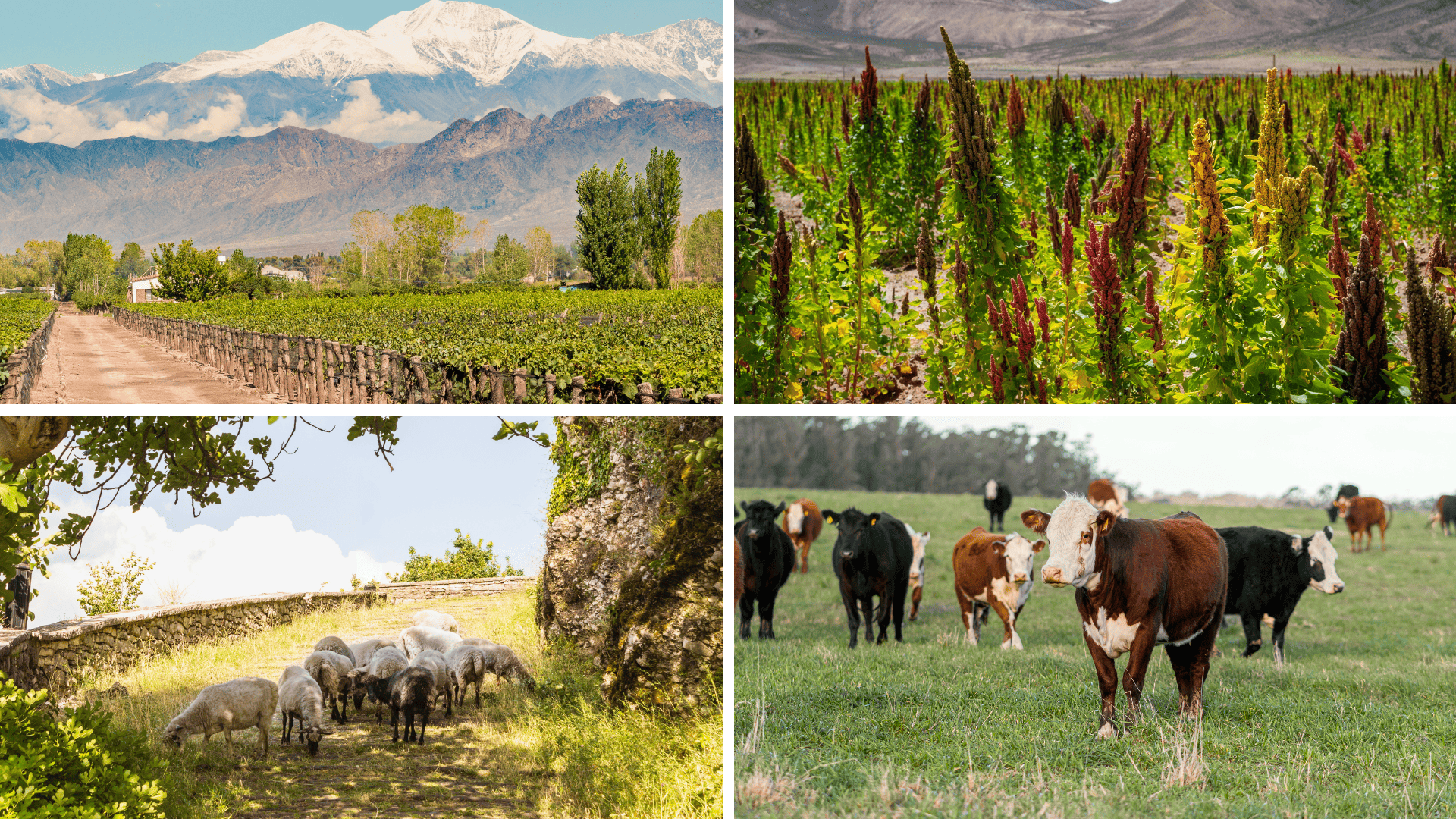
The EduSAF project (Education for the transition to Sustainable AgriFood systems in South America) is in the framework of higher education. The project will give rise to training courses, modernisation of laboratories and updating of curricula to promote capacity building in agrifood topics in five universities in Argentina, Bolivia and Uruguay, focusing on the incorporation of skills in sustainability and resilience to climate change.
Coordinated by CIHEAM Zaragoza, EduSAF has nine partners from Argentina, Belgium, Bolivia, Portugal, Spain and Uruguay (Universidad Nacional del Sur and Universidad Nacional de Cuyo, Argentina; Université Libre de Bruxelles and Universiteit Gent, Belgium; Universidad Mayor de San Simón and Universidad Técnica de Oruro, Bolivia; Universidade do Porto, Portugal; CIHEAM Zaragoza, Spain; and Universidad de la República, Uruguay).
Raúl Compés, director of CIHEAM Zaragoza describes the project, “EduSAF is an example of CIHEAM Zaragoza’s capacity to bring the Mediterranean closer to the countries of Latin America, one of the founding objectives of our Institutes”. Compés also points out, “The new projects highlight the importance of Erasmus+ programmes in carrying out our mission of cooperation”.
CIHEAM Zaragoza is the Spanish headquarters of the International Centre for Advanced Mediterranean Agronomic Studies, an intergovernmental organisation working in multilateral cooperation in agriculture and food, management of natural resources and coastal and rural development in the Mediterranean.
Gestionar consentimiento
Para ofrecer las mejores experiencias, utilizamos tecnologías como las cookies para almacenar y/o acceder a la información del dispositivo. El consentimiento de estas tecnologías nos permitirá procesar datos como el comportamiento de navegación o las identificaciones únicas en este sitio. No consentir o retirar el consentimiento, puede afectar negativamente a ciertas características y funciones.
Funcional
Always active
El almacenamiento o acceso técnico es estrictamente necesario para el propósito legítimo de permitir el uso de un servicio específico explícitamente solicitado por el abonado o usuario, o con el único propósito de llevar a cabo la transmisión de una comunicación a través de una red de comunicaciones electrónicas.
Preferencias
El almacenamiento o acceso técnico es necesario para la finalidad legítima de almacenar preferencias no solicitadas por el abonado o usuario.
Estadísticas
El almacenamiento o acceso técnico que es utilizado exclusivamente con fines estadísticos.El almacenamiento o acceso técnico que se utiliza exclusivamente con fines estadísticos anónimos. Sin un requerimiento, el cumplimiento voluntario por parte de tu proveedor de servicios de Internet, o los registros adicionales de un tercero, la información almacenada o recuperada sólo para este propósito no se puede utilizar para identificarte.
Marketing
El almacenamiento o acceso técnico es necesario para crear perfiles de usuario para enviar publicidad, o para rastrear al usuario en una web o en varias web con fines de marketing similares.