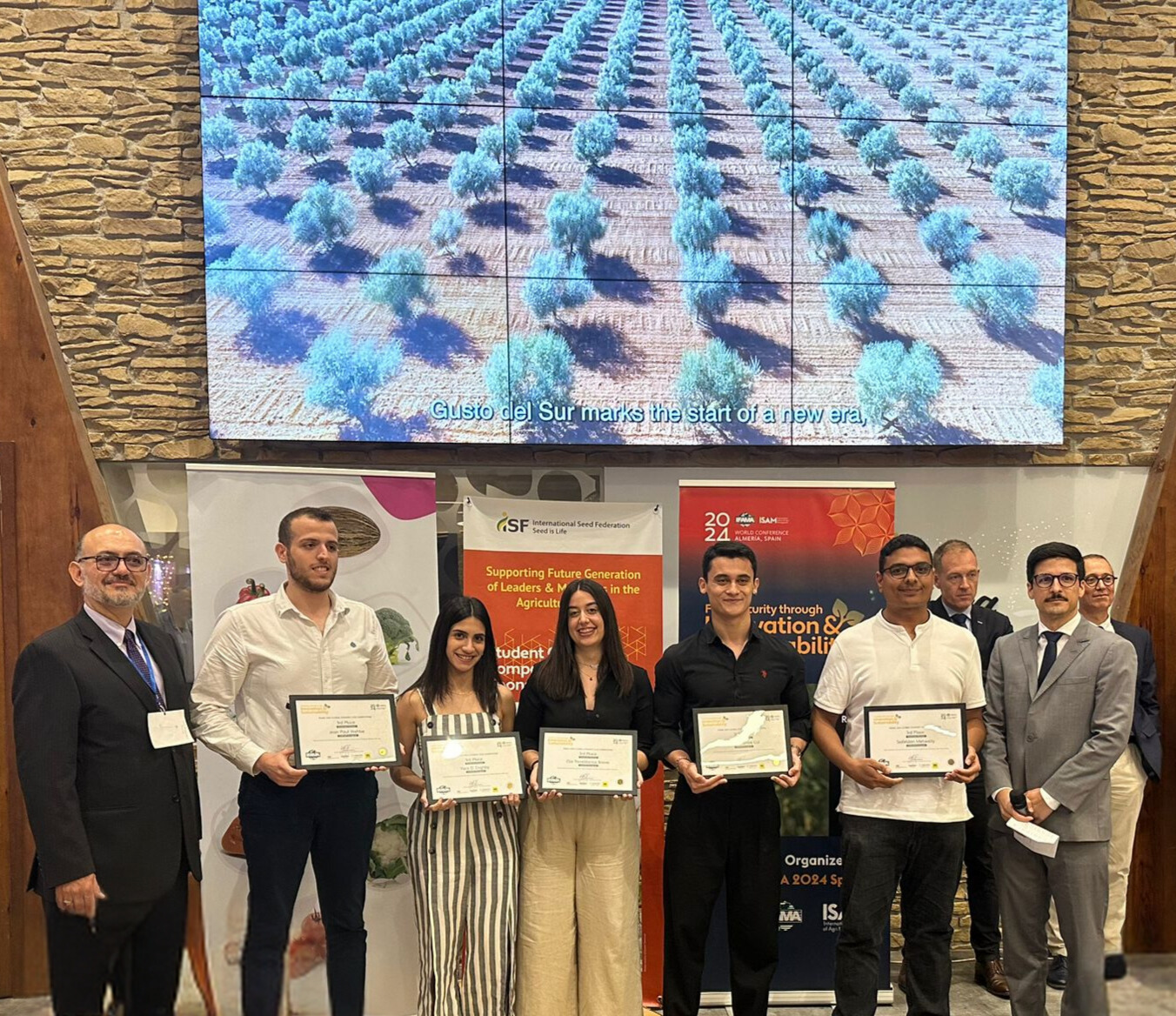
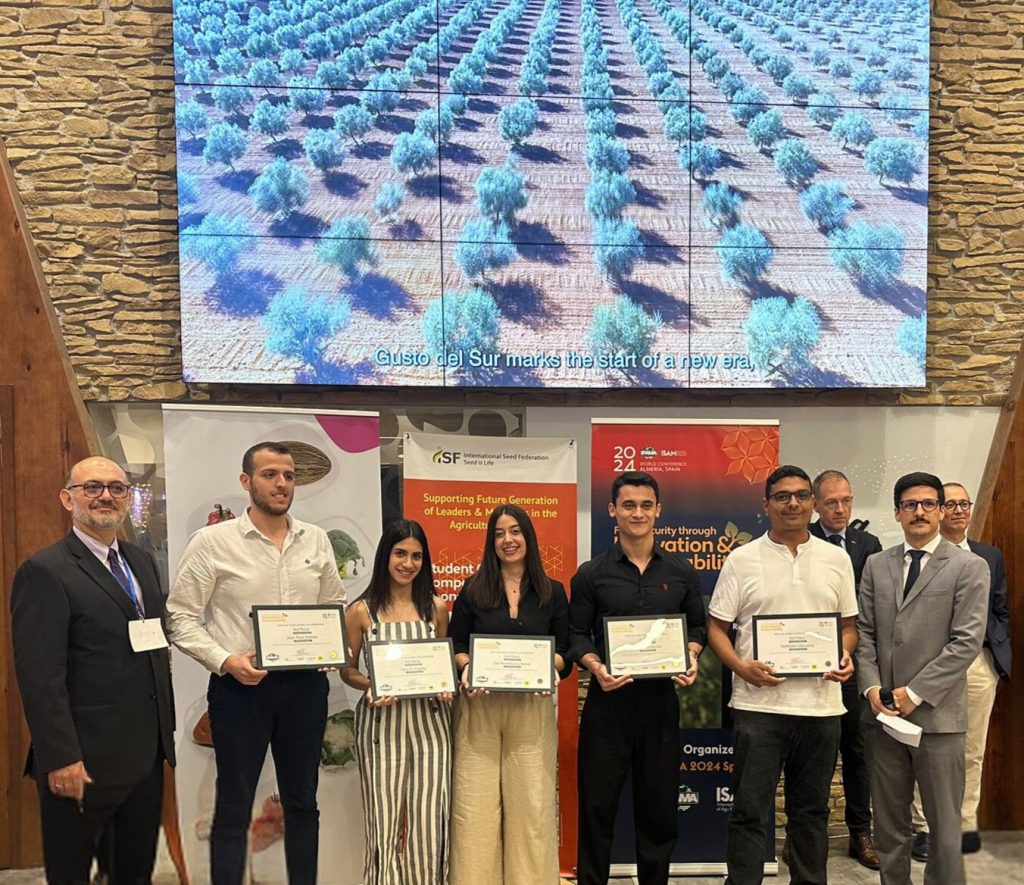
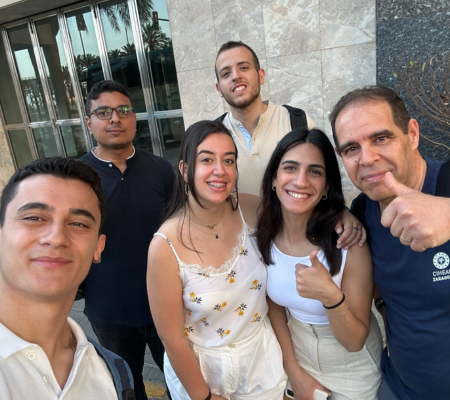
The young representatives from CIHEAM Zaragoza come from Egypt, Lebanon, Spain and Türkiye and are currently following the International Master on Plant Genetics, Genomics and Breeding.
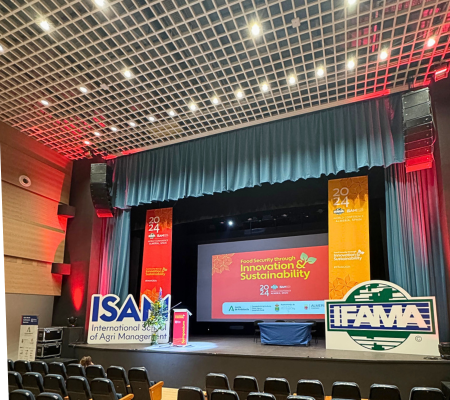
Almeria, 21 June 2024.- A group of students from CIHEAM Zaragoza has come third in the prestigious international student case competition organised by the International Food and Agribusiness Management Association (IFAMA).
The competition, held in Almeria (Spain) from 17 to 20 June, focuses exclusively on the agribusiness sector. This year, the subject was addressed from the perspective of innovation and sustainability. The participants were given four hours to work on a real case study related with businesses in the agrifood sector, followed by a presentation of their proposals to an international panel of judges.
The team from CIHEAM Zaragoza was made up of five students of the International Master in Plant Genetics, Genomics and Breeding from Egypt, Lebanon, Spain and Türkiye. Their proposal was based on the latest innovations and advances in plant breeding.
This third place is an acknowledgement of the efforts and dedication they have shown throughout the academic year. Ramzi Belkhodja, academic coordinator of the master at CIHEAM Zaragoza and students’ mentor during their participation in IFAMA’s competition talks of their achievement: “We are very proud of what they have done. They have applied everything they have learnt during the first year of the master’s programme in a real-life context, demonstrating the enormous potential of plant breeding in achieving sustainable and innovative agriculture”.
CIHEAM Zaragoza organises the International Master in Plant Genetics, Genomics and Breeding together with the University of Lleida and in collaboration with ICARDA, CBGP and Agrotecnio. The two-year multidisciplinary programme is delivered by top international experts.
In the framework of the PASTINNOVA course, Antonio López-Francos, CIHEAM Zaragoza’s cooperative project and network administrator, highlights the contribution of pastoralism to the sustainability of livestock farming and rural development.
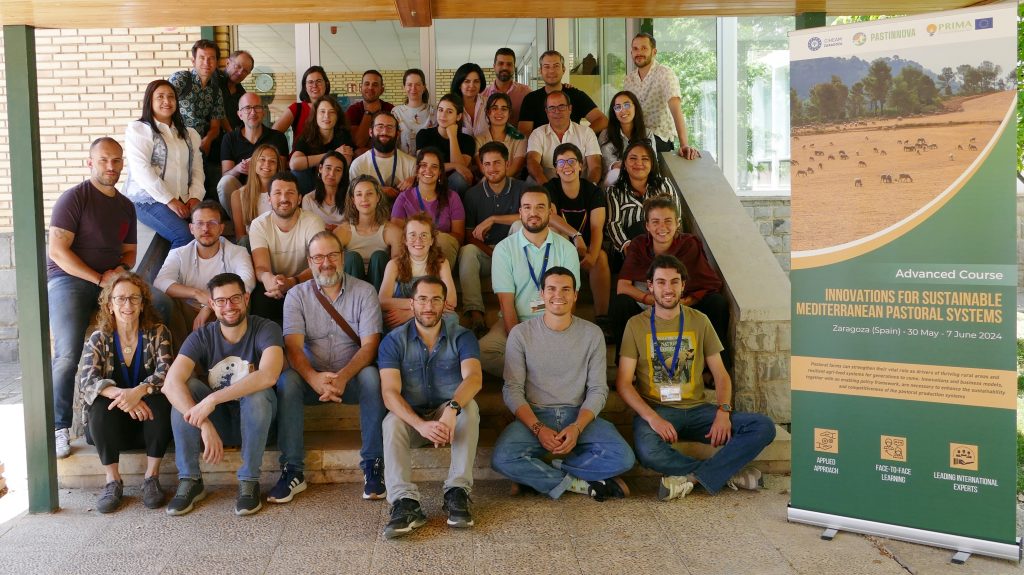
10 June 2024.-Innovation in Mediterranean pastoral systems was the main theme of an advanced course organised between 30 May and 7 June by CIHEAM Zaragoza as part of the PASTINNOVA project, financed by the PRIMA programme of the European Union.
The activity was organised in Aragon (Spain), bringing together 31 young professionals from 12 Mediterranean countries (Albania, Algeria, Croatia, France, Greece, Italy, Lebanon, Morocco, Portugal, Spain, Tunisia and Türkiye). They focused on various dimensions of pastoralism (technical, economic, environmental, social and political), learning from an international group of lecturers made up of 20 experts from universities, research centres, businesses, associations and public bodies related to the sector.
Antonio López-Francos, CIHEAM Zaragoza’s project and network administrator, talks about the large practical component of the course: “We wanted to provide participants with tools that they could use in their professional activity and offer them practical examples that could corroborate that pastoralism is alive and well, that it is innovating, and has a bright future ahead that will strengthen the sustainability of livestock farming and territorial development“.
Five days of lectures, a three-day field trip and two technical visits highlight the intensive work schedule of the programme that revolved around six main topics:
Introduction: Relevance of pastoral systems in the Mediterranean region
Technical management challenges: traditions and innovations
Economic sustainability of pastoral systems
Environmental implications of pastoral systems
Social and governance aspects in pastoralism
Public action and policies to promote the role of sustainable livestock production and pastoralism in the Mediterranean
LIVESTOCK FARMS, RESEARCH AND INNOVATIVE BUSINESS PROJECTS
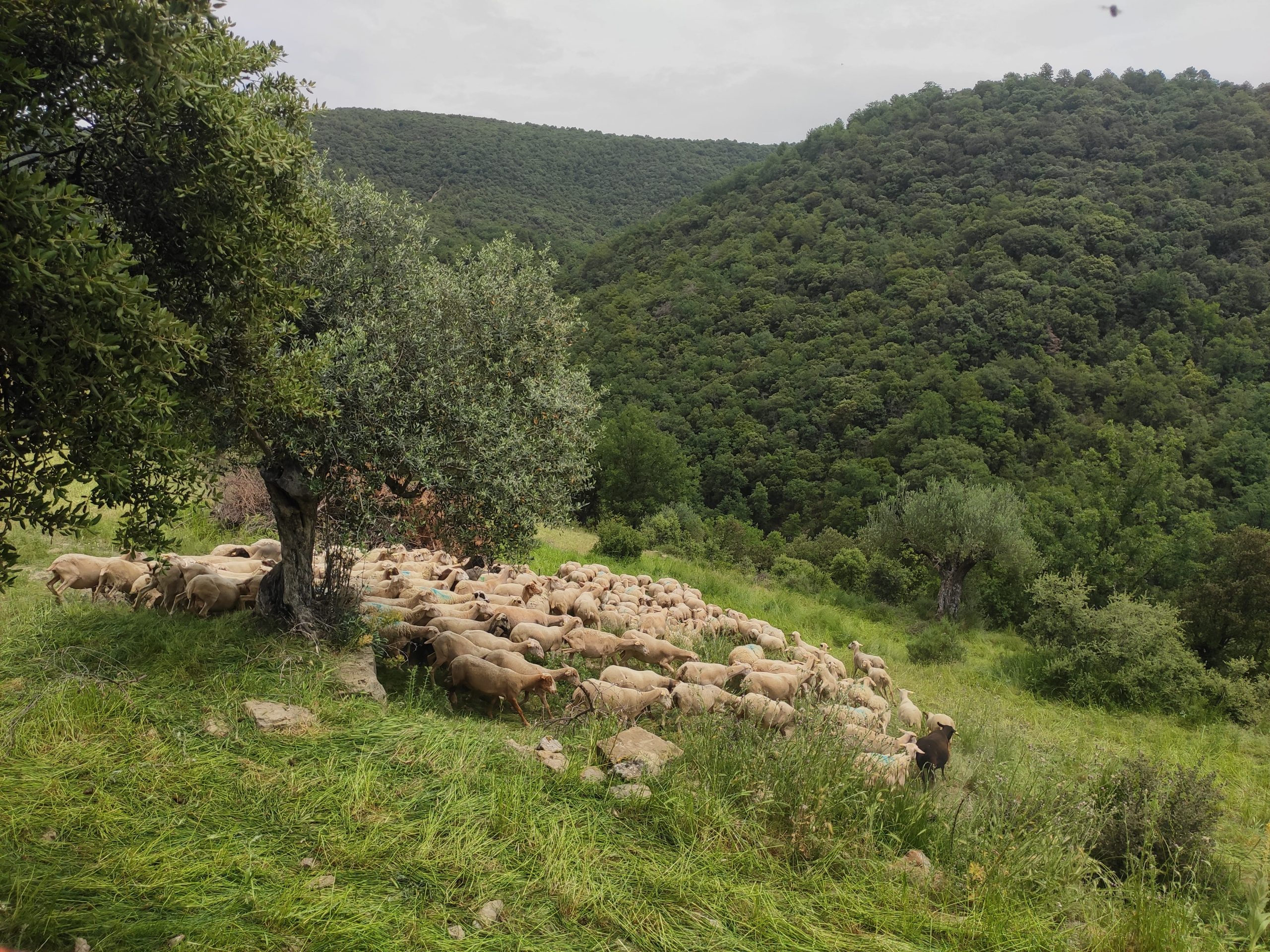
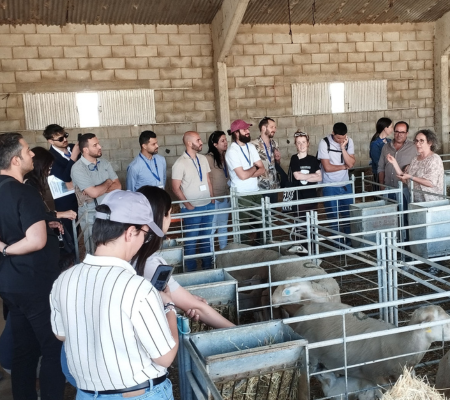
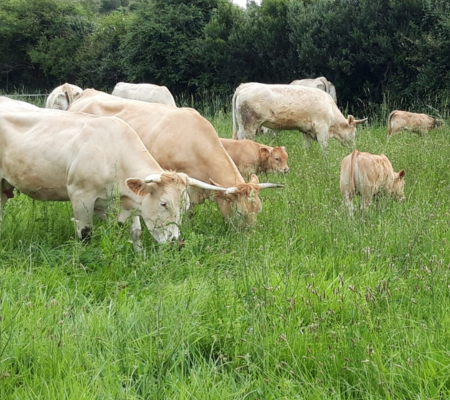
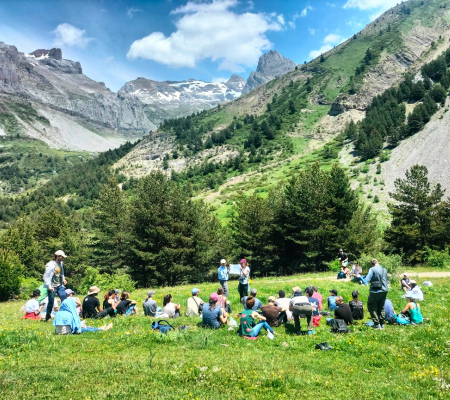
The field visits provided good examples of the topics addressed during the course, showing practical examples of initiatives, projects and research applied in two very different but related Aragonese territories. On one hand the central Ebro valley, a semi-arid environment where sheep farming co-exists with rainfed and irrigated cereal and forage crops, and grazing in steppe areas. On the other hand, the valleys of the Pyrenees, where cattle farming is predominantly based on meadows, forages, highlands and wild pastures.
Maite Aguinaco, academic coordinator of the course and CIHEAM Zaragoza’s administrator of the Environment and Natural Resources area, talks about the activity: “These visits were crucial to the success of the course. Besides addressing the technical aspects of pasture and livestock management, they also showed innovative examples of product transformation and marketing initiatives, and shepherd training and hiring programmes. They also gave insight into the historical and cultural aspect of sheep farming in Aragon.
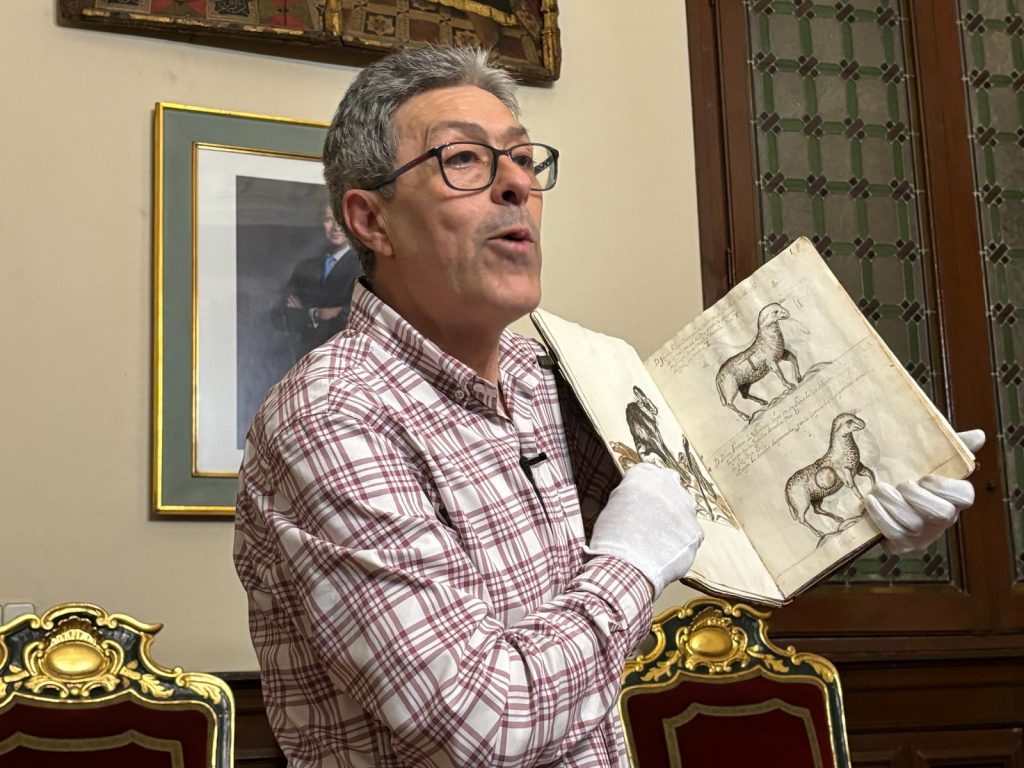
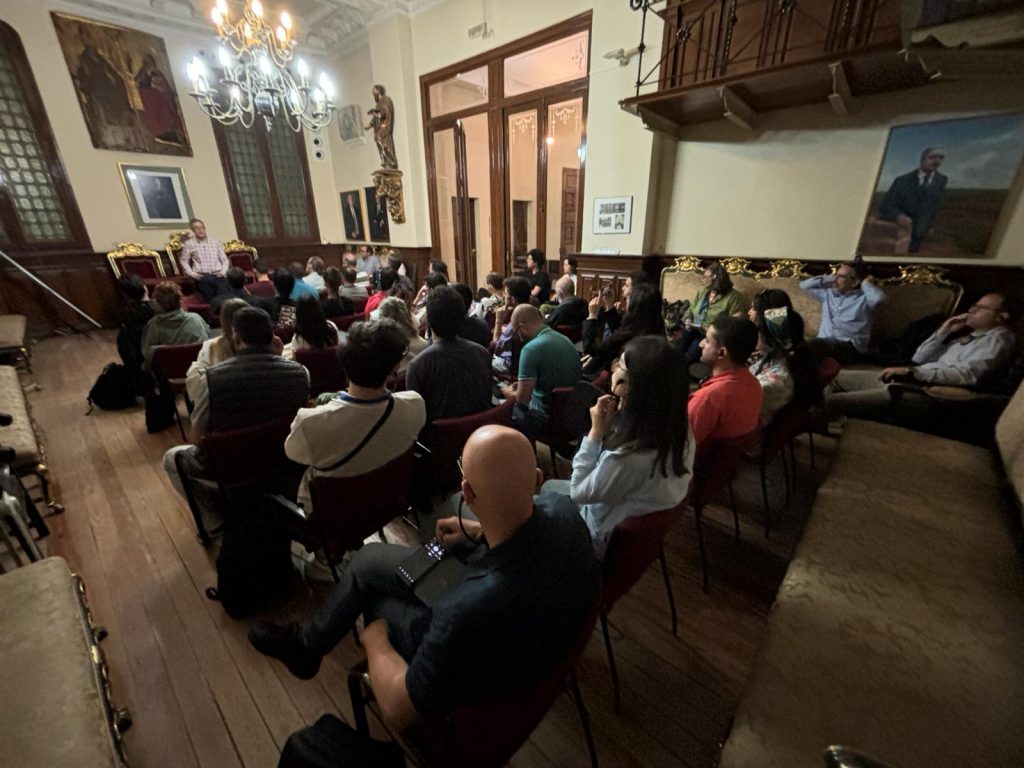
This was particularly evident during the visit to Casa Ganaderos de Zaragoza, where the international group of students and lecturers learnt first-hand about the 800 years of history and how stakeholders in the agrifood system have evolved over time.
López-Francos concludes by saying: “We wanted to offer participants a wide vision of pastoral farming, not just the idea they have learnt from their scientific discipline or professional activity. For example, to show a veterinarian examples of how to analyse the value chain; or give an environmentalist or a forester insight into technical and economic questions of livestock farming; or share with a sociologist the environmental benefits of pastoralism … That way it’s much easier for everyone to see their work in context – it all makes more sense“.
Group photo of the international course “Innovations for Sustainable Mediterranean Pastoral Systems” at CIHEAM Zaragoza.
PASTINNOVA is an international project driven by 20 organisations from 12 countries: Algeria, Cyprus, Croatia, France, Greece (coordinator), Italy, Lebanon, Morocco, Slovenia, Spain, Tunisia and Türkiye. The initiative, which began in 2022, has a duration of 3 years and aims to identify, test and accompany successful initiatives and business models in the pastoral and extensive livestock farming sector in different Mediterranean countries, a way of living and farming that has deep-rooted traditions across the Mediterranean basin.
For more information about the project, visit the official website.
Twenty five fisheries officials and experts from 19 countries attended the course in Zaragoza
The programme featured lectures, case studies, and practical exercises delivered by FAO officials, as well as guest lecturers from organisations such as MAPA-SGP, CSIC Vigo, and EFCA
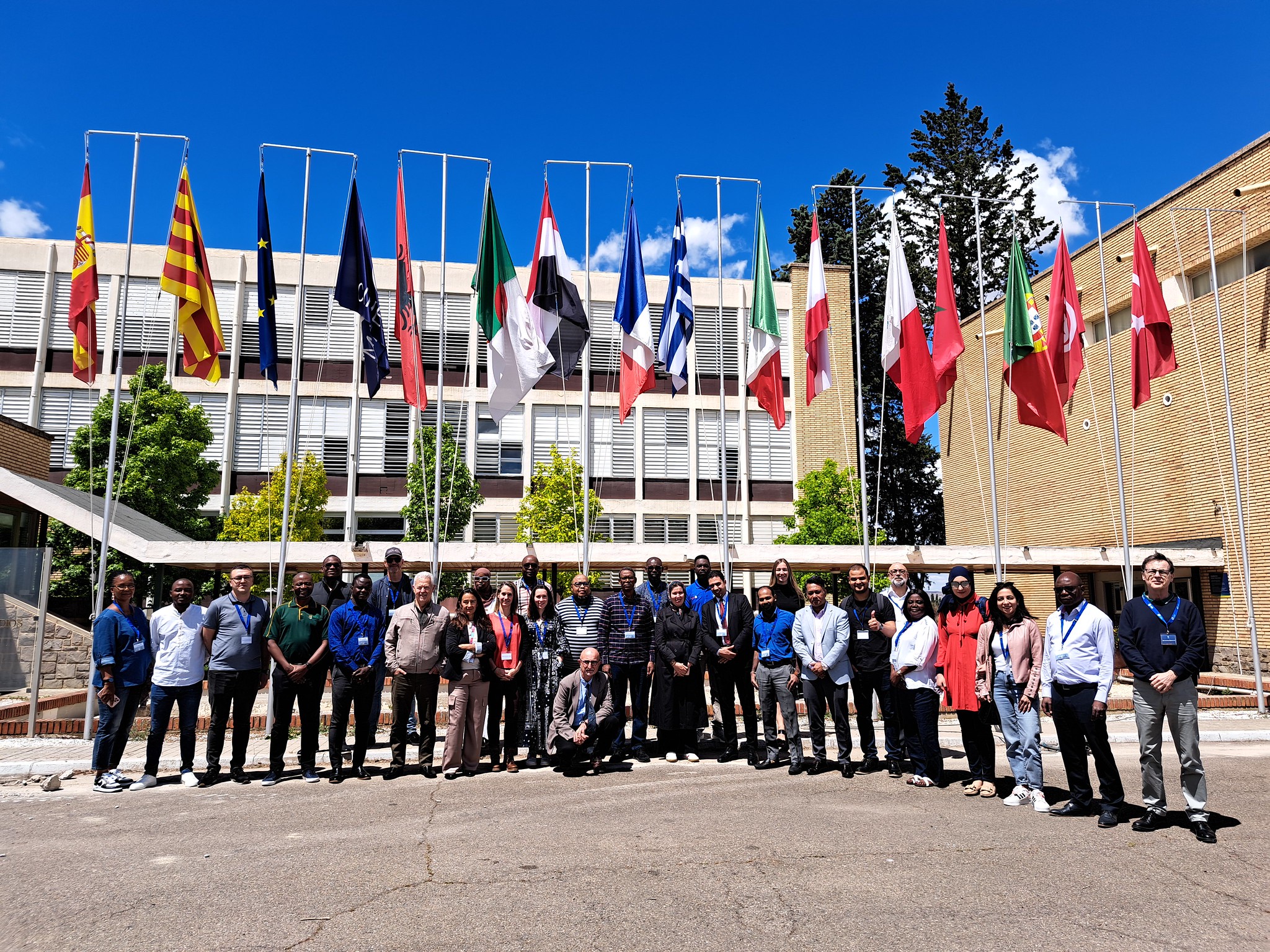
The course brought together 25 fisheries officials and experts from 19 countries (Bangladesh, Eritrea, Gambia, Ghana, Kenya, Liberia, Morocco, Namibia, Netherlands, Portugal, Sierra Leone, Spain, Somalia, Sri Lanka, South Africa, Tanzania, Tunisia, Türkiye, and the United Kingdom).
The programme included lectures, case studies and practical work that were held at CIHEAM Zaragoza. A practical technical visit to the fishing port of La Rapita in Tarragona (Spain) was organised at the end of the first week, where participants observed different fishing boats and gears, gaining first-hand experience of inspection activities conducted by national inspectors. Towards the end of the course, participants had the opportunity to visit the Spanish Fisheries Monitoring Centre at the Spanish Secretariat for Fisheries in Madrid, where they attended lectures on Spanish MCS systems, selection and training of fishery inspectors, and the implementation of the Port State Measures Agreement (PSMA).
The Port State Measures Agreement (PSMA) was established in 2016 in response to the growing threat posed by illegal, unreported, and unregulated (IUU) fishing, and as the first binding international agreement targeting this global issue. The PSMA aims to prevent, deter, and eliminate IUU fishing by denying access to ports and landing of catches by vessels engaged in such activities. These measures apply to fishing vessels entering designated ports in States that are not their flag State.
Effective implementation of the PSMA contributes to the long-term conservation and sustainable use of marine resources and ecosystems. To support the 77 states and the European Union that are currently part of this agreement, the FAO launched the Global Capacity Development Programme in 2017. The programme seeks to improve fisheries and aquaculture governance in developing countries through capacity development and training for the effective implementation of international instruments and their integration into national policy and legal frameworks. The FAO has developed a comprehensive Training Programme Prospectus to support these activities, with a focus on topics such as the Law of the Sea, ocean affairs, fisheries governance, and monitoring, control, and surveillance (MCS), as well as information exchange. However, many States still lack the necessary MCS expertise to effectively combat IUU fishing and achieve key fisheries management objectives.
In light of this challenge, the advanced course on fisheries monitoring, control, and surveillance was designed to equip participants with a robust understanding of MCS systems, processes, and tools, as well as practical skills to support their day-to-day work in combatting IUU fishing. The course featured lectures, case studies, and practical exercises delivered by FAO officials, as well as guest lecturers from organisations such as MAPA-SGP, CSIC Vigo, and the European Fisheries Control Agency (EFCA).
Due the success of this second edition, CIHEAM Zaragoza and FAO are now working on the possibility of extending their collaboration on this course over the next five years, to further promote that capacity development and international cooperation in addressing the global issue of IUU fishing.
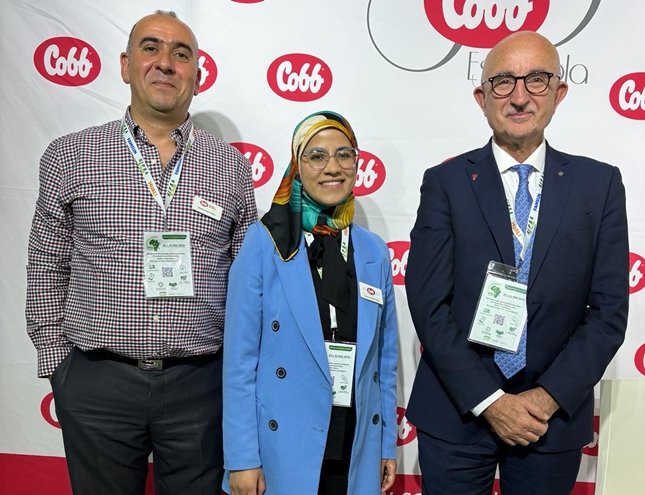
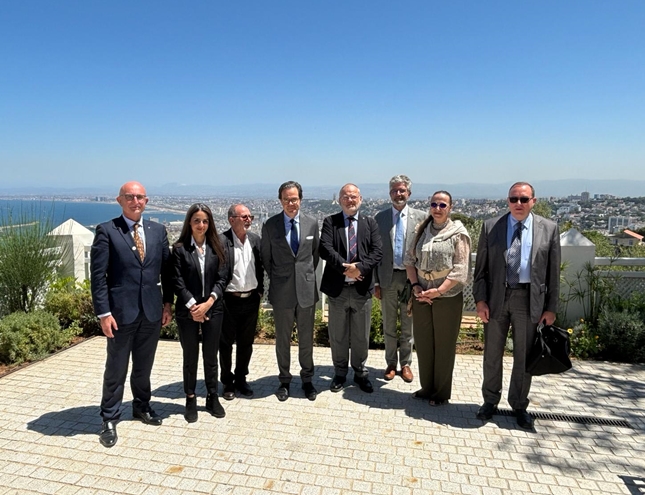
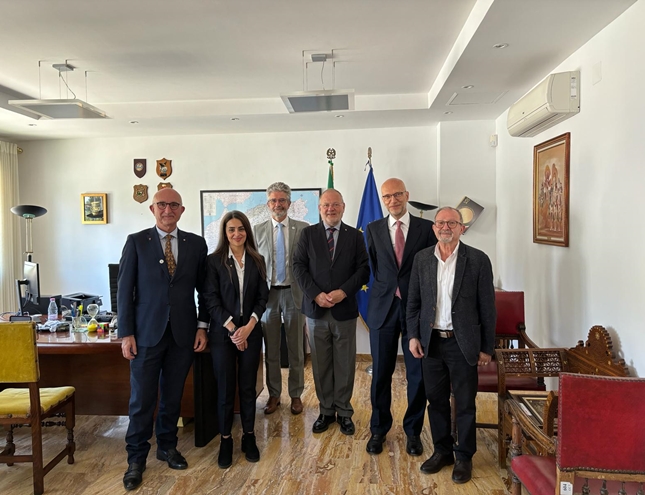
Director Raúl Compés was part of a delegation from CIHEAM led by Secretary General Teodoro Miano and Administrator Yasmine Seghirate, together with Director of CIHEAM Montpellier Thierry Dupeuble, and former Principal Scientific Administrator of CIHEAM Montpellier Omar Bessaoud.
Algeria, an active member of CIHEAM since 1986, plays a pivotal role in many research and cooperation programmes.
The visit to Algeria also provided an opportunity for numerous working meetings with the Ministry of Agriculture and Rural Development and its associated institutes, fostering dialogue about future cooperation in training, research, and technical collaboration. The CIHEAM delegation further strengthened diplomatic ties by visiting the Ambassadors of Spain, France, and Italy, representing the organisation’s host countries in Zaragoza, Montpellier, and Bari, respectively.
Algeria, an active member of CIHEAM since 1986, plays a pivotal role in many research and cooperation programmes, with alumni from the organisation’s four institutes serving as a unique resource for maintaining strong relations between Algeria and CIHEAM.
SIPSA FILAHA SHOW AND PANAFRICAN CONFERENCE
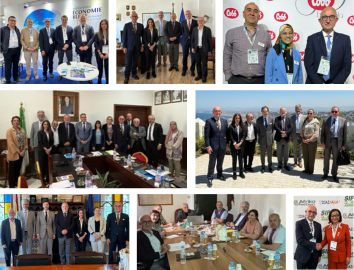
The CIHEAM delegation, led by Secretary General Teodoro Miano and Administrator Yasmine Seghirate, included Director of CIHEAM Zaragoza Raul Compés, Director of CIHEAM Montpellier Thierry Dupeuble, and former Principal Scientific Administrator of CIHEAM Montpellier Omar Bessaoud. The delegation participated actively in the SIPSA FILAHA exhibition, which featured the inaugural edition of the traveling conference “The Panafrican Food Debate.”
The high-level conference, co-organised by Filaha Innov Think Tank and Institut Sénégalais des Recherches Agricoles (ISRA), provided a platform for African nations to reflect and collaborate on sustainable and inclusive food systems in the context of climate change, water stress, and socio-economic challenges in the agricultural sector.
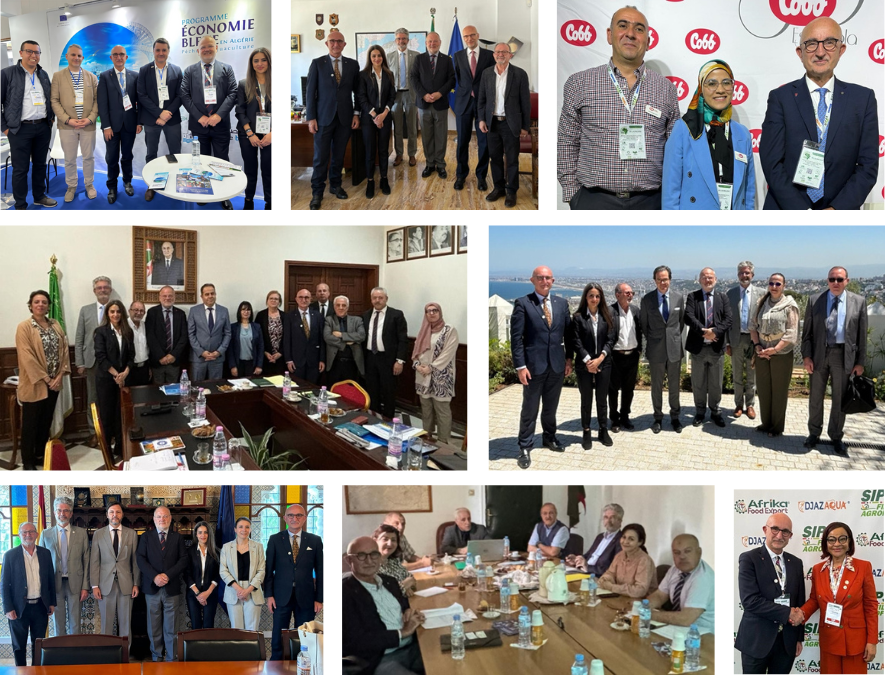
Participants engaged in meaningful discussions with key decision-makers such as H.E. Josefa Leonel Correia Sacko, African Union Commissioner for Agriculture, Rural Development, Blue Economy, and Sustainable Environment.
Raúl Compés with Ambassador Josefa Leonel Correia Sacko, Commissioner for Agriculture, Rural Development, Blue Economy and Sustainable Environment of the African Union
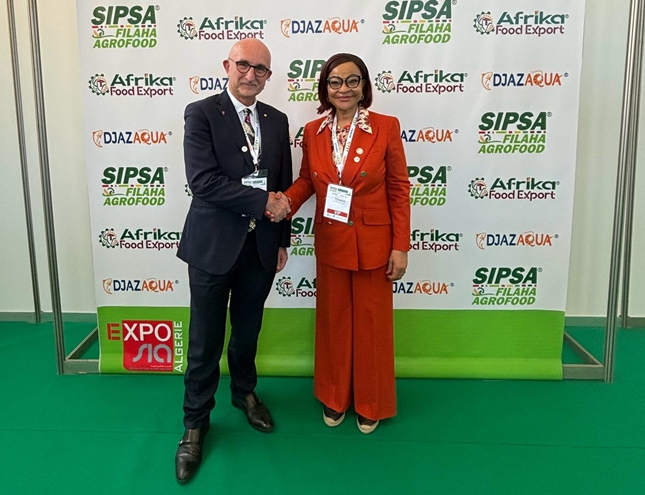
With key stakeholders of the blue economy programme in Algeria, focusing on fisheries and aquaculture
Raúl Compés with former students of the Master in Animal Nutrition Samira Djihad Saka and Mohamed Frikha
WORKING MEETINGS
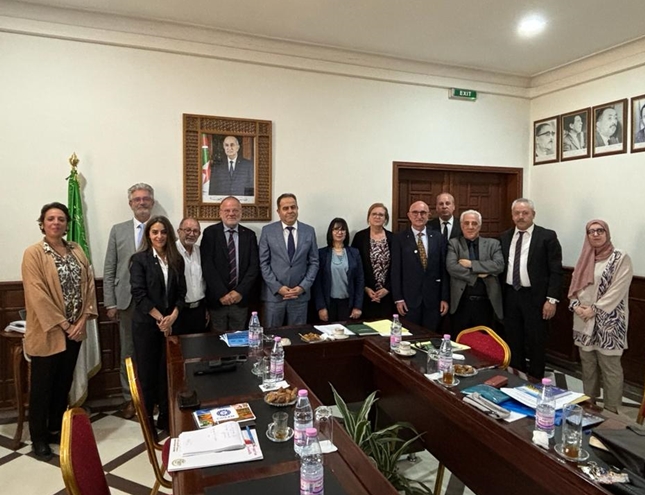
Secretary General of the Ministry of Agriculture and Rural Development Hamid Bensaâd welcomed the CIHEAM delegation in the presence of directors from production, cooperation, training, research, and innovation departments, as well as the Director General of INRAA. The meetings focused on developing future collaborations in research and technical cooperation, in alignment with Algeria’s new agricultural strategy aimed at promoting food self-sufficiency, fostering modernisation and innovation, facilitating investment, integrating small farms into value chains, and preserving natural resources.
Exploratory discussions also included the potential to offer tailored training courses for Algerian managers and professionals, develop joint research projects, and establish a Master of Innovation and Entrepreneurship programme for Algerian youth.
Meeting with the Secretary General of Agriculture and Rural Development, Hamid Bensaâd, Algerian delegate to CIHEAM, Fatiha Baouche, and Maysoun Benchikh-Lehocine (ENSA, Algeria, CAB), department heads and research directors
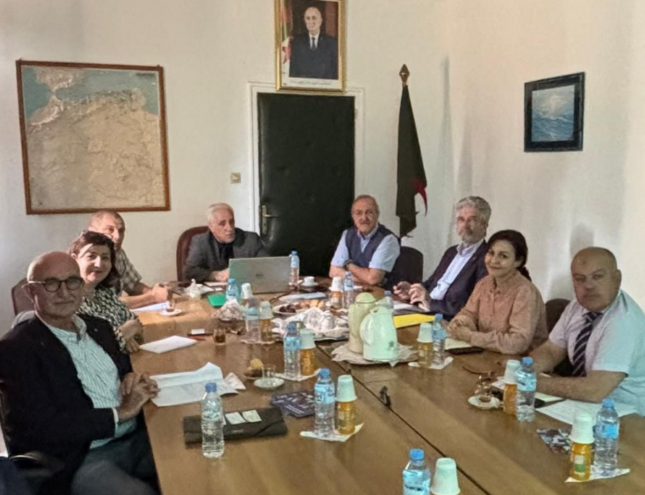
Meeting at the Institut National de la Recherche Agronomique of Algeria (INRAA)
VISIT TO EMBASSIES
The visit culminated in the CIHEAM delegation being received by the Ambassadors of France, Italy, and Spain, where they shared ongoing activities in Algeria and emphasised the importance of continued relations between the organisation and the country.
The CIHEAM institutes in Montpellier (France), Zaragoza (Spain), Chania (Greece), and Bari (Italy), which host numerous students and researchers, have several Algerians among their teaching staff and project coordinators. Currently, around 30 CIHEAM projects are underway in Algeria, addressing areas such as sustainable resource and energy management, reducing agricultural losses and food waste, conserving agrobiodiversity, promoting agroecological practices, climate change mitigation and adaptation, and animal and plant health.
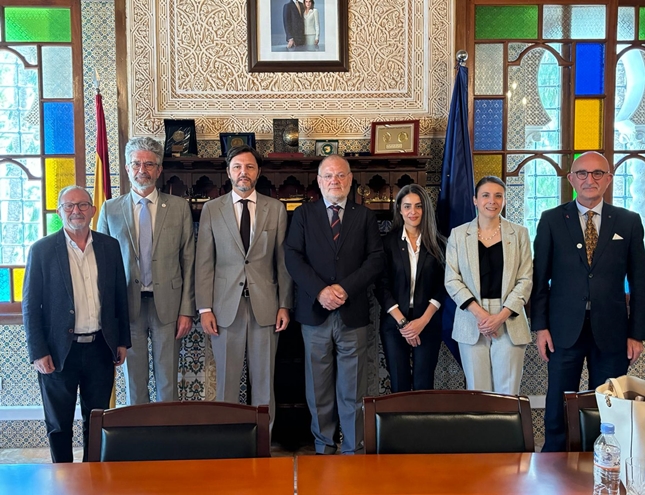
Meeting at the Spanish Embassy with Minister Counselor, Álvaro Ortega Barón, and Economic and Commercial Counselor, Cristina Olazabal Valiente
Meeting with H.E. Stéphane Romatet, Ambassador and High Represenative of the French Republic in Algeria, Laurent Fiat, advisor for agricultural and agri-food affairs, and Sabrina Benbouali, Export Advisor
Meeting with H.E. Alberto Cutillo, Italian Ambassador to Algeria
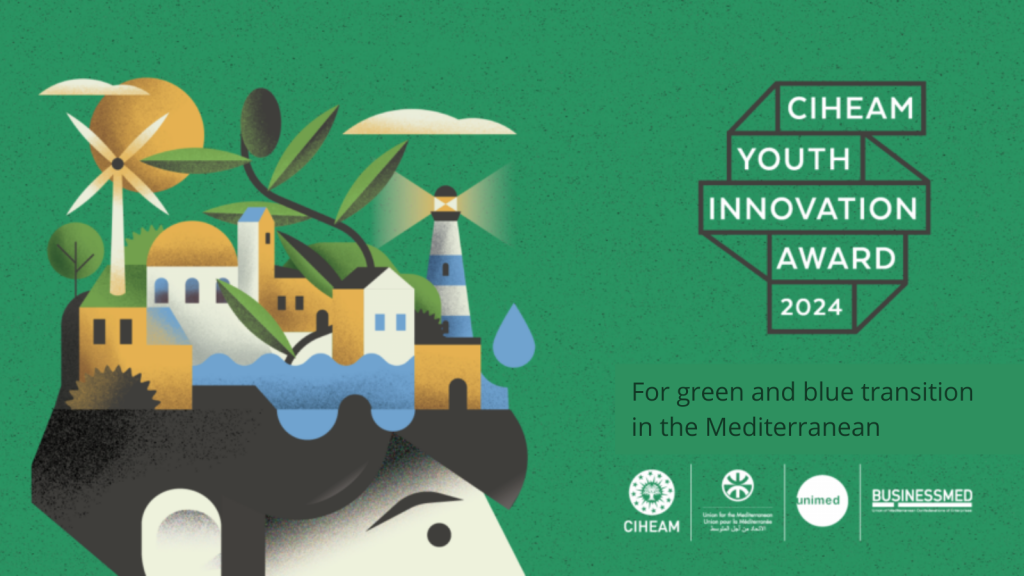
CIHEAM initiated the Youth Innovation Award in 2022 to reward innovative solutions designed and implemented by young people, to accelerate green and blue transition processes towards more sustainable, inclusive and equitable food systems in the Mediterranean (SFS Med).
The “CIHEAM Youth Innovation Award for Green and Blue Transition in the Mediterranean” will reward an innovative solution (scientific or entrepreneurial product/service) at least in the pilot phase, developed by a Mediterranean student or graduate under 39 years old and implemented in a country of the region. The innovation must demonstrate its ability to contribute to the environmental, social and economic sustainability of Mediterranean food systems.
The Award ceremony will take place in a CIHEAM special session of the ECOMONDO – The Green Technology Expo , one of the most important fairs in the world dedicated to green and circular economy hosted in Rimini, Italy, on 5-8 November 2024.
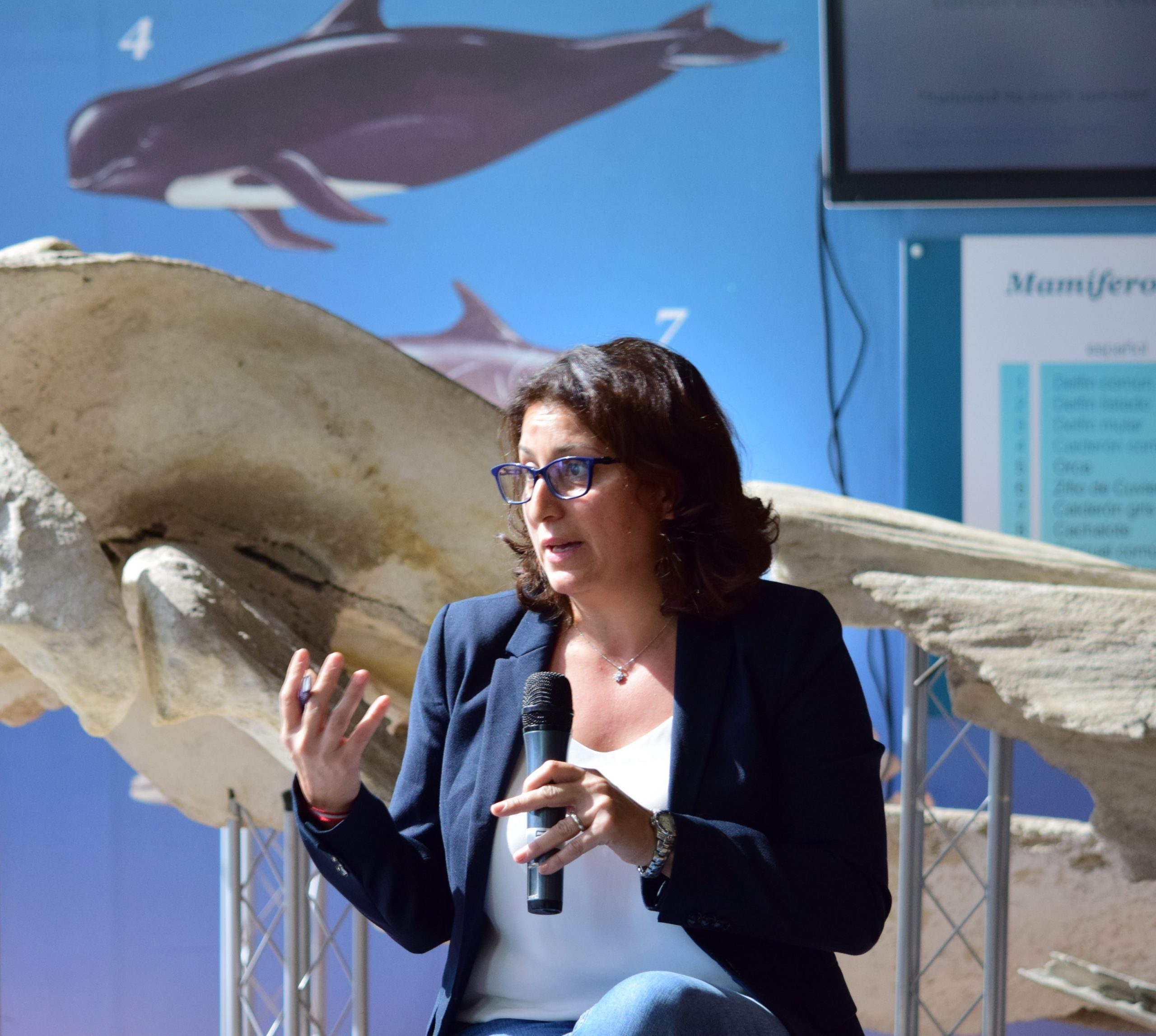
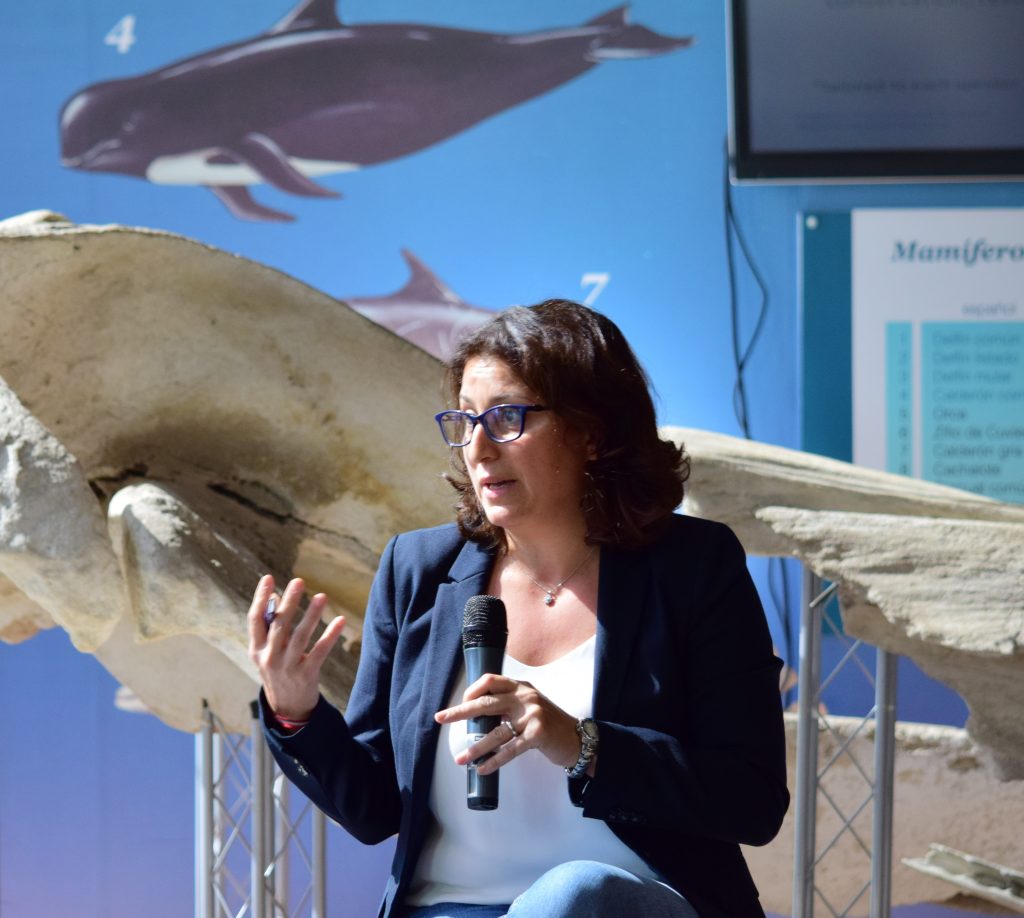
Dania Abdul Malak, Director of the European Topic Centre on Spatial Analysis and Synthesis of the University of Malaga, talks to us about her experience in CIHEAM Zaragoza’s Master and the impact it has had on the development of her professional career
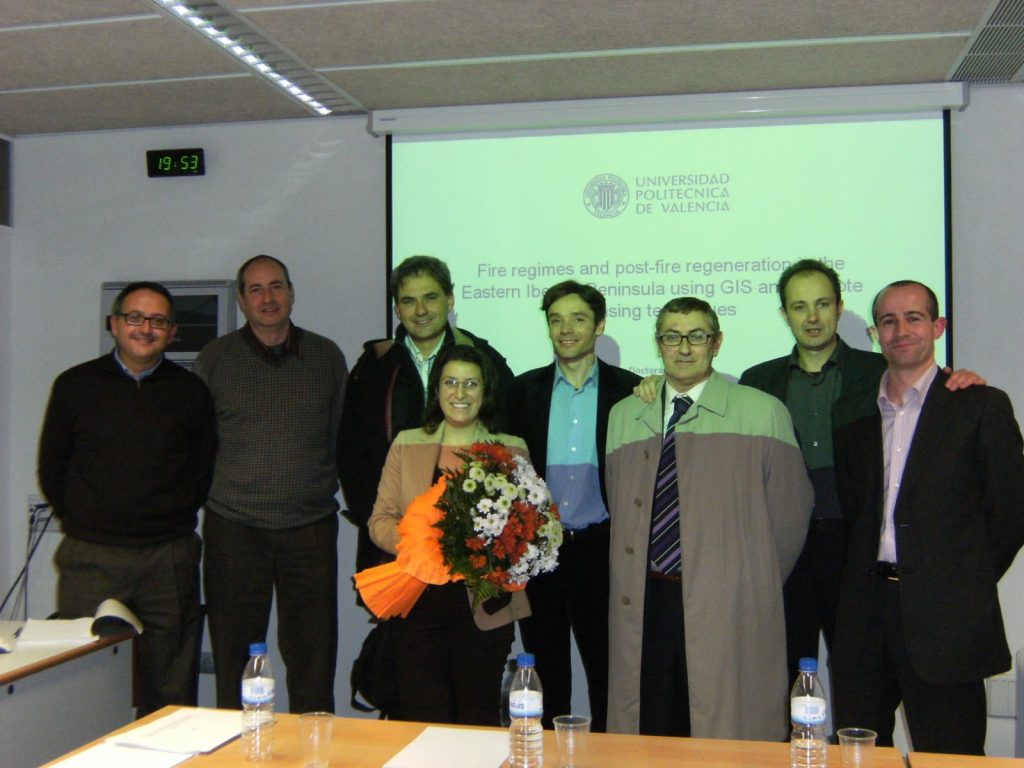
Born in Btater (Lebanon) in 1977, Dania is an agricultural engineer and has cultivated a brilliant professional career as an environmental scientist. Starting with the International Master in Rural Planning in relation to the Environment at CIHEAM Zaragoza in 2000, she went on to the Mediterranean Center for Environmental Studies (CEAM) in Valencia in Spain to prepare her Final Master’s Thesis ‘Use of GIS to Study Forest Fires in relation to the Environment in the Province of Valencia (1978-2001)’. Dania continued her studies at the Polytechnic University of Valencia working towards her doctoral thesis ‘Fire Regimes and Post-fire Regeneration in the Eastern Iberian Peninsula using Remote Sensing and GIS Techniques’.
As director of the European Topic Centre on Spatial Analysis and Synthesis of the University of Malaga (ETC-UMA) since 2015, her work addresses current environmental and conservation issues. Her research, conducted together with her team at ETC-UMA, focuses on the evaluation of the effects of climate change on Mediterranean and European ecosystems. In particular, the research concentrates on the design of integrated methodologies to assess ecosystems in Europe and the Mediterranean in the context of climate change and on how to transform results into recommendations for regional stakeholders, including territorial managers, policy-makers and decision-makers.
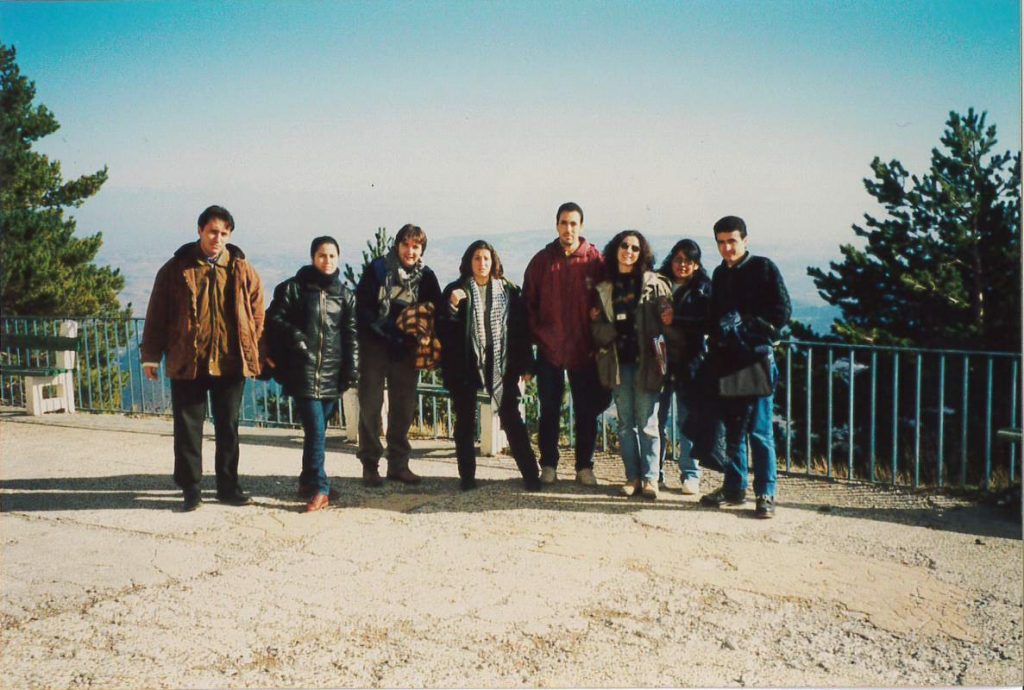
Visit to the Moncayo (Zaragoza) during the Master
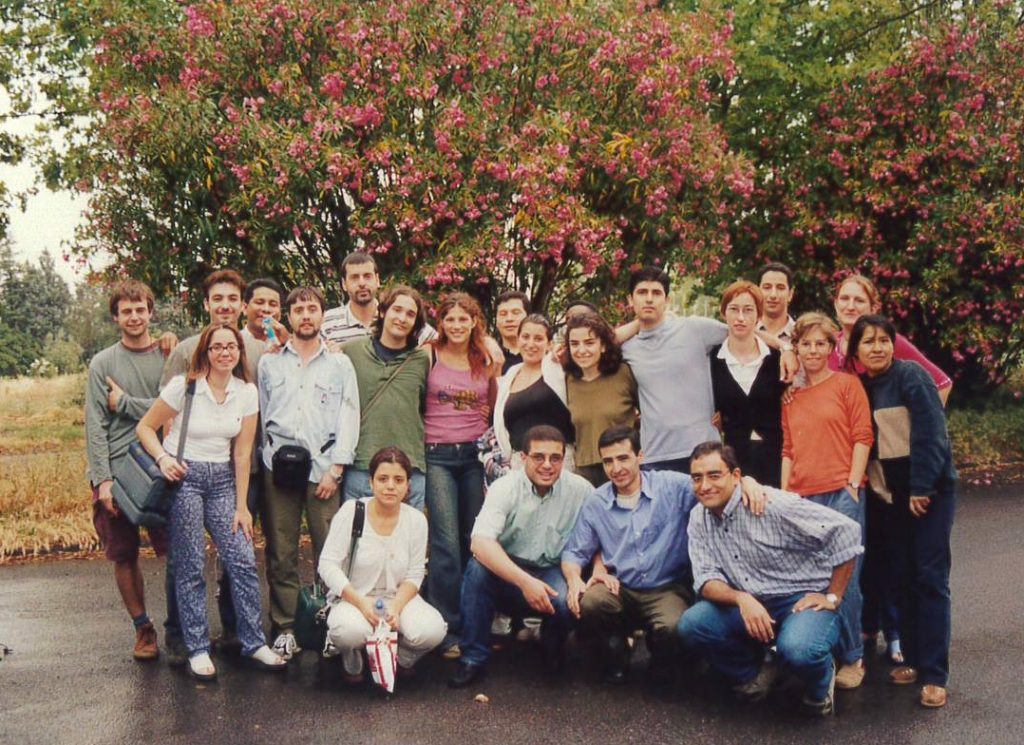
Study trip on the Master
Defence of the Doctoral Thesis at UPV
During this interview, Dania talks to us about her experience at CIHEAM Zaragoza’s International Master in Rural Planning in relation to the Environment, about the focus of her research and how it relates to her current work at the University of Malaga.
You studied agricultural engineering at the American University of Beirut (AUB). What led you to specialise in environmental management?
The degree in agricultural engineering that I studied at AUB for 4 years gave me greater insight into the subject that was most attractive and interesting to me: ecology. Looking back on what I did in the last year of my degree as well as the different projects and activities, I discovered that ecology was the part that appealed to me most of all. I wanted to learn more about the relationships between species, their preferred habitats and the effect that habitat status has on their longevity and survival. I realised that even though the status of a given species is good, it cannot survive without a healthy habitat. Based on what I learnt and observed, I knew I wanted to dedicate more time to researching and understanding methods to assess the condition of semi-natural habitats and propose solutions for their conservation.
With this interest in mind, I began to seek opportunities to study a master’s programme that would provide me with these tools and methods that I could apply to my work in the future. I was also attracted by the wealth of biodiversity in the Mediterranean that I could study and then later apply my knowledge in the region.
CIHEAM Zaragoza offered the master’s programme you were looking for. What have you gained from this experience?
AlWhen I finished my degree at AUB, I applied for three master’s programmes, two in the Lebanon and the one organised by CIHEAM Zaragoza on rural planning in relation to the environment. As I was accepted in all three, I had to think hard about what each programme really offered me, in terms of professional, personal and cultural growth. I chose CIHEAM Zaragoza.
It was a good experience on all levels, starting from the cultural, linguistic and professional perspective. For me, the added value lies in the friends I have made from all over the Mediterranean, friendships that have lasted 24 years. This is a gift that I treasure deeply.
The master’s programme offered a wide range of modules: from territorial management to applied techniques; geotechnological methods such as geographical information systems and remote sensing. Regarding the lecturers, I was extremely fortunate to come into contact with a wide range of professionals.
This experience gave me the opportunity to use these topics and the network of professionals to deepen my knowledge and do research for my thesis the following year.
In 2015 you supervised an End of Master’s Project of a student from CIHEAM Zaragoza. What was that experience like for you?
When CIHEAM Zaragoza contacted me and asked me if I could supervise a student’s End of Master Project, I was aware of my responsibility to help young professionals develop their work. I was given the opportunity to help Mathilda Merkohasanaj learn more about the application of geographical information systems and remote sensing to monitor wetlands. In addition to testing technological tools, this work took a deep look into the methodology used to monitor agricultural zones and develop spatial indicators to measure the pressure from agriculture surrounding the Mediterranean wetlands. Mathilda learnt monitoring methodologies and tested their utility during her End of Master Project, which in turn helped her to transfer the knowledge acquired and apply it to other ecosystems, specifically coastal and marine ecosystems. She then went on to do a doctorate in coastal wetlands.
Since 2015 you have been directing ETC-UMA, a research centre focused on environmental and conservation issues. What are the main projects you are working on at the moment?
The European Topic Centre for Spatial Analysis and Synthesis (ETC-UMA) is an international research centre based at the University of Malaga. Since 2011, ETC has been engaged in the development of environmental knowledge to support evidence-based policy- and decision-making. The team has extensive experience in different environmental and social areas. The main areas of specialisation include the assessment and monitoring of ecosystems, and the evaluation of ecosystem services, coastal and marine studies,conservation of the environment, and territorial development, using geotechnology. The ETC-UMA team has vast experience in integrating, harmonising and exchanging regional data, generating environmental indicators and developing knowledge-based tools to support resource managers and decision-makers and help them in their understanding and recognition of how they depend on the ecosystems and the impact they can have on them.
ETC-UMA’s work focuses on mapping environmental and anthropogenic pressures and their impact on biodiversity, as well as raising awareness about the value of ecosystem services and evaluation of their implications. ETC-UMA researchers support various international initiatives at European level, collaborating with the European Environment Agency (EEA) in applying different thematic components of its regional strategy and pluriannual working plans, and contributing to several working groups of the European Commission, among others the Group of Experts on Monitoring Ecosystems and the Academy of the Copernicus programme. Furthermore, the ETC-UMA team leads and contributes to several research projects such as the Horizon Plus and EUROMED e Interreg programmes.
One important aspect of your research has been to assess the effects of global change on Mediterranean and European systems. In your opinion, what lessons on resilience can be drawn from the Mediterranean region?
Ecosystem services are direct and indirect contributions made by ecosystems to human welfare. This means that human societies depend on ecosystems functioning well. There are other ecosystem services, such as erosion control, coastal protection, regulation of temperature, and storm buffering, as well as cultural services such as recreation or ecotourism. They are highly appreciated by the Mediterranean populations and are vital in terms of economy and food security.
Over the last 22 years, my post-graduate research work –and since 2015 the work at the centre I lead – has focused on generating knowledge and evidence, in addition to developing methodologies to assess and monitor Mediterranean and European ecosystems. Over these years, our research has enabled us to understand the effect that the status of these ecosystems has on the provision of ecosystem services. The results obtained over the years in the Mediterranean demonstrate that socioecological resilience relies on the health of its ecosystems. The degradation and loss of these ecosystems may have considerable impact on the Mediterranean population’s capacity to guarantee food security.
In addition, intensive planning and degradation of ecosystems, as well as natural hazards and climate change, all present a threat for socioecological sustainability of the Mediterranean in the long term, making the Mediterranean population vulnerable. In order to maintain the resilience of the Mediterranean ecosystem we need to find a balance between socioeconomic benefits, environmental pressure and the impacts of climate change. This is a key challenge for Mediterranean communities, making sustainable management and natural resource conservation fundamental to support the resilience of these Mediterranean communities.
As a former student of CIHEAM Zaragoza, what advice would you give students currently taking a masters in this international organisation?
Based on my experience, the Master offers multiple benefits for its students. One direct benefit is its contribution to the students’ knowledge and professional experience. Equally important are the indirect benefits, such as learning a new language, living in a multicultural environment, and making friendships that extend beyond borders, among others.
Personally, I would urge students to take advantage of all these opportunities that will help them grow professionally as well as personally, becoming ambassadors to consolidate a network of Mediterranean specialists in the topic of the master and in other topics in CIHEAM Zaragoza’s scope of action.
I would also encourage them to make the most of this year. I would recommend them to think about what they can do to take advantage of the wealth of knowledge, experiences and networks and make it a starting point to improve the status of this Mediterranean Basin, with its rich, unique biodiversity, socioeconomy, culture and gastronomy.
And for anyone thinking about applying for a master’s, why would you encourage them to study at CIHEAM Zaragoza?
Studying at CIHEAM Zaragoza has many direct and indirect benefits for young professionals: learning Spanish, one of the most widely-spoken languages on the planet; the theoretical contents, case studies and examples of good practices, field work and practical projects; the chance to get to know young professionals from all over the Mediterranean basin and beyond (in my case I was lucky enough to meet professionals and make friends from Latin America too); the creation of international friendships and the opportunity to progress towards cross-border territorial cooperation in issues related to the course.
Also, I encourage the young professionals to make good use of what CIHEAM Zaragoza has to offer so as to consolidate a community of Mediterranean experts in these thematic areas. Likewise, I encourage former students of CIHEAM Zaragoza to help to make this network grow whenever possible and to supervise End of Maser theses in this centre. In that way they can give something back and make their contribution, be it large or small, to this excellent project of Mediterranean cooperation.
Gestionar consentimiento
Para ofrecer las mejores experiencias, utilizamos tecnologías como las cookies para almacenar y/o acceder a la información del dispositivo. El consentimiento de estas tecnologías nos permitirá procesar datos como el comportamiento de navegación o las identificaciones únicas en este sitio. No consentir o retirar el consentimiento, puede afectar negativamente a ciertas características y funciones.
Funcional
Always active
El almacenamiento o acceso técnico es estrictamente necesario para el propósito legítimo de permitir el uso de un servicio específico explícitamente solicitado por el abonado o usuario, o con el único propósito de llevar a cabo la transmisión de una comunicación a través de una red de comunicaciones electrónicas.
Preferencias
El almacenamiento o acceso técnico es necesario para la finalidad legítima de almacenar preferencias no solicitadas por el abonado o usuario.
Estadísticas
El almacenamiento o acceso técnico que es utilizado exclusivamente con fines estadísticos.El almacenamiento o acceso técnico que se utiliza exclusivamente con fines estadísticos anónimos. Sin un requerimiento, el cumplimiento voluntario por parte de tu proveedor de servicios de Internet, o los registros adicionales de un tercero, la información almacenada o recuperada sólo para este propósito no se puede utilizar para identificarte.
Marketing
El almacenamiento o acceso técnico es necesario para crear perfiles de usuario para enviar publicidad, o para rastrear al usuario en una web o en varias web con fines de marketing similares.