Corporate Social Responsibility: Businesses Today and their Commitment with Sustainability

  • Mario Anamaría, administrator of the training area ‘Marketing and Agrifood Systems’ at CIHEAM Zaragoza, addresses in this article the commitment of today’s firms with corporate social responsibility and sustainability
Corporate Social Responsibility: Businesses Today and their Commitment with Sustainability.
An article by Mario Anamaría, administrator of the training area ‘Marketing and Agrifood Systems’ at CIHEAM Zaragoza.

According to the International Labour Organization (ILO), Corporate Social Responsibility (CSR)is the set of actions that a company considers so that its activities may have a positive impact on society and can affirm the principles and values by which the company is governed, both in its own internal methods and processes as well as in its relationship with other actors”. It involves interaction between three areas: economic, social and environmental, where sustainability is understood as the balance between the three.

The concept and foundations of sustainable development were defined for the first time in the Brundtland report, published in 1987 by the UN World Commission on Environment and Development: “Sustainability meets the needs of the present without compromising the ability of future generations to meet their own needs”. In order to achieve this goal, a balance must be found between economic and social growth and conservation of the environment.

Likewise, the 2015 Resolution approved by the General Assembly of the United Nations, “Transforming our world: the 2030 Agenda for Sustainable Development”, seeks to achieve the three dimensions of sustainable development: economic, social and environmental – in a balanced and integrated manner. The 17 Sustainable Development Goals (SDG) and 169 associated targets, are “universal and involve the entire world, developed and developing countries alike” including all sectors of society and being a commitment for us all.

In 1953, Howard Bowen developed the concept of CSR as “the obligation of businessmen to pursue policies, to make decisions or to follow lines of action that are desirable in terms of the objectives and values of society”. This concept englobes various scopes, from conveying social and environmental concern through their business transactions to being socially responsible towards their employees.

Businesses are attaching greater importance to social and environmental awareness and are taking a different approach to their activities and functions, in how they interact with their stakeholders, transmitted through their culture and values and enabling them to care for and improve the environment. Today, being socially responsible has a significant impact on a company’s reputation and image.

In recent years, due to a series of business scandals, firms have lost the trust of citizens who are increasingly questioning the actions of organisations and demanding greater transparency and responsibility. Consumers want to know what raw materials are contained in their products. They want to know how they are manufactured and whether the production process is harmful to the environment. They also want to know what the firm is doing to protect the environment and to comply with standards, in other words, consumers are anxious to have a business sector that is committed to the environment and to sustainability, and that respects human rights.

Current society requires businesses to do more than just reap profits. Society expects companies to contribute to social development and engage in fair trade, with a commitment to their employees. By following these initiatives, a company can improve its market image and decrease any negative perception that consumers may have.

Today, more and more firms are aware of the importance of CSR for their success and have incorporated it into their business strategy, aligned with their priorities and culture. Consumers appreciate this and connect with socially responsible firms, and are often willing to pay more for their products and services, revealing greater customer loyalty to the businesses practising CSR.

According to the United Nations Industrial Development Organization (UNIDO), if applied correctly, CSR can improve market access, increase transactions, improve productivity and enhance quality, brand image and recognition, customer loyalty, decision-making and risk management.

From the business perspective, the social pillar is based on reinsertion and combating social exclusion, ensuring gender equality and equal pay for men and women, and promoting solidarity, etc. The economic pillar is based on the recycling of products and use of renewable raw materials, and on the development of an economically responsible system and the third, environmental, pillar is based on the commitment to reduce the risks of environmental impact, avoid overexploitation of renewable resources and depletion of non-renewable resources, and reduce greenhouse gas (GHG) emissions, etc.

In order to support the small and medium-sized enterprises (SMEs) in their implementation of a CSR-based management approach, UNIDO developed a management tool called REAP (Responsible Entrepreneurs Achievement Programme). The programme, based on the Triple Bottom Line (TBL), has been successful in developing countries, enabling them to measure corporative performance in economic, social and environmental terms. This is based on the premise that in order for an organisation to be sustainable, it has to be financially secure without compromising its competitivity, and be able to minimise or eliminate possible environmental impacts and behave in accordance with society’s expectations.
Developing skills in water management. An essential tool to face drought challenges

  • A webinar organised by CIHEAM Zaragoza to celebrate the World Water Day explores solutions to overcome water scarcity in Mediterranean regions.

  • The Spanish headquarters of the International Centre for Advanced Mediterranean Agronomic Studies presents the 2024-2026 edition of the Master in Water Management.

Zaragoza, 22 March 2024.- CIHEAM Zaragoza has invited a panel of experts to participate in the webinar to celebrate the World Water Day (22 March). Consensus among the participants is clear: investing in human capital and developing water management skills are crucial strategies to combat water scarcity in Mediterranean regions, which are particularly vulnerable to the effects of climate change.

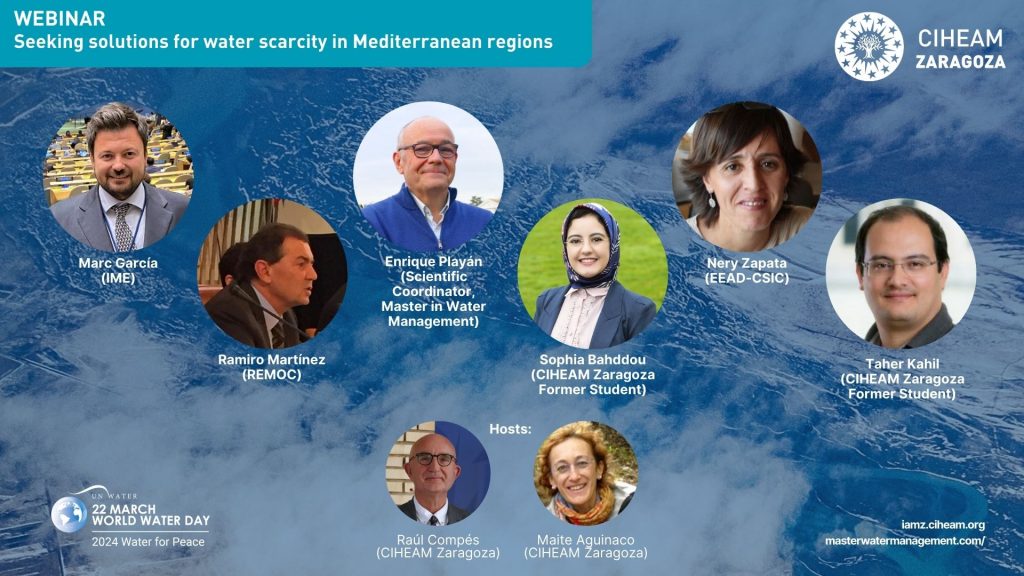
Delivered in Spanish and English for an international audience, the webinar has hosted a panel of guest experts including Marc García, Secretary General of the Mediterranean Water Institute; Enrique Playán and Nery Zapata, scientists from the Experimental Station of Aula Dei of the Spanish National Research Council; and Ramiro Martínez, Coordinator of the Mediterranean Network of Basin Organisations (MENBO). The panel also included former students of CIHEAM Zaragoza, Sophia Bahddou and Taher Kahil that are currently developing their professional careers in the United Kingdom and Austria, respectively.

The event has focused on the need to provide training that will strengthen sustainable water management in a context of water scarcity and climate change. Raúl Compés, director of CIHEAM Zaragoza, has pointed out that the Mediterranean region is undergoing one of the worst periods of drought in history and requires greater coordination, better policies and more professionals to improve water use efficiency, increase water availability and reduce losses.

Water scarcity, water quality concerns, droughts, flooding, sustainable agriculture production, and food security are just some of the water-related challenges confronting Mediterranean countries. These issues are expected to intensify in the coming years due to the compounding effects of climate change, demographic growth, and urban development.

NEW EDITION OF CIHEAM ZARAGOZA’S MASTER IN SUSTAINABLE WATER MANAGEMENT

During the webinar, Enrique Playán, research professor from the Spanish National Research Council, has presented the 2024-2026 edition of CIHEAM Zaragoza’s International Master in Sustainable Water Management and Governance in Natural and Agricultural Environments that he coordinates. With over fifty lecturers from 12 countries chosen for their expertise in a range of topics, this programme aims to train future professionals that will be able to support decision-makers in the field of sustainable water management and governance.

The Master is organised by the headquarters in Spain of the International Centre for Advanced Mediterranean Agronomic Studies (CIHEAM). This post-graduate training programme counts on the collaboration of the General Directorate for Water from the Spanish Ministry for Ecological Transition and the Demographic Challenge (MITECO), the Spanish Agency for International Development Cooperation (AECID), the Spanish Ministry of Agriculture, Fisheries and Food (MAPA), TRAGSA Group, the State Trading Company for Agricultural Infrastructures (SEIASA), the National Institute for Agricultural and Food Research and Technology (INIA-CSIC), the International Center for Agricultural Research in Dry Areas (ICARDA), and the Iturriaga Dañobeitia Foundation.

When presenting the Master, Playán explains: “The Master’s teaching programme covers the whole water cycle in response to the needs of the sector and addresses the challenge of modernising irrigation systems to achieve sustainable food production”.

The next edition of the Master will commence in October 2024 with a duration of two years (120 ECTS). In the second year, and in partnership with different collaborating institutions, students will engage in research and professional activities and work towards their End of Master Thesis (TFM). Upon completion of the required credits, students are awarded an International Master of Science (MSc) degree, recognised by the Spanish authorities as equivalent to the official Master’s degree of the Spanish university system.


WORLD WATER DAY

The slogan for World Water Day 2024 is ‘Water for Peace’. Find out more about the World Water Day on the United Nations website.

Integrated pest management for efficient, sustainable and profitable crop protection

  • Experts address the present and future situation of integrated pest management during a technical seminar held at CIHEAM Zaragoza in the framework of the European IPMWORKS project
Gestión integrada de plagas

21 March 2024.- Advisors, technicians, scientists and researchers in the plant health sector have participated in a technical seminar on Integrated Pest Management (IPM) in the framework of the European IPMWORKS project from 19 to 20 March at CIHEAM Zaragoza.

One of the main conclusions of this technical forum has been the affirmation of IPM as a key strategy to achieve sustainable agriculture. As Joaquín Balduque, IPMWORKS project manager points out, “This seminar has made it clear that integrated pest management is a robust approach to crop protection that can guarantee farm profitability as well as environmental sustainability “.

The current situation of IPM; the risks and challenges posed by this strategy for plant health in forthcoming years; the range of management techniques available to control pests, diseases and weeds; and farm profitability are just some of the topics addressed by the experts during the technical seminar.

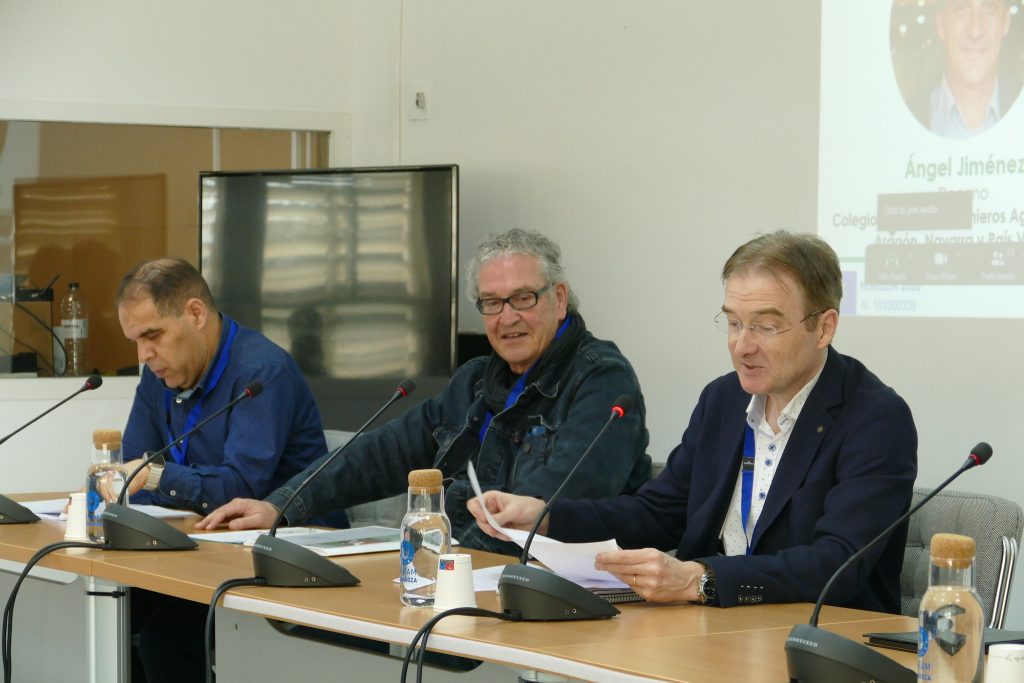
Emilio Betrán (CSCV) & Ángel Jiménez (COIAANPV)

Valentín Almansa (MAPA)

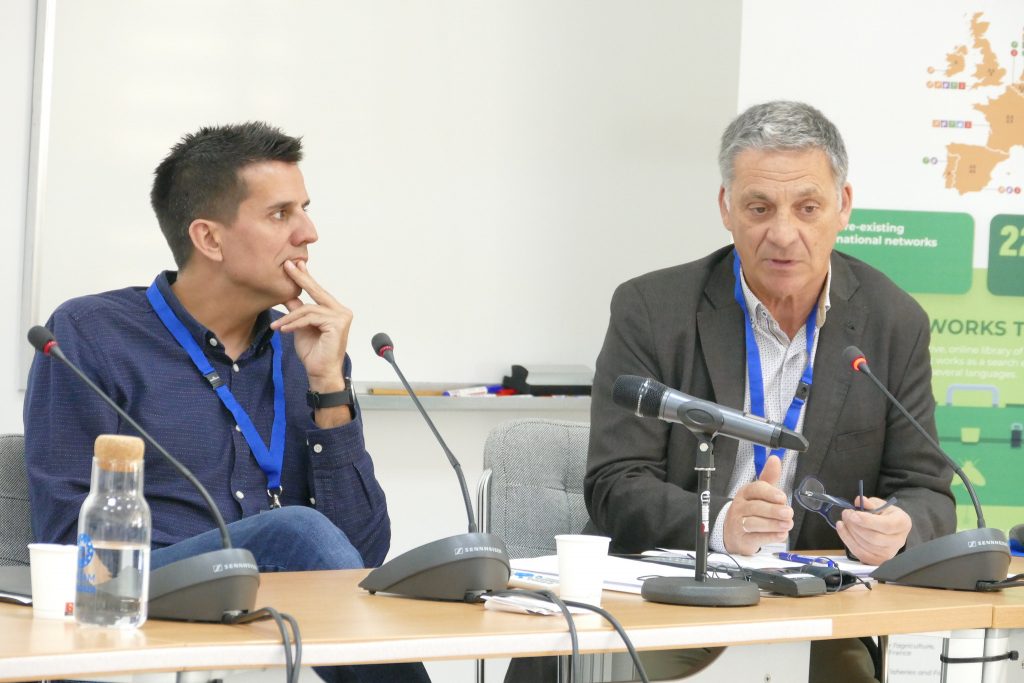
Ramzi Belkhodja (CIHEAM Zaragoza), Juan José Barriuso (Univ. Zaragoza) & Alun Jones (CIHEAM Zaragoza)

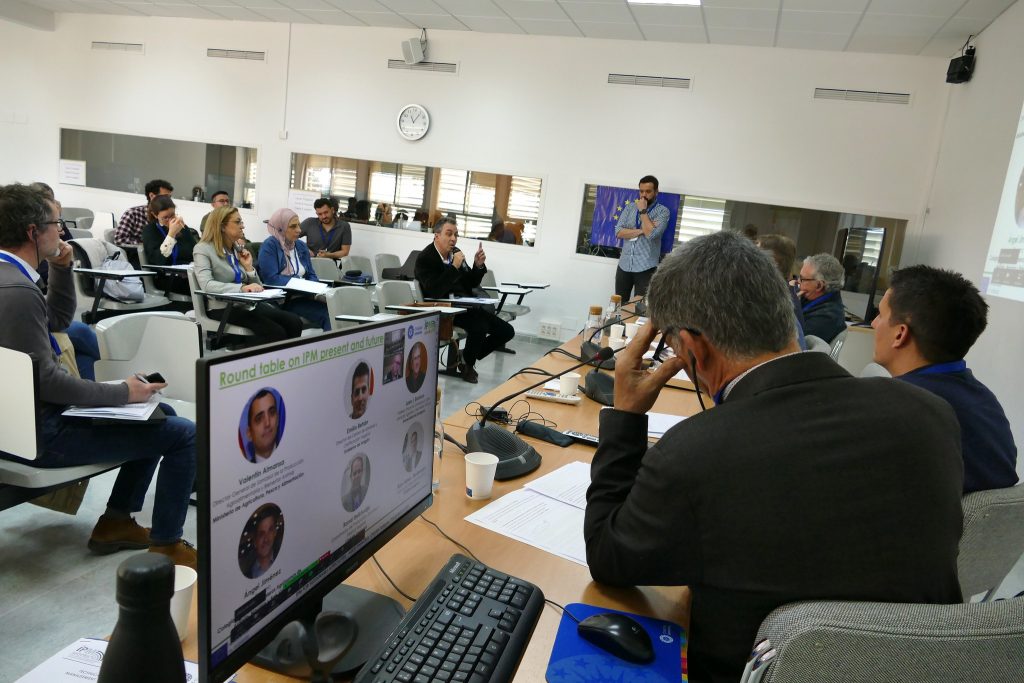
The event included a round table discussion on the present and future situation of IPM, chaired by Alun Jones, Head of Projects at CIHEAM Zaragoza, with the following panellists:

  • Valentín Almansa, Director General for Health in Agriculture and Food Production and Animal Welfare, Spanish Ministry of Agriculture, Fisheries and Food;
  • Emilio Betrán, Director of the Plant Health and Certification Centre of the Government of Aragon;
  • Juan José Barriuso, Tenure lecturer of the Department of Agricultural Science and the Natural Environment of the University of Zaragoza;
  • Ángel Jiménez, Dean of the Official College of Agricultural Engineers of Aragon, Navarre and the Basque Country; and
  • Ramzi Belkhodja, Coordinator of the Area of Plant Production, Health and Breeding of CIHEAM Zaragoza.

INTEGRATED PEST MANAGEMENT, A GLOBAL APPROACH

IPM is a global approach to pest control in agriculture and provides an alternative to conventional crop protection techniques, in an effort to prevent excessive use of plant protection products. The main objective is to apply long-term control strategies that combine biological, cultural and chemical methods to bring pathogen population levels down to tolerable levels, so that pests do not exceed the economic damage threshold.

The European project IPMWORKS seeks to demonstrate that IPM, recognised in the European Green Deal as a key strategy to achieve sustainable agriculture and protect the environment, can lead to a lower level of dependence on plant protection products, better pest control, cost reduction, and increased profitability.

One of CIHEAM Zaragoza’s objectives is to extrapolate the results of the project that concludes in September 2024, to non-European countries. Ramzi Belkhodja, coordinator of the Area of Plant Production, Health and Breeding at CIHEAM Zaragoza talks about these objectives, “As an organisation engaged in international cooperation in agriculture and food, we will work to demonstrate that IPM is a strategy that works at international level, and encourage application of the project results in southern Mediterranean countries such as Tunisia, Morocco or Algeria”.

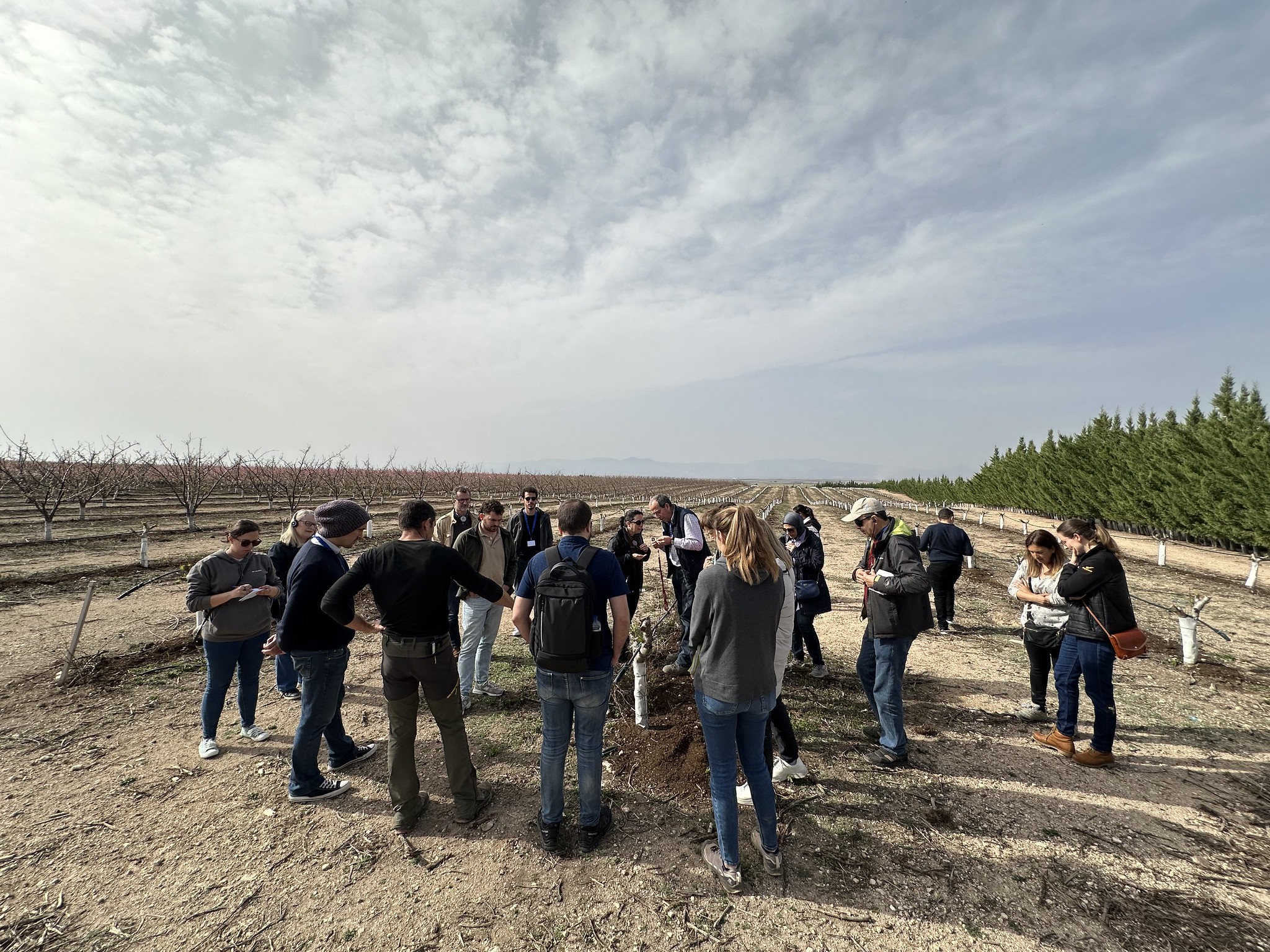
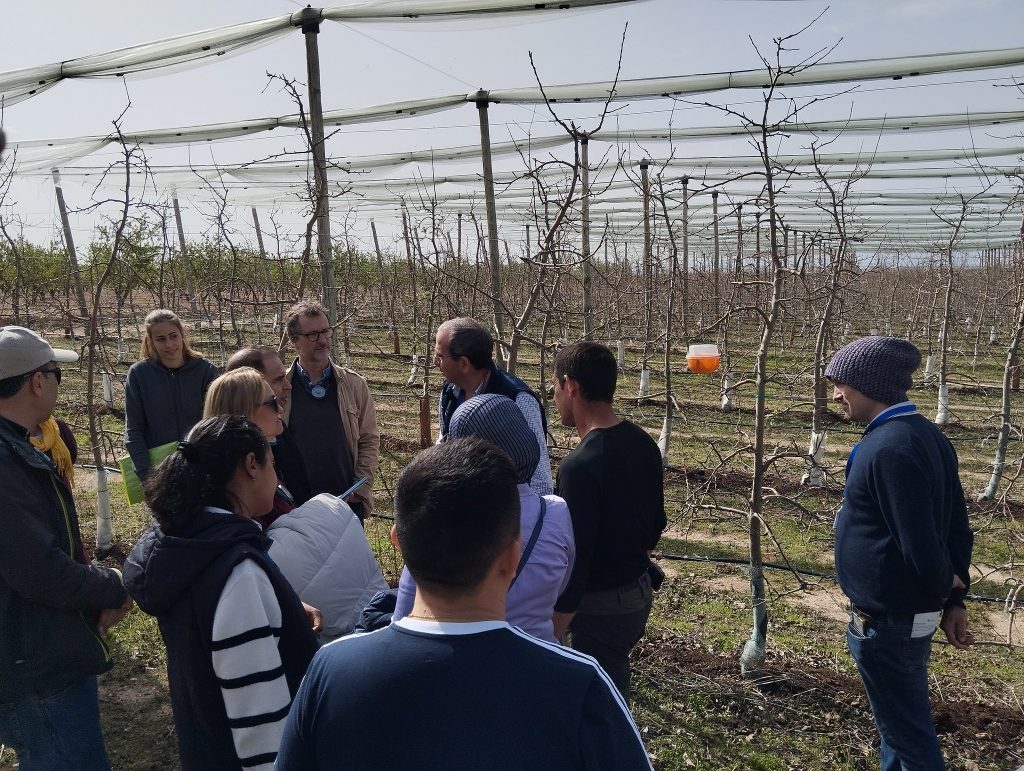
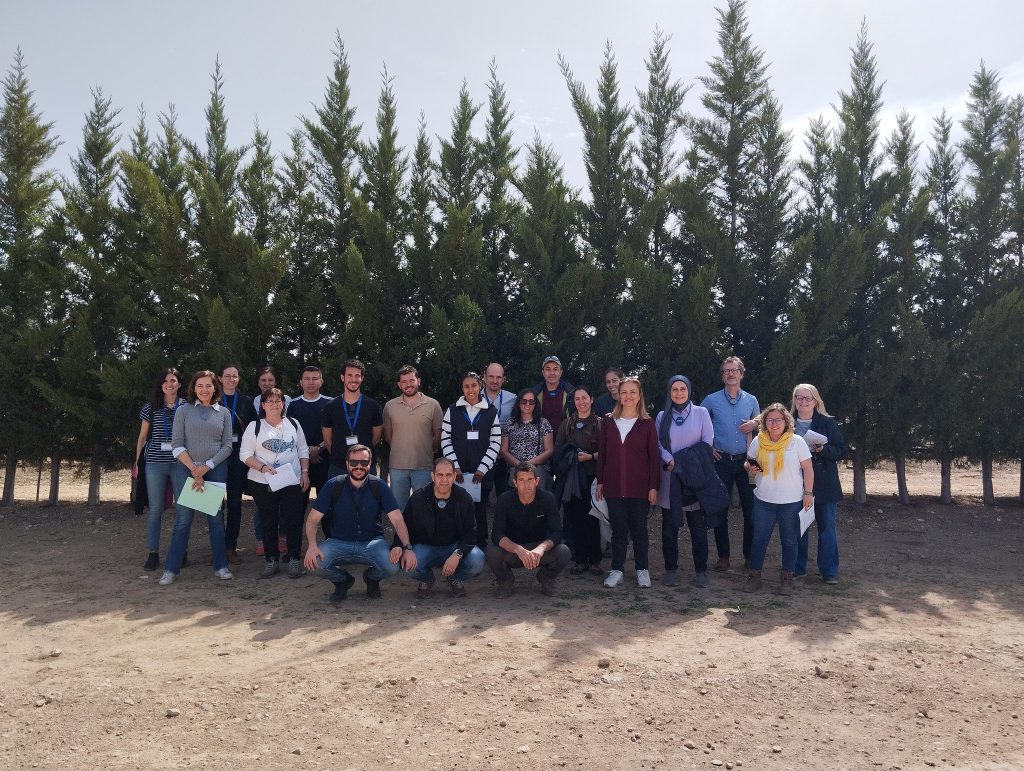
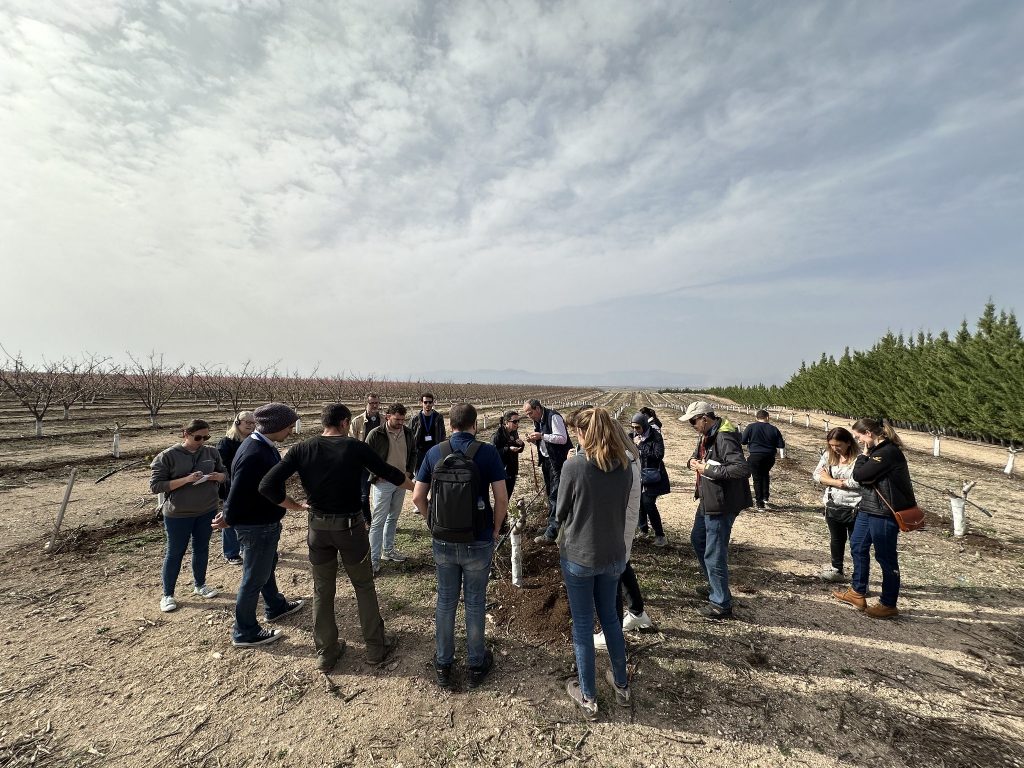
The seminar concluded with a technical visit to BIOSANZ, a pioneer organic agriculture business situated in Epila, Aragon, where participants saw, first-hand, examples of IPM in action.

Visit to a fruit orchard equipped with a hail net

Group photo of the technical visit

Identification of pests during the technical visit

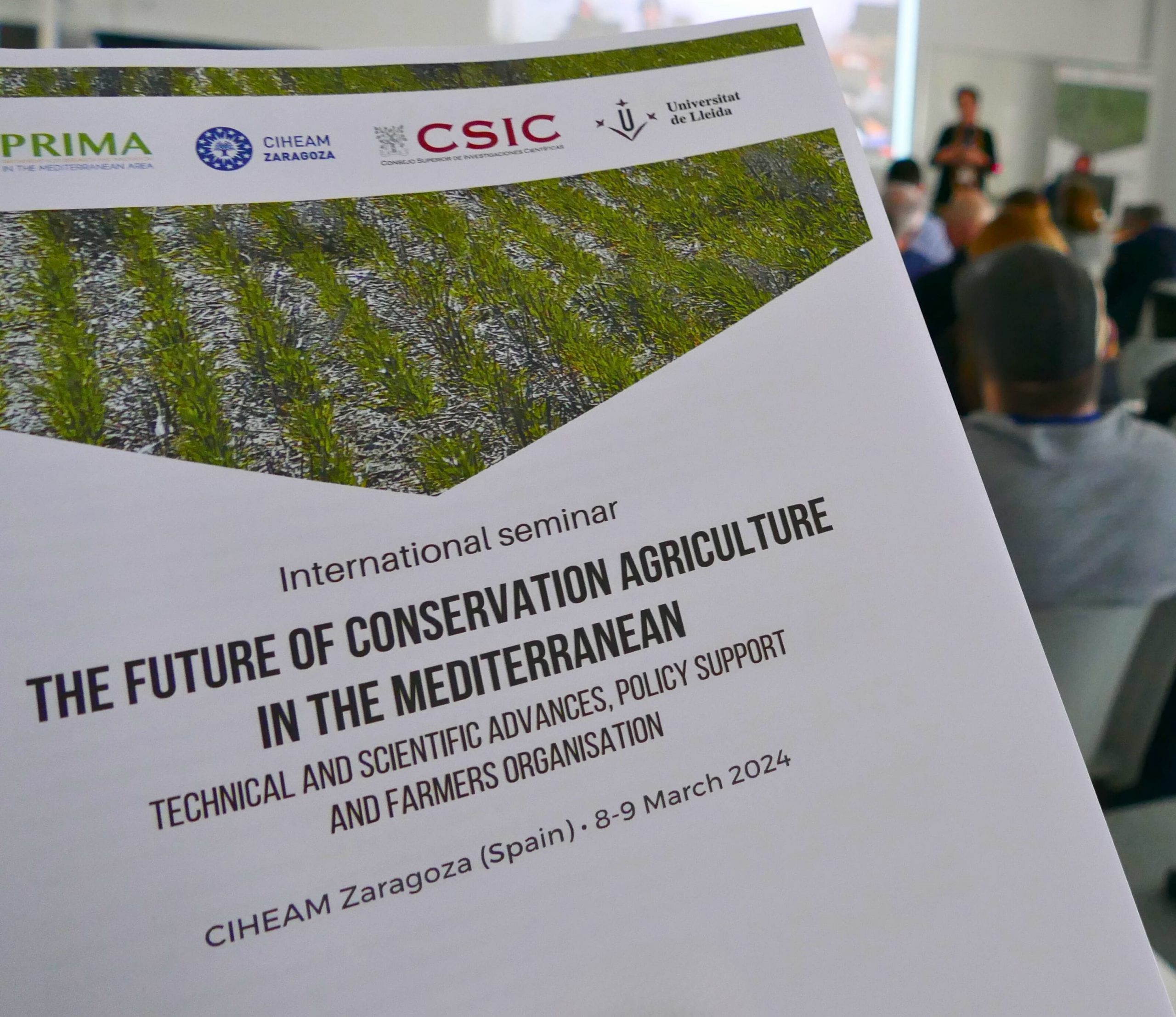
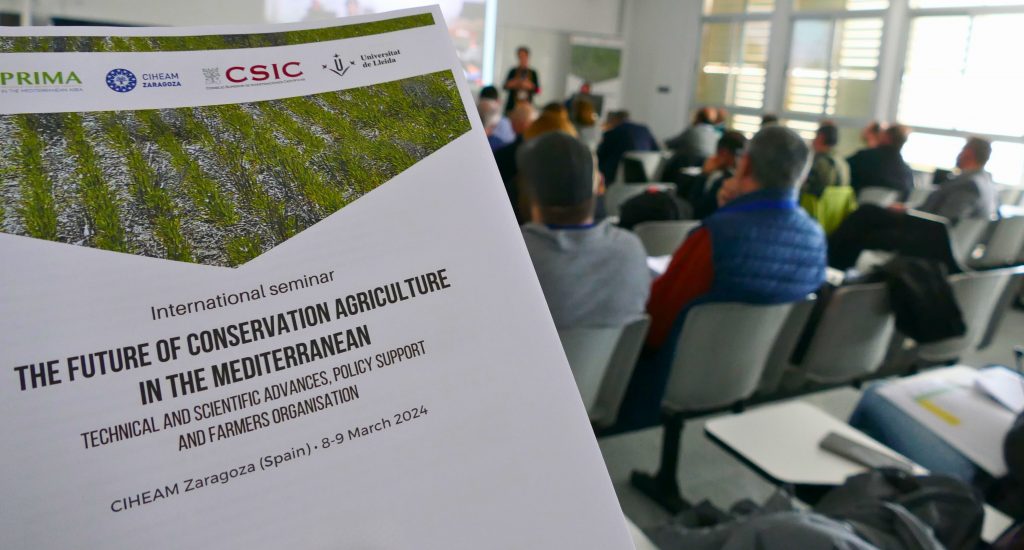
The final seminar at CIHEAM Zaragoza on conservation agriculture marks the success of the CAMA project

11 March 2024.- An international seminar held on 8 and 9 March addressing the future of conservation agriculture has gathered 13 partners from 8 Euro-Mediterranean countries (Algeria, France, Greece, Italy, Morocco, Portugal, Spain and Tunisia) participating in the CAMA research project (Conservation Agriculture in the Mediterranean Area).

The seminar has marked the end of a four-year EU PRIMA project, aimed at understanding and overcoming the obstacles that prevent widespread adoption of conservation agriculture in the Mediterranean Basin.

Organised by CIHEAM Zaragoza together with the Spanish partners of the project: the Experimental Station of Aula Dei of the Spanish National Research Council (EEAD-CSIC), and the University of Lleida (UdL); the seminar has attracted interest from researchers and representatives of farmers’ associations specialising in conservation agriculture, as well as regional and national administrations from several countries.

During the opening session, guest speaker María Dolores Gómez, from Cartagena Polytechnic University, presented the current situation of carbon farming in the Mediterranean.

The experts involved in CAMA presented the results of their research, which measured the positive effects of conservation agriculture on soil properties, soil conservation, water use efficiency, and crop development. Additionally, they shared the conclusions reached over the four years of the project regarding factors related to farmers’ adoption of this cropping system.

Jorge Álvaro-Fuentes (EEAD-CSIC, partner of the CAMA project).
Carlos Cantero-Martínez (University of Lleida, partner of the CAMA project).
Guest expert María Dolores Gómez (University of Cartagena).

The seminar also served as a forum to discuss the role of public policies in the transition towards a model of sustainable agriculture from an economic, social and environmental point of view. In this framework, the Spanish Ministry of Agriculture presented the experience of the Eco-schemes of the Common Agricultural Policy (CAP) 2023-2027 focusing on elements such as direct seeding and crop rotations, aimed at encouraging the use of techniques that will benefit the climate and the environment.

Seminar participants also discussed how to enhance the adoption of conservation agriculture through farmers’ organisations in the Mediterranean Basin. From Spain, the Aragonese Association of Conservation Agriculture (AGRACON) presented the work they have been conducting for over 20 years to promote this sustainable crop production.

The second day of the seminar was dedicated to a technical visit to farms practising conservation agriculture in semi-arid rainfed and irrigated cropping systems within the region of Aragon.

CIHEAM Zaragoza, new member of Zaragoza Congresses

CIHEAM Zaragoza, the Spanish headquarters of the International Centre for Advanced Mediterranean Agronomic Studies (CIHEAM), has joined part of Zaragoza City Council’s Convention Bureau ‘Zaragoza Congresses’, as an associate member in the Congress Centre category.

Through this initiative, CIHEAM builds stronger connections with the city of Zaragoza and enhances its visibility as a venue for events and scientific, academic and professional meetings.

CIHEAM Zaragoza has a number of versatile spaces tailored to suit a variety of events. The buildings hold multifunctional spaces, seminar rooms and lecture rooms equipped with modern audiovisual technology to accommodate face-to-face and online activities. In addition, CIHEAM Zaragoza has an auditorium seating 250 persons. With all areas in use at the same time, the Institute can host approximately 600 guests.

In recent years, national and international businesses, associations and public institutions such as Bayer Crop Science; the Interprofessional Association for Agricultural Development (AIDA); the Spanish Association of Agri-food Economy (AEEA); the Department of Agriculture, Livestock and Food of the Government of Aragon, and the Spanish National Research Council (CSIC) have chosen CIHEAM Zaragoza to hold their events and meetings.

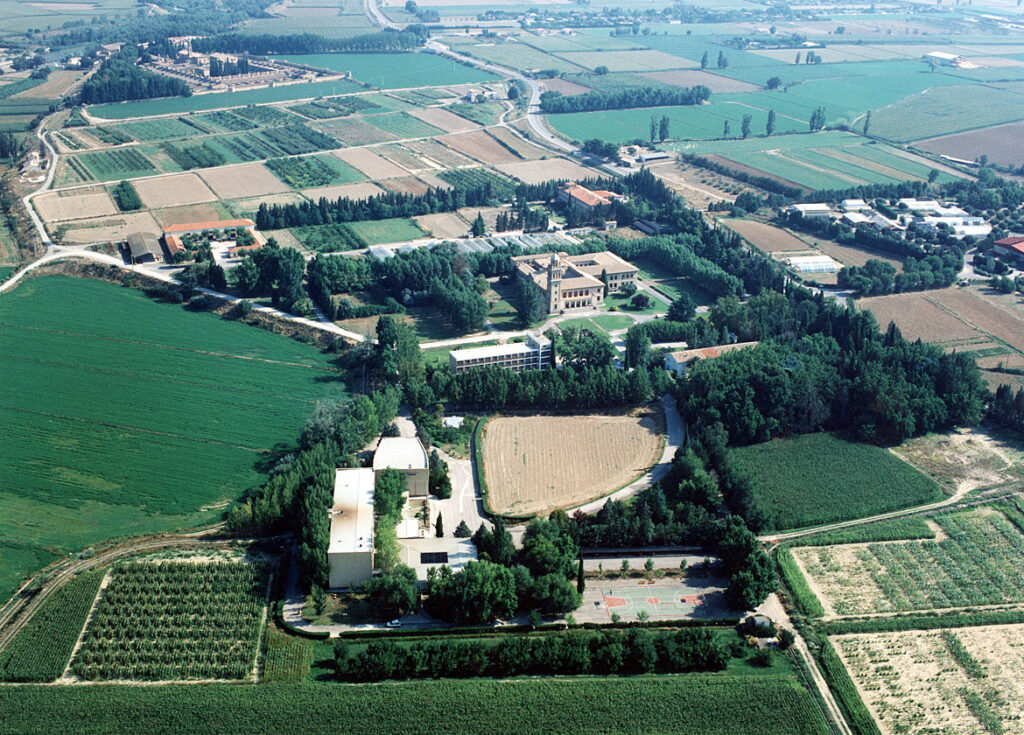
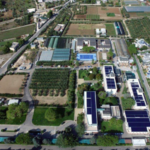
CIHEAM Zaragoza, the only international organisation with headquarters in Aragon, is situated on the Campus of Aula Dei, in the periurban area to the north of Zaragoza. The campus is a prestigious technical and scientific complex, home to over 700 professionals of the agriculture and food sector working at the seven R&D+i centres located on campus, equipped with laboratories and other research, training and innovation facilities surrounded by experimental plots, estates and farms.

Photo of the Campus of Aula Dei, 10 kilometres from Zaragoza. CIHEAM Zaragoza buildings bottom left.

Being a member of Zaragoza Congresses will strengthen CIHEAM Zaragoza’s collaboration with numerous entities belonging to Aragon’s business network, in particular those specialised in the organisation of big events.

Networking is one of the key features of CIHEAM’s Institute in Spain, founded in Zaragoza in 1969. All activities are organised with the participation and support of an extense range of alliances with partners that include governments, international organisations, universities, research centres, foundations, professional associations and firms from the private sector.

CIHEAM Zaragoza at the presentation of the Olive Oil World Congress (OOWC)

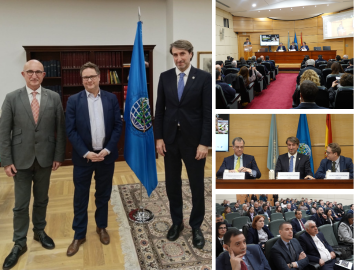
  • CIHEAM Zaragoza’s director, Raúl Compés, has attended the presentation of the Olive Oil World Congress (OOWC) on 28 February at the headquarters of the International Olive Council (IOC) in Madrid.
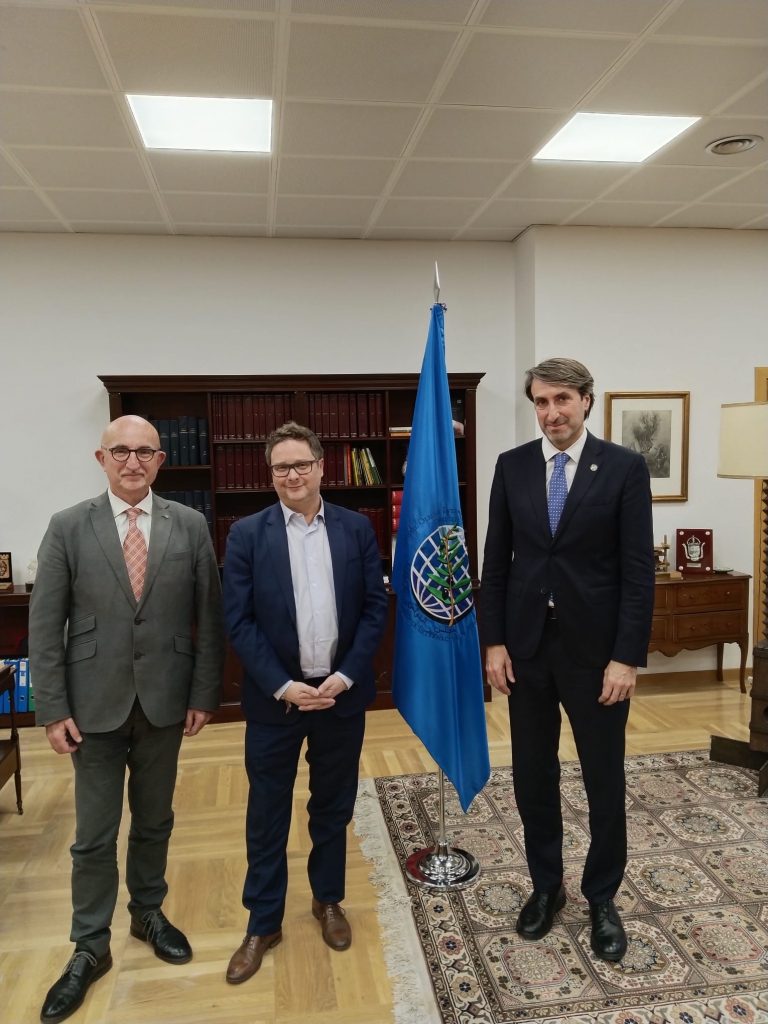
CIHEAM Zaragoza director, Raúl Compés, with Jaime Lillo, executive director of the IOC, and Ricardo Miguelañez, general coordinador of the OOWC
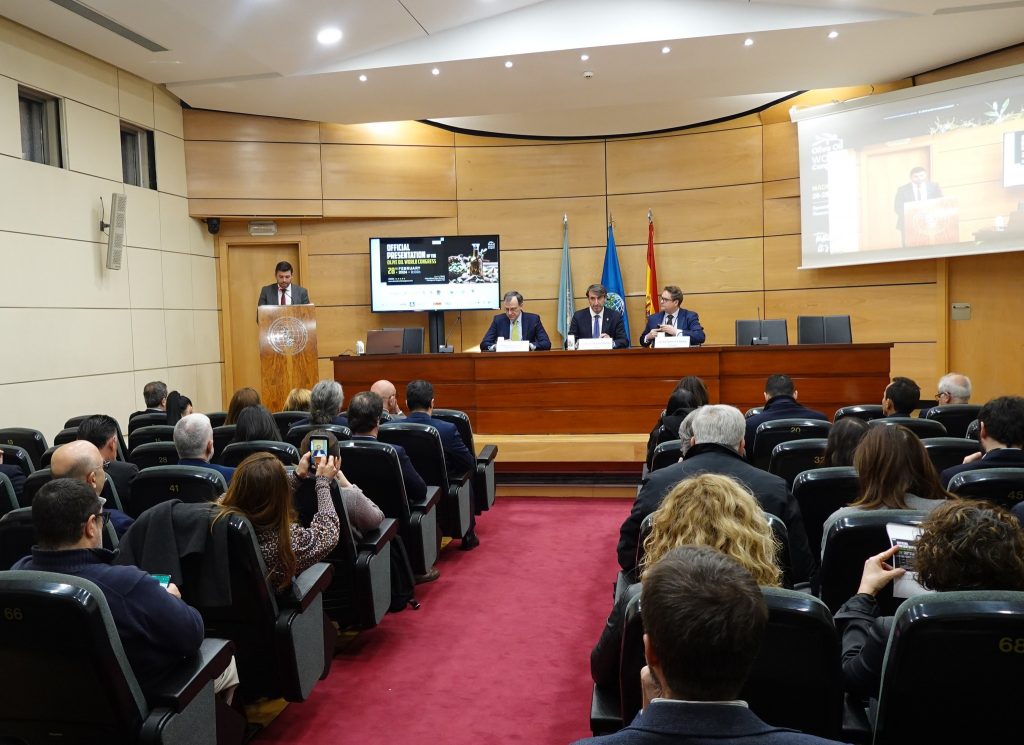
Presentation of the OOWC at the headquarters of the International Olive Council in Madrid

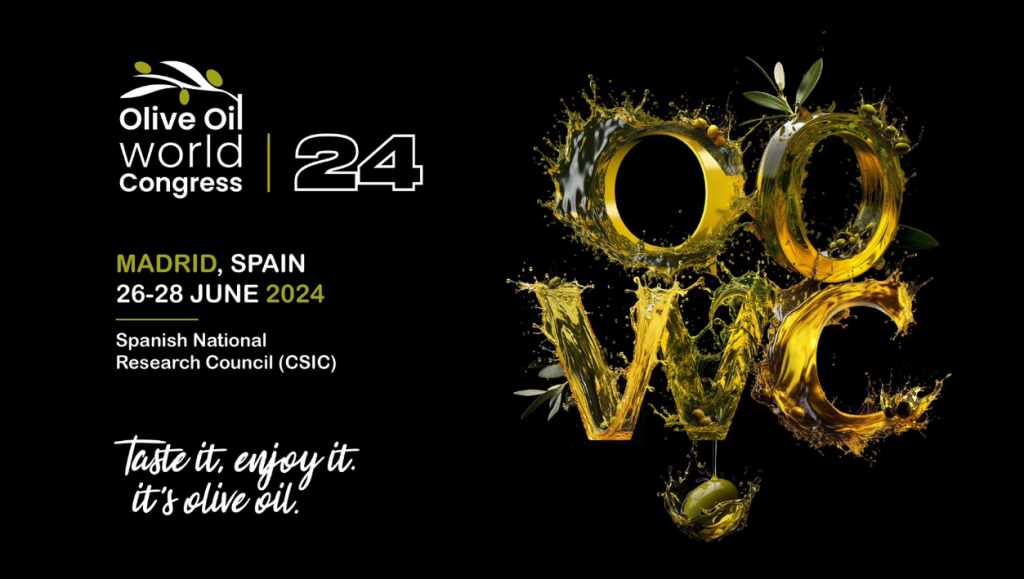
The congress will be held on 26, 27 and 28 June 2024 in the auditorium of the Spanish National Research Council (CSIC) in Madrid. CIHEAM Zaragoza is one of the collaborators in this first edition of the congress that will gather operators from over 50 countries to discuss different challenges that the olive sector will be facing in forthcoming years: climate change, product quality and safety, water, sustainability, and marketing. The congress also provides a forum of exchange to analyse the health benefits of olive oil and explore potential market opportunities that health and nutrition related aspects can offer as drivers of consumer patterns in many countries today.

During his welcome speech, Jaime Lillo, Executive Director of the IOC highlighted the importance of this event for the olive oil sector worldwide. Lillo expressed his gratitude to His Majesty the King, Felipe VI, President of the Committee of Honour of the OOWC, and to Luis Planas, Minister of Agriculture, Fisheries and Food, for their support.

Antonio Rodríguez de Liévana Sahagún, Deputy Director General of International Relations and Community Affairs of the Ministry of Agriculture, Fisheries and Food (MAPA), also participated in the opening event and spoke of the importance of the olive oil sector for Spain, stretching beyond the food industry and contributing to job creation, wealth, landscape conservation, health, and culture.

Ricardo Migueláñez, General Coordinator of the OOWC presented the congress’s innovative features: “the initiative originates in Spain, the largest olive oil producer in the world, but the congress has an international scope and other countries will be able to host future editions every two years”. He went on to say “Furthermore, one of the objectives of the OOWC is to become a platform that is active not only for each congress, but to organise promotion and knowledge-sharing activities all year round, focusing on olive growing and olive oil production worldwide and involving operators from both the production and the consumption sectors of the value chain”.

The OOWC will serve to valorise olive oil and convey its benefits to society. It is also a an opportunity to bring together professionals from all over the world and boost the transfer of knowledge about this product by creating a global network to exchange experiences and develop new R&D+i projects with the collaboration of experts across continents.

As one of the main collaborators, CIHEAM Zaragoza has been involved in the congress from the start, providing support in communication and dissemination work and participating in the Scientific Committee. In the run-up to the congress, coordination with the other participating entities, in particular with the International Olive Council, will be essential.