Sustainable food systems and urban food

  • CIHEAM Zaragoza strengthens ties with the World Sustainable Urban Food Centre (CEMAS) in Valencia
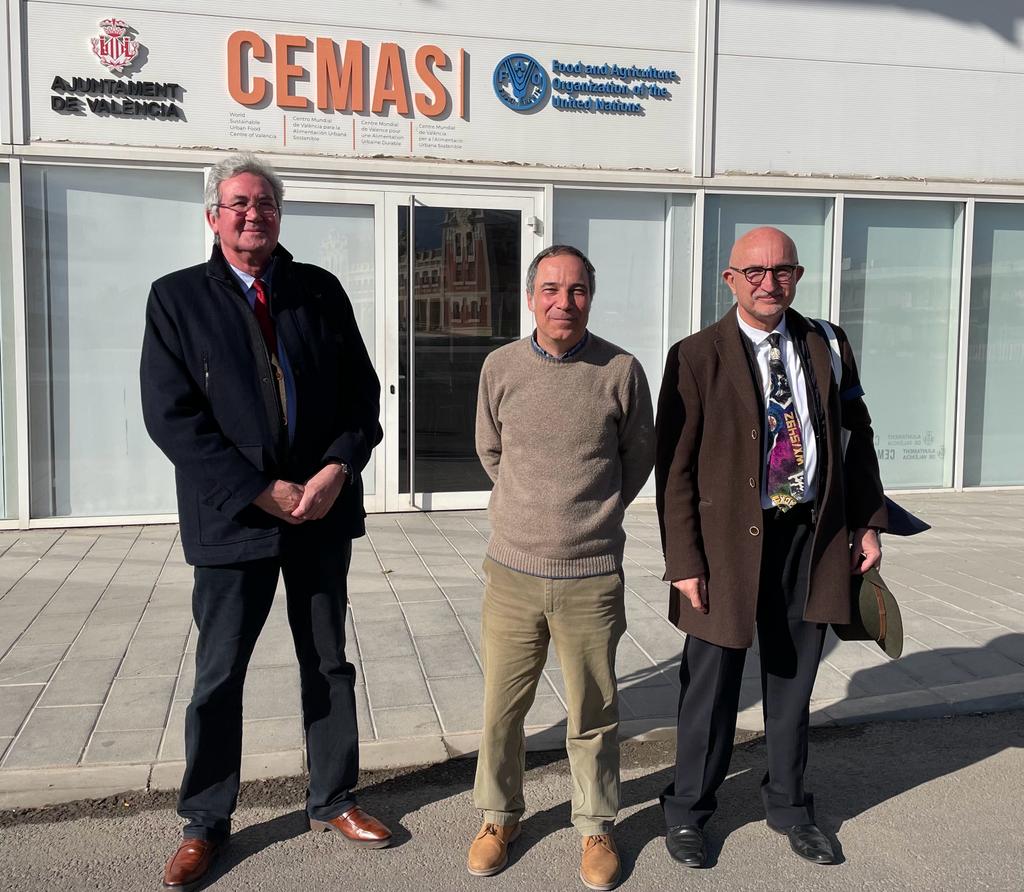
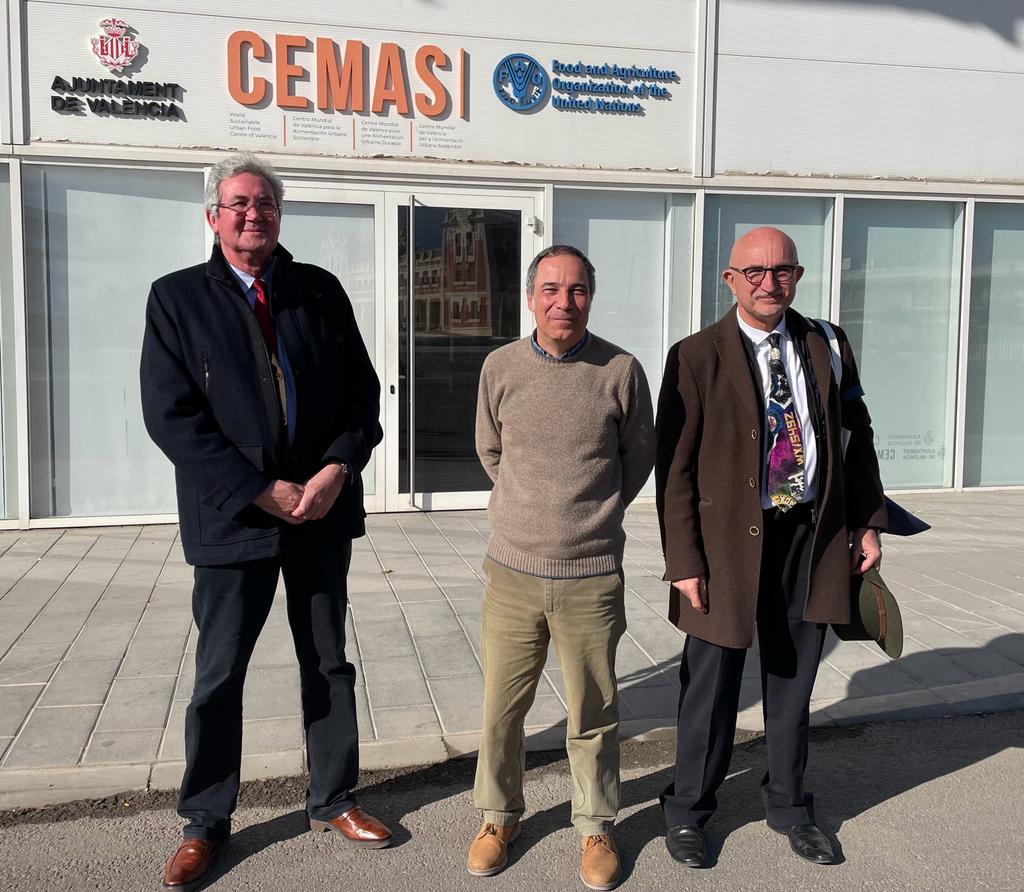
The secretary general of CIHEAM, Plácido Plaza, the director of CIHEAM Zaragoza, Raúl Compés, and the director of the World Sustainable Urban Food Centre of Valencia (CEMAS), Vicente Domingo, have held a working meeting to open up a new channel of collaboration between both organizations. The meeting has enabled future synergies to be explored in training and knowledge transfer – strategic activities for both organizations.

Compés explains that “CIHEAM is a point of reference in specialized international training in the agriculture and food sector whose corporate activities include promotion of sustainable food systems, particularly through the Mediterranean diet. This is the point where the activities of our organization coincide with the sustainable urban agenda of CEMAS, which incorporates the nutritional aspects of the diet as a priority”.

During this encounter, CIHEAM Zaragoza and CEMAS have made progress in the exchange of experiences and knowledge of sustainable food systems and urban food production. Compés adds: “From now onwards we will try to organize joint activities”.

Created in 2019 by the City Council of Valencia and the Food and Agriculture Organization of the United Nations (FAO), CEMAS manages and coordinates activities to strengthen knowledge and outreach of topics related to food, nutrition, the fight against hunger, climate change, and local sustainable food systems that can serve as example for other cities.

THE ROLE OF CITIES IN THE DEVELOPMENT OF SUSTAINABLE FOOD SYSTEMS

According to the FAO, a sustainable food system is one that delivers food security and nutrition for all in such a way that the economic, social and environmental bases to generate food security and nutrition for future generations is not compromised. The UN Food Systems Summit, held during the UN General Assembly in New York on 23 September 2021, set the stage for the transformation of world food systems in order to reach the Sustainable Development Goals for 2030.

As for the European Union, in 2023 the European Commission will present the proposal of the legislative framework for sustainable food systems (FSFS), one of the flagship initiatives of the Farm to Fork Strategy. The objective is to speed up and facilitate the transition towards more sustainable food systems.

The role of cities in this new global food paradigm was established definitively in Milan in 2015. On the occasion of Expo 2015, with the theme Feeding the Planet, Energy for Life, more than one hundred mayors and local authorities signed the Milan Urban Food Policy Pact (MUFPP) on 15 October 2015.

This pact was spearheaded by the mayor of Milan, who worked with a group of 46 cities from across the world, committed to “develop sustainable, inclusive, resilient, safe and diverse food systems, that provide healthy and affordable food for everyone in a framework based on human rights, that keep food waste to a minimum, and conserve biodiversity whilst adapting and mitigating the impacts of climate change”.

The main objective is to support the cities that wish to develop more sustainable urban food systems by encouraging mutual cooperation and the exchange of good practices. Priority elements are to guarantee healthy and affordable food for everyone, protect biodiversity, and combat food waste. It includes a list of 37 recommendations, grouped in 6 categories, accompanied by a series of indicators to control their implementation. The Pact currently involves more than two hundred cities, and is open to any city in the world.

In recent years, numerous initiatives have arisen to guide and support cities in designing policies and strategies for sustainable food systems.

THE AGRIFOOD SYSTEM IS NO LONGER JUST A RURAL AND AGRICULTURAL MATTER

There is general consensus about the need for active involvement of cities to reach the objective of sustainable food systems and SDG 2 and 11. The agrifood system is no longer just a rural and agricultural matter, the urban world has a significant role that will grow in the future.

On 15 November 2022, the world population reached 8 billion. More than 55 % are city dwellers and this percentage is estimated to grow to 60 % in 2030, and increase further to 68 % in 2025 (World Population Prospects, UN, 2022). In the case of Spain, the urban population is 81.06 % (according to 2021 data of the World Bank). By way of comparison, Portugal has 67 %, Italy has 71 %, Germany has 78 % and France has 81 %.

More and more people live in cities and this affects the whole food chain, from consumer behaviour to food distribution and production. In particular, the urban food consumption patterns have a large impact on the status of citizens’ nutrition and health, food loss and waste, food safety and emissions, among other effects. Crisis such as Covid-19 have emphasized that urban environments are particularly vulnerable.

As a result of these rapid changes, unlike in the past, cities are at the heart of the food challenge.
The story of the olive trees in the Garden of Peace

  • The Park of the Aljafería in Zaragoza hosts the Garden of Peace, a joint initiative of CIHEAM Zaragoza, Zaragoza City Council and the Garden of Peace Association.

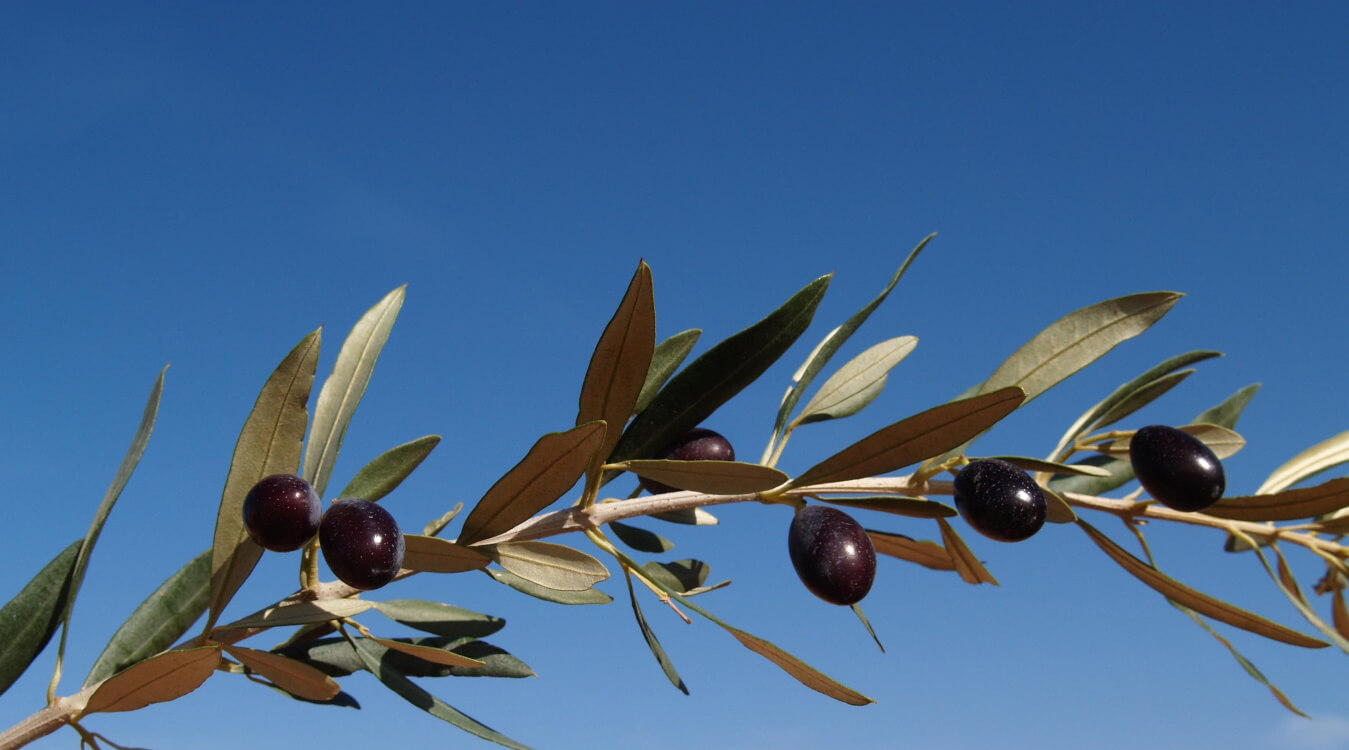
  • Set in the surroundings of the Aljafería Palace, this new space is a Mediterranean symbol of peace and cooperation, composed of 22 olive trees from across the world.

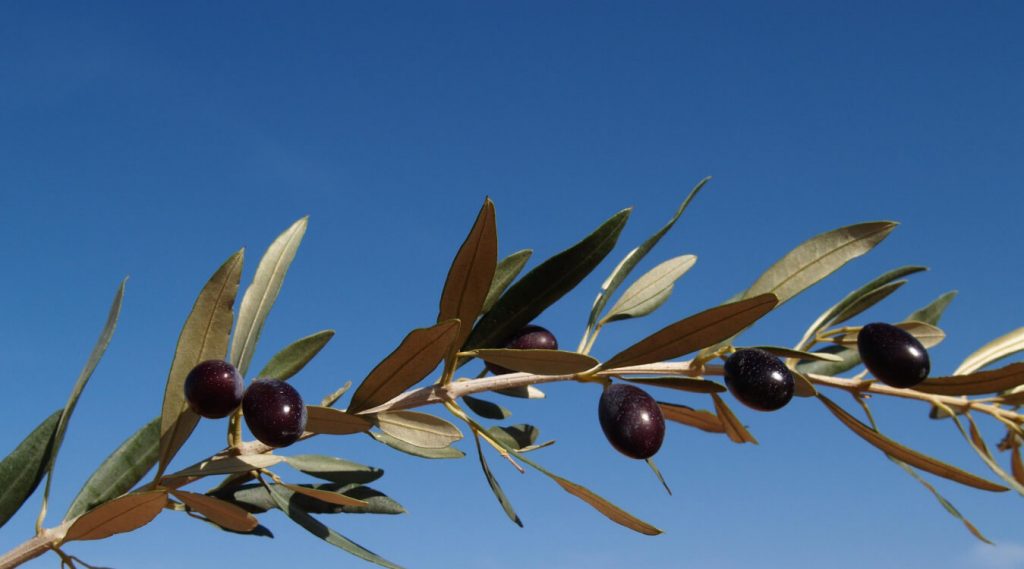
An Empeltre olive tree in the centre of the garden | Photograph: thegardenofpeace.org

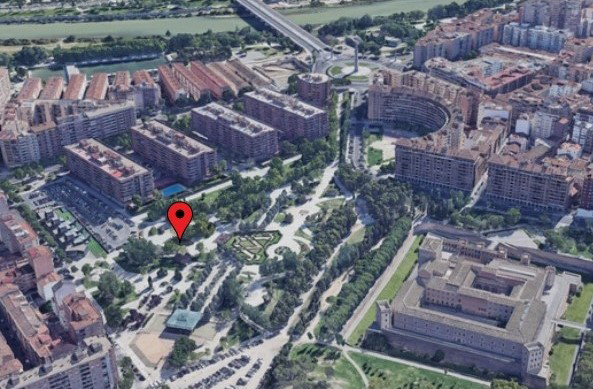
Trees are a living part of history. Some stories span centuries and others are just beginning, but the olive trees in the Garden of Peace will tell their stories together through a project undertaken by Zaragoza City Council upon the initiative of CIHEAM Zaragoza, based on the model of the Garden of Peace Association. The olive garden, a Mediterranean symbol of peace and cooperation, is located in an emblematic part of the city in the surroundings of the Aljafería Palace, a jewel of Hispano-Muslim art.

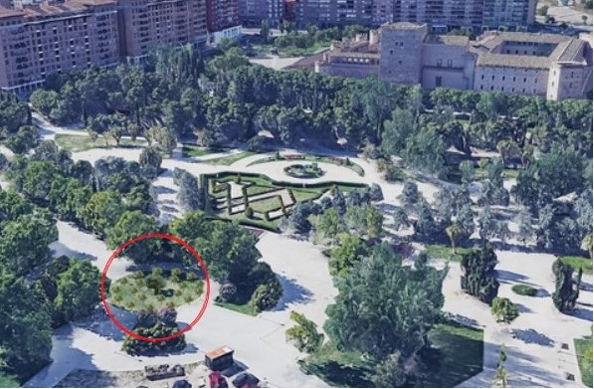
The garden has 22 olive trees from different parts of the world. The centre piece is an olive tree from the city of Zaragoza of the most common variety in Aragon – the Empeltre. The garden has a circular design, featuring olive trees from the World Olive Germplasm Bank: 21 varieties from 21 of the most prominent olive-growing countries in the world that provide 95 % of global production.

Francesco Serafini is president of the Garden of Peace Association and describes the new space: “In the centre, just as a mother watches over her children, is the ancient olive tree“. The Association is based in Madrid and promotes this project, planting gardens of peace in different countries in an effort to use common elements between cultures to enhance peace and tolerance. To date, including Zaragoza, 6 gardens have joined the initiative (1 in Italy, 2 in Greece and 3 in Spain). Serafini goes on to say: “There are plans to include Toledo (Spain), Argentina, Brazil, and Jordan“.

Ubicación del Jardín de la Paz - Zaragoza
Jardín de la Paz - Parque de la Aljafería

CIHEAM STRENGTHENS RELATIONS WITH THE CITY OF ZARAGOZA

For an organization like CIHEAM dedicated to cooperation in the Mediterranean, the Garden of Peace is full of symbolism. The project enables this intergovernmental organization to strengthen ties with the city of Zaragoza. A symbol of harmony, peace and prosperity, and a strategic crop in the Mediterranean region, the olive tree is very much present in the Organization’s activities and mission. In fact the olive is the centre feature of CIHEAM’s logo.

CIHEAM Zaragoza organizes the International Master in Olive Growing and Oil Technology with the University of Cordoba. This master’s trains professionals, technical specialists and managers in a key sector for all Mediterranean countries. It is a core element of a wide range of training and research activities in sustainable olive production.

Situated on the Campus of Aula Dei, one of the most prestigious agricultural research complexes in Spain, CIHEAM Zaragoza welcomes this joint endeavour with Zaragoza’s citizens and visitors by endorsing the Garden of Peace in the Park of the Aljafería as a future venue for activities related to Mediterranean agriculture and food in keeping with the values and mission of the Centre.


LIST OF COUNTRIES AND OLIVE VARIETIES

GARDEN OF PEACE – PARK OF THE ALJAFERÍA (ZARAGOZA, SPAIN)

🇦🇱 Albania: Mixani

🇩🇿Algeria: Chemlal de Kabylie

🇦🇷Argentina: Arauco

🇭🇷Croatia: Lastovka

🇨🇾Cyprus: Kato Drys

🇪🇬Egypt: Toffahi

🇫🇷France: Verdale de l’Hérault

🇬🇷Greece: Koroneiki

🇮🇷Iran: Zard

🇮🇱Israel: Barnea

🇮🇹Italy: Frantoio

🇱🇧Lebanon: Soury

🇲🇦Morocco: Picholine marocaine

🇵🇸Palestine: Nabala Baladi

🇵🇹Portugal: Cobrançosa

🇸🇮Slovenia: Buga

🇪🇸Spain: Empeltre and Picual

🇸🇾Syria: Zaity

🇹🇳Tunisia: Chétoui

🇹🇷Turkey: Gemlik

🇺🇸USA: Mission

Digital transformation in water management and governance

  • Big data, cybersecurity, artificial intelligence … CIHEAM Zaragoza’s international master’s on water management addresses “digital water” technologies.
Master Gestión del Agua

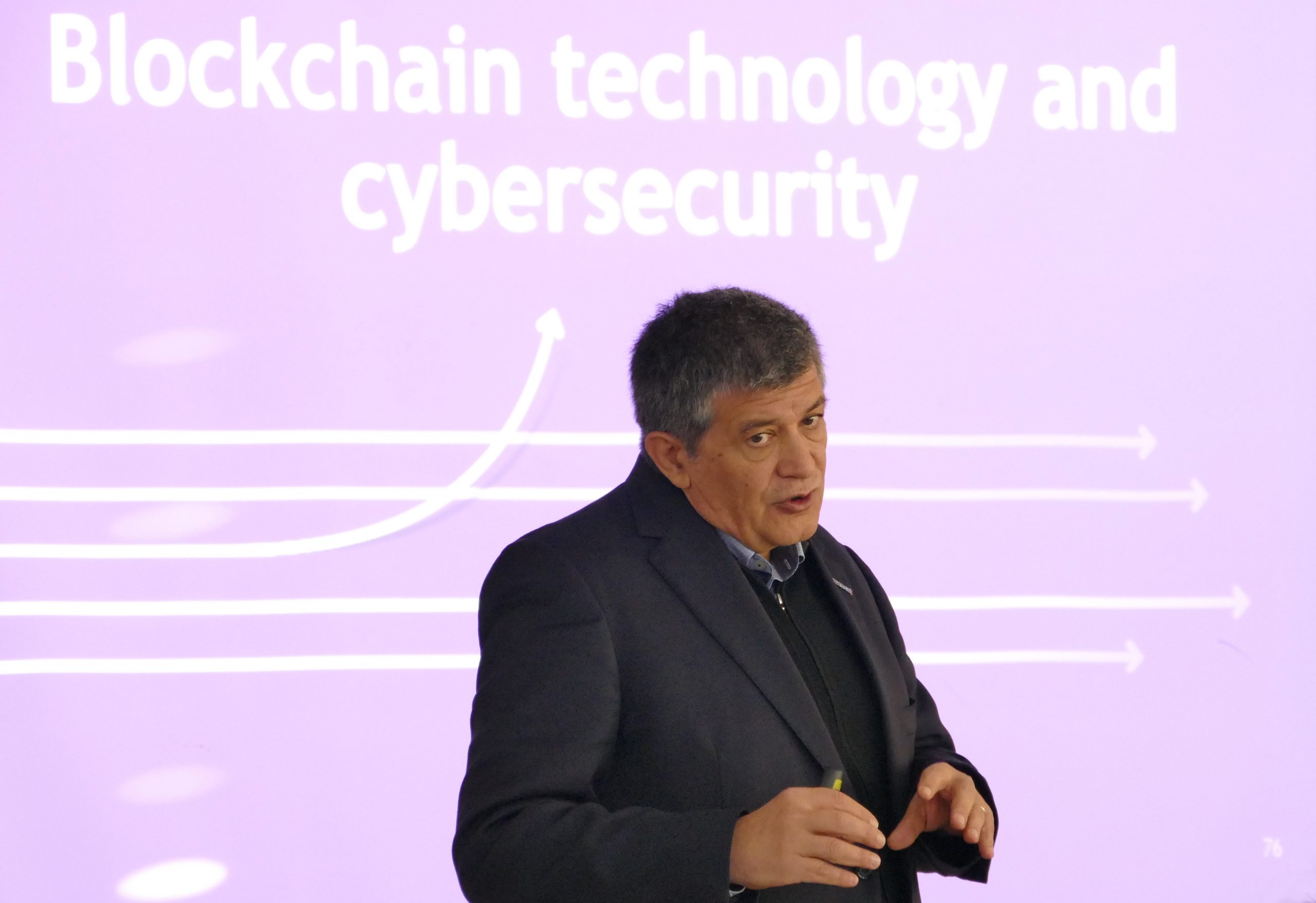
Gabriel Anzaldi during a lecture of CIHEAM Zaragoza’s international master’s programme on water management.

The students of the international master’s programme on water management at CIHEAM Zaragoza have dived into “digital water”. Top experts in the matter have guided them through the use of new technologies such as the Internet of Things (IoT), big data or artificial intelligence to increase efficiency and improve risk prediction and management in the water sector.

The master’s programme, organized by CIHEAM Zaragoza with the collaboration of the Spanish National Institute for Agriculture and Food Research and Technology (CSIC-INIA) and the International Center for Agricultural Research in the Dry Areas (ICARDA), trains future decision-makers in the field of water management and governance in natural and agricultural environments from an integrated, multidisciplinary perspective.

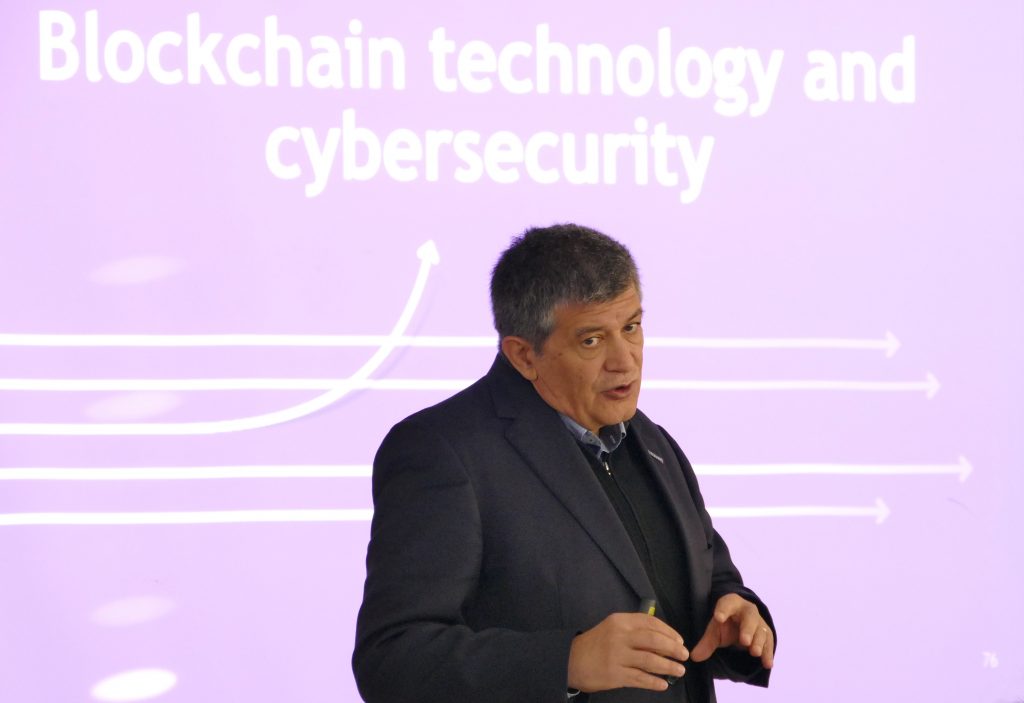
Gabriel Anzaldi, director of Scientific and Technological Development at Eurecat-Technology Centre of Catalonia, is one of the 90 lecturers from 16 countries teaching on the master’s. He addresses the role played by digital transformation in water management and governance.

Anzaldi explains that “from Eurecat we deliver a module that we call digital water where we try to bring together all the technologies that accompany digital transformation, with a disruptive role, and explain how they can be applied to manage the integrated water cycle, especially in agriculture. We talk about big data, artificial intelligence, digital twins, or cybersecurity among others”.

BENEFITS OF WATER SENSORS

The master’s also offers a vision from the technology business world in questions related IoT. Valeria Shimkevich is Agrifood Business Development Manager at Libelium, a company that designs and manufactures IoT technology and delivers a module focusing on water sensors.

In this video she presents the benefits associated to the use of this technology in fields such as agriculture, aquaculture and protection of the environment.


DISCOVER MORE VIDEOS ABOUT THE WATER SECTOR ON OUR YOUTUBE CHANNEL

“The award for my Final Master Project motivates me to carry on with my work and strive to achieve the best results”

  • Mohamed Hamitouche, winner of an IIAMA Award for his Final Master Project, talks about his training experience at CIHEAM Zaragoza, his research results and future plans

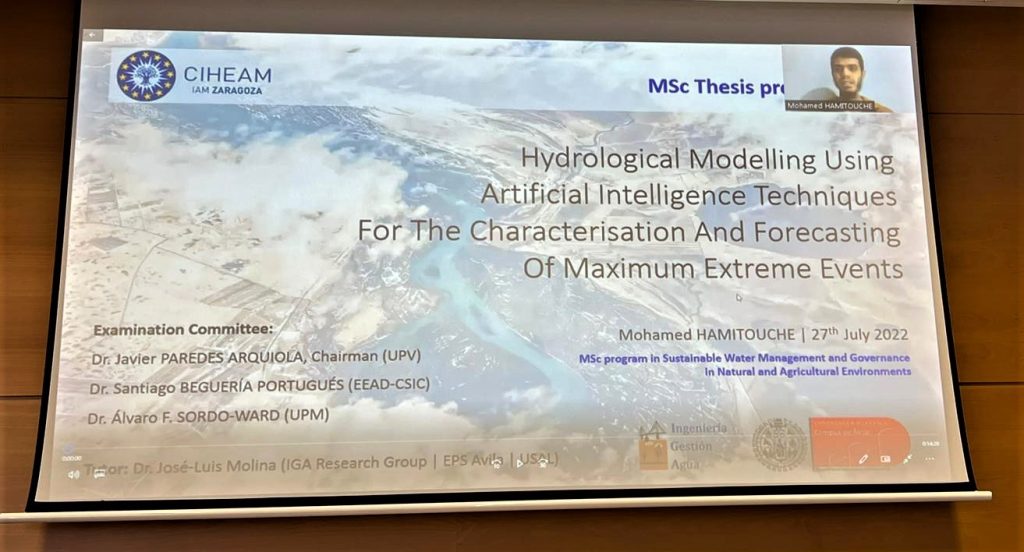
Mohamed Hamitouche, an Algerian student from CIHEAM Zaragoza, is the author of the Final Master Project ‘Hydrological modelling using artificial intelligence to characterize and predict extreme high-flow events’. The project was carried out under the supervision of Dr José Luis Molina at the University of Salamanca and has been awarded the top distinction in the FMP/FDP category of the VIII edition of the IIAMA Awards of the Valencian Research Institute of Water and Environmental Engineering of the Polytechnic University of Valencia, Spain.

In 2020, during a pandemic that thwarted so many plans, Mohamed decided to further his studies in Spain. After graduating from the Higher National Agronomic School (ENSA) in Algeria, this agricultural engineer, specialized in agricultural hydraulics, applied for a place on the International Master in Sustainable Water Management and Governance in Natural and Agricultural Environments organized by CIHEAM Zaragoza with the collaboration of INIA and ICARDA. His application was successful and the international organization, which carries out cooperation through training, awarded him one of the scholarships they grant to outstanding students from the southern and eastern shores of the Mediterranean.

In this interview, Mohamed talks about his training experience at CIHEAM Zaragoza, his research results and future plans.

Question. What made you apply to study in the International Master in Water Management at CIHEAM Zaragoza?

Answer. Lately, my country (Algeria) has been experiencing serious water availability problems, affecting both drinking water and crop irrigation through the spatial and temporal variability of rainfall as a consequence of climate change. However, I think that the main reason why we have reached this situation is bad water management which is why I chose this international master that addresses water management and governance from all perspectives.

Q. Tell us about the research that you have carried out.

A. Water management is very much conditioned by extreme hydrological events. Climate change affects the frequency and intensity of these events that are difficult to quantify, making it complicated for the water sector to develop effective adaptation strategies. In this sense, my FMP aimed to fill this gap in research and develop a methodology based on artificial intelligence to characterize and predict extreme flood events, estimate associated uncertainty and quantify the impact of the causing factors.

Q. What are the main conclusions of this project?

A. The project has generated a lot of results. In fact the work is made up of three publications:

            – “A review of AI methods for the prediction of high-flow extreme hydrology”, identifying relevant artificial intelligence methods with high prediction precision such as ANNs, SVMs, wavelets and Bayesian methods.

            – “HydroPredicT_Extreme: A probabilistic method for the prediction of extreme high-flow hydrological events”, focused on the HydroPredicT_Extreme method that gives simple, robust predictions of the runoff associated to a high-rainfall event. A very powerful method for anticipating high risks of floods and catastrophic impacts on nature and the environment.

            – “Event-based Bayesian causal modelling for flood hydrograph prediction, Upper Andarax intermittent stream, Spain”. This shows the results of Bayesian causal modelling in the Upper Andarax river basin in Almería. Among these findings, this work concludes that the response of the river basin depends more on the rainfall intensity than on the previous moisture conditions of the soil.

Q. What does this IIAMA award for your MFP mean to you?

A. The award motivates me to carry on with my work and strive to achieve the best results.

Q. How about your experience at CIHEAM Zaragoza.

A. I’ll never regret such an experience. Unfortunately in my year of studies we couldn’t come to Zaragoza because of Covid and the lectures were given online. But it was enriching to learn from top lecturers from the best universities in the world.

Q. What are your plans for the future?

A. I am actively seeking to improve my skills, perfect my knowledge and prepare to become a researcher in high technology. That is why I have recently embarked upon a doctoral programme in sustainable development and climate change at the University School for Advanced Studies – IUSS Pavia, in collaboration with the Laboratory for Climate Modelling of the Casaccia Research Centre – ENEA, in Italy.

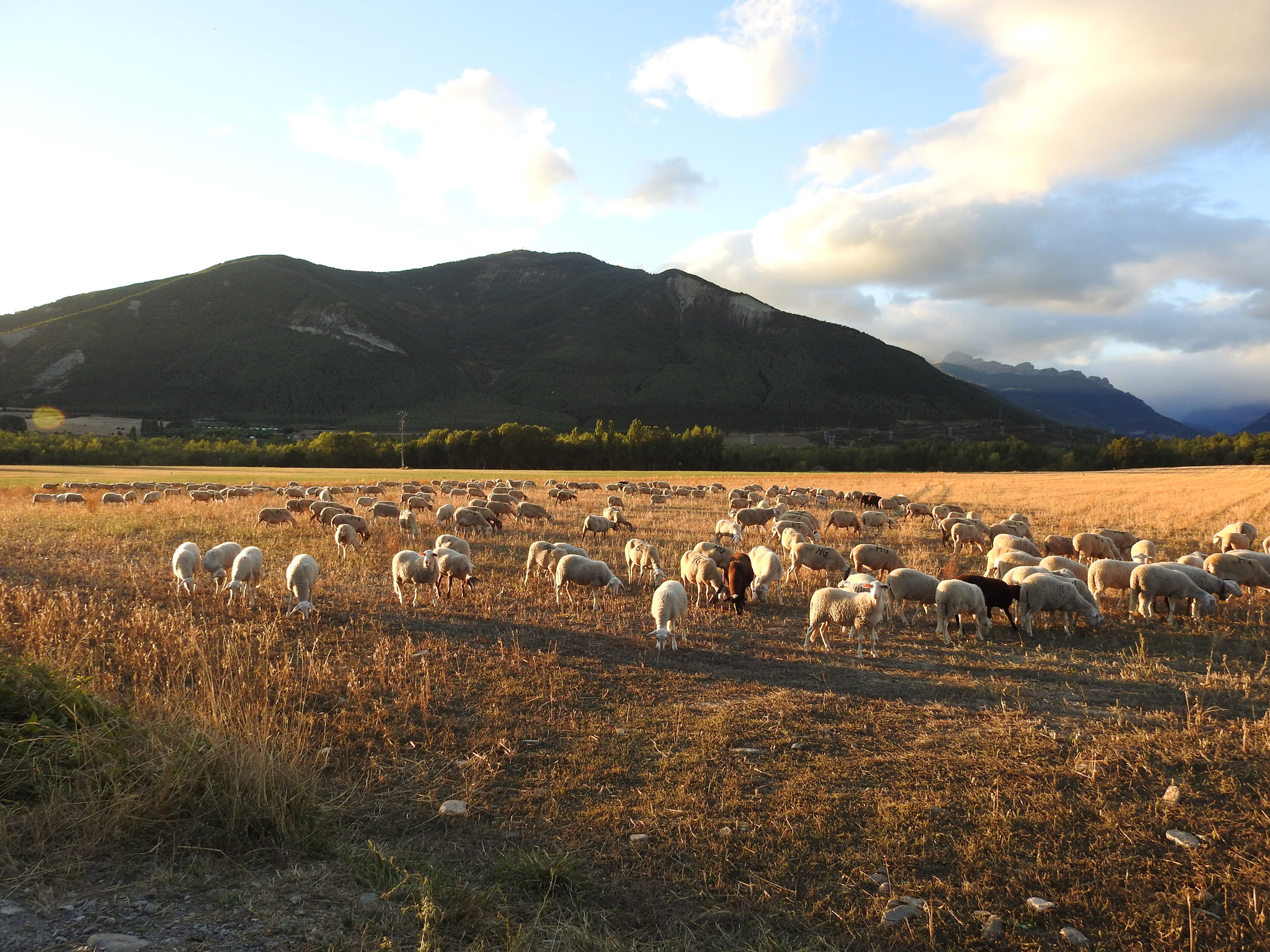
Workshop at CIHEAM Zaragoza on Mediterranean pastoralism

  • The course was organized within the framework of the PASTINNOVA PRIMA project, aimed at developing innovation on pastoralism through a Living Lab approach

  • Project partners from 10 Mediterranean countries (Croatia, France, Greece, Italy, Lebanon, Morocco, Slovenia, Spain, Tunisia and Turkey) attended the training workshop

Innovation and sustainability took centre stage at the workshop held at CIHEAM Zaragoza (Spain) on January 24-25 about Mediterranean pastoralism. Participants from 10 Mediterranean countries (Croatia, France, Greece, Italy, Lebanon, Morocco, Slovenia, Spain, Tunisia and Turkey) attended the course, organized within the framework of the PASTINNOVA project, supported by the European PRIMA foundation and programme for research and innovation solutions in the Mediterranean region.

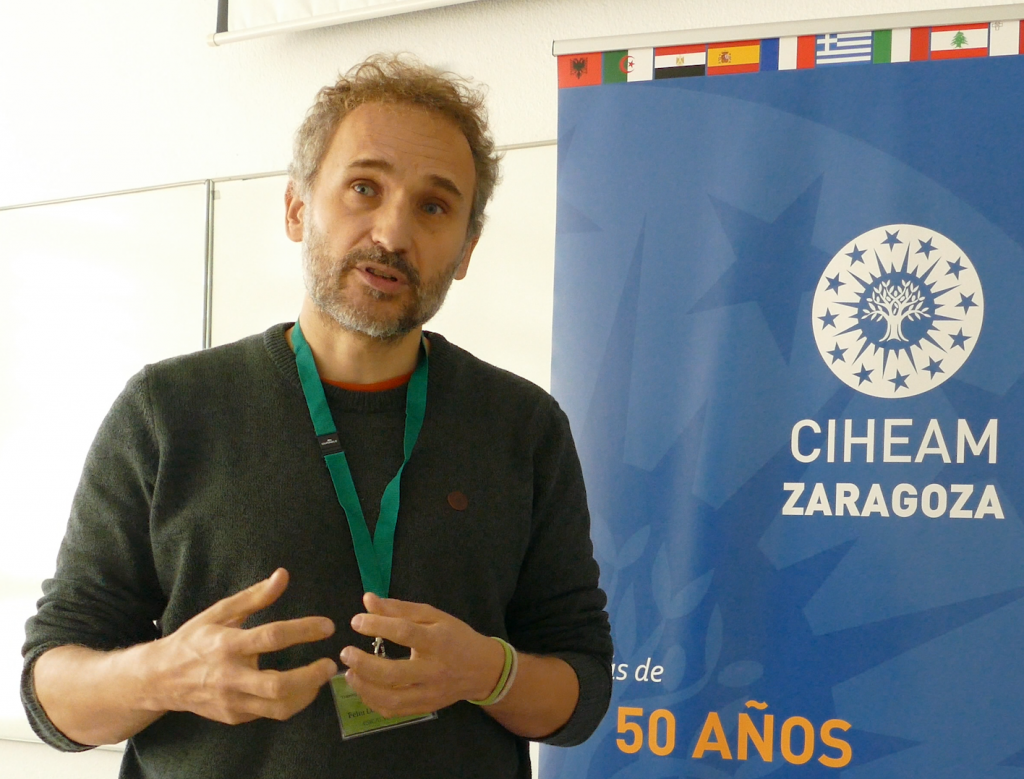
“The key objective of PASTINNOVA is to reinforce the sustainability, profitability and resilience of small pastoral farms

Antonio López-Francos, CIHEAM Zaragoza

The project utilizes a co-creation approach, based on the theory of Living Laboratories, in order to upscale existing innovations for a broad range of socio-cultural, economic, environmental and policy aspects. The training workshop at CIHEAM Zaragoza served to train facilitators of the project’s Regional Living Labs and familiarize project partners on the various methods and activities that they will employ within these labs.

Facilitation means that inside the PASTINNOVA Regional Living Labs, trained facilitators will support a group of pastoral actors towards reaching our shared key objective, which is to reinforce the sustainability, profitability and resilience of small pastoral farms“, explained Antonio López-Francos, Projects and Cooperative Networks Administrator at CIHEAM Zaragoza.

As a project partner, CIHEAM’s Institute in Spain, a point of reference for international cooperation in matters concerning the agriculture and food sector, supports the dissemination, communication and capacity-building efforts of PASTINNOVA. Within this role, the Institute was responsible for hosting and organizing the project’s internal training workshop, where the main challenges for pastoralism in the Mediterranean region were discussed.

Pastoral systems: drivers of sustainable and inclusive development

Pastoral systems provide a wide range of ecosystem services and play multiple roles towards sustainable and inclusive development in rural territories. “Pastoralism provides a lot of benefits to humanity and these benefits are sometimes understimated. They deal with the welfare of people, resistance to climate change, rural societies that continue to inhabit mountains, remote areas, coastal areas, islands… Pastoralism is the basic source of livelihood for this people“, detailed Athanasios Ragkos, agricultural economist and researcher at ELGO-DIMITRA (Greece) and coordinator of the PASTINNOVA PRIMA project.

“We want to provide solutions for pastoral people in order to increase their livelihoods and involve them in more efficient and inclusive societies”

Athanasios Ragkos, PASTINNOVA Project Coordinator

However, pastoral systems face multiple challenges and structural weaknesses which render them vulnerable to policy, environment and market uncertainties. The PASTINNOVA project is intended to support them by setting up innovations, business and organizational models to valorize their full potential as drivers towards agro-ecological transition in livestock production.

We want to bring together partners that are doing multidisciplinary research on pastoralism and also the people, the stakeholders who are working closely with us. We want to provide solutions for pastoral people in order to increase their livelihoods and involve them in more efficient and inclusive societies“, said Athanasios Ragkos.


[VIDEO] SEE WHAT THE EXPERTS HAVE TO SAY

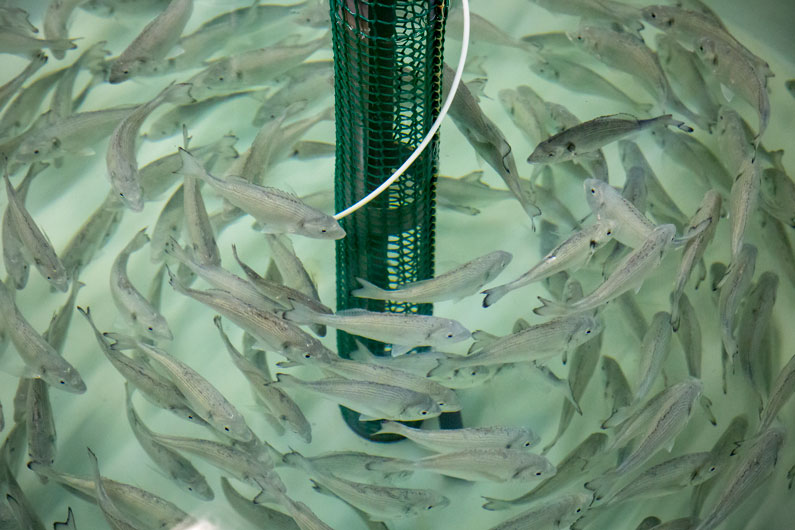
CIHEAM Zaragoza and the NewTechAqua project organize a specialized course on fish nutrition, feeding and health in aquaculture

  • Experts from international institutions, research centres and businesses from Spain, Italy, Norway and Portugal will provide training in new technologies to promote a more sustainable aquaculture.

  • The programme will address important challenges for the sector such as feed production using alternative and sustainable ingredients, improvement of productivity and fish health.

Aquaculture is taking on a more important role as a food source in Europe and the Mediterranean. In order to improve the sector’s competitiveness and sustainability, CIHEAM Zaragoza, a point of reference for international cooperation in matters concerning the agriculture and food sector, and the NewTechAqua project, financed by the research and innovation programme Horizon 2020 of the European Union, are organizing an advanced international course on feed nutrition, feeding and health in aquaculture.

The training will address the latest scientific advances in nutritional physiology, use of conventional and alternative ingredients and feeding strategies to improve fish health and quality. It will be given by experts from international institutions and universities, research and businesses from Spain, Italy, Norway and Portugal. The course is designed mainly for professionals, technical advisors and researchers involved in the aquaculture sector.

Bernardo Basurco is the administrator of the area of Fisheries and Aquaculture of CIHEAM Zaragoza and academic coordinator of the course. He explains: “With this course we aim to provide solutions for the most important challenges that the aquaculture sector faces today, such as how to reduce feed manufacturers’ dependence on fishmeal and fish oil from fisheries and at the same time improve fish health and resistance to disease”.

Within the framework of the European project, the course promotes the use of new technologies for a more sustainable aquaculture. It will be held at CIHEAM Zaragoza from 5 to 9 June 2023. Those interested may apply through the CIHEAM Zaragoza portal. There are 30 places available.

CIHEAM Zaragoza: an international point of reference in the field of fisheries and aquaculture

Since CIHEAM Zaragoza’s creation in 1969, fisheries and aquaculture have been considered key priorities and are an important part of the current training offer, that includes master’s programmes in Sustainable Fisheries Management and Marine Aquaculture and several advanced courses for professionals.

Besides participating in the NewTechAqua project, CIHEAM Zaragoza has lead the European H2020 MedAID project, aimed to increase the competitiveness and sustainability of the aquaculture sector in the Mediterranean, with special emphasis on seabass and seabream production.

Check the course’s programme and lecturers